

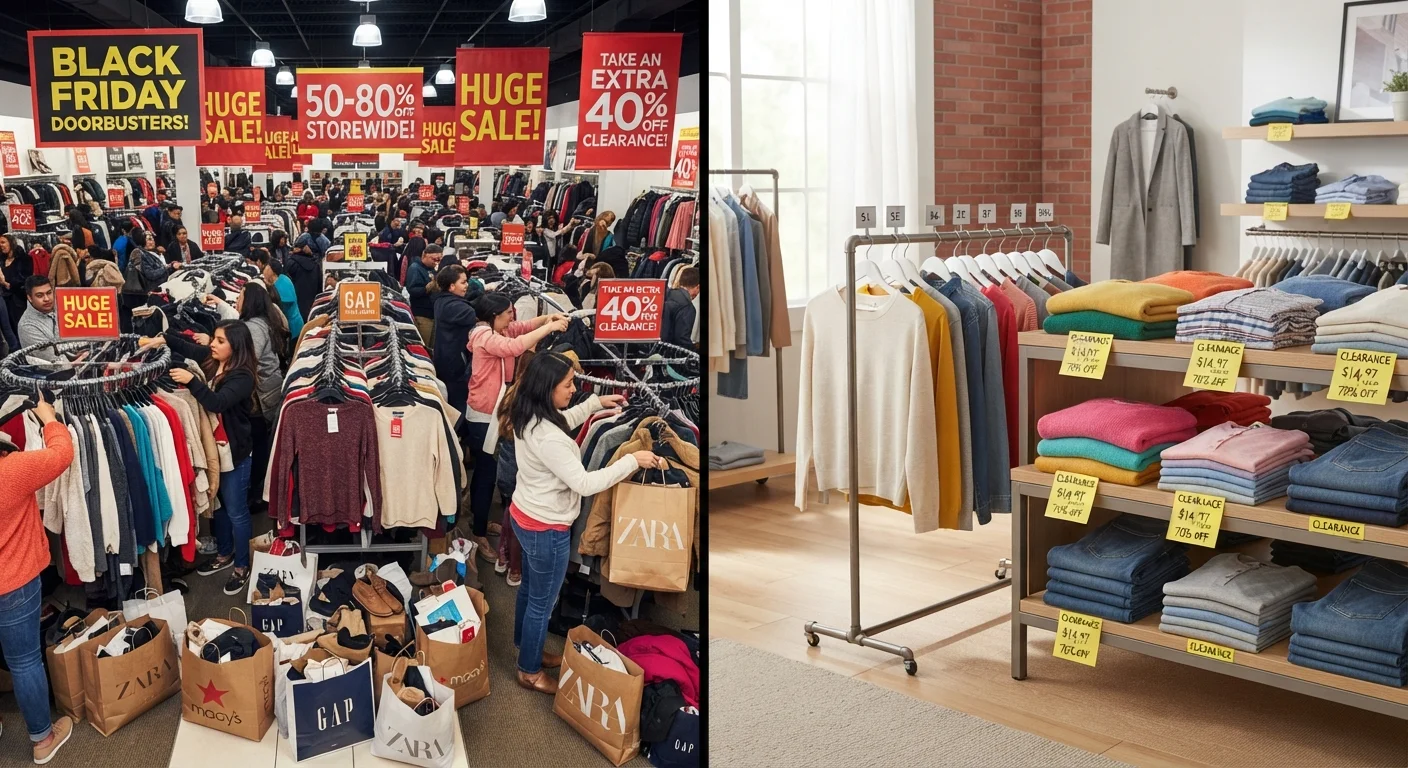
Key Takeaways
Option A
Black Friday
The high-volume, high-hype event sale.
Best for: Electronics, appliances, and gift purchases where specific items are targeted in advance.
Option B
End-of-Season Sales
The quiet clearance window that rewards patient shoppers.
Best for: Apparel, outdoor gear, furniture, and seasonal items where category depth matters more than brand.
If you need specific electronics or appliances before the holidays
Black Friday
This is where Black Friday genuinely earns its reputation. TVs, laptops, and major appliances see competitive, verifiable discounts driven by manufacturer incentives and retailer competition.
If you're shopping for clothing, shoes, or seasonal apparel
End-of-Season Sales
End-of-season clearance regularly hits 50-80% off on apparel as retailers clear inventory for the next season - no crowds, no artificial urgency.
If you're furnishing a home or buying patio furniture
End-of-Season Sales
Outdoor furniture and home seasonal goods see their deepest markdowns in late summer and post-January, when retailers genuinely need the floor space back.
If you want to stack coupons, cashback, and store credit
End-of-Season Sales
Black Friday deals frequently exclude stackable promotions. End-of-season clearance items are far more likely to accept coupon codes, cashback portals, and loyalty rewards simultaneously.
If you're buying gifts for specific people on a deadline
Black Friday
Black Friday's broad product selection and guaranteed availability make it the safer choice when you need a specific item by a specific date.
Why This Comparison Actually Matters
Most shoppers treat Black Friday as the default answer to every deal-hunting question. That assumption costs real money. The marketing machinery behind Black Friday is enormous - retailers spend heavily to create urgency, inflate perceived savings, and compress your decision window. End-of-season sales operate on a completely different logic: retailers need to move inventory to make physical and financial room for the next season's merchandise, which creates genuine pricing pressure with no deadline manufactured for your benefit.
Understanding which sale type wins by category is the difference between a systematic shopping strategy and a reactive one. As Black Friday myths persist in the consumer psyche, the shoppers who actually capture the deepest savings are often the ones quietly working the clearance racks in August and January.
This breakdown cuts through the noise. We'll compare both sale types across the categories where it actually matters, so you can allocate your budget and timing deliberately rather than by default.
| Criterion | Black Friday | End-of-Season Sales |
|---|---|---|
| Discount driver | Manufacturer subsidies & marketing budgets | Genuine inventory pressure |
| Typical discount depth | 20-40% (select items 50%+) | 40-80% as season closes |
| Best categories | Electronics, appliances, toys | Apparel, outdoor gear, furniture |
| Coupon/cashback stackability | Usually restricted or excluded | Generally permitted |
| Selection availability | High - purpose-built for event | Narrows as season progresses |
| Shopping competition | Extremely high - crowd and sell-out risk | Low - minimal urgency from other shoppers |
| Timing predictability | Fixed - late November annually | Variable - category and retailer dependent |
| Price verification ease | Requires price history tools | Discount from original tag is transparent |
| Urgency factor | Manufactured - deadline pressure tactics | Real - inventory genuinely depletes |
How Each Sale Type Actually Works
The mechanics behind each sale type explain everything about where the real savings are.
Black Friday: Marketing-Driven Discounts
Black Friday discounts are a negotiated outcome between retailers and manufacturers. Major brands offer markdown subsidies on specific SKUs - usually last-generation or purpose-built loss-leader products - in exchange for prominent placement and volume. The retailer's goal is foot traffic and basket size, not your savings. That's why you see a 65-inch TV at an impossible price next to full-priced accessories designed to ride the purchase. The TV deal is real. The halo purchases are where the margin gets recaptured.
Black Friday prices aren't always the year's lowest - especially on non-featured items. Price history tools like CamelCamelCamel consistently show that many items marked down 30% on Black Friday were 35-40% off during an earlier Prime Day or a quieter October promotion.
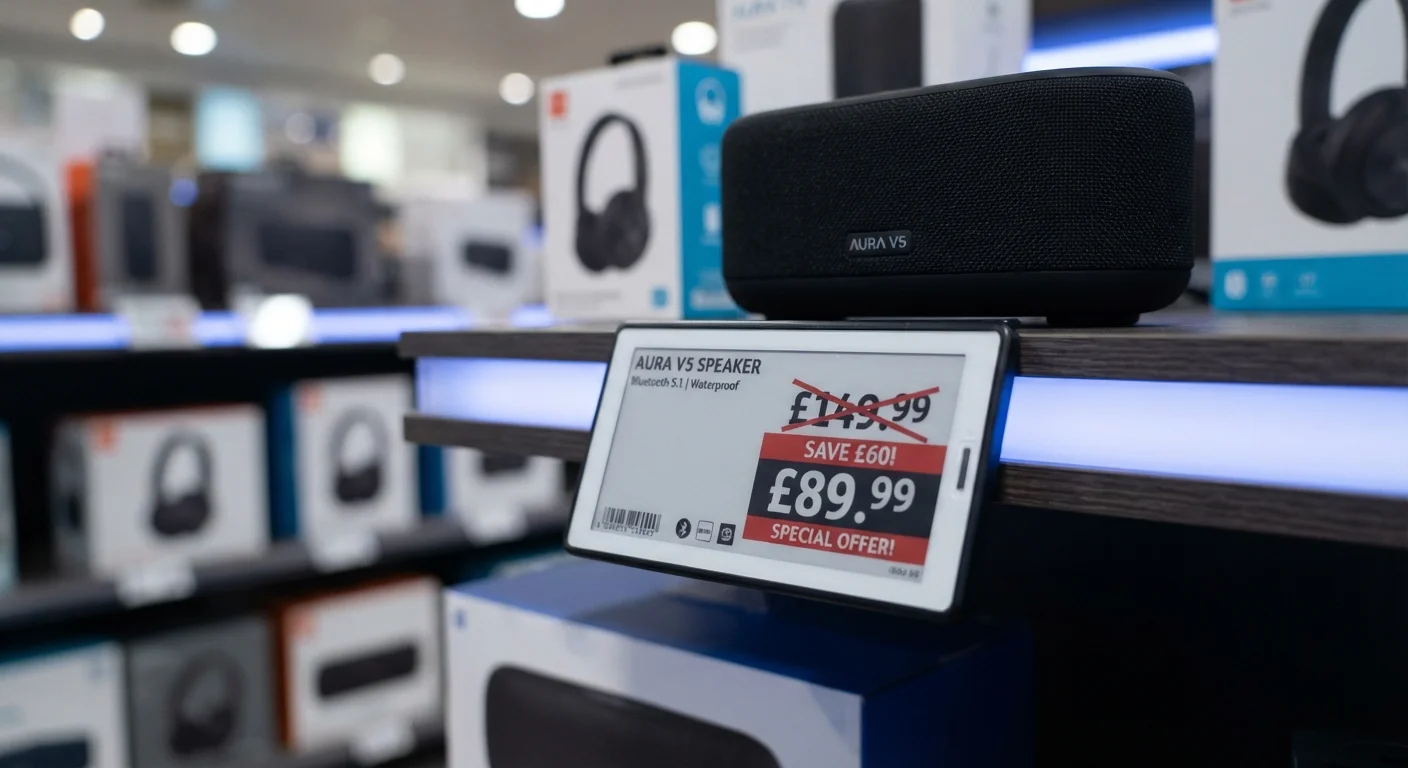
End-of-Season Sales: Inventory-Driven Discounts
End-of-season clearance is structurally different. When a retailer marks down summer swimwear in late August or winter coats in February, they're not running a marketing campaign - they're solving a real problem. Unsold seasonal inventory costs money to store, occupies space needed for incoming merchandise, and depreciates in value every week it sits. That creates authentic downward pressure on price, which is why the discounts often reach 60-80% without any manufactured urgency needed.
The tradeoff is selection. By the time discounts hit their deepest point, popular sizes and colors have sold through. This is the core tension in end-of-season shopping: discount depth versus selection quality. The fix is tracking markdown schedules and moving before the final clearance wave, not after. Clearance shopping myths often lead people to wait too long, chasing that final price drop while the best inventory disappears.
60-80%
Typical apparel discount at late-season clearance
Retail industry markdown data shows end-of-season apparel clearance routinely exceeds Black Friday clothing discounts by 20-30 percentage points.
~33%
Share of Black Friday deals cheaper earlier in the year
Price tracking analyses by tools like CamelCamelCamel consistently find that roughly one in three Black Friday prices were matched or beaten earlier in the calendar year.
4x
Increase in Black Friday online spending since 2017
Adobe Analytics data shows U.S. online Black Friday spending has grown from roughly $5 billion in 2017 to over $20 billion by recent years, intensifying competition for deals.
70%+
Effective discount possible with clearance stacking
Combining end-of-season markdowns with coupon codes, cashback portals, and credit card rewards can produce effective discounts well above the listed clearance price.
Category-by-Category Breakdown
The winner between Black Friday and end-of-season sales changes significantly depending on what you're buying. Here's where each one genuinely outperforms.
Electronics and Appliances: Black Friday Wins
This is Black Friday's home turf. Manufacturer incentives are concentrated here, retailer competition is most intense, and the specific discounts on TVs, laptops, soundbars, and major kitchen appliances are often genuine. Verify with price history tools - but for these categories, Black Friday typically delivers the year's best verified discount in a single window. Cyber Monday extends the advantage into the online channel with further tech deals the following Monday.
Apparel and Footwear: End-of-Season Wins - Decisively
Black Friday clothing deals are shallow compared to what clearance delivers. Typical Black Friday apparel discounts run 20-40%. End-of-season clearance regularly hits 50-70%, with an additional promotional code often stackable on top. For basics, athletic wear, outerwear, and footwear, the math is clear. Buy your winter coat at the end of February. Buy summer athletic gear in late August. The summer blowout breakdown by category shows exactly when specific apparel categories hit their floor price.
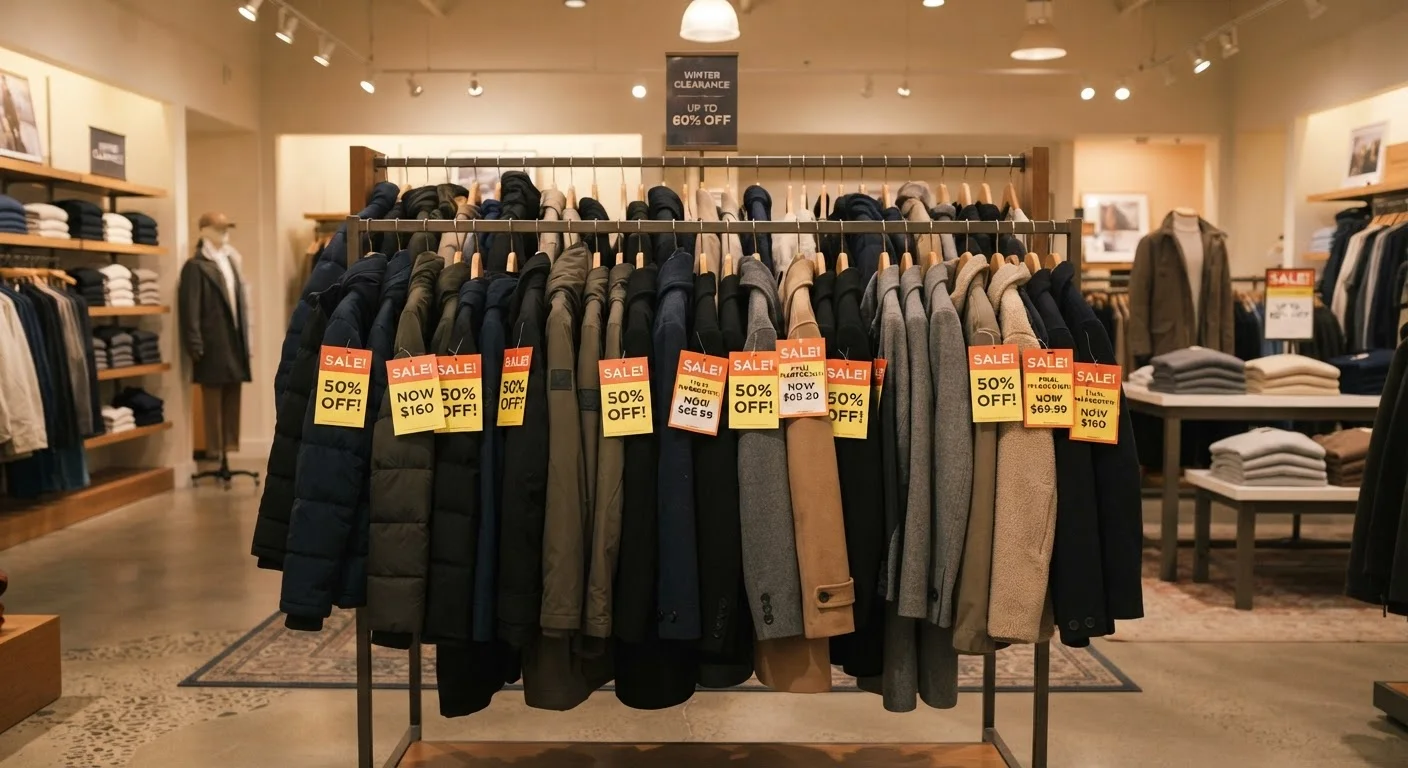
Furniture and Home Goods: End-of-Season Wins
Black Friday furniture deals exist but tend to be on slower-moving stock the retailer already couldn't move at full price. End-of-season clearance - especially late summer for outdoor furniture and post-January for indoor - represents genuine inventory liquidation. The discounts are deeper, and there's no competing crowd. For major furniture purchases, January is often the best month to buy across multiple home categories.
Outdoor and Sporting Gear: End-of-Season Wins
Outdoor gear follows seasonal inventory cycles that align perfectly with end-of-season clearance. Camping equipment, kayaks, hiking gear, and ski apparel all hit their lowest prices when the relevant season ends. Black Friday occasionally offers deals on outdoor tech (GPS devices, fitness trackers), but the structural category discounts belong to clearance windows. Brand outlets and discount sites often compound these savings further.
Toys and Gift Items: Black Friday Wins
For gifts with specific recipients in mind, Black Friday's broad selection and reliable availability at known prices makes it the practical choice. End-of-season clearance on toys is unpredictable - what's available is whatever didn't sell. If you need a specific item by a specific date, Black Friday gives you the certainty that clearance shopping can't.
How to Verify Any Deal Before You Buy
Whether you're shopping Black Friday or end-of-season clearance, the single most important habit is checking price history before committing. For Amazon purchases, CamelCamelCamel tracks the full price history of any ASIN. For broader retail, browser extensions like Honey or Capital One Shopping surface historical lows in real time. A deal that looks like 40% off may have been 50% off three months ago - or it may be a genuine floor price. Know before you click.
The Markdown Schedule Most Shoppers Don't Know Exists
Major retailers follow internal markdown cadences during clearance periods - typically reducing clearance prices by an additional 10-20% every one to two weeks until inventory clears. At Target, for example, clearance items are re-priced on a weekly cycle. Knowing when your retailer's markdown day falls lets you time purchases to hit the next price drop rather than the current one. Ask a floor associate or check deal forums where shoppers track retailer-specific markdown schedules.
The Stacking Advantage: Where End-of-Season Pulls Further Ahead
The raw discount percentage is only part of the equation. Where you can stack additional savings, the effective discount compounds significantly - and end-of-season clearance is structurally more compatible with stacking than Black Friday.
Why Black Friday Restricts Stacking
Most Black Friday promotions explicitly exclude coupon codes, restrict cashback portal tracking, or bar the use of loyalty points. This is deliberate - the deal is already subsidized, and retailers cap their exposure. Read the fine print on any Black Friday promotion and you'll routinely find language like "not combinable with other offers" or "excludes doorbuster items."
Why End-of-Season Is Stacking-Friendly
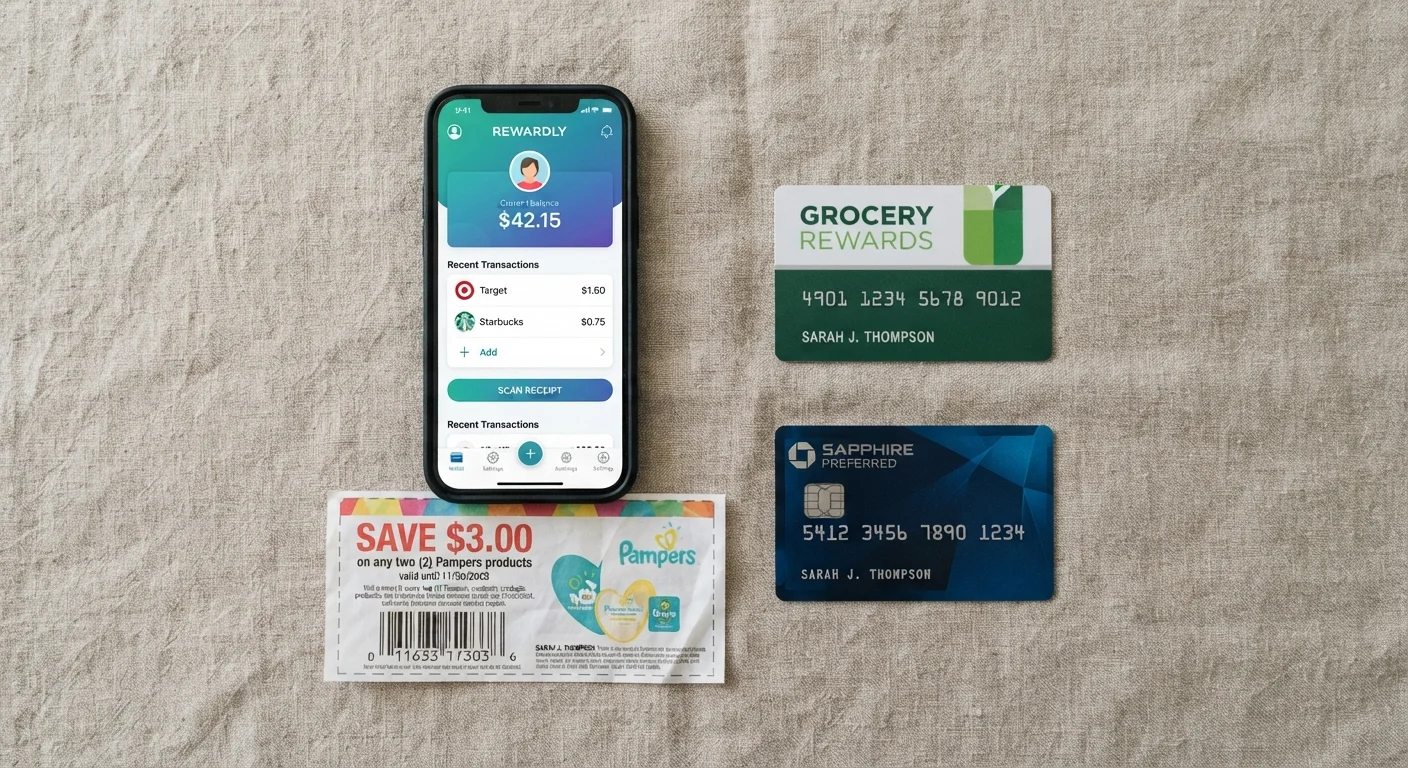
Clearance items rarely carry the same restrictions. A coat marked down 60% in February can often accept:
- A retailer coupon code (additional 15-20% off)
- A cashback portal like Rakuten or TopCashback (3-10% cashback)
- Store credit from a loyalty program
- A credit card with category-specific rewards
Stack all four on a $200 coat that's already at $80, and your effective price drops to $55-60. That's a 70-72% effective discount versus the listed 60%. No Black Friday promotion will let you do that. Winter clearance shopping strategy covers exactly how to sequence these stacking moves to maximize the outcome.
For a full picture of which sale windows are worth targeting across the calendar, the holiday sales calendar maps the major events by product category month by month.
Timing Your Strategy: A Practical Calendar Framework
The most effective shoppers don't choose between Black Friday and end-of-season - they use both at the right moment. Here's how to structure the year.
Q1 (January-March): Post-Holiday and Winter Clearance
January is one of the best months to buy furniture, mattresses, winter apparel, and fitness equipment as retailers clear post-holiday inventory. Winter clearance windows run deep through February and into early March for cold-weather categories. This is also when department stores run their deepest apparel clearance of the year. Department stores versus online outlets each have distinct advantages during this window - knowing which channel suits your category saves additional money.
Q2 (April-June): Watch for Pre-Summer Promotions
This is the weakest quarter for deal hunting. Memorial Day offers moderate discounts on mattresses and appliances, but this is generally a planning and tracking period, not a buying period. Use this time to set up price alerts for items you plan to buy at year-end.
Q3 (July-September): Summer Clearance and Back-to-School
Late July through September is prime season for outdoor furniture, summer apparel, and sporting goods clearance. Summer blowouts hit their deepest discounts from mid-August onward. This end-of-season checklist helps you time each category purchase precisely. Back-to-school also creates genuine competition-driven discounts on tech accessories and school supplies.
Q4 (October-December): Deploy Black Friday Strategically
Black Friday and Cyber Monday are the right tools for electronics, appliances, and specific gift purchases. Resist the gravitational pull to buy everything here. Stick to the categories where Black Friday demonstrably wins, and use early access versus doorbuster strategy to get your specific items without competing with peak crowd volume. For the full picture of which Q4 events actually deliver real discounts, the retail calendar most shoppers ignore is worth reading before November hits.

The Bottom Line: Treat Them as Complementary Tools
Black Friday and end-of-season sales are not competitors for the same shopping job - they're tools for different categories and different purchasing contexts. The error most shoppers make is defaulting to Black Friday for everything because it's a known event on a fixed date. That default is expensive.
The framework is straightforward: buy electronics and specific gifts during Black Friday. Buy apparel, outdoor gear, furniture, and seasonal items during the relevant end-of-season window. Layer cashback and coupons wherever the terms allow - and those terms almost always favor clearance over event sales.
If you want to go further, holiday sale myths that cost shoppers money every year are worth knowing before you commit a dollar to either window. And if Black Friday's credibility is still in question for you, how to identify a genuine deal versus a manufactured one gives you the verification framework to shop confidently regardless of which window you're in.
The savings are real in both cases - but only when you're using each tool for the job it was built for.