

Key Takeaways
Why Black Friday Myths Are Expensive
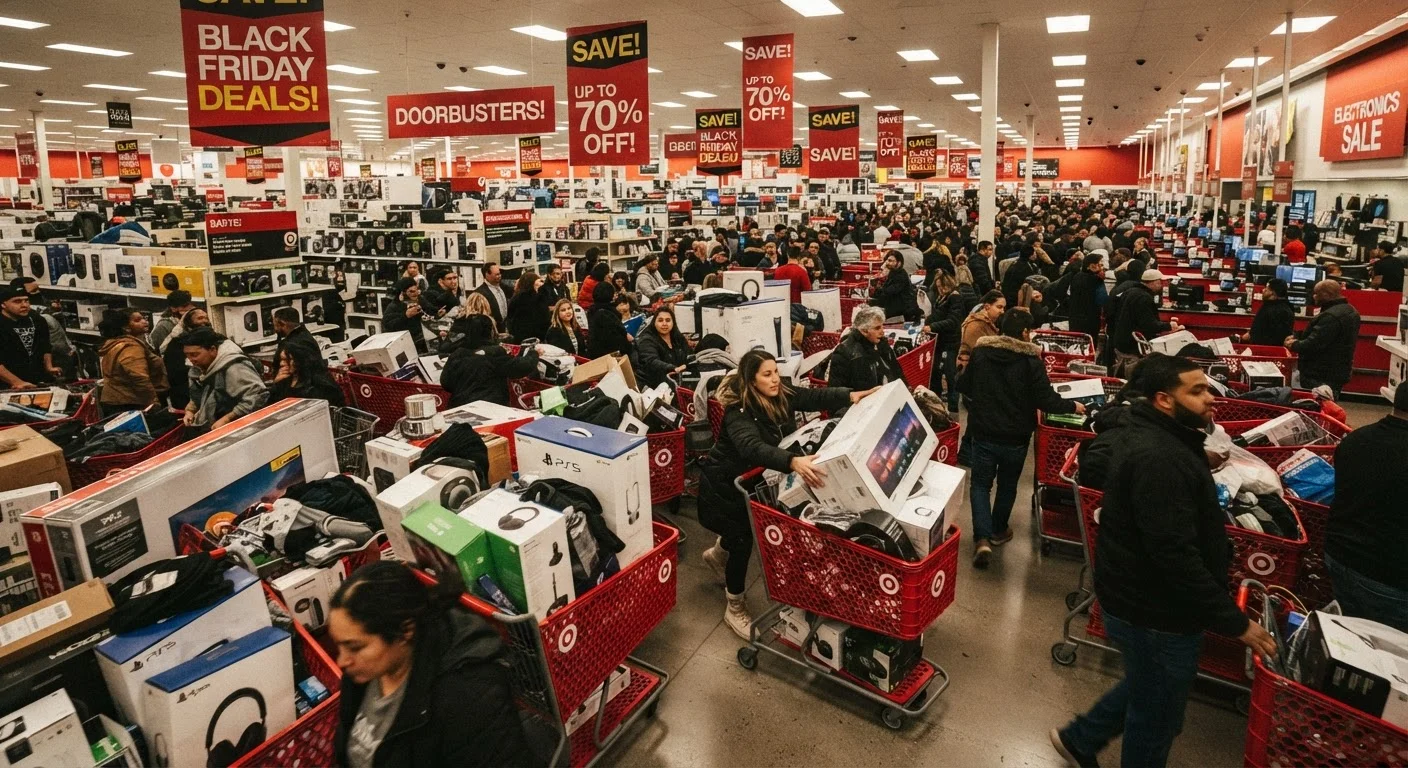
Black Friday is the most aggressively marketed shopping event of the year, which means it's also the most fertile ground for consumer misconceptions. Retailers spend months engineering the perception of value - and most shoppers walk in with zero data to push back against it.
The result: billions of dollars in purchases that weren't actually good deals. A 2023 analysis by consumer research firm Which? found that over 90% of Black Friday "deals" were available at the same price or cheaper in the six months prior. That's not an anomaly. It's a business model.
This article breaks down the most persistent Black Friday myths - the ones that cost shoppers real money year after year - and gives you the specific framework to tell a manufactured deal from a genuine one. For a broader look at how holiday pricing works across the season, see Holiday Sale Myths That Cost Shoppers Money Every Year.
Let's start debunking.
The Big Black Friday Myths - Debunked
Each of the following myths is something a significant portion of shoppers believe going into Black Friday. Each one, left unchallenged, leads directly to worse purchasing decisions. Here's what the data and the mechanics of retail pricing actually tell us.
Myth
Black Friday offers the lowest prices of the year - if you don't buy now, you'll pay more later.
Fact
Research consistently shows the majority of Black Friday prices were available at the same level or lower at other points in the year, including Cyber Monday, January clearance, and mid-year sales events.
This is the foundational myth that makes every other Black Friday manipulation possible. If consumers believe Black Friday prices are categorically the lowest of the year, then any hesitation feels like leaving money on the table.
The reality is more nuanced. While some categories - particularly large TVs and gaming consoles - do see genuine annual price floors around Black Friday, the majority of product categories don't. A study tracking over 1,000 products across major UK and US retailers found that more than 85% of items featured in Black Friday promotions had been available at the same or lower prices in the preceding six months.
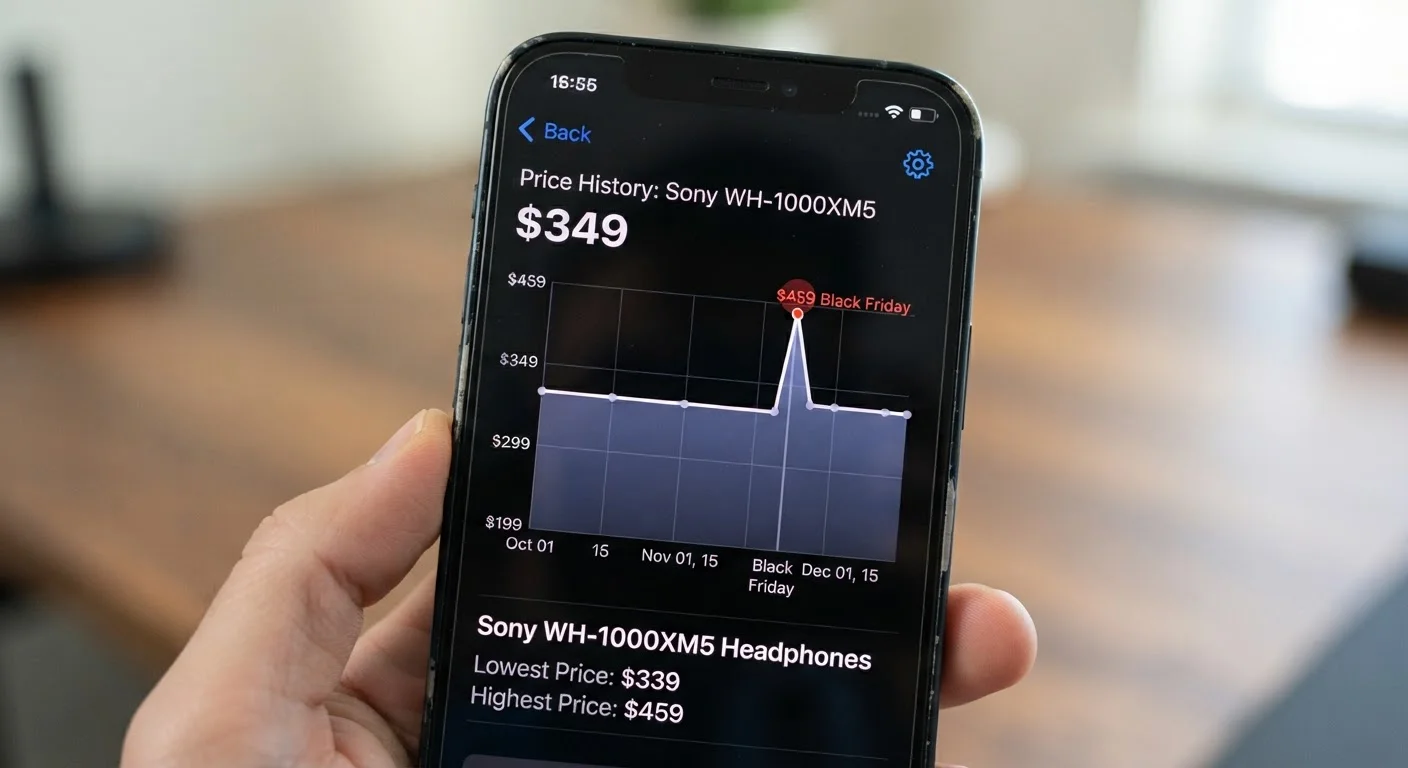
The tools to verify this yourself exist and are free: CamelCamelCamel for Amazon price history, Honey's price history graph, and Google Shopping's historical price chart all give you access to the data retailers prefer you don't look at. Use them before, not after, you buy.
The broader point: no single sale event is the universally optimal time to buy every category of product. Timing your purchases to category-specific discount cycles rather than marketing events is almost always the higher-value approach.
Myth
Doorbuster deals are genuinely exceptional offers - first come, first served.
Fact
Doorbusters are loss-leader marketing instruments deliberately designed to drive foot traffic and attention, not to represent a retailer's best or most available deals.
The doorbuster format was engineered with a specific psychological purpose: create the impression that a retailer is practically giving products away, which triggers urgency and draws consumers into the store (or onto the landing page). Once there, the behavioral pattern is predictable - shoppers who come for a doorbuster rarely leave with only that item.
Several structural features of doorbusters reveal their true nature:
- Extreme quantity limits: A 65" TV at $299 available in quantities of 8 per store isn't a deal most people will access - it's an ad.
- Model-specific selection: Doorbuster TVs and appliances are frequently prior-generation, stripped-down, or exclusive-to-the-retailer SKUs that don't have an easy market comparison price.
- Placement strategy: In physical retail, doorbusters are positioned at the back of the store. Equivalent web strategies involve long scroll paths or prominent banner positioning that expose shoppers to full-margin items before reaching the deal.
None of this means doorbusters are never worth pursuing - but entering that pursuit with clear eyes about what they are changes the calculus. If you want the doorbuster item specifically and have confirmed its price represents genuine value against historical data, great. Going in expecting the surrounding offers to be equally exceptional is where the money gets lost.
Myth
Online Black Friday deals are just as good as in-store - you can skip the lines entirely.
Fact
In-store and online Black Friday inventories are deliberately differentiated, and some categories offer meaningfully better value in one channel than the other.
Retailers manage Black Friday across channels strategically. The myth that online and in-store deals are interchangeable leads shoppers to assume they can cherry-pick the best of both without tradeoffs - which isn't accurate.
Here's how the differentiation typically plays out:
- Electronics: In-store doorbusters on big-ticket items (TVs, gaming hardware) are frequently not replicated online, or online equivalents sell out within the first hour of availability.
- Apparel and soft goods: Online inventory is often broader and more size-inclusive, but in-store clearance racks frequently carry deeper markdowns that aren't reflected online.
- Exclusive SKUs: Retailers frequently create store-exclusive or online-exclusive bundles that prevent direct cross-channel price comparison.
The practical implication: know your target item and verify its availability and pricing in both channels independently before committing to a strategy. Don't assume an online price equals the in-store price, or that an in-store deal will be available online later.
For categories that lean heavily toward online performance, Cyber Monday Explained: Why Online Deals Hit Different Than Black Friday covers why waiting until Monday sometimes beats shopping Friday for digital-native categories.
Myth
The countdown timer means the deal is genuinely expiring - you have to act now.
Fact
Countdown timers are a conversion optimization tactic, not a reliable indicator of deal expiration or actual inventory scarcity.
Urgency is one of the most well-documented psychological triggers in consumer behavior, and countdown timers are one of the most direct ways to manufacture it. When a timer hits zero, one of several things typically happens: the price resets to its prior level, a new "deal" replaces it, or the timer simply resets.
This doesn't mean every countdown timer is deceptive - some do mark genuine time-limited pricing windows. But the signal has been so overused that it's no longer reliably informative. A 2022 study on e-commerce conversion tactics found that countdown timers increased purchase conversion rates by an average of 8-11% with no corresponding change in actual deal value or availability constraints.
The practical rule: treat a countdown timer as a signal to pause, not to purchase. Ask yourself whether you'd already identified this item as a target, whether the price clears your verified historical threshold, and whether you're buying because the deal is good or because the clock is running. If the answer to the last question is "the clock," close the tab.
[important_callout]Urgency is the enemy of price verification. Any deal that won't survive the 90 seconds it takes to pull up a price history chart probably wasn't worth buying to begin with.
Myth
A 50% discount off list price is automatically a great deal.
Fact
Percentage discounts are calculated against whatever baseline the retailer sets - and that baseline is often inflated specifically to make the markdown look impressive.
This is the "reference price" problem, and it's pervasive. Retailers set a "compare at" or "was" price that becomes the anchor for all discount calculations. If that anchor is inflated relative to the product's actual market value or historical selling price, a 50% discount can still leave you paying more than you should.
The Federal Trade Commission has guidelines on deceptive reference pricing, but enforcement is limited and the practices remain common. Specific patterns to watch for:
- MSRP as anchor: Manufacturer's Suggested Retail Price is frequently a legal fiction that no one actually pays. A 40% discount off MSRP may correspond to a 5% discount off the actual market price.
- Temporary price inflation: Some retailers have been documented raising prices in the weeks before Black Friday to create a larger discount percentage on the day itself.
- Bundle anchor inflation: Bundled items are priced collectively against an inflated "if sold separately" total that doesn't reflect real individual item pricing.
The defense is straightforward: ignore the percentage entirely and focus on the absolute dollar amount relative to price history. A 20% discount that brings an item to its 12-month low is a better deal than a 50% discount that leaves it above the 12-month average. See also Why Black Friday Prices Aren't Always the Lowest of the Year for more on how retailer pricing mechanics work against the shopper.
Myth
If you miss Black Friday, you've missed the best deals of the holiday season.
Fact
Cyber Monday, Green Monday (second Monday of December), and post-Christmas clearance all offer competitive - and sometimes superior - pricing across multiple categories.
The Black Friday-as-peak-event framing serves retailers well, because it concentrates purchasing into a single window and creates artificial scarcity pressure. The actual discount calendar is more distributed than that narrative suggests.
Here's what the data shows by event:
- Cyber Monday: Consistently outperforms Black Friday on software, streaming subscriptions, smaller electronics, and online-only apparel brands. The Anatomy of a Real Cyber Monday Deal gives you the framework to tell genuine Cyber Monday discounts from inflated ones.
- Green Monday: A less-publicized but consistently strong discount window, particularly for toys, games, and apparel, as retailers push to clear holiday inventory before shipping deadlines.
- Post-Christmas clearance: For non-gift purchases - home goods, fitness equipment, clothing - the week between Christmas and New Year's frequently offers the deepest discounts of the season.
- January clearance: Apparel, winter gear, and furniture often hit their annual price floors in January as seasonal inventory clears. If you're buying for yourself rather than gifting, waiting is almost always the right call in these categories.
Missing Black Friday is not a loss. For many categories, it's the start of a better buying window.

Understanding these patterns isn't cynicism - it's a prerequisite for shopping smart. Once you recognize the playbook, you stop being the target and start being the informed buyer retailers can't easily manipulate.
How to Actually Verify a Black Friday Deal
Knowing the myths is half the battle. The other half is building a verification routine you can execute quickly, because Black Friday moves fast and decision fatigue is real.
Step 1: Pull 90-Day Price History Before the Sale
For Amazon purchases, CamelCamelCamel gives you a complete price history chart for any product. For other retailers, browser extensions like Honey or Capital One Shopping surface historical price data inline while you browse. If the current Black Friday price isn't at or below the 90-day low, it's not a deal worth treating as one.
Step 2: Check the Comparison Baseline
Google Shopping's price comparison tab and sites like PriceGrabber let you see what competing retailers are charging for identical items right now. A 40% discount off a retailer's own inflated list price may still be $30 more than a competing store's everyday price.
Step 3: Know Your Category
Not all product categories perform equally on Black Friday. Electronics, particularly TVs and headphones, do see genuine discounts - but often on prior-year models or budget-tier versions. Clothing, housewares, and small appliances frequently see better prices during end-of-year or January clearance cycles. See Black Friday vs. End-of-Season Sales: Where the Real Savings Hide for a detailed breakdown by category.
Don't Use Retailer List Prices as Your Baseline
Comparing a Black Friday price to a retailer's own "original" or "compare at" price is almost always misleading. That baseline is set by the seller and may not reflect the product's actual market value or historical selling price. Always verify against third-party price history tools before treating a discount percentage as meaningful.
TV Doorbuster Models Are Often Retailer Exclusives
Many Black Friday TV deals involve model numbers manufactured exclusively for that retailer's sale event. Because these models don't appear in standard price databases, you can't pull historical data or comparison prices. Before buying a deeply discounted TV, confirm the model number exists outside the retailer's own ecosystem - or treat it as an unknown-quality risk.
Early Access Sales Don't Always Reflect Final Black Friday Pricing
Retailers increasingly launch "early Black Friday" events weeks before the actual date. These prices are not always the lowest that will be offered - the final sale window frequently introduces additional markdowns. If you see an early-access deal on a tracked item, confirm whether the retailer offers price adjustment policies before committing.
Step 4: Set Price Alerts in Advance
The best time to start verifying deals is before Black Friday. Set a target price in CamelCamelCamel or a wishlist alert in your preferred retailer's app 4-6 weeks out. When the sale hits, you'll know instantly whether the price crossed your threshold - no scrambling required.
For a full pre-sale research system, Building a Black Friday Shopping List That Actually Works walks through a list-building process that protects against impulse buys and keeps your budget intact.
Tactics Retailers Use to Manufacture Urgency
Understanding the psychological mechanics behind Black Friday marketing is as important as knowing the pricing mechanics. Retailers don't just set prices - they engineer the emotional environment in which you evaluate those prices.
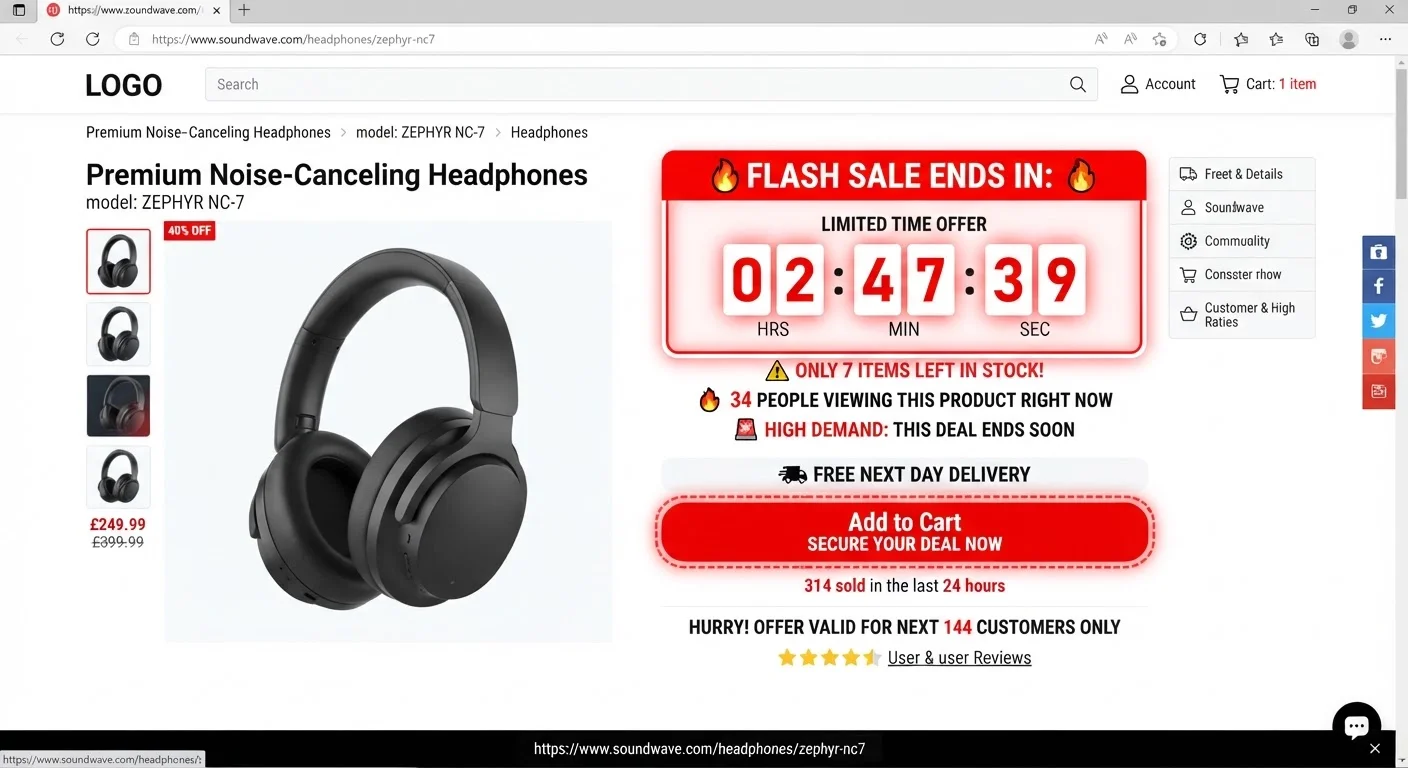
Countdown Timers
Countdown clocks on product pages create artificial scarcity. Most flash deals that "expire" simply refresh or rotate to a comparable item. A timer is a design choice, not a factual statement about inventory. Treat it as a signal to slow down, not speed up.
"Limited Stock" Labels
Stock indicators are frequently used at low thresholds even when warehouses are well-stocked. The specific mechanism varies by retailer, but the pattern is consistent: "Only 3 left!" appears when availability is far higher in practice. If an item has been in stock for weeks at a lower count label, that label stopped being informative the moment it became a permanent fixture.
Bundle Inflation
Black Friday bundles frequently pair a genuinely discounted anchor item with accessories or add-ons priced at near-retail to inflate the perceived value. Always price each component of a bundle separately before concluding the bundle is worth the aggregate price.
Doorbuster Displacement
Doorbuster deals - whether in-store or online - are deliberately positioned to drive traffic and capture surrounding full-price purchases. Studies of shopper behavior consistently show that consumers who enter a store (or landing page) for a loss-leader buy far more than the lead item. The doorbuster exists to get you through the door, not to represent the retailer's best offer across the board.
For a strategic comparison of whether early-access deals or doorbuster formats actually deliver better value for different buyer types, read Early Access vs. Doorbusters: Which Black Friday Strategy Wins.
Urgency Is the Enemy of Verification
Every tactic designed to make you buy faster - countdown timers, low stock warnings, flash deal formats - exists to compress the time between impulse and purchase. The antidote is a pre-built list of researched target items with known price thresholds. When you already know what a fair price is, no urgency tactic can override that data. Without that preparation, you're making decisions under conditions that are deliberately designed to impair your judgment.
Retailer-Exclusive SKUs Cannot Be Price-Compared
A significant share of Black Friday's highest-profile electronics deals involve exclusive model numbers or configurations that exist solely for the sale event. Without a comparable market price, the only baseline is the retailer's own inflated reference price - which tells you nothing about actual value. If a product can't be found in any external price database, you have no way to verify whether the deal is real. Treat exclusivity as a red flag, not a selling point.
What Actually Beats Black Friday
Here's the part most deal coverage skips: Black Friday is not the optimal purchase window for every category, or even most categories. Knowing when to skip it entirely and wait for a better window is a core savings skill.
Categories Where Black Friday Legitimately Wins
- Large-screen TVs (65"+ flagship models): Retailers genuinely compete on these, particularly on prior-year flagship models being cleared for new inventory.
- Gaming hardware and bundles: Console bundles at Black Friday often represent the best value of the calendar year.
- Select headphones and audio gear: Established mid-range models from brands like Sony and Bose consistently hit annual lows around this period.
Categories Where You Should Wait or Shop Elsewhere
- Apparel and footwear: End-of-season and January clearance almost always beats Black Friday pricing. See Clearance Shopping Myths That Are Costing You Better Deals for timing nuances.
- Furniture and bedding: Presidents' Day and Memorial Day weekend historically outperform Black Friday in this category.
- Software and digital subscriptions: Cyber Monday consistently delivers deeper discounts. The Anatomy of a Real Cyber Monday Deal breaks down which software categories see genuine price floors on that day versus inflated offers.
- Kitchen appliances: Category-specific sales events (like Amazon's Prime Day or cookware-specific retailer events) often match or beat Black Friday pricing.
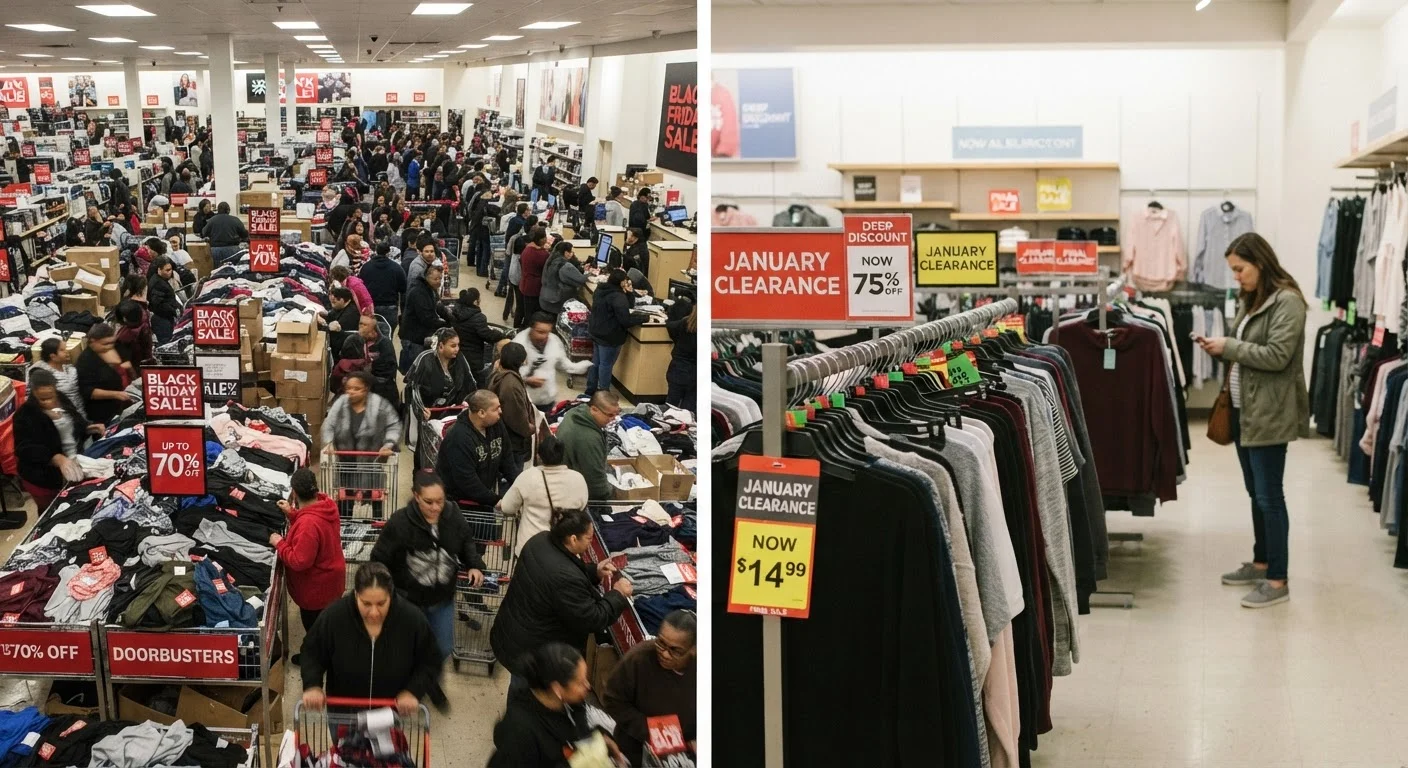
The overarching principle: align your purchase timing to the category's discount cycle, not to the marketing calendar. Black Friday is a great opportunity when it overlaps with a genuine category low - and a waste of time and money when it doesn't.
For a direct comparison of how Black Friday stacks up against Cyber Monday by product type, Cyber Monday Explained: Why Online Deals Hit Different Than Black Friday gives a useful side-by-side view.
Build Your Black Friday Defense System
Putting this all together: the shoppers who come out of Black Friday genuinely ahead aren't the ones who camped outside a store at 4 a.m. or refreshed an app for six hours. They're the ones who did the boring work in advance.
Here's the condensed framework:
- Build your list 4-6 weeks out. Identify the specific items you need - not want, need - and set target prices based on historical data, not retailer list prices.
- Install price-tracking tools now. CamelCamelCamel alerts for Amazon products, Honey or Capital One Shopping for broader retail coverage.
- Know your category calendar. If your target item's best discount window isn't Black Friday, don't force the timing.
- Ignore urgency signals. Countdown timers, stock warnings, and doorbuster framing are marketing instruments, not informational signals.
- Verify before you buy. 30 seconds of price history review is the single highest-ROI action you can take at point of purchase.
Black Friday can be a legitimate savings opportunity - but only if you bring your own data to the table. Retailers have entire teams optimizing the perception of value. Your only counter is information and discipline.
For more strategies on navigating the full holiday sales season without getting burned, explore the Black Friday Tips hub and Cyber Monday Deals hub for curated guidance across both events.
And if you want to understand why the lowest Black Friday price isn't always what it appears to be even when the data looks clean, Why Black Friday Prices Aren't Always the Lowest of the Year covers the structural reasons behind that pattern.