

Key Takeaways
Why Winter Clearance Is Different From Every Other Sale
Most sales are manufactured urgency. Winter clearance is not. Retailers are genuinely motivated to move inventory before spring floor sets arrive, which means the discounting pressure is real and the markdowns compound week over week. That fundamental difference is why clearance shopping rewards a system-oriented shopper far more than Black Friday ever will.
The post-holiday window - roughly December 26 through the end of February - is one of the few times in the retail calendar when the store's interests and your interests are genuinely aligned. They need the shelf space. You need the coat. The only question is whether you execute the timing correctly. As our Winter Clearance Calendar documents, prices don't hit their floor on December 26 - that's actually a relatively early entry point. The deepest cuts typically land three to six weeks later.
If you've ever wondered whether the patience required for clearance shopping actually beats the convenience of buying during a holiday event, the comparison is revealing - clearance frequently wins on discount depth by a significant margin, especially in apparel and home goods.
The Core Practices for Buying Winter Inventory at Rock-Bottom Prices
These aren't general tips - they're operational practices that separate shoppers who get 70% off from those who get 30% off on identical items. Each one addresses a specific failure point in the clearance shopping process.
Track item prices for 60-90 days before the clearance window opens.
Retailers occasionally inflate "original" prices before marking items down, making a modest discount look dramatic. A 90-day price history reveals the true baseline and confirms whether a clearance price is genuine. Without this data, you're trusting the retailer's math.
Set a firm markdown threshold before entering any clearance environment.
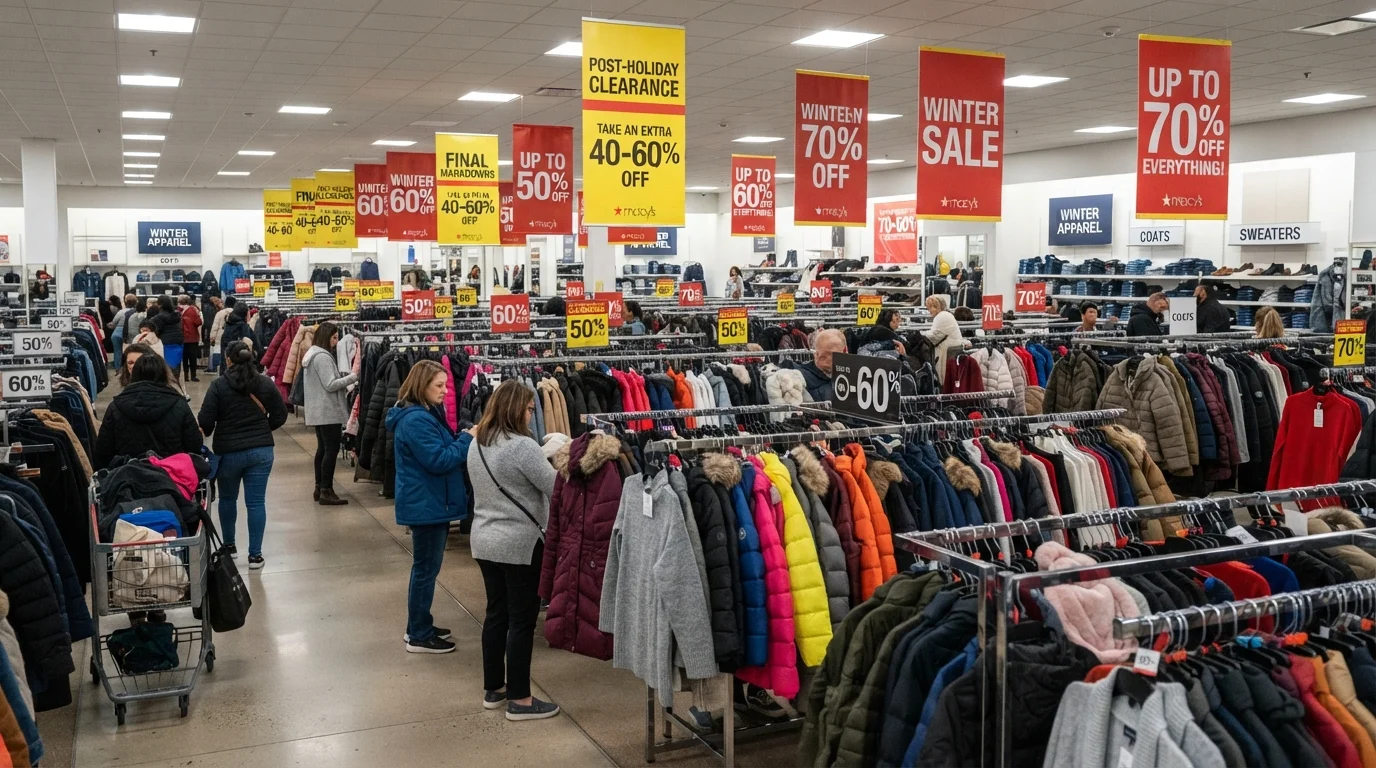
Without a predetermined discount floor, the visual cues of a clearance section - red tags, percentage-off signs - create their own urgency. A firm rule (e.g., "I buy only if it's 50% off or more") protects you from buying items at 20-30% off that will reach 60-70% off in three weeks.
Shop with a size-inclusive list rather than a single target item.
Clearance inventory is inherently incomplete. If you enter looking for only one specific coat in size Medium, you'll frequently leave empty-handed. A list that includes acceptable alternatives - different colorways, adjacent sizes if fit allows, or similar styles from different brands - dramatically increases your hit rate without inflating your budget.
Layer cashback portals on top of clearance prices before every online purchase.
Clearance pricing and cashback are not mutually exclusive, but most shoppers don't think to activate a portal when buying sale items. The additional 2-8% cashback on top of a deep discount compounds meaningfully, especially on big-ticket categories like outerwear and bedding.
Verify return policies for clearance items before completing the purchase.
Many retailers restrict or eliminate return windows for clearance merchandise. Buying a clearance item without checking the return policy is accepting blind risk - especially for items like outerwear or footwear where fit is critical. A non-returnable item that doesn't fit is not a deal.
Check in-store and online clearance pricing independently before buying either.
Retailers frequently run different markdown depths across channels due to inventory management differences. An item marked 40% off in-store may be 55% off online (or vice versa). Assuming parity without checking leaves money on the table on nearly every clearance purchase.
Prioritize future-need planning over present-moment impulse when scanning clearance racks.
The mental trap of clearance shopping is buying what's discounted rather than what you need. A disciplined shopper enters with a pre-built list of genuine upcoming needs - next year's outerwear, winter home goods, holiday décor - and filters every item through that lens. This prevents storage clutter and buyer's remorse from masquerading as savings.
Timing Your Entry: When to Wait and When to Move
The single most common mistake in clearance shopping is moving too early. Stores begin marking items 20-30% off immediately after Christmas. That is not the floor. Retailers have a predictable markdown cadence - typically 10-15 additional percentage points every one to two weeks until inventory is gone or the season turns.
70%+
Maximum discount depth on winter apparel clearance
Industry markdown data consistently shows outerwear and cold-weather apparel reaching 65-75% off during the final weeks of winter clearance, typically mid-to-late January.
3-6 weeks
Time from initial clearance to price floor
Retail markdown cadence data shows most major retailers require three to six weeks post-holiday to reach their deepest clearance discount on seasonal inventory.
2-8%
Additional cashback available on top of clearance prices
Leading cashback portals including Rakuten and TopCashBack typically offer 2-8% on major department store and retail purchases, stackable with existing clearance discounts.
The practical implication: if you can tolerate some size or color risk, holding out until late January or early February on apparel typically yields 50-70% off. If you need a specific size or colorway, you'll need to weigh that against waiting. Use a wish list to track whether your exact item is still in stock, not whether a similar item exists.
Category matters enormously here. Electronics tied to holiday releases don't follow the same pattern as outerwear. For a full breakdown of how clearance timing differs by product type, this category-by-category markdown guide is the most precise resource available.
Use a Size-Scarcity Timeline
Popular sizes (Medium in apparel, 9-11 in shoes) sell out weeks before uncommon sizes. If you're a mid-range size, move earlier in the clearance window - accept a slightly smaller discount in exchange for availability. If you're a less common size, you can often wait longer and capture deeper markdowns on identical remaining inventory.
Set a Weekly Check-In Rather Than Daily Browsing
Checking clearance prices daily creates decision fatigue and increases impulse buying risk. A once-weekly check-in - same day, same time - gives markdowns time to accumulate while keeping your buying decisions deliberate. Most retailers update clearance pricing on a weekly cycle anyway, so daily checks rarely surface new information.
For home goods - seasonal décor, throw blankets, holiday-adjacent items - late January is often the true floor. These items sit longer because fewer people impulse-buy a fireplace screen in February, which means retailers discount harder to clear them out.
Stacking Savings: Clearance Prices Are a Starting Point, Not the Finish Line
A 60% clearance tag is an excellent base. It is not your final price if you're shopping strategically. The best clearance hauls combine the in-store or online markdown with at least two additional layers of savings.
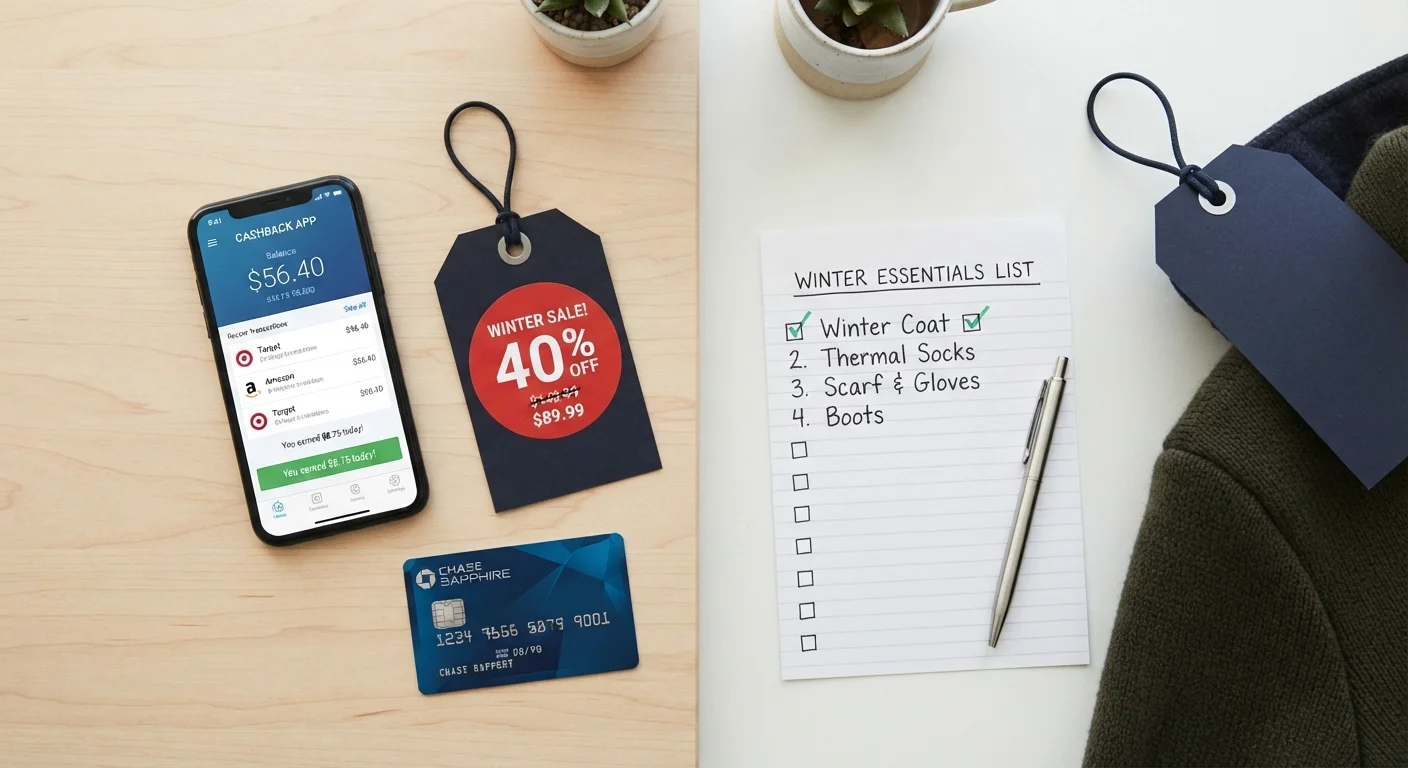
The most reliable stack in 2024-2025 looks like this: clearance price + portal cashback + credit card category bonus. If you're buying from a major retailer online, routing through a cashback portal (Rakuten, TopCashBack, or similar) adds 2-8% on top of the clearance discount. Pairing that with a credit card that earns elevated rewards on department store or online purchases adds another 2-5%. On a $200 coat at 65% off ($70 final price), those layers recover an additional $7-12 in cashback - not transformative, but it's money left on the table otherwise.
The other stack worth knowing: store-issued clearance coupons. Some retailers, particularly department stores, distribute additional percentage-off coupons that explicitly apply to clearance merchandise. These are rare but real. Sign up for retailer email lists and loyalty programs before the clearance window opens - they're the distribution channel for these coupons.
Cashback Portals and Clearance Items
Some retailers exclude clearance or sale items from cashback portal eligibility - check the portal's terms for the specific retailer before assuming the cashback applies. Most major portals list category or item exclusions clearly in the retailer's portal page. When in doubt, check before you click through, not after checkout.
Annual Planning Reduces In-Season Decision Load
Shoppers who build their clearance target list in October - before the holiday rush distorts their judgment - consistently make better buying decisions than those who build the list mid-clearance. When you're surrounded by discount signage, everything looks like a need. A pre-built list anchors you to actual priorities. Revisit the list once before the clearance window opens to verify nothing has changed.
One habit worth building before any clearance season: configure price-drop alerts for your target items while they're still full price. By the time clearance begins, you'll have a baseline and can verify you're actually seeing a discount versus an inflated "original" price. Setting up those alerts correctly takes about 15 minutes and pays dividends throughout the season.
Avoiding the Traps That Cost Clearance Shoppers Money
Winter clearance has reliable pitfalls that trip up even experienced shoppers. Recognizing them in advance keeps your budget intact.
The Restocking Trap
Retailers occasionally restock clearance items mid-season - particularly online, where inventory visibility is tighter. If you see an item come back in stock that was previously sold out, don't assume it's newly reduced. Check the price against your tracked history. Restocked units sometimes carry the pre-clearance price or an earlier markdown, not the current floor price.
The "Clearance" Labeling Trap
Not everything on a clearance rack is a genuine deal. Some retailers route slow-moving full-price merchandise onto clearance fixtures with minimal price reduction. Always verify the clearance price against a 90-day price history for online purchases. For in-store items, a quick mobile search for the item's current price across competing retailers takes 30 seconds and prevents overpaying.
The Over-Buying Trap
Low prices make everything look like a good investment. Before adding a clearance item to your cart, apply one filter: would you have bought this at full price? If the answer is no, the clearance price is not turning a bad purchase into a good one - it's making a bad purchase cheaper. Storage costs, clutter, and the mental overhead of managing things you don't need are real costs that don't appear on the receipt.
“The customer who wins at retail is not the one who responds fastest to marketing - it's the one who shows up with a plan when the retailer runs out of patience with their own inventory.”
— Paco Underhill, Retail environment researcher and author of 'Why We Buy'
For shoppers who want a structured pre-shopping checklist, the approach covered in this end-of-season shopping checklist - originally written for summer clearance but applicable to any season - prevents the most common buying errors before they happen.

Channel Strategy: Where to Shop for Winter Clearance
Online and in-store clearance aren't interchangeable. Each has structural advantages you should exploit rather than ignore.
In-store clearance advantages: You can assess condition directly (clearance items sometimes show handling wear), try before you buy, and avoid return shipping complications. Physical racks also surface items that didn't make it online - particularly in home goods and apparel, where inventory management between channels is imperfect.
Online clearance advantages: Price comparison is instant, inventory across locations is aggregated, and you can filter by your exact size or specification. Online clearance also tends to run deeper discounts later in the season because the retailer can see precisely what's left across all locations and price accordingly.
The strategic move is to use both: browse online to identify what's available and at what price, then buy online or use the online price as a negotiating baseline in-store (many retailers will match their own website price). For a detailed breakdown of how each channel performs during the post-holiday window, this department store vs. online outlet comparison covers the tradeoffs precisely.
Building a Repeatable System for Next Year (Starting Now)
The shoppers who consistently win at winter clearance don't rely on luck or memory. They run a lightweight system that costs maybe two hours of setup per year and pays off with compounding savings across multiple seasons.
The system has three phases:
- Pre-season list building (October-November): Identify what you'll genuinely need in the coming year - outerwear, boots, winter bedding, holiday décor, etc. Note your sizes, preferred styles, and maximum price you'd pay at full retail. This list becomes your clearance shopping filter.
- In-season price tracking (November-December): Set price alerts for your target items while they're full price. This establishes an authenticated baseline and alerts you the moment prices drop. Tools like CamelCamelCamel (for Amazon), Honey, and Google Shopping alerts each cover different retail ecosystems.
- Clearance execution (late December-February): Work your list, not the rack. Check in weekly on tracked items. Move when price and availability intersect at your target threshold - not because a sale sign is present.
This approach connects directly to a broader principle: timing beats discounting tactics in almost every retail category. The shoppers paying the most for winter gear are the ones buying it in November. The ones paying the least are the ones who planned in October and bought in February.

If you want to extend this system beyond winter, the same logic applies to every clearance cycle throughout the year. The Clearance Cycles hub maps the full retail calendar so you can apply this approach to summer, back-to-school, and fall inventory as well.
Cashback Portals and Clearance Items
Some retailers exclude clearance or sale items from cashback portal eligibility - check the portal's terms for the specific retailer before assuming the cashback applies. Most major portals list category or item exclusions clearly in the retailer's portal page. When in doubt, check before you click through, not after checkout.
Annual Planning Reduces In-Season Decision Load
Shoppers who build their clearance target list in October - before the holiday rush distorts their judgment - consistently make better buying decisions than those who build the list mid-clearance. When you're surrounded by discount signage, everything looks like a need. A pre-built list anchors you to actual priorities. Revisit the list once before the clearance window opens to verify nothing has changed.