

Key Takeaways
The Myth Machine Behind Black Friday
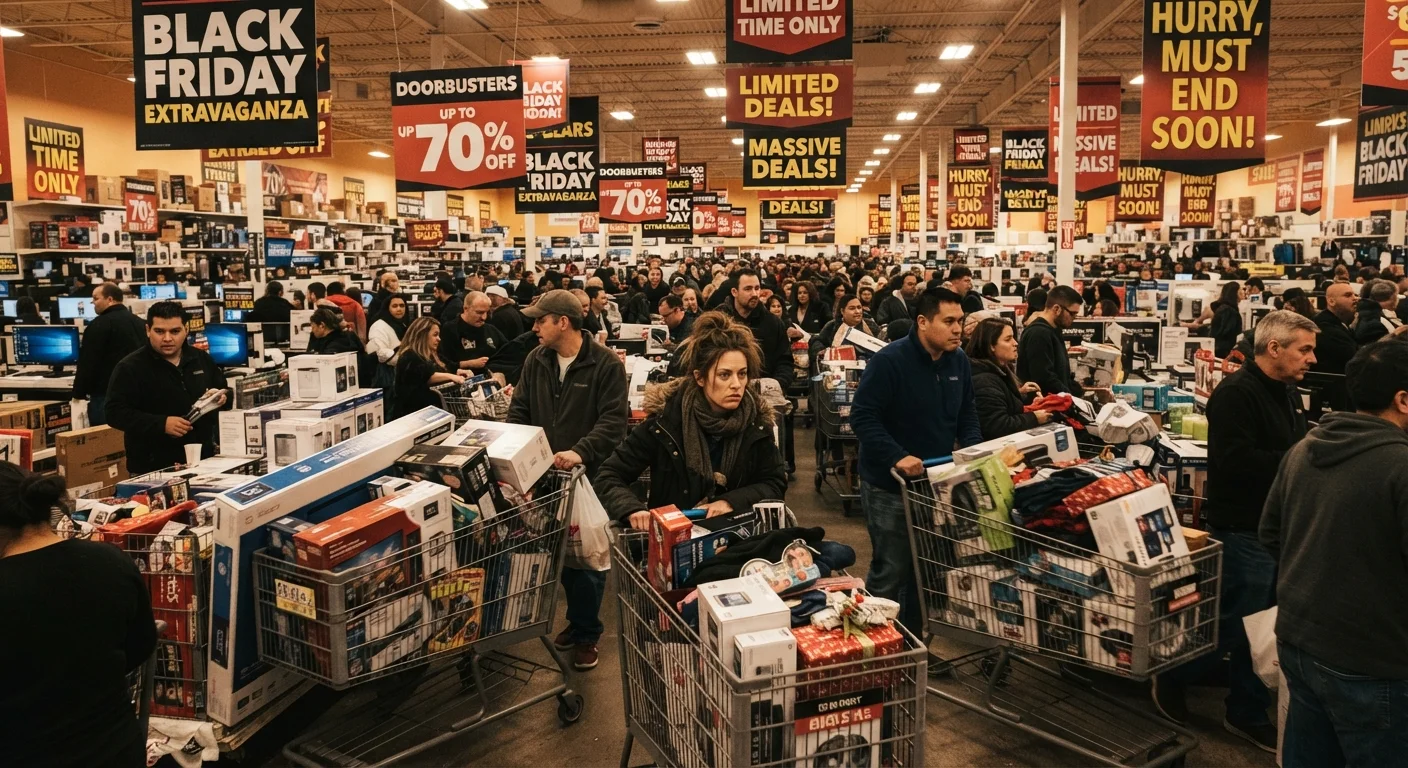
Black Friday has become the most heavily marketed shopping event in American retail, and that marketing has done its job almost too well. Consumers broadly believe that the Friday after Thanksgiving represents a singular opportunity - the one window when prices drop to their absolute floor. Retailers have spent decades reinforcing this belief because it drives foot traffic, clears inventory, and captures consumer spending before alternative options can be considered.
The reality is more complicated. A growing body of consumer research, price-tracking data, and regulatory scrutiny has confirmed what deal hunters have known informally for years: Black Friday prices are often good, sometimes excellent, but rarely the lowest prices a product will see across a twelve-month period. The hype is real; the primacy of the discount frequently is not.
This article works through the most persistent Black Friday pricing myths using price data, retail industry patterns, and practical verification methods. The goal isn't to convince you to skip Black Friday - it's to give you the framework to determine, in real time, whether a specific deal is worth acting on.
For a broader look at how holiday sale timing compares across the calendar, see the full retail pricing calendar broken down by category. And if you want companion reading on the myths that cost shoppers money year after year, this breakdown of holiday sale myths is worth bookmarking.
Common Black Friday Myths - Corrected
Below are the most damaging misconceptions about Black Friday pricing, each paired with the factual correction and a practical explanation of what the data actually shows. Use these as a mental checklist the next time you're standing in front of a "doorbuster" tag.
Myth
Black Friday has the lowest prices of the year across all product categories.
Fact
Black Friday delivers category-specific discounts, not universal price floors. Many product categories hit their lowest prices at other points in the year.
The idea that Black Friday is a blanket lowest-price event is the foundational myth that every other misconception builds on. Price-tracking data consistently shows that while certain categories - particularly televisions and consumer electronics - do see genuine Black Friday lows, many others do not. Winter apparel often hits its floor price in January clearance. Major appliances tend to be cheapest in September and October when new model years arrive. Mattresses see their deepest discounts around Memorial Day and Labor Day.
A 2022 analysis by consumer advocacy group Which? found that in over 60% of product categories tracked, the same items were available at lower prices at some point in the preceding six months. The expectation that one date on the calendar represents the universal best time to buy is a marketing construct, not a market reality.
Myth
The "original price" shown next to the sale price is what the item normally costs.
Fact
Reference prices are frequently inflated ahead of Black Friday to make the discount appear larger - a practice documented by the FTC and multiple state attorneys general.
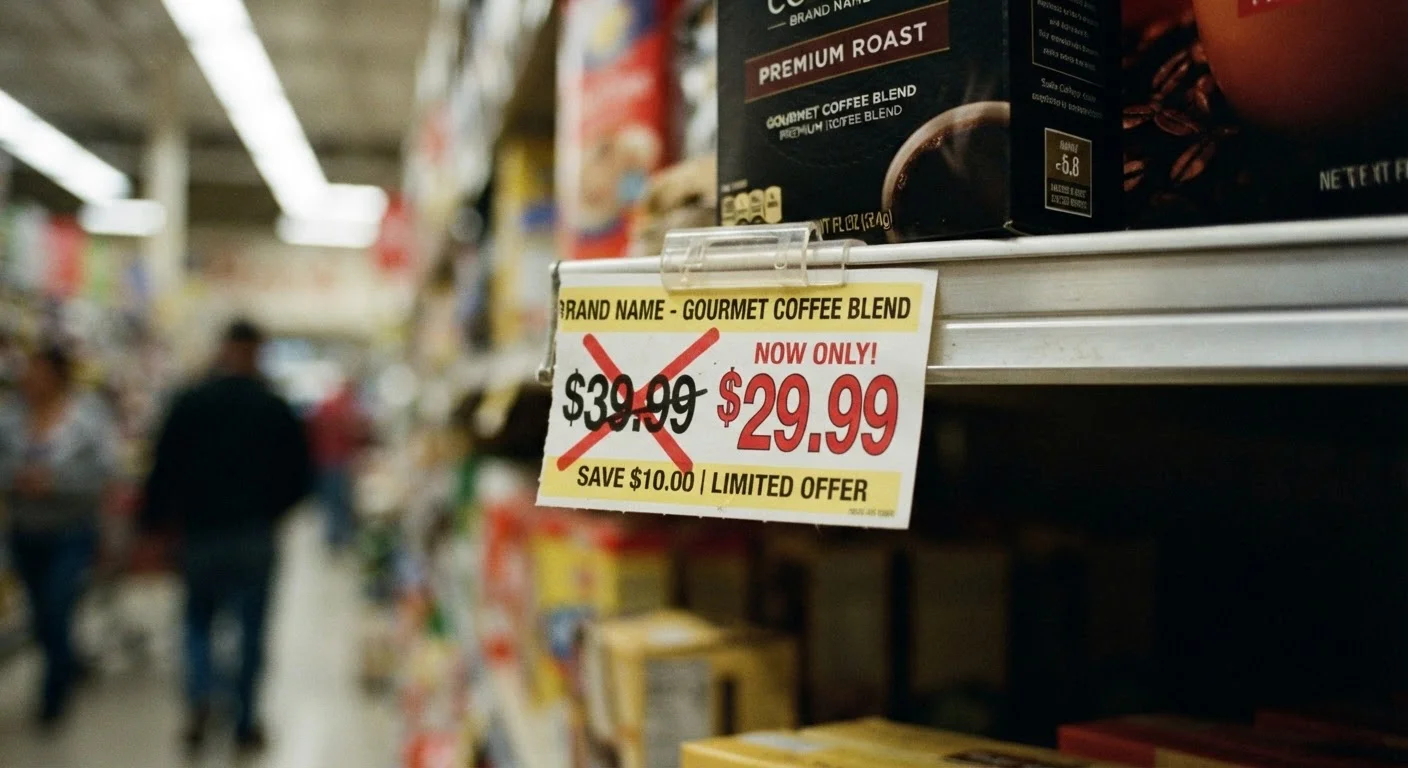
This is arguably the most financially damaging Black Friday myth because it operates invisibly. A product listed at "$599.99, now $299.99" implies a $300 savings - but that math only holds if $599.99 was ever the real market price. In documented cases reviewed by consumer protection regulators, retailers have raised prices in the weeks before Black Friday specifically to manufacture a larger apparent discount when the "sale" launches.
The Federal Trade Commission's pricing guides prohibit deceptive reference pricing, but enforcement is inconsistent and complaints-driven. The practical defense is price-tracking: tools like CamelCamelCamel (for Amazon products) and Keepa maintain historical price logs that show you what the item actually sold for over the past 12-24 months. If the "original price" never existed in the price history, you're looking at a manufactured discount.
[in_content_images:2]This tactic is not limited to Black Friday - Cyber Monday deals use the same reference price inflation as a core mechanism, which is why price history verification should be a year-round habit.
Myth
Doorbuster deals are available to anyone willing to show up.
Fact
Doorbusters are deliberately stocked in extremely limited quantities, often as few as three to five units per store location, making them functionally inaccessible to most shoppers.
The term "doorbuster" tells you exactly what the promotion is designed to do: get bodies through the door. The actual product being advertised at the extreme discount is secondary. Former retail employees and internal retail planning documents that have surfaced in legal proceedings confirm that doorbuster quantities per location are intentionally minimal - often single digits for large stores.
The functional effect is that the doorbuster generates advertising reach and store traffic while remaining financially marginal for the retailer. Shoppers who arrive too late for the doorbuster (the overwhelming majority) are already in the store and psychologically primed to purchase. Conversion rates on non-doorbuster items among shoppers who arrived seeking the doorbuster are reliably higher than baseline. It's a traffic-generation mechanism dressed as a pricing event.
The actionable takeaway: if a specific doorbuster item is genuinely what you want and it is actually at a historically low price, factor the probability of availability into your decision. If you arrive and it's gone, have a pre-decided walk-away plan rather than pivoting to adjacent products you didn't intend to buy.
Myth
"Limited time" countdown timers mean the deal will genuinely disappear when the clock hits zero.
Fact
Most countdown timers on retail sites are cosmetic pressure tactics; the same price frequently persists after the timer expires or resets.
Countdown timers trigger a well-documented psychological response called scarcity pressure, which measurably reduces the time consumers spend on price comparison and increases impulse purchase rates. Online retailers have known this for well over a decade and deploy timers as a standard conversion-rate optimization tool - not as a literal representation of pricing logistics.
A straightforward test: open the product page in a private browsing window after the timer expires. In the majority of cases, the timer has reset or the price is unchanged. In cases where the price does change, it frequently moves to a different promotional price rather than reverting to a higher baseline. The urgency is engineered, not emergent.
[important_callout]This doesn't mean all time-limited Black Friday offers are fake - genuine flash sales exist, particularly on brand-controlled storefronts. But the default assumption should be skepticism, not panic compliance. If a deal requires you to act before you've had time to verify the price history, the right answer is almost always to wait thirty minutes and check.
Myth
Buying on Black Friday guarantees you won't need to price-match or return later.
Fact
Many retailers extend price-match guarantees through the end of December, meaning a lower post-Black Friday price entitles you to a refund of the difference.
Most major US retailers - including Target, Best Buy, Walmart, and Amazon - maintain holiday price-match policies that cover purchases made in November and extend the standard protection window through December 25 or later. This means that buying on Black Friday does not close your exposure to a better price appearing in December.
The practical implication is that Black Friday purchases should be tracked after the fact, not just before. Set a price alert on items you've already purchased. If the price drops below what you paid, contact the retailer's customer service - in most cases a chat or phone interaction will result in a credit to your original payment method for the difference, without requiring a return and repurchase.
This also reframes the urgency question: even if a Black Friday deal is marginally better than current pricing, you are not locked in to that price permanently. The floor may not have been reached yet, and the retailer's own policy gives you a mechanism to capture the lower price retroactively.
[in_content_images:3]Myth
Online Black Friday prices are better than in-store, or vice versa.
Fact
Pricing between online and in-store is often identical for the same retailer, but exclusive deals do exist in each channel - the channel advantage depends on the specific product and retailer.
The online-vs-in-store debate generates a lot of shopping advice that is confidently wrong in both directions. The truth is retailer-specific and sometimes SKU-specific. Some chains deliberately differentiate their online and in-store Black Friday offers to drive traffic to whichever channel they're trying to strengthen. Others maintain strict channel parity. A handful create "in-store only" doorbusters specifically to drive foot traffic while reserving online-exclusive deals to boost their e-commerce metrics.
The verification approach here is parallel comparison: check the retailer's website and app against their in-store weekly circular on the same product, by model number. Do not assume either channel is inherently better. For electronics in particular, in-store "open box" deals - refurbished or returned units - often undercut both listed online and in-store prices by 15-30% and are not always advertised online.
For comprehensive Black Friday navigation strategy, the Black Friday tips hub covers channel-specific tactics and preparation timelines in detail.
The Price History Verification Toolkit
Knowing that Black Friday myths exist is only half the work. The other half is building a verification habit that takes less than two minutes per product and dramatically reduces the chance you'll pay more than you should.
Step 1: Install a price-history browser extension
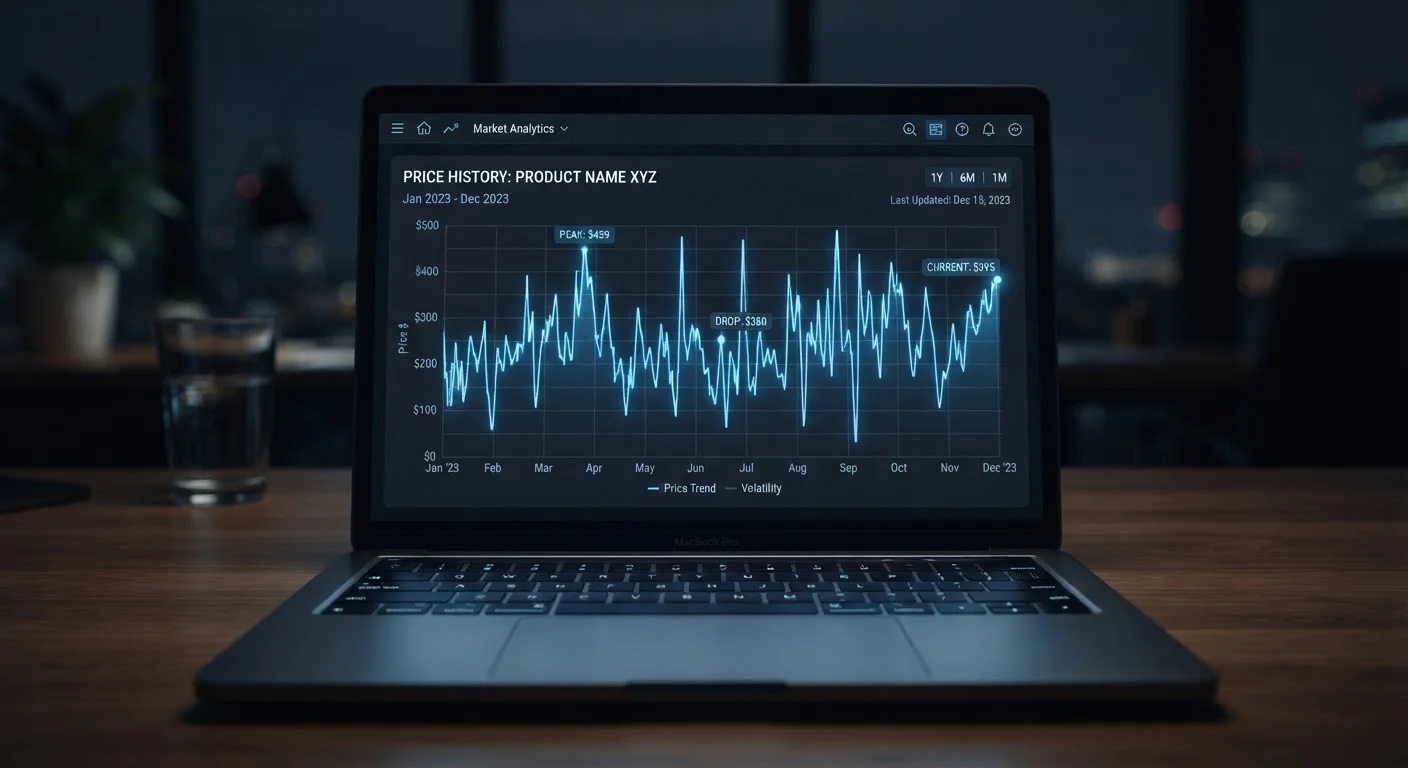
Tools like CamelCamelCamel (for Amazon), Keepa, and Honey's price history feature attach directly to product pages and display a chart of price movements over the past 12-36 months. Before you treat any Black Friday price as a deal, pull up that chart. If the current "sale" price is higher than the 90-day average, you're not looking at a discount - you're looking at a reference price manipulation.
Step 2: Build your watchlist before November 1
Add every item you're considering to a price-alert watchlist at least 60 days before Black Friday. This gives you a reliable baseline. If a retailer inflates prices in mid-October - a documented and common practice - your watchlist will show you the pre-inflation number, making the "discount" immediately visible as manufactured.
Step 3: Compare across channels simultaneously
During Black Friday week, use Google Shopping to pull prices from every major retailer for the exact product (matched by SKU or model number). Retailers frequently price-match during this period but won't advertise that fact. Knowing that a competitor is $40 cheaper gives you instant leverage - either to shop elsewhere or request a match.
60%+
Black Friday items cheaper at other times of year
A Which? consumer analysis found that more than 60% of tracked products were available at lower prices at some point in the six months preceding Black Friday.
~5
Average doorbuster units per store location
Retail planning disclosures and former employee accounts suggest many doorbuster items are stocked in single-digit quantities per physical location.
30%
Shoppers who check price history before buying
A NerdWallet survey found that fewer than one-third of Black Friday shoppers verify a product's price history before making a purchase decision.
2-6 weeks
How early retailers inflate reference prices
Consumer watchdog investigations have documented retailers raising prices 2-6 weeks before Black Friday to manufacture larger apparent discounts at launch.
$100+
Median overspend vs. January clearance on apparel
Price tracking data from Camelizer and similar tools shows winter apparel purchased on Black Friday typically costs $100+ more per item than January clearance pricing.
Step 4: Know your category's actual discount window
Different product categories have different seasonal low points. TVs often do hit genuine lows around Black Friday because manufacturers release updated models in January and retailers need to clear older inventory. But winter apparel doesn't hit its floor until January clearance. Mattresses are discounted more aggressively around Memorial Day and Labor Day. Major appliances tend to drop hardest in September and October when new model-year products arrive. See how Black Friday compares to end-of-season sales by category for a detailed breakdown.
When Black Friday Deals Are Genuinely Worth It
This article is not an argument to avoid Black Friday - it's an argument to approach it with calibrated expectations. There are real deals to be found, concentrated in specific categories and types of products.
TVs and displays
This is the category where Black Friday discounts are most consistently legitimate. The model-year cycle in consumer electronics is predictable: new panels launch at CES in January, flow into stores by spring, and older inventory must be cleared by year-end. Retailers have genuine margin pressure to move these units. A 55-inch 4K TV at a significant percentage off its spring launch price is often a real discount - verify it with price history, but don't be surprised when the chart confirms it.
Laptops - with caveats
Laptop deals on Black Friday are real but inconsistent. The genuine discounts are usually on specific configurations that are being discontinued or replaced. The risk is that retailers introduce "Black Friday exclusive" bundles with accessories you don't need, inflating the apparent value. Strip out the bundle and price the core unit alone before evaluating.
Small kitchen appliances and smart home devices
These categories see meaningful Black Friday movement, particularly for brand-owned products (Amazon Echo, Instant Pot, iRobot) where the manufacturer controls pricing and can set genuine promotional windows. First-party discounts from manufacturers are almost always real; third-party markups on those same products are not.
Bundle Deals Often Hide the Real Unit Price
Retailers frequently package Black Friday electronics deals with accessories, extended warranties, or gift cards to obscure the true cost of the core product. Before evaluating any bundle, price the main item alone using a price tracker. If the core item is at or above its non-sale price, the bundle is not a deal - it's an upsell in discount clothing.
"Exclusive" Black Friday SKUs Prevent Price Comparison
Some retailers sell products under model numbers that exist only for Black Friday, making direct price comparisons with other retailers or price history databases impossible. If a model number returns zero results on price-tracking sites or Google Shopping, treat that as a red flag. Demand the manufacturer's universal model number and search for that instead.
Post-Black Friday Regret Is a Return-Window Problem
Many retailers shorten their return windows during the holiday season or exclude Black Friday purchases from extended holiday return policies. Before purchasing, confirm the return and price-match policy explicitly - don't assume standard terms apply. A deal that cannot be returned or price-matched after December 1 carries more risk than its discount justifies.
For a parallel analysis of how Cyber Monday compares - a sale event with its own mythology and manipulation tactics - see the anatomy of a real Cyber Monday deal. The tactics retailers use are nearly identical, but the product categories that perform best differ. You can also explore the full Cyber Monday deals hub for additional guidance on navigating that sale period.
Building a Black Friday Strategy That Survives Contact With the Store
The gap between knowing these myths and acting differently in the moment is where most shoppers lose money. Retail environments - both physical and digital - are optimized specifically to collapse the time between impulse and purchase. Countdown timers, "only 3 left" banners, and push notifications from apps are not informational tools; they are pressure mechanisms.
A practical Black Friday strategy has three properties: it's built before you walk in (or log on), it's anchored to specific price targets rather than discount percentages, and it has a default answer of "no" for anything not on the pre-approved list.
- Set a price target, not a discount threshold. "I want to pay $280 for this monitor" is actionable. "I'll buy it if it's 30% off" is gameable by the retailer through reference price inflation.
- Assign a purchase decision to each item in advance. Buy at target price: yes. Above target price: walk away and check again in January. Below target: buy immediately and stop comparing.
- Use the Black Friday tips hub as a pre-season preparation checklist rather than a same-day resource. The shoppers who do best on Black Friday do the work in October.
Urgency Is the Retailer's Greatest Weapon
Every element of Black Friday - the date specificity, the countdown timers, the "limited stock" warnings, the early-access email campaigns - is engineered to make you feel that pausing to verify is costly. It is not. A thirty-second price history check has saved consumers hundreds of dollars on individual purchases. The deal that is genuinely worth taking will survive the time it takes you to confirm it's real. If a price disappears before you can verify it, that is not a loss - that is the system working correctly.
Know Which Categories to Skip on Black Friday
Furniture, winter apparel, gym equipment, and jewelry consistently underperform on Black Friday relative to their seasonal discount windows. Buying these categories in November because they carry a "sale" tag means paying more than January, February, or end-of-season clearance would require. The opportunity cost of an early purchase in these categories is measurable - often 20-40% of the item's price. If you're drawn to a non-electronics category during Black Friday, default to waiting unless your price-tracking data confirms it's a genuine historical low.
Finally, resist the gravitational pull of categories where Black Friday legitimately underperforms. Winter clothing, furniture, gym equipment, and jewelry all have better discount windows. Buying a coat on Black Friday because it's "on sale" when January clearance will put it at 60-70% off is a real, quantifiable mistake - not a conservative hypothetical.
The full guide to Black Friday myths that cost real money covers additional psychological traps and category-specific patterns worth reviewing before the season starts.