

Key Takeaways
Summary
28 items · 20-40 minutes
Why End-of-Summer Clearance Is One of the Most Underrated Sale Windows
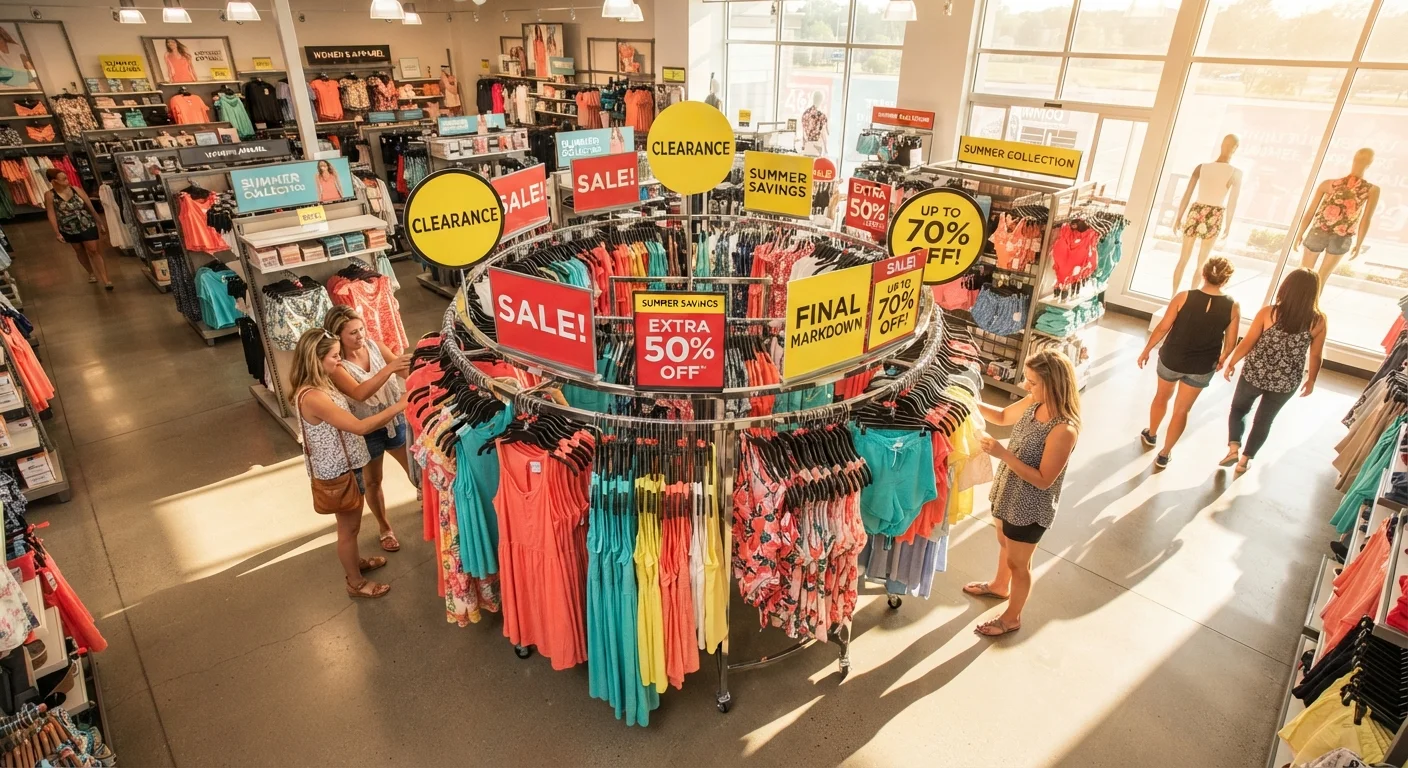
Most shoppers are programmed to wait for Black Friday. That's a mistake - at least for certain categories. End-of-summer clearance is a quieter, less competitive window that regularly produces deeper discounts than November's headline events. Retailers are under genuine inventory pressure: they cannot carry summer stock through winter without taking a cost hit on warehousing and write-downs, so they cut aggressively to move units. That urgency works in your favor.
The window itself is tighter than people assume. True clearance - not a "sale" but actual markdown-to-move pricing - typically kicks in during the last two weeks of July and accelerates through August. By mid-September, the best sizes and configurations are gone and the racks are picked over. Shoppers who arrive in October looking for deals find only what nobody else wanted.
Understanding this cycle is the foundation of buying smart. For a deeper look at how summer clearance compares to holiday events by category, see how end-of-season sales stack up against Black Friday. The short version: seasonal clearance often wins on outdoor furniture, apparel, and appliances - categories where holiday deals are surprisingly thin.
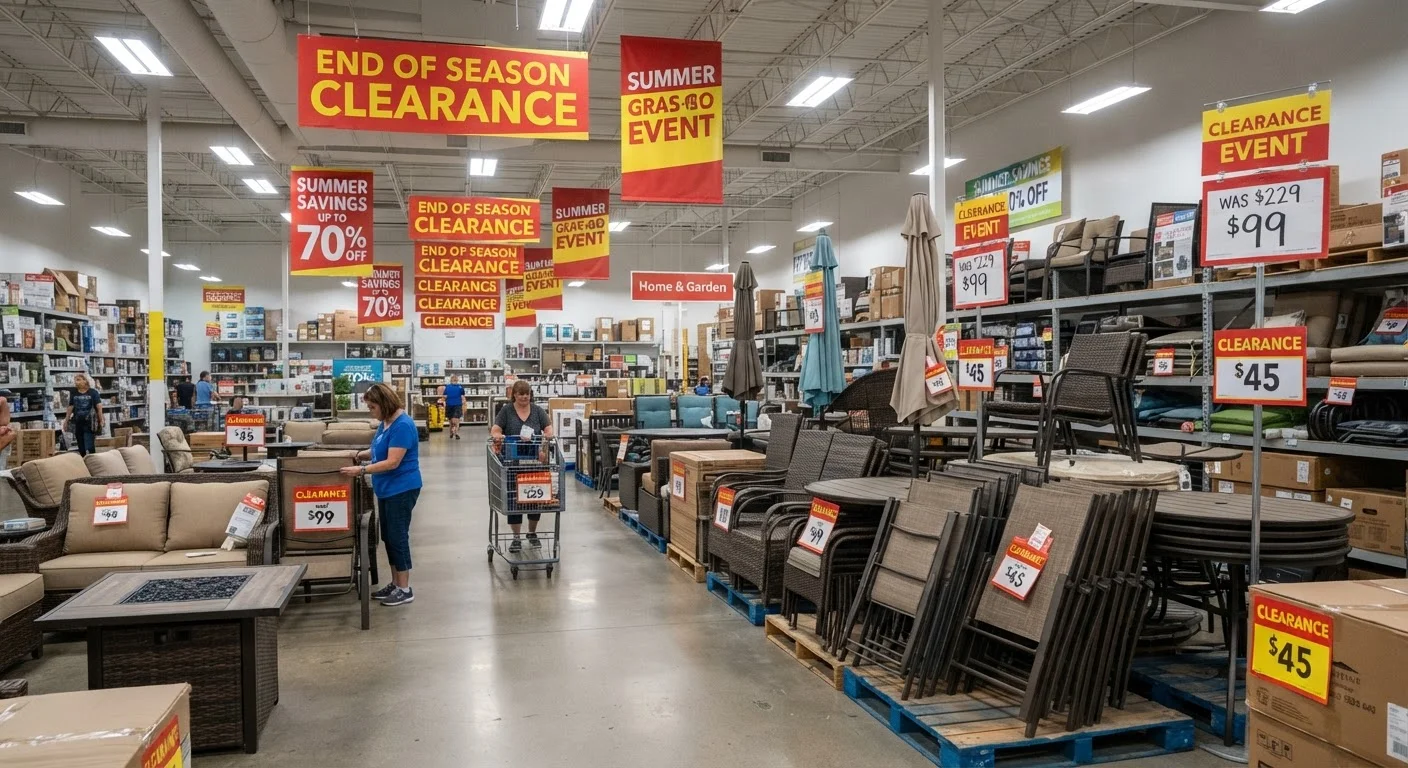
The checklist below is organized to move you through the process systematically - from prep work before you shop, to in-store and online execution, to the post-purchase steps that lock in your savings. Work through it category by category rather than all at once, and you'll avoid the scattered approach that leads to impulse buys and missed opportunities.
Tools You'll Need Before You Start
Clearance shopping without the right tools is like navigating without a map - you might get somewhere, but you'll waste time and miss turns. Set these up before the season winds down, not after you're already standing in an aisle.
CamelCamelCamel
Tracks Amazon price history so you can verify whether a clearance price is genuinely lower than the item's historical average.
Honey (browser extension)
Automatically tests coupon codes at checkout and tracks price drops on saved items across major retailers.
Rakuten (formerly Ebates)
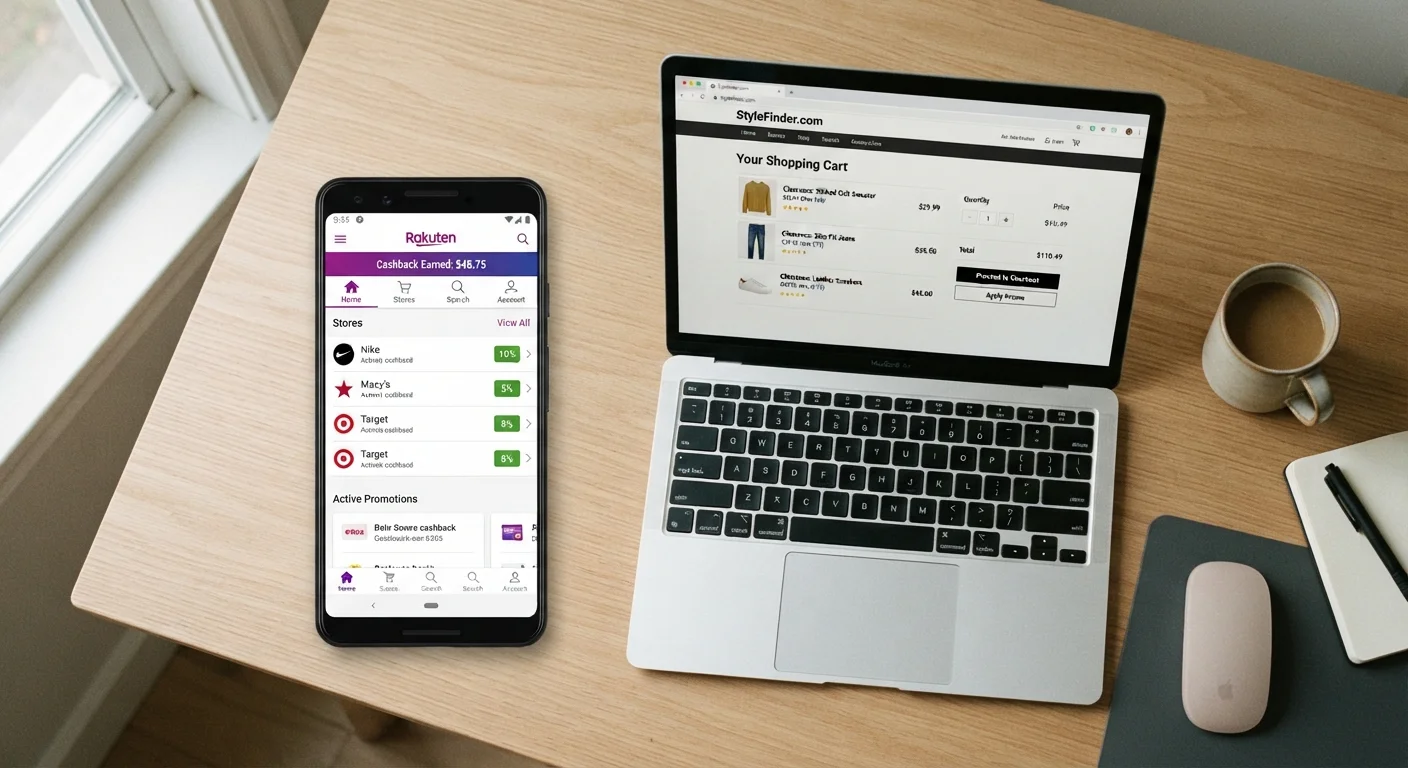
Activates cashback on purchases at thousands of retailers - stack this with clearance prices to push effective savings higher.
Google Shopping
Provides a quick cross-retailer price comparison for any item, helping you confirm whether a clearance price is genuinely competitive.
TopCashBack
Alternative cashback portal that sometimes offers higher rates than Rakuten on specific retailers - worth checking both before clicking through.
Flipp (app)
Aggregates weekly sales flyers from major retailers so you can spot clearance events and compare offers without visiting multiple store websites.
Store loyalty account (retailer-specific)
Unlocks member-only clearance pricing, bonus points events, and early access to markdown resets at participating chains.
A note on browser extensions: install them on the device you actually shop from. If you browse on mobile but checkout on desktop, you need coverage on both. Many shoppers set up price tracking on a laptop but forget to activate cashback on their phone - that's money left behind on every mobile purchase.
The Complete End-of-Summer Clearance Checklist
Work through each group in order. Preparation steps done in advance make the execution steps faster and less prone to impulse decisions. If you're targeting specific categories, cross-reference with the summer blowout category breakdown to understand which departments typically hit peak markdown depth and when.
Preparation (Do Before You Shop)
Timing and Markdown Tracking
In-Store and Online Execution
Savings Stacking
Post-Purchase Follow-Through
Clearance Returns Are Often Final Sale
Many retailers restrict or completely eliminate return rights on clearance-priced merchandise. Before you purchase, confirm the exact return policy - especially for large items like furniture, appliances, or electronics. If the item is defective or incomplete, your options may be limited to an exchange rather than a refund, and some stores won't offer even that on marked clearance goods.
Don't Overbuy Just Because the Price Is Low
End-of-season clearance can trigger impulse buying disguised as smart shopping. A 70%-off price on something you don't need is still money spent, not saved. Before adding any clearance item to your cart, check it against your pre-built priority list. If it's not on the list, give yourself a 24-hour wait period before purchasing.
Size and Inventory Drop Fast - Don't Wait Too Long
Popular sizes in apparel and high-demand SKUs in outdoor equipment sell out quickly once clearance pricing goes live. Waiting an extra week for a marginally deeper markdown often means losing your size or configuration entirely. If an item meets your price threshold today, buying it is usually better than gambling on deeper cuts with no stock guarantee.
After you've cleared the checklist, your post-purchase actions matter just as much as the purchase itself. Filing cashback claims, registering products for warranty, and storing your receipts take less than ten minutes but protect and amplify every dollar you saved.
How to Read Markdown Tags and Decode Clearance Pricing
Not all clearance tags are created equal. Retailers use color-coded systems, percentage stickers, and price-point thresholds that signal where an item is in its markdown cycle - if you know how to read them.
Color-Coded Tag Systems
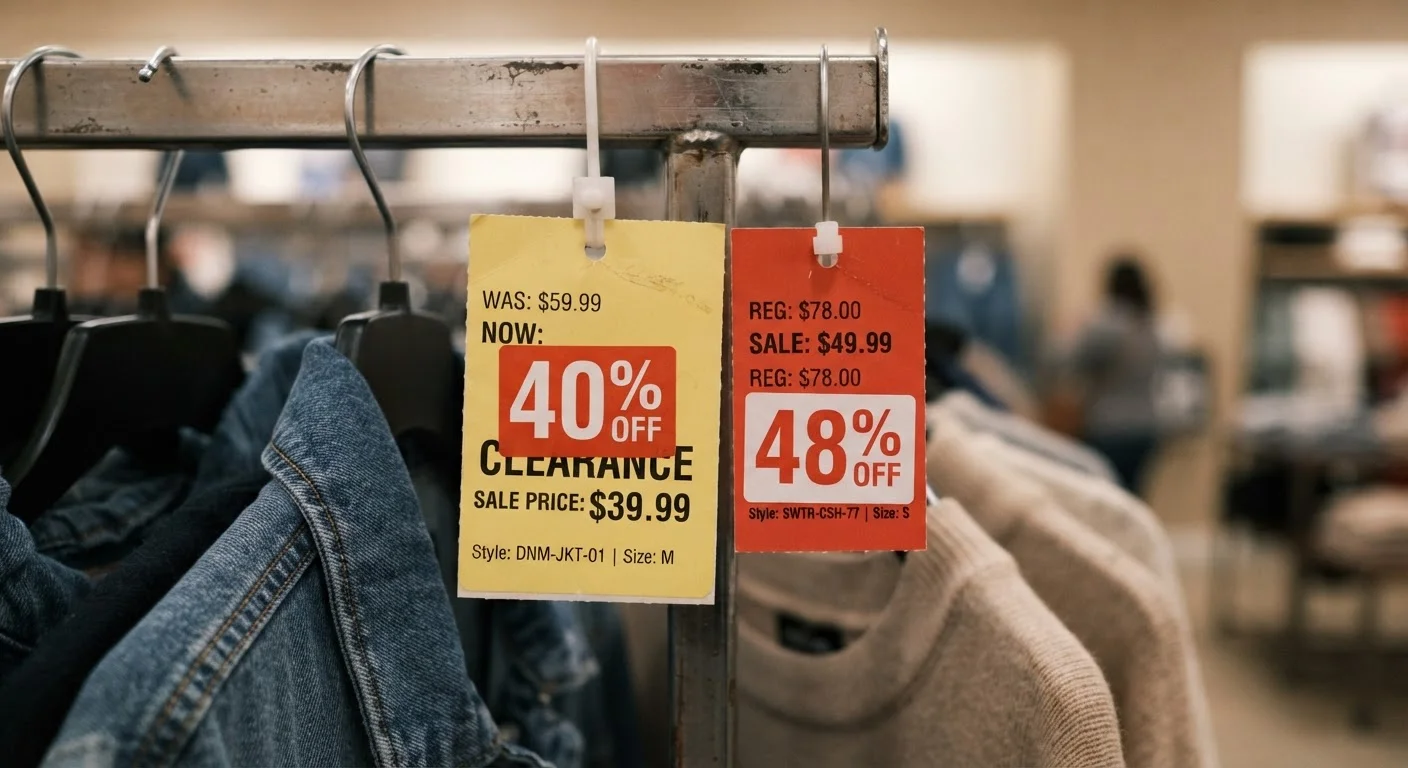
Most major chains rotate tag colors on a weekly or bi-weekly cycle. A yellow tag might be the first markdown; an orange tag the second; a red tag the final clearance cut before donation or liquidation. The specific colors vary by retailer, but the pattern is consistent: multiple markdown stages, each deeper than the last. Ask a department associate which color is currently the lowest markdown - most will tell you. That information alone can justify waiting another week on a borderline purchase.
Percentage Stickers vs. Already-Reduced Prices
Some retailers display the original MSRP on the tag and put a percentage sticker on top. Others update the price digitally and the tag only shows the new price. The danger with the first format: the "original" price shown is sometimes inflated above what the item actually sold for at regular price. Always verify the pre-sale price against a third-party source - a quick price history check via a tracking tool takes 30 seconds and keeps you from celebrating a fake discount.
For a systematic breakdown of how different categories cycle through markdowns, the clearance rack field guide by category is worth reading before your first store visit. Apparel, electronics, and home goods each follow distinct rhythms.
End-of-Aisle and Floor Display Items
Floor models and display units are often excluded from standard clearance pricing - but they're also negotiable in ways that rack items aren't. If you find a display unit of something you want, ask specifically whether it can be discounted beyond the sticker. Stores prefer selling floor stock outright rather than boxing it for return. You have more leverage than you think, especially late in the season.
Verify the Price History Before You Celebrate
Clearance tags can reference inflated "original" prices that the item never actually sold at in normal retail. A tag showing 60% off a $200 MSRP is meaningless if the item sold at $80 all summer. Before any clearance purchase, run a 90-day price history check using CamelCamelCamel (for Amazon) or Google Shopping's price graph. A genuine markdown will show a clear step down from a consistent prior price point. Anything else is a pricing optics game.
Category Priorities: Where to Focus Your Clearance Budget
Not every department goes deep on clearance at the same time. Spreading your attention and budget evenly across categories is a common mistake. Instead, rank your targets by markdown depth and timing, then concentrate your effort on the highest-yield categories first.
Tier 1: Deepest Discounts, Shortest Window
- Patio furniture and outdoor décor: Retailers cannot warehouse this efficiently. Expect 50-70% off by late August. Large items like sectionals and dining sets hit peak discount first because they take up floor space retailers need for fall inventory.
- Outdoor power equipment (mowers, trimmers, pressure washers): Gas-powered equipment in particular sees aggressive clearance. Electric tools may carry into fall sales events, so timing is slightly less urgent.
- Swimming pools and water features: Above-ground pools, hot tubs, and inflatable equipment mark down fast and often hit liquidation pricing in September. Storage is the primary barrier - have a plan for where this goes before you buy.
Tier 2: Strong Discounts, Slightly Longer Window
- Swimwear and summer apparel: 40-60% off is standard, but size availability drops quickly. If your size is in stock in late July, buy then - don't wait for a deeper cut that may not leave you with your size.
- Camping and hiking gear: This category has a dual season (summer and fall), so clearance is less steep but still significant - typically 30-50% off. Core hiking gear may transition into fall promotions, giving you slightly more time.
- Air conditioners and portable fans: Window units and portable ACs hit genuine clearance pricing in September. If yours is aging or underperforming, this is the lowest-cost replacement window of the year.
Tier 3: Moderate Discounts, Longer Availability
- Grills and outdoor cooking equipment: Surprisingly, grills don't always clear at the deepest rates because they carry into fall tailgating demand. Watch for accessory deals (covers, grill tools, fuel) where discounts are steeper.
- Garden tools and supplies: Hand tools see modest clearance; soil amendments, mulch, and fertilizer often get deeply discounted because they're heavy to hold and store seasonally.
For a more granular breakdown of which categories deliver the best value and when, see the full summer blowout category guide. It covers deal depth by retailer type - big box, specialty outdoor, and direct-to-consumer - which significantly affects your strategy.
Also worth noting: the same discipline that makes end-of-summer clearance profitable applies to other off-peak windows. The off-season deals hub maps out when to buy specific items year-round - not just in late summer - so you can extend this approach across every major purchase.
Stacking Savings and Locking In Your Best Price
Clearance price alone is the floor, not the ceiling, of what you can save. Layering additional savings mechanisms on top of a marked-down price is where the math gets genuinely interesting.
The Stacking Sequence That Works
- Confirm the clearance price - verify it scans at the marked price before you add anything on top. Mismatches between shelf tags and POS systems are common and almost always resolved in your favor if you catch them at the register.
- Apply store loyalty discounts - if the retailer has a membership or loyalty program, confirm whether clearance items qualify. Many do; some don't. Check the terms before assuming.
- Add any applicable coupon or promo code - some retailers exclude clearance from coupon stacking; others allow it. Test at checkout. If a coupon code doesn't apply, try an older code or a generic sitewide offer.
- Activate your cashback portal - always click through your cashback portal last, after you've confirmed the cart is built and discounts are applied. Navigating away mid-session can void the cashback tracking.
- Pay with a rewards credit card - choose the card that offers the highest reward rate for the retailer category (typically 2-5% on department store or wholesale purchases).
When you stack all five layers on a 60%-off clearance item, total effective savings of 70-75% are achievable - and in some cases higher when portal rates are elevated during promotional periods.
Planning to buy clearance for next season? It's a smart move, but it requires more discipline than in-season shopping. You're buying for a need 9-10 months out, which means estimating sizes for kids, projecting household needs, and resisting the urge to buy items just because they're cheap. A structured approach to off-season buying keeps this profitable rather than just an exercise in accumulating stuff you don't need.
If you want to understand how these strategies apply to the next major clearance window, winter clearance shopping done right covers the same systematic approach for post-holiday and late-winter markdowns. The mechanics are nearly identical - timing, category prioritization, and stacking - just applied to a different seasonal inventory cycle. And for a broader view of what that window looks like, the winter clearance hub maps out the full landscape of post-holiday deals.