


Key Takeaways
Cyber Monday
Cyber Monday is the Monday following Thanksgiving weekend in the United States, established as a dedicated online shopping event. Retailers offer site-wide discounts, flash sales, and exclusive online-only deals on electronics, software, apparel, and more. Unlike Black Friday - which historically centered on in-store traffic - Cyber Monday was designed from the start to drive digital purchases.
Coined in 2005 by the National Retail Federation, the term described an observed spike in online transactions on that Monday; today it is the single largest online shopping day of the year by revenue in the US.
How Cyber Monday Became Its Own Shopping Event
Cyber Monday didn't emerge from a retailer's marketing playbook - it emerged from data. In November 2005, the National Retail Federation noticed a consistent and significant spike in online sales every Monday after Thanksgiving. They named it, publicized it, and retailers caught up fast. Within a few years, the day had transformed from an observed pattern into a manufactured event, with brands planning their online promotions months in advance specifically to hit that window.
The original driver was practical rather than promotional: workers returned to their office computers after the long weekend, where they had faster internet connections than most homes of the era. Broadband democratized quickly after that, but the spending habit stuck. By the mid-2010s, Cyber Monday had surpassed Black Friday as the single highest-revenue online shopping day in the United States.
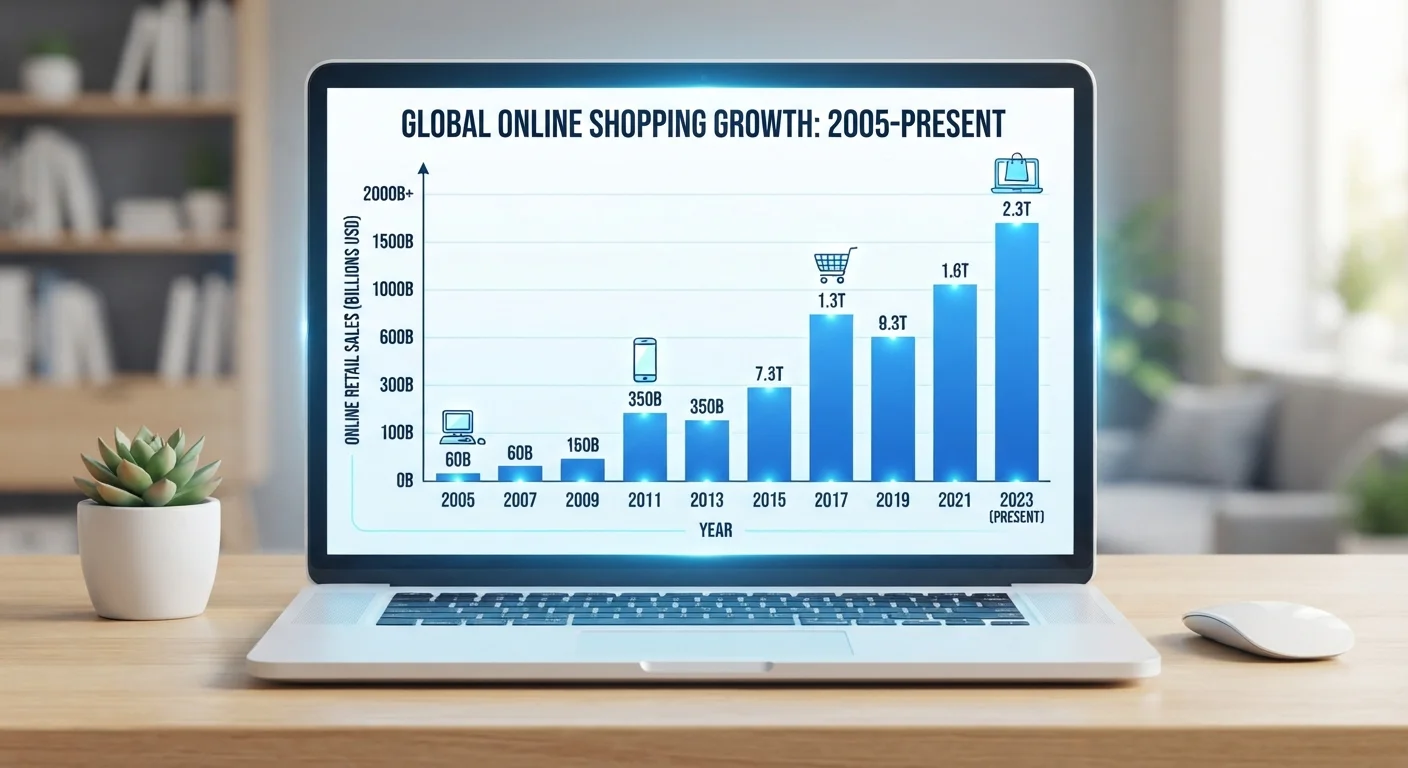
Today the event is genuinely global. Retailers in Canada, the UK, Australia, and across Europe have adopted their own versions, and US-based e-commerce giants serve international customers with Cyber Monday promotions regardless of local market conditions. The result: if you shop online regularly, Cyber Monday is simply the highest-stakes version of what you do year-round - and it rewards the same habits that make you a good everyday shopper, just compressed into a narrower time window.
Cyber Monday Is Not a US-Only Event
While the holiday originated in the United States, major e-commerce platforms - including Amazon, eBay, and global fashion retailers - now run Cyber Monday promotions in Canada, the UK, Australia, Germany, and beyond. Dates and deal depths vary by market, so international shoppers should check their regional storefronts rather than assuming US promotions apply.
Green Monday Is Worth Watching Too
If your target item doesn't hit your price threshold during Cyber Week, mark your calendar for Green Monday - the second Monday in December. Retailers use it to move inventory that didn't sell during Cyber Week, and discounts on electronics, toys, and apparel can rival or exceed Cyber Monday pricing. It's a quieter event with less competition and occasionally better deals on specific SKUs.
Cyber Monday Deals Can Appear Early
Increasingly, major retailers begin posting 'early Cyber Monday' deals the week before the official date - sometimes as early as the Wednesday before Thanksgiving. If you're tracking a specific item, don't assume Cyber Monday itself is the only window. Set a price alert and let the tool notify you if the price drops regardless of what the calendar says.
Cyber Monday vs. Black Friday: The Structural Difference
The distinction between these two events isn't just timing - it's architecture. Black Friday was built around physical scarcity: limited shelf stock, specific store locations, and the psychological pressure of being present in a crowd. Cyber Monday was built around digital abundance: infinite shelf space, global access, and the ability to comparison-shop in real time across dozens of tabs.
That structural difference shapes the deal types you encounter. Black Friday doorbusters - the televisions marked down 60% for the first 50 customers - are a physical-store tactic designed to generate foot traffic. They don't translate cleanly online because there's no foot traffic to generate. Instead, Cyber Monday retailers compete on breadth: site-wide percentage-off codes, tiered discounts that scale with cart size, and category-specific flash sales timed throughout the day.
$12.4B
US Cyber Monday online spending in 2023
According to Adobe Analytics, Cyber Monday 2023 set a new record as the largest US online shopping day ever recorded.
31%
Average discount on electronics on Cyber Monday
Adobe's 2023 holiday shopping analysis found electronics consistently received the deepest category discounts on Cyber Monday compared to other sale events.
61%
Share of Cyber Monday purchases made on mobile
Adobe Analytics reported that mobile devices drove 61% of Cyber Monday traffic in 2023, with purchases increasingly happening via apps rather than desktop browsers.
7 days
Average length of 'Cyber Monday' promotional window
Most major US retailers now extend Cyber Monday deals across a full week - Cyber Week - rather than limiting promotions to a single day.
3x
Higher cashback rates vs. typical shopping days
Cashback portals like Rakuten and TopCashback frequently offer elevated Cyber Monday rates that are two to three times their standard year-round percentages at major retailers.
This is also why the in-store vs. online Black Friday comparison matters so much for planning. Doorbusters favor the person willing to stand in line at 4 a.m. Online deals reward preparation and patience - price alerts, pre-loaded carts, and knowing exactly when to pull the trigger. Those are fundamentally different skill sets, and knowing which game you're playing changes how you prepare.
One more structural point: returns. Online Cyber Monday purchases come with the friction of shipping items back, whereas in-store Black Friday buys can often be returned to a physical location instantly. If you're buying something you're uncertain about - a clothing size, a product you haven't tested - factor return logistics into your Cyber Monday calculus.
Pre-Load Your Cart the Night Before
Add your target items to your cart on Sunday evening and verify the price. When Cyber Monday deals go live at midnight, many retailers automatically reprice items already sitting in your cart. You'll skip the frantic add-to-cart step and move straight to checkout - critical when flash deals sell out in minutes.
Always Open the Cashback Portal First
Before navigating to any retailer site, click through from your cashback portal of choice. If you open the retailer tab directly and then try to activate cashback afterward, the tracking won't register and you'll miss the payout. Make portal activation the first step of every Cyber Monday purchase, not an afterthought.
Cap Your Cyber Monday Budget in Advance
Set a hard spending ceiling before the day starts - per category if needed - and treat it as non-negotiable. Cyber Monday's time pressure and deal framing are engineered to push impulse purchases. A pre-set budget is the simplest circuit breaker against spending more than you planned, regardless of how convincing the discount badge looks.
Which Categories Actually Win on Cyber Monday
Not every product category benefits equally from Cyber Monday. Knowing where to focus your energy - and where to skip it - is the difference between a productive shopping session and an afternoon of mediocre deals.
Electronics and Tech
This is Cyber Monday's home turf. Laptops, tablets, headphones, smart speakers, gaming consoles (and accessories), and streaming devices consistently hit their annual price floors. Retailers like Amazon, Best Buy, and Walmart compete aggressively here because electronics carry brand prestige and high average order values. Expect 20-40% off on mainstream models; deeper cuts on last-generation hardware being cleared out before new releases.
Software and Digital Subscriptions
This category is nearly Cyber Monday-exclusive for major discounts. Antivirus suites, productivity software, cloud storage plans, streaming services, and creative tools frequently offer 30-60% off annual subscriptions during Cyber Week. Because the product has zero physical inventory constraints, retailers can sustain these offers longer - but the best signup bonuses (free months, bundled extras) tend to appear only on Cyber Monday itself.
Apparel and Home Goods
Discounts exist here but are less reliable. Many apparel retailers run 30-40% off site-wide codes, but those same codes appear several times a year during promotional weekends. Unless you're tracking a specific item and know the Cyber Monday price represents a genuine low, apparel deals deserve more skepticism. Home goods - particularly small appliances and kitchenware - can be strong, especially from brands like KitchenAid or Instant Pot that use Cyber Monday as a clearance vehicle.

Where to Skip It
Large appliances, furniture, and mattresses are better purchased during Black Friday or end-of-season sales. Luxury goods rarely discount meaningfully during Cyber Monday. And for categories like winter clothing or holiday decor, quieter clearance windows often beat the headline events - items hit true clearance pricing in January, not November.
The Timing Game: When Deals Actually Drop
Cyber Monday is not a steady-state discount environment where everything is on sale equally all day. It operates in waves, and understanding those waves is the single biggest tactical edge most shoppers overlook.
Pre-Monday Leaks (Saturday-Sunday)
Major retailers typically begin posting early Cyber Monday deals on the Sunday prior - sometimes Saturday. These aren't the deepest deals, but they include product categories that won't be featured on Monday, and inventory can move fast. If you're tracking something in a niche category, this early window is worth monitoring.
Morning Surge (12:01 a.m.-9 a.m. EST)
Midnight and early morning Eastern time is when automated deal pages go live and the highest-trafficked flash sales launch. If you're targeting something specific - a specific laptop model, a particular headphone SKU - this is when to buy it. Waiting until noon means waiting for something already gone.
Midday Flash Windows
Many retailers stagger deals through the day in hourly or two-hour flash windows. Amazon's Lightning Deals operate this way. If you have flexibility to check in periodically, midday windows often surface items that weren't in the overnight push.
End-of-Day Restocks
Counterintuitively, late evening (8 p.m.-midnight EST) can surface restocked inventory and final-push deals from retailers trying to hit revenue targets. Don't write off Cyber Monday at 5 p.m. if your specific item sold out in the morning.
“The best Cyber Monday shoppers don't browse - they execute. They arrive with a list, a price floor, and a checkout flow that's already been tested. The deal itself is almost secondary to the preparation.”
— Dana Mercer, Shopping strategist and cashback optimization specialist
Building your shopping session around these windows - rather than assuming you can browse casually at any point - turns Cyber Monday from a chaotic day into a manageable schedule. Set price alerts on your watchlist items beforehand so you're not manually refreshing all day. See our full Cyber Monday game plan for a pre-day checklist that covers price tracking setup, browser extension installation, and account preparation.
Stacking Savings: Cashback, Codes, and Card Rewards
The listed discount on a Cyber Monday product page is a floor, not a ceiling. Systematic shoppers treat it as the starting point and layer additional savings on top. Here's how the stack works in practice:
- Activate a cashback portal first. Before navigating to any retailer, click through from a cashback site like Rakuten, TopCashback, or your credit card's shopping portal. Cyber Monday activates elevated cashback rates - sometimes 8-12% - that aren't available year-round. This step costs zero extra dollars and adds percentage points to everything you buy.
- Check for a stackable coupon code. Sites like RetailMeNot, Honey, or DealNews aggregate promo codes in real time. Not every code stacks with sale pricing, but many do - especially site-wide percentage codes on top of already-discounted items. Test the code before finalizing checkout.
- Use the right credit card. If your card offers bonus rewards on online purchases or at specific retailers, Cyber Monday purchases compound those rewards on already-discounted items. Some issuers also offer statement credits for eligible holiday purchases - check your card's Cyber Monday promotions in advance.
- Check for price match guarantees. Several major retailers (Best Buy, Target, Walmart) offer holiday price match windows. If a competitor drops lower after you buy, you may be able to claim the difference. Know the window and document competitor prices.
Pre-Load Your Cart the Night Before
Add your target items to your cart on Sunday evening and verify the price. When Cyber Monday deals go live at midnight, many retailers automatically reprice items already sitting in your cart. You'll skip the frantic add-to-cart step and move straight to checkout - critical when flash deals sell out in minutes.
Always Open the Cashback Portal First
Before navigating to any retailer site, click through from your cashback portal of choice. If you open the retailer tab directly and then try to activate cashback afterward, the tracking won't register and you'll miss the payout. Make portal activation the first step of every Cyber Monday purchase, not an afterthought.
Cap Your Cyber Monday Budget in Advance
Set a hard spending ceiling before the day starts - per category if needed - and treat it as non-negotiable. Cyber Monday's time pressure and deal framing are engineered to push impulse purchases. A pre-set budget is the simplest circuit breaker against spending more than you planned, regardless of how convincing the discount badge looks.
The most common mistake is activating cashback after you've already navigated to the retailer directly. The portal only tracks purchases initiated through its link. If you've already opened the retailer's site in a tab, close it, go back to the cashback portal, and click through fresh.
Not sure which deals are actually real discounts versus inflated markdowns designed to look like savings? The anatomy of a real Cyber Monday deal breaks down exactly how to read price history and spot the signals of a genuine markdown versus a fake one.
Cyber Week and Beyond: How the Event Has Expanded
Cyber Monday no longer exists as a single-day event for most major retailers. The shift to "Cyber Week" - deals running from the Monday after Thanksgiving through the following Friday or Saturday - has been accelerating since roughly 2018. For shoppers, this is mostly good news: more time to find your item in stock, more opportunities to compare prices, and less pressure to make snap decisions.
That said, the expansion has also diluted some of the urgency that used to create genuinely sharp deals. When a retailer knows they can sustain a promotion for seven days instead of one, they may conserve their deepest discounts. The best single-day flash deals - the ones that move fast and disappear - tend to cluster on Cyber Monday itself. The tail end of Cyber Week is better for restocked items and second-tier discounts that weren't featured on day one.
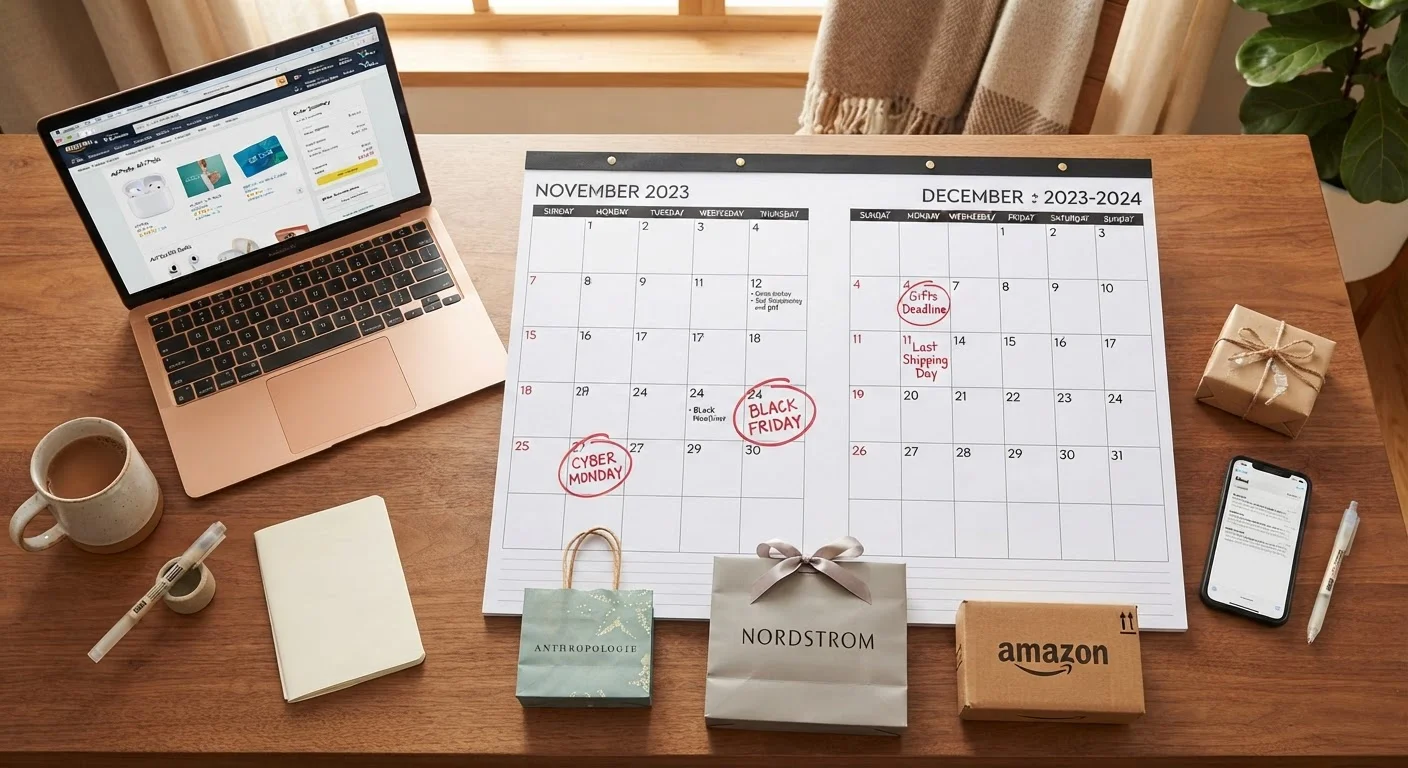
There's also the matter of what comes after Cyber Week. Green Monday (the second Monday in December) quietly produces strong deals on items that didn't move during Cyber Week. Free Shipping Day in mid-December is useful for last-minute purchases. And the January clearance window - particularly on winter apparel, holiday decor, and large appliances - often beats Cyber Monday pricing outright, for anyone with the patience to wait. For a broader view of how these events compare, Black Friday vs. end-of-season sales maps the full competitive landscape across the holiday calendar.
The practical implication: if your target item doesn't reach your price threshold during Cyber Monday or Cyber Week, don't panic-buy. Note the sale price, set a post-holiday alert, and revisit in January. Cyber Monday is the best moment to buy tech and software. It's not the last moment to get a good deal.
Cyber Monday Is Not a US-Only Event
While the holiday originated in the United States, major e-commerce platforms - including Amazon, eBay, and global fashion retailers - now run Cyber Monday promotions in Canada, the UK, Australia, Germany, and beyond. Dates and deal depths vary by market, so international shoppers should check their regional storefronts rather than assuming US promotions apply.
Green Monday Is Worth Watching Too
If your target item doesn't hit your price threshold during Cyber Week, mark your calendar for Green Monday - the second Monday in December. Retailers use it to move inventory that didn't sell during Cyber Week, and discounts on electronics, toys, and apparel can rival or exceed Cyber Monday pricing. It's a quieter event with less competition and occasionally better deals on specific SKUs.
Cyber Monday Deals Can Appear Early
Increasingly, major retailers begin posting 'early Cyber Monday' deals the week before the official date - sometimes as early as the Wednesday before Thanksgiving. If you're tracking a specific item, don't assume Cyber Monday itself is the only window. Set a price alert and let the tool notify you if the price drops regardless of what the calendar says.
Building a Repeatable Cyber Monday System
The shoppers who consistently win on Cyber Monday aren't luckier - they're more prepared. The difference between a chaotic browsing session and a productive one comes down to work done in the weeks before the event, not the day itself.
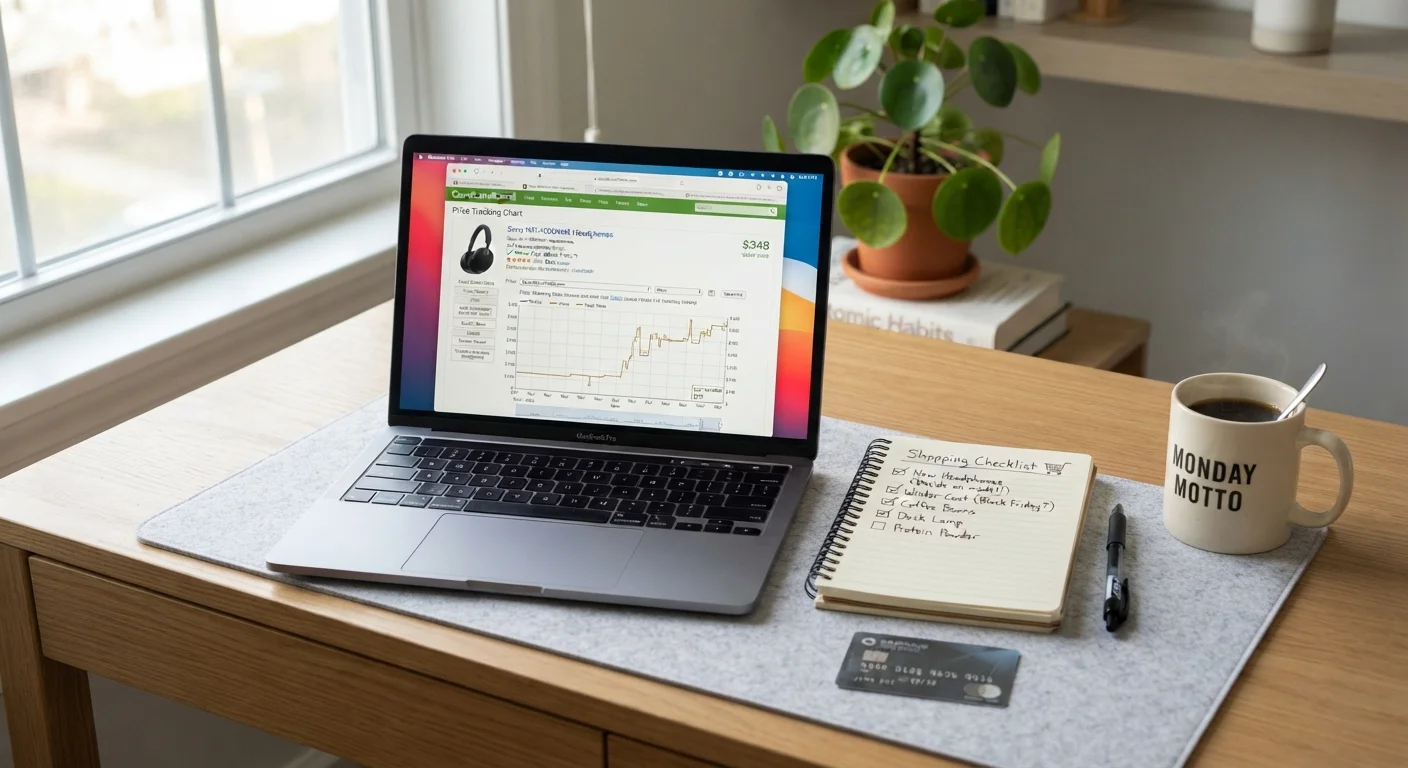
Start by building a focused wishlist in October. Limit it to items you actually intend to purchase within the next three months - Cyber Monday is not the time to explore; it's the time to execute. For each item, note the current price and use a tool like CamelCamelCamel (for Amazon) or Google Shopping's price history view to establish a 90-day baseline. That baseline is your benchmark: if the Cyber Monday price doesn't beat it materially, move on.
Set up price drop alerts through your tracking tool of choice so you're notified if an item drops before Cyber Monday - sometimes retailers discount early to clear inventory, and you can skip the Cyber Monday rush entirely. Pre-load your shipping address and payment method into every retailer account you plan to use. In a flash sale, checkout speed matters.
On the day, work from a prioritized list: must-buy items with tight inventory at the top, nice-to-have items with flexible timing at the bottom. Check your highest-priority items during the morning surge window, then revisit the rest midday. Activate cashback portals before you open any retailer tab. Have your browser's coupon extension running. And know your walk-away price for each item - impulse spending during Cyber Monday is still spending, regardless of how large the discount badge looks.
For the complete pre-game checklist - including which browser extensions to install, how to set up deal alerts, and account verification steps - the Cyber Monday game plan covers it end to end. And if you want to sharpen your radar for spotting inflated markdowns dressed up as deals, Black Friday myths that cost shoppers real money applies equally well to Cyber Monday pricing tricks.
Cyber Monday is a real opportunity - but only if you treat it as a system to execute rather than a sale to wander through. The preparation window is short, the deals move fast, and the shoppers who show up with a plan are the ones who walk away with genuine savings.