

Key Takeaways
Option A
Department Stores
The tactile, immediate clearance experience.
Best for: Shoppers who want to physically inspect items, score unadvertised markdowns, and walk out same-day.
Option B
Online Outlets
The data-driven, selection-rich alternative.
Best for: Buyers who prioritize price comparison, size availability, and the ability to stack coupons and cashback on top of clearance pricing.
If you need winter outerwear or footwear in specific sizes
Department Stores
Physical clearance lets you try before you buy and avoid return shipping costs. January racks in-store are deepest in the first two weeks post-holiday.
If you're hunting electronics, bedding, or home goods at clearance prices
Online Outlets
Price tracking tools like CamelCamelCamel and cashback portals stack on top of clearance pricing, and inventory lasts longer without the physical scramble.
If you want to stack multiple discount layers for maximum savings
Online Outlets
Online is the only channel where you can combine clearance pricing, a promo code, a cashback portal, and a rewards credit card in a single transaction.
If you need clearance items immediately without waiting for shipping
Department Stores
Same-day availability with no shipping delay and no minimum order threshold to hit free shipping.
If you're a systematic bargain hunter willing to monitor prices over weeks
Online Outlets
Online clearance inventory tends to replenish from returned or overstock items, and alert tools notify you when prices drop further - a luxury physical stores can't match.
How Winter Clearance Actually Works in Each Channel
Most shoppers treat winter clearance as a single event. It isn't. It's a rolling sequence of markdowns that plays out differently depending on whether inventory is sitting on a physical rack or in a fulfillment center. Understanding that distinction is the foundation of buying at the absolute floor - not just "on sale."
In department stores, clearance begins in earnest the day after Christmas and ramps through the first two weeks of January. Store managers are under direct pressure to clear seasonal floor space for spring receipts. That urgency creates genuine deals - but it also creates a race. The best sizes and colors disappear within days. By mid-January, what remains tends to be the inventory that didn't move for a reason: odd sizes, damaged packaging, color misfires.
Online outlets operate on a different clock. Retailers processing returns from holiday purchases, plus warehouse overstock, typically begin reflecting that inventory in online clearance sections one to three weeks after in-store markdowns begin. The upside: selection holds longer and replenishes as returns flow in. The downside: that initial in-store markdown urgency isn't there, so the very first wave of deep cuts hits physical stores first.
Inside the markdown machine, retailers use automated inventory aging systems that trigger price reductions at set intervals - typically 25%, 40%, 60%, and 75% off, spaced two to four weeks apart. Online and in-store systems are often on separate schedules, which is exactly why knowing both timelines is a compounding advantage.
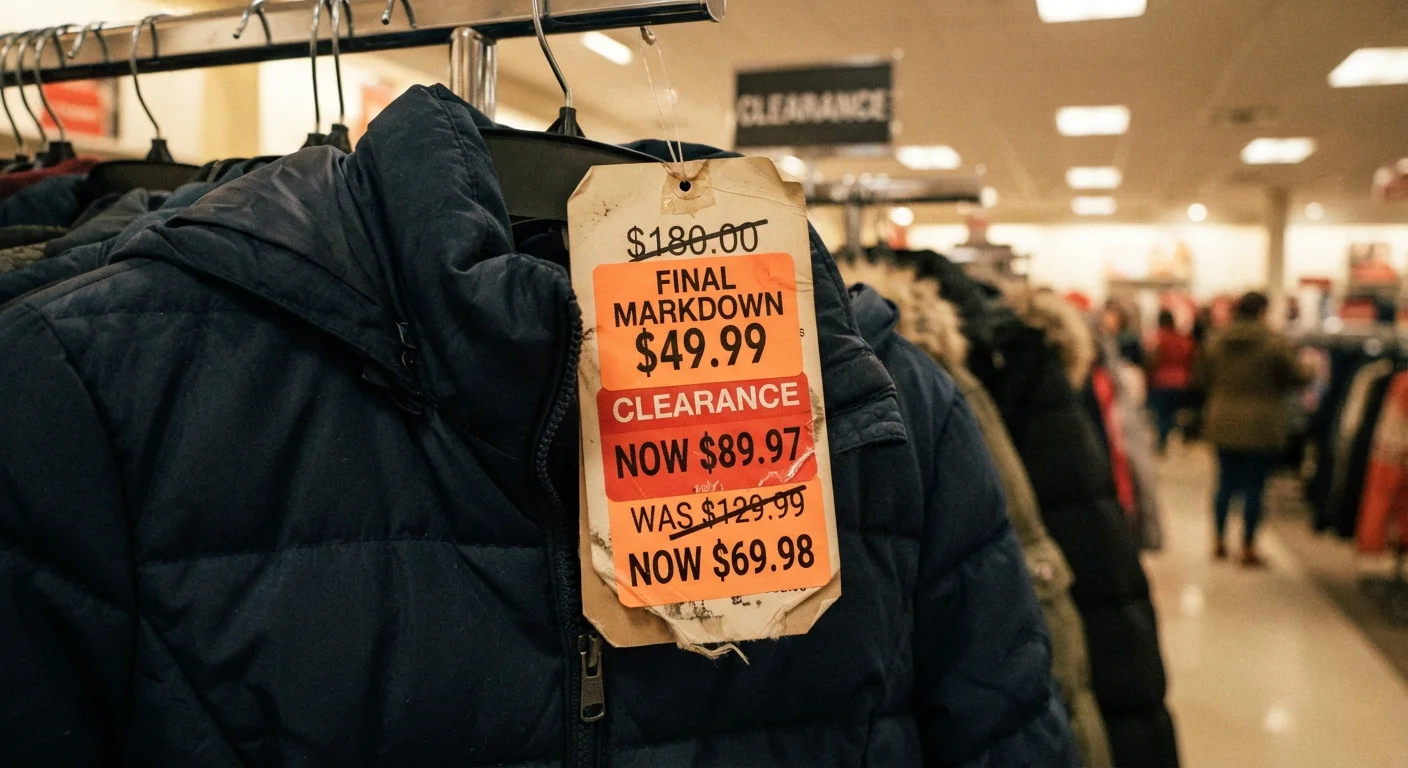
For a precise week-by-week breakdown of when prices hit their lowest across categories, see The Winter Clearance Calendar. The short version: department store clearance floors out fastest, online outlets stay discounted longer.
Head-to-Head: Where Each Channel Wins and Loses
Comparing these two channels requires separating the variables most shoppers blur together: price depth, selection, discount stacking potential, and the cost of your time. Here's the honest breakdown.
| Criterion | Department Stores | Online Outlets |
|---|---|---|
| Initial markdown timing | Dec 26 - early January | 1-3 weeks post-holiday |
| Inventory depth at peak | High initially, depletes fast | Replenishes from returns & overstock |
| Price floor potential | Up to 75% off MSRP | 75%+ with stacking layers |
| Discount stacking | Store card only | Promo codes, cashback, rewards cards |
| Fit confidence | Full - try before you buy | None - size charts and reviews only |
| Return ease | Immediate, no shipping cost | Varies; return shipping fees apply |
| Final sale risk | Moderate | Higher - common at 60%+ off |
| Price tracking tools | None | Full - alerts, history, extensions |
| Best categories | Outerwear, boots, holiday decor | Electronics, bedding, basics |
| Time investment | High - travel, browsing in person | Low - shop any time, automated alerts |
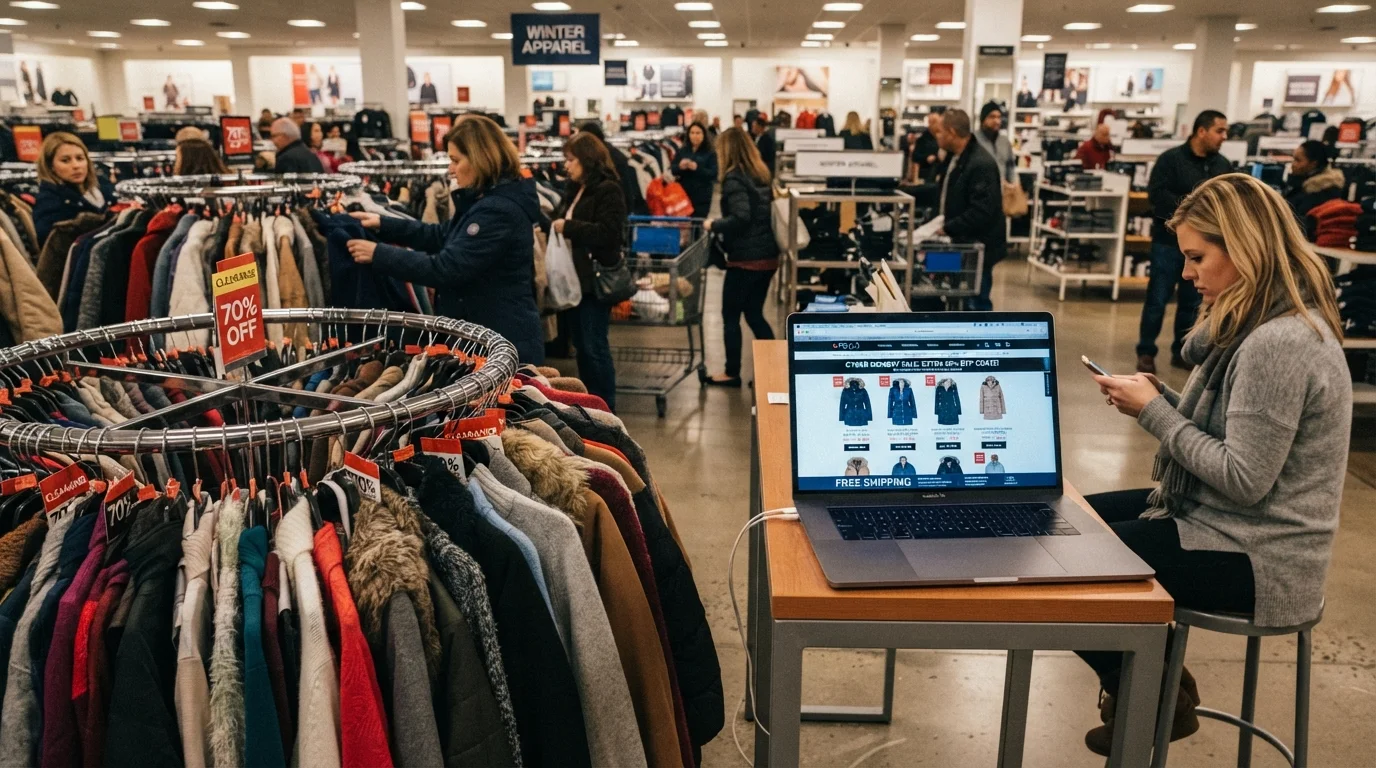
The table reveals a pattern: department stores win on immediacy and fit confidence; online outlets win on discount layering and sustained inventory. Neither channel dominates across every dimension, which is exactly why a split strategy outperforms committing to one.
Check Online Before You Leave the Store
Many department stores now allow price matching between their physical and digital clearance sections. If an item rings up higher in-store than on the retailer's app or website, ask a floor associate for a price match. This is an under-used tactic that combines the fit-confidence of in-store shopping with the pricing floor of online clearance - the best of both channels without splitting your trip.
Clearance ≠ Outlet: Know the Difference
Online outlets operated by brands (Gap Outlet, Nordstrom Rack online, Saks Off Fifth) carry a mix of true clearance and outlet-made merchandise - items manufactured specifically for the discount channel, not marked-down full-price goods. Clearance pricing on original retail inventory is typically a better value than outlet-made equivalents. Check the label origin when in doubt, especially on outerwear and footwear where quality differences are most apparent.
Store Credit Cards Only Pay Off If You Clear the Balance
Department store co-branded cards often provide an extra 10-20% off clearance purchases as a signup benefit or loyalty perk. This is genuinely useful - but only if you pay the balance in full. Store card APRs typically run 25-29%, which eliminates any clearance savings within one billing cycle of carrying a balance. Treat the card as a discount mechanism, not a financing tool.
One underappreciated department store advantage: unadvertised markdowns. Store employees have discretion in some chains to mark down damaged items or mis-tagged inventory on the spot. Scanning items with a store app or asking a floor associate about additional markdowns on clearance items is a tactic that only works in person.
The Discount Stacking Opportunity Online Has and Stores Don't
This is the single biggest structural advantage online clearance holds, and it's worth spelling out precisely because most shoppers underestimate how much it compounds.
Start with the clearance price - say, 50% off a $120 jacket, leaving you at $60. Now layer:
- Promo or coupon code: An additional 15-20% off clearance is common at retailers like Nordstrom Rack, Gap Outlet, and J.Crew Factory. That takes $60 down to $48-51.
- Cashback portal: Rakuten, TopCashBack, or RetailMeNot Cashback commonly offer 3-10% on apparel and home goods. On a $48 purchase, even 5% is $2.40 - trivial in isolation, but it's money returned for zero effort.
- Rewards credit card: A card earning 3% on online retail spending adds another layer. On $48, that's $1.44 in points.
- Gift card discount: Buying a retailer's gift card at a discount (often 5-10% off face value via Raise or CardCash) before completing the purchase adds one more layer before you check out.
That $120 jacket purchased through stacked online clearance channels can realistically land at $42-46 all-in - a 62-65% total reduction versus the original price. A department store clearance rack gives you the same 50% markdown with no additional levers to pull.
62-65%
Total discount via online stacking
Combining clearance pricing, promo codes, cashback portals, and gift card discounts can yield reductions well beyond the advertised clearance percentage.
1-3 weeks
Online clearance lag vs. in-store
Post-holiday online outlets typically reflect their deepest clearance inventory one to three weeks after physical department stores begin marking down seasonal stock.
75%+
Peak in-store clearance depth
Department store holiday decor and seasonal apparel commonly reaches 75% off MSRP within the first two weeks of January.
15-18%
Return shipping as % of purchase
A $7-9 return shipping label on a $48-50 clearance order represents a significant portion of savings - one reason fit-sensitive items should favor in-store shopping.
Weeks 4-6
When online clearance hits its floor
The second and third automated markdown cycles in January and early February typically represent the lowest online clearance prices across most retail categories.
This is also why choosing the right online platform matters - cashback rates and coupon eligibility vary significantly by retailer, and the wrong platform can forfeit the stacking opportunity entirely.

Category-by-Category Verdict: Where to Shop What
Clearance strategy shouldn't be channel-first - it should be category-first. Here's how to assign each product type to the right shopping venue.
Winter Outerwear and Boots
Shop in-store first. Fit variance in coats, parkas, and winter boots is significant enough that the cost of return shipping on online clearance orders can eliminate your savings. Additionally, in-store racks move fastest on these items, so the first two weeks of January are critical. Go early, go often, and use the store app to scan tags for additional markdowns.
Sweaters, Fleece, and Cold-Weather Basics
Split. High-inventory basics (crew-neck sweaters, fleece pullovers) are safer online because sizing is more consistent and return policies on these items tend to be simpler. Statement pieces or fitted knitwear are better evaluated in person.
Electronics and Appliances
Online wins decisively. Price tracking via CamelCamelCamel (Amazon) or Google Shopping history removes guesswork. Physical clearance on electronics in department stores is limited - most clearance is cosmetic packaging damage, not meaningful price cuts. Online outlets, manufacturer refurb stores, and platforms like Best Buy's Outlet section hold real inventory at genuine discounts.
Bedding, Towels, and Home Textiles
Online. Sizing for bedding is standardized, there's no fit concern, and white sales in January traditionally push online retailers to stack extra percentage-off promotions on top of clearance pricing. This is one of the categories where winter clearance strategies compound most reliably.
Holiday Decor
In-store, immediately post-Christmas. Decor markdowns in physical stores hit 50-75% within days of December 25. Online platforms are slower to clear this inventory, and shipping costs on bulky items like artificial trees or light sets can eat the discount. If you're stocking up for next year, the store is the right call - but you have a narrow window.

For shoppers who want to see how physical outlet stores compare to online brand sites specifically for gear and apparel, this channel-by-channel breakdown for outdoor gear is worth reading alongside this article.
Timing the Two Channels Together for Maximum Return
The optimal playbook doesn't pick one channel - it sequences them. Here's the framework that extracts the most value from winter clearance season without requiring you to be everywhere at once.
Week 1 (Dec 26 - Jan 4): In-Store Priority
Hit department store clearance racks in person for outerwear, footwear, and holiday decor. These categories move fastest, fit matters, and the first markdown wave is deepest in physical stores. Don't wait - the good sizes are gone by the second weekend of January in most markets.
Weeks 2-3 (Jan 5 - Jan 18): Online Setup
While in-store inventory is being picked over, set up price alerts for any items you didn't find physically. Use Google Shopping alerts or retailer-specific wish lists. This is the window where online clearance inventory swells with returned merchandise and warehouse overstock. Confirm your cashback portal and promo code sources before buying.
Weeks 4-6 (Jan 19 - Feb): Final Markdown Watch
This is when the second and third markdown cycles hit - both in stores and online. Remaining physical store inventory goes to 60-75% off. Online clearance sections get refreshed. If you held off on non-urgent categories (bedding, home textiles, basics), this window often yields the floor price. The clearance calendar maps this cycle precisely, including which weeks historically produce the deepest cuts by retail category.
One calibration worth making: winter clearance savings are real, but they don't automatically beat every other sale format. End-of-season sales frequently outperform Black Friday on apparel and home goods, but Black Friday still leads on electronics. Understanding where each sale period wins keeps you from passing up a genuine November deal while waiting for a January markdown that never gets deeper.

Also worth noting: the in-store vs. online dynamic during winter clearance mirrors what plays out during other major sale periods. The same channel-splitting logic applies to Black Friday - doorbusters reward physical shoppers, while online rewards patience and stacking.
The Return Equation: A Cost Often Forgotten
Every experienced clearance shopper has made the same mistake: bought three sizes online to find the right fit, then realized the cost to return two of them wiped out the savings. This is one of the cleaner arguments for in-store shopping on fit-sensitive categories, and it deserves a direct accounting.
Many retailers have tightened return policies on clearance items in recent years. Final sale designations - common on 60%+ off clearance - mean you own what you buy regardless of fit. Before purchasing online clearance, check three things:
- Is this item marked final sale? If yes, treat it like an in-store decision - only buy if you're certain.
- What's the return shipping cost? For orders under $50, a $7-9 return label can represent 15-18% of your purchase price. That erodes a meaningful portion of your discount.
- Does the retailer offer free in-store returns for online purchases? Major department store chains (Nordstrom, Macy's, Kohl's) frequently allow online clearance returns in-store. If that's available, the online channel's biggest friction point disappears entirely.
The free in-store return option essentially converts online clearance into the best of both worlds: the stacking advantages of online purchase with the no-cost return safety net of the physical store. When that option exists, it should anchor your strategy. When it doesn't, category and fit-risk drive the channel decision.
For shoppers working specifically in branded fashion, a direct comparison of outlet stores versus online discount sites for branded clothing addresses the return and authenticity questions in more depth.