

Key Takeaways
Why End-of-Summer Sales Hit Different
Most shoppers treat clearance as a passive windfall - they stumble onto a markdown and feel lucky. That's the wrong frame. End-of-summer blowouts are a predictable retail event driven by hard inventory math: retailers need floor space for fall merchandise, and carrying summer stock into October costs them money in storage, markdown risk, and lost margin on the next season's goods. That pressure translates directly into genuine price cuts, not the manufactured "sales" you see during peak season.
But not all categories are created equal. A 20% discount on swimwear in late August is table stakes. A 55% reduction on a sectional patio set at the same time is a structural pricing event worth planning your calendar around. Understanding which categories drop hardest, when the markdown cycle peaks, and how to layer additional savings on top is the difference between a good deal and an exceptional one.
Late August is when retailer pressure peaks - inventory systems flag overstocked summer SKUs, automatic markdown triggers kick in, and clearance pricing gets serious. The window is real, but it's narrow. Here's how to work through it category by category.
The Categories That Deliver - Ranked and Explained
Patio Furniture: The Single Best Category to Target
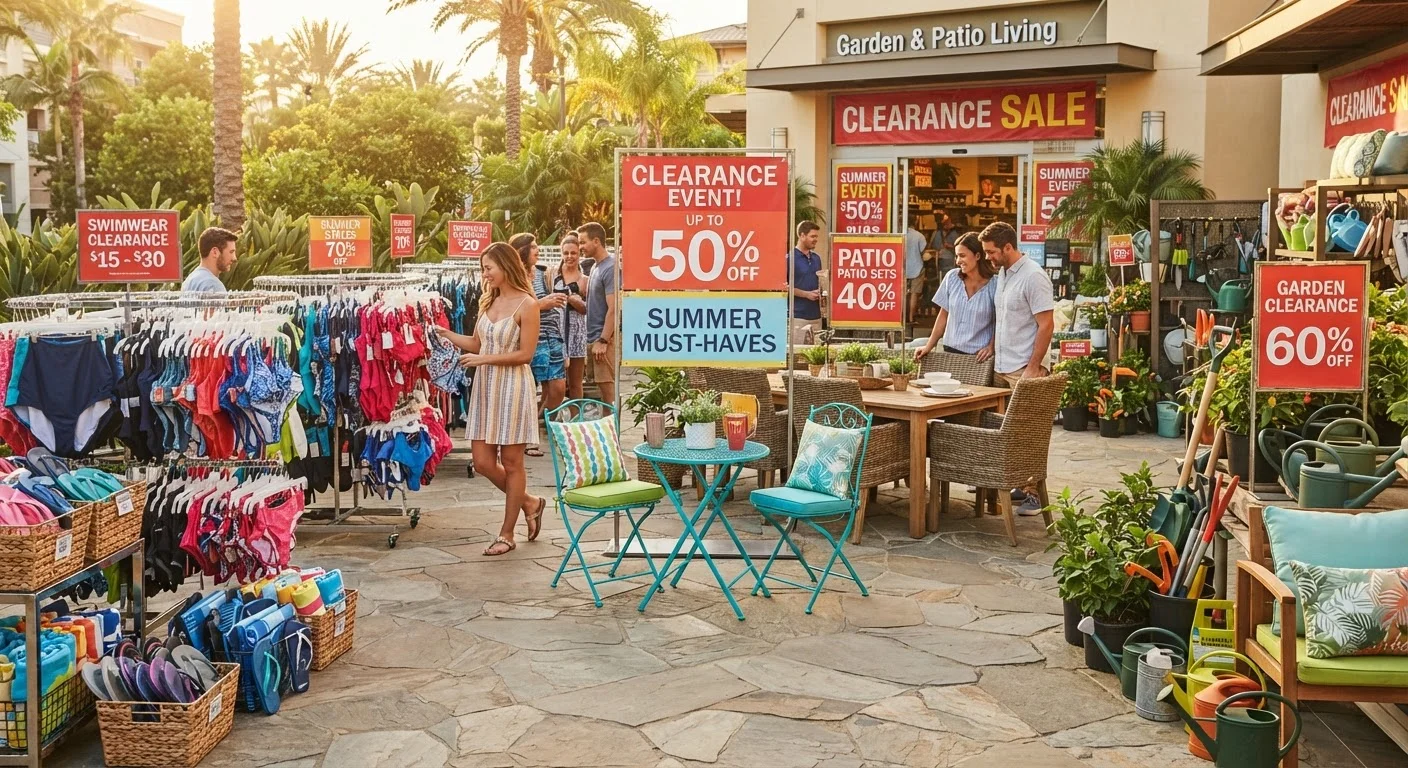
Patio furniture delivers the deepest end-of-summer discounts of any category, full stop. Retailers start the season with high-margin full-price sets in April and May. By late July, unsold inventory starts getting marked down. By mid-August, clearance pricing kicks in hard - and by Labor Day, anything still on the floor is priced to move immediately.
Typical discount depth: 40-60% off original retail, with premium sets from brands like Sunbrella, Polywood, and Hampton Bay occasionally hitting 65% off at big-box retailers. The driver is simple: patio furniture is bulky, expensive to warehouse, and nearly impossible to sell once fall merchandise takes over the floor space.
[in_content_images:1]What to look for:
- Complete sets over individual pieces - retailers discount sets more aggressively because they need to clear coordinated inventory together.
- Weather-resistant materials - teak, powder-coated aluminum, and all-weather wicker hold up well in storage and are worth buying ahead of next season.
- Floor models - assembled display pieces are often reduced an additional 10-20% on top of clearance pricing to avoid the labor cost of disassembly and reboxing.
Timing tip: The first weekend after Labor Day is peak clearance for patio furniture at Home Depot, Lowe's, Wayfair, and Target. Set price alerts two weeks before and be ready to move quickly - the best sets at the deepest discounts sell out within 48-72 hours of a major markdown.
The first weekend after Labor Day is peak clearance for patio furniture - be ready to move within 48 hours.
Air Conditioners and Portable Fans: Buy for Next Year Right Now
Window air conditioners and portable fans are counterintuitive purchases in August and September - why buy cooling equipment when the heat is breaking? Because the savings are exceptional and the use case is guaranteed. You will use an air conditioner next summer. Buying it now at 35-50% off versus paying full price in June is pure financial logic.
The markdown pattern here is unusually predictable. Retailers order AC units in the spring based on projected demand. Any unsold inventory after Labor Day represents a genuine carrying cost problem - these units are large, heavy, and store poorly. That urgency creates real discounts.
Where the deals are deepest:
- Big-box home improvement stores (Home Depot, Lowe's) typically run the steepest markdowns on window units after Labor Day - often 40-50% off.
- Mass merchants (Walmart, Target) discount portable fans and tower fans aggressively in mid-August as they transition floor space to back-to-school and fall décor.
- Appliance retailers (Best Buy) sometimes offer additional bundle discounts or extended warranty deals layered on top of clearance pricing on smart AC units.
One caveat: smart or connected AC units (those with app control or voice assistant integration) depreciate more slowly because they sell year-round as smart home devices. Focus your clearance hunting on standard window units for the best dollar-value savings.
Buying an air conditioner in September at 40% off versus paying full price in June is pure financial logic.
Outdoor Grills and Smokers: Wait Until September for Peak Discounts
Grills are one of the most misunderstood categories in the end-of-summer clearance window. Many shoppers assume the Memorial Day and Fourth of July sales are the best time to buy - but those are promotional events, not inventory clearance. Retailers are still in peak grilling season and have no incentive to cut deeply.
The real markdown cycle for grills and smokers runs from late August through mid-September. By that point, the seasonal floor display needs to be dismantled for fall merchandise, and full-size grills are among the most space-intensive items a retailer carries. That physical reality drives meaningful price cuts.
Discount depth by grill type:
| Grill Type | Typical End-of-Summer Discount | Peak Timing |
|---|---|---|
| Gas grills (2-4 burner) | 30-45% | Late August - early September |
| Charcoal kettle grills | 25-35% | Mid-August onward |
| Pellet smokers | 20-30% | September (slower markdown) |
| Portable/tabletop grills | 35-50% | August (clears fastest) |
Pellet smokers and high-end kamado grills (like Big Green Egg or Kamado Joe) discount more slowly because they have year-round demand and strong secondary markets. If you're targeting those, check off-season buying windows - winter clearance at specialty retailers sometimes beats end-of-summer pricing on premium smokers.
Memorial Day grill sales are promotional events - September clearance is when retailers actually need to move inventory.
Swimwear and Summer Apparel: High Discounts, Fast-Shrinking Selection
Swimwear clearance is a race. The discounts get deeper as August progresses - from 30% off in early August to 50-70% off by late August - but selection narrows dramatically as the month goes on. By the time you're looking at 70% off, you're also looking at whatever sizes and styles remain after most shoppers have already taken their pick.
The strategic play depends on what you're shopping for:
- If you need specific sizes or styles: Shop the early clearance window (first two weeks of August) when discounts are 30-40% but selection is still reasonable. You'll leave more money on the table, but you'll actually find what you need.
- If you're flexible on style: Wait until late August or post-Labor Day for 50-70% off. This is ideal for basics - solid color suits, rash guards, cover-ups - where style specifics matter less.
- For kids' swimwear: Buy one size up at end-of-season clearance. Children's sizing makes this a reliable annual strategy.
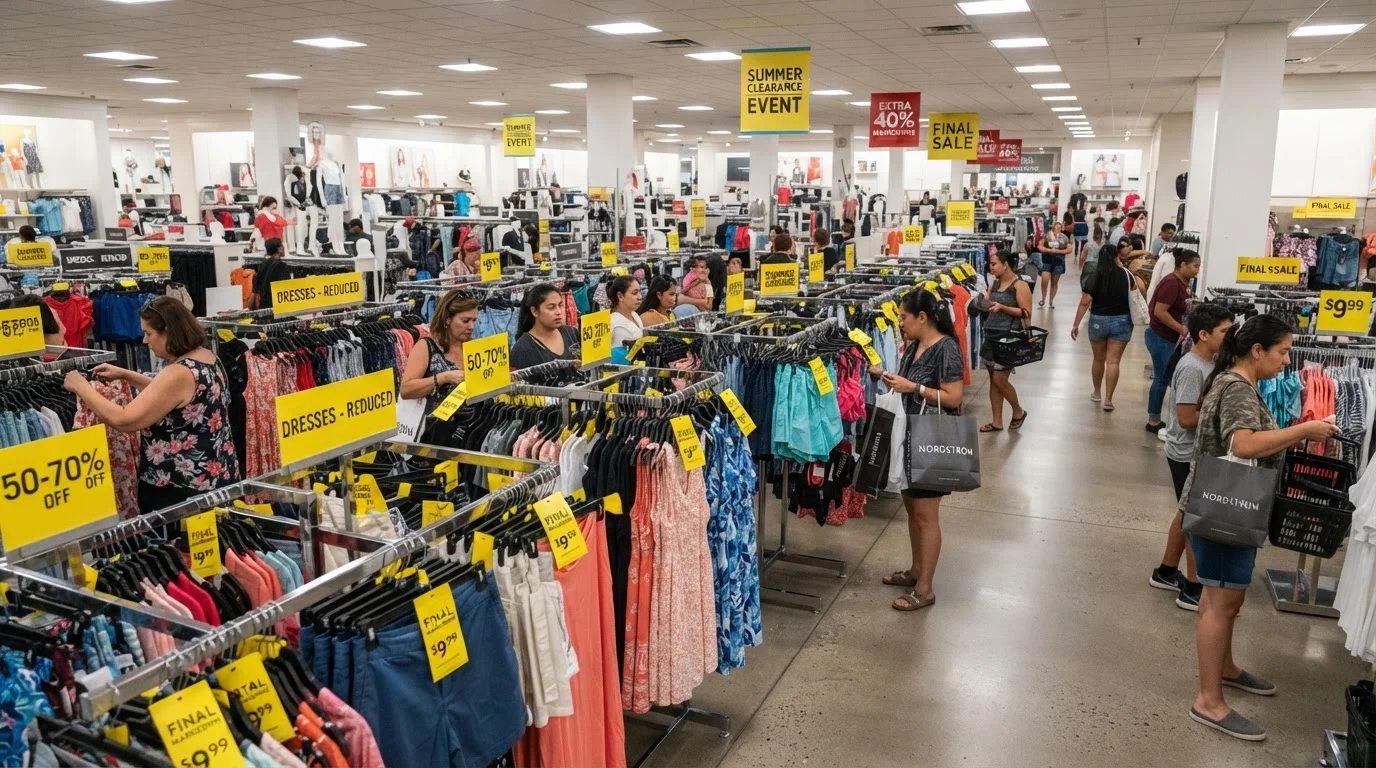
For the broader summer apparel category - shorts, linen shirts, sundresses - the same logic applies. Retailer-specific clothing markdown calendars show that Old Navy, Gap, and J.Crew run their deepest summer clearance in the first two weeks of August, while department stores like Nordstrom and Macy's tend to mark down hardest in the final week before Labor Day.
For kids' swimwear, buy one size up at end-of-season clearance - it's a reliable annual savings strategy.
Lawn Care and Garden Tools: A Predictable Markdown Schedule
Lawn mowers, string trimmers, leaf blowers, and garden tools follow one of the most predictable markdown schedules in retail. Retailers typically run a three-phase clearance cycle:
- Phase 1 (Late July - early August): 20-30% off on gas-powered and electric mowers. Retailers test demand before committing to deeper cuts.
- Phase 2 (Mid-August): 35-45% off on riding mowers and zero-turn models. These are bulky, expensive to store, and hit markdown harder than walk-behind models.
- Phase 3 (Post-Labor Day): 40-60% off on remaining inventory, including tools, accessories, and attachments that didn't move earlier.
Battery-powered lawn equipment (particularly the major 40V and 80V platforms from Greenworks, EGO, and Ryobi) discounts less dramatically because it sells year-round and has strong overlap with fall cleanup use cases. If you're building out a battery platform, end-of-summer is a decent but not exceptional time to buy - the better opportunities are on gas-powered equipment being phased out.
For hand tools - pruners, shovels, rakes, hoses - discount depth is moderate (20-30%) but the purchase risk is low. These items store easily, last for years, and have predictable replacement cycles. Buying a quality hose or pruner set at 25% off in September is a solid background purchase to layer into a broader clearance shopping trip. Check a clearance shopping checklist to make sure garden tools don't get deprioritized in favor of higher-drama purchases.
Riding mowers and zero-turn models hit 35-45% off by mid-August - bulk and storage costs drive the markdown.
Outdoor Power Equipment and Pressure Washers: The Overlooked Category
Pressure washers, generators, and outdoor power equipment sit in an underappreciated sweet spot during end-of-summer clearance. They're seasonal enough to face retailer inventory pressure, but durable enough that buying for next year makes complete sense. Most consumers don't think to shop for a pressure washer in September - which means less competition for the best deals.
Typical discount range: 30-50% off on electric and gas-powered pressure washers at major home improvement retailers. Generators discount less because they have year-round demand (storms, power outages), but end-of-summer can still yield 20-30% off on residential models.
Brand outlets and official websites sometimes beat big-box clearance pricing on power equipment - worth checking Ryobi, Greenworks, and Sun Joe directly before assuming the Home Depot clearance aisle is your best option.
What makes this category particularly attractive for strategic buyers:
- High durability - properly stored, a pressure washer or generator purchased this September will perform identically next spring.
- Limited style/model risk - unlike apparel or seasonal décor, outdoor power equipment doesn't go out of fashion.
- Manufacturer rebate eligibility - check manufacturer websites for fall rebate programs that often stack with retailer clearance pricing.
Most shoppers don't think to buy a pressure washer in September - less competition means the best units stay on shelves longer.
Pool and Water Play Equipment: Deep Discounts, Storage Commitment Required
Above-ground pools, inflatable pools, and water play equipment (slip-n-slides, sprinkler toys, water tables) hit clearance pricing early - often starting in late July - and can reach 50-70% off by mid-August. The discount depth is real, but it comes with a storage caveat: these items are bulky, and improper storage (especially for above-ground pool components) leads to damage that voids any savings.
The calculus here is straightforward:
- Inflatable pools and water toys under $50: Buy freely at clearance if you have any outdoor space for kids next summer. At 60% off, the risk-reward is easy.
- Above-ground frame pools ($150-$500 range): Worth buying if you have dry, rodent-free storage. The frame components and liner must be stored correctly to avoid damage.
- Large above-ground pools ($500+): Evaluate carefully. Shipping damage, missing components, and incomplete clearance sets are more common at this price point. Inspect packaging before purchasing floor models or open-box clearance items.
Spa and hot tub accessories (covers, chemicals, filters) also see meaningful end-of-summer clearance - typically 25-40% off - and are compact enough to store without issue. If you own a spa or hot tub, late August is a reliable time to stock up on chemicals and replacement parts at reduced prices.
Water toys and inflatable pools at 60% off are easy wins - the only constraint is clean, dry storage space.
Set Price Alerts Two Weeks Early
For high-value categories like patio furniture and grills, set price alerts on tools like Google Shopping, Camelcamelcamel (for Amazon), or Honey at least two weeks before Labor Day. The best deals at the deepest discounts sell out within 48-72 hours of a major markdown trigger. Being ready to act immediately is what separates a great purchase from a missed opportunity.
Check the Return Policy Before You Buy
Clearance and final-sale items often carry modified return policies - some retailers mark clearance goods as non-returnable. Before committing to a large purchase like a patio set or pressure washer, confirm the return window. If the item is non-returnable, inspect packaging carefully for damage before leaving the store or accepting a delivery.
Don't Skip the Cashback Stack
Activate your cashback portal before clicking through to any retailer's clearance section - even if you're buying in-store, check whether the portal offers a printable coupon or in-store cashback activation. On a $400 patio purchase at 6% cashback, that's $24 back. It takes 60 seconds and is the easiest incremental saving available.
Not All "Clearance" Tags Are Equal
Retailers use terms like "clearance," "special buy," "rollback," and "manager's special" differently - and not all of them indicate genuine end-of-season markdowns. True clearance pricing means the item is being discontinued at that retailer and won't be restocked. "Special buy" at some big-box stores simply means a one-time purchase, not necessarily a below-market price. When in doubt, use a price history tool to verify that the current price actually represents a discount from the item's typical selling price.
Outdoor Furniture Quality Varies Significantly
At clearance prices, it can be tempting to prioritize the discount over the materials. For patio furniture specifically, materials matter for longevity: powder-coated aluminum and solid teak hold up well in storage and through seasons; cheaper painted steel and basic plastic frames may not last more than two or three years. A 50% discount on furniture you'll replace in two years may not beat a 30% discount on furniture that lasts a decade. Factor material quality into your purchase decision, not just the markdown percentage.
End-of-Summer vs. Other Sale Windows
End-of-summer clearance is genuinely strong for seasonal categories, but it's worth understanding how it compares to other sale windows before committing. For non-seasonal goods - electronics, bedding, kitchen appliances - Black Friday and Presidents' Day sales frequently deliver better prices. The end-of-summer window is specifically powerful for outdoor, seasonal, and weather-dependent categories. For a full comparison by category, see how the holiday sales calendar maps discount depth across the full year.
Stacking Your Savings on Top of Clearance Prices
Clearance pricing is the floor, not the ceiling of your savings. The best end-of-summer shoppers treat a 40% markdown as the starting point and layer additional discounts on top. Here's a practical stack that works across most of the categories above:
- Store credit card or loyalty rewards: Many retailers offer an extra 5-10% off for cardholders, even on clearance items. Check the fine print - some exclude already-reduced merchandise, but most end-of-summer clearance qualifies.
- Cashback portals: Rakuten, TopCashBack, and similar portals frequently run elevated cashback rates during late-summer clearance events. A 6% cashback rate on a $600 patio set is $36 back - real money on top of the primary discount.
- Manufacturer rebates: Outdoor power equipment and major appliances (including window ACs) often carry manufacturer rebates that run through September. These are separate from the retailer's markdown.
- Price protection: If you buy something that drops further in price within 14-30 days, many retailers will refund the difference. Track your purchases with a tool like Honey or Capital One Shopping to catch additional drops automatically.
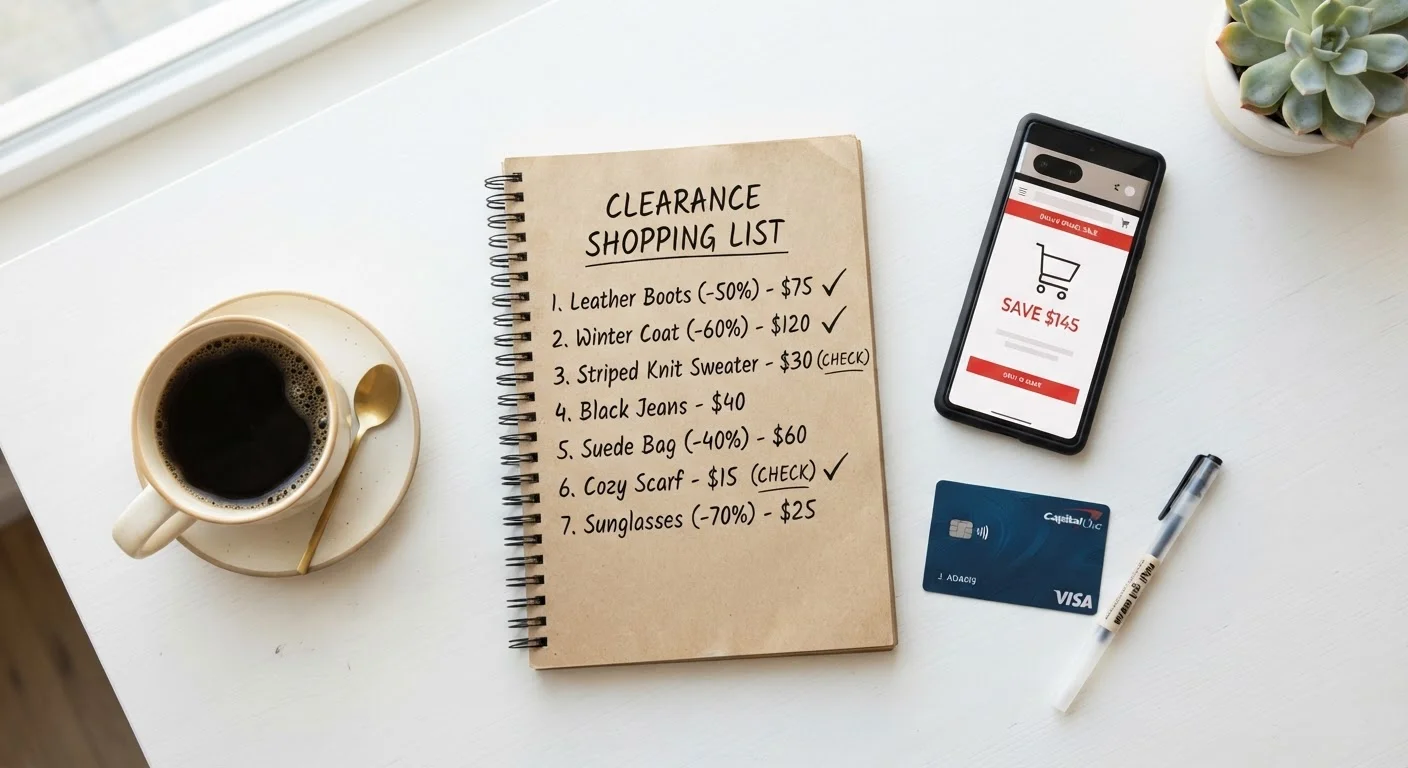
Use a clearance checklist to track which items you're targeting across categories so you don't miss markdown windows or let a savings stack expire before you've completed a purchase.
It's also worth comparing end-of-summer deals to what's available in other sale windows. End-of-season clearance often beats Black Friday for seasonal categories precisely because the inventory pressure is genuine - retailers must move product, not just create a promotional moment. For non-seasonal goods, the calculus flips, which is why understanding the category context matters so much.
Final Thoughts: Build a Category Priority List Before You Shop
The single biggest mistake end-of-summer shoppers make is browsing instead of targeting. When you walk into a clearance event without a priority list, you end up buying whatever catches your eye rather than what delivers the best structural value. Patio furniture, outdoor power equipment, and air conditioners are your anchor categories - they offer the deepest discounts and the highest dollar-value savings. Swimwear and summer apparel are worth grabbing if your timing is right and the selection still covers your size and style needs. Grills and garden tools reward patience and a willingness to wait until September.
Off-season buying strategy applies directly here: you're purchasing summer goods for next summer, which means the only real constraint is storage. If you have the space and the cash flow, buying a $150 air conditioner in September for $90 is a 40% return on a guaranteed future purchase.
Compare this approach against other sale windows using the full holiday sales calendar to make sure you're not holding off on a purchase when the end-of-summer window is actually your best shot. For apparel specifically, the clothing sale calendar will show you exactly how end-of-summer clearance stacks up against other retailer discount events throughout the year.
Treat end-of-summer blowouts as a system, not a stroke of luck, and you'll consistently walk away with purchases that would cost 30-60% more at any other point in the calendar year.