

Key Takeaways
Why Holiday Sale Myths Persist - and What They Actually Cost You
Holiday sales are one of the most heavily marketed events in retail. Retailers spend billions creating urgency, and the side effect is a culture of shopping myths that feel true because they're repeated so often. The average American household overspends by an estimated $1,000 during the holiday shopping season - not because they're reckless, but because they're operating on bad assumptions about when and where prices are actually lowest.
This article breaks down the most expensive myths by the calendar events that fuel them. Think of it as a reference guide you can use to pressure-test any deal before you commit. Each myth is paired with the specific evidence that refutes it and a practical action you can take instead.
For a broader look at which events tend to hide the best savings versus the most hype, the Black Friday vs. end-of-season sales comparison is worth reading alongside this piece.
Myth
Black Friday has the lowest prices of the year across all product categories.
Fact
Black Friday delivers the best prices for specific categories like TVs and gaming consoles, but appliances, mattresses, and furniture are almost always cheaper during Memorial Day, Labor Day, or end-of-season clearance.
The belief that Black Friday is a universal price floor is one of the most expensive assumptions in consumer culture. Retailers have spent decades building this perception - and it works, which is why they keep investing in it. But price tracking data consistently shows a different picture.
According to Consumer Reports and RetailMeNot's historical price analyses, the categories where Black Friday genuinely delivers the deepest annual discounts are narrow: large-screen TVs (particularly in the 55"+ range), gaming consoles and bundles, and select small kitchen appliances. Outside those categories, the "lowest price of the year" label falls apart quickly.
Appliances? Memorial Day and Labor Day are the correct windows. Retailers use these holidays to clear floor inventory ahead of new model introductions, and the discount depth reflects genuine inventory pressure rather than manufactured urgency. Mattresses? Same story - major mattress brands run their deepest promotions around Memorial Day and Presidents' Day. Furniture? Labor Day and end-of-year clearance consistently beat Black Friday margins.
The practical implication: before buying anything on Black Friday, ask whether that specific category has a better seasonal window. If it does, and the purchase isn't urgent, waiting is the smarter move.
Myth
The 'original price' shown next to a sale price is what the item actually sold for before the discount.
Fact
Retailers routinely set artificially inflated 'original' or 'compare at' prices to make discounts appear larger than they are - a practice sometimes called 'reference price inflation.'
This is the most structurally dishonest element of holiday retail, and it's surprisingly widespread. The Federal Trade Commission has issued guidance on deceptive pricing practices, and multiple states have pursued retailers for exactly this behavior - but enforcement is inconsistent, and the practice continues at scale.
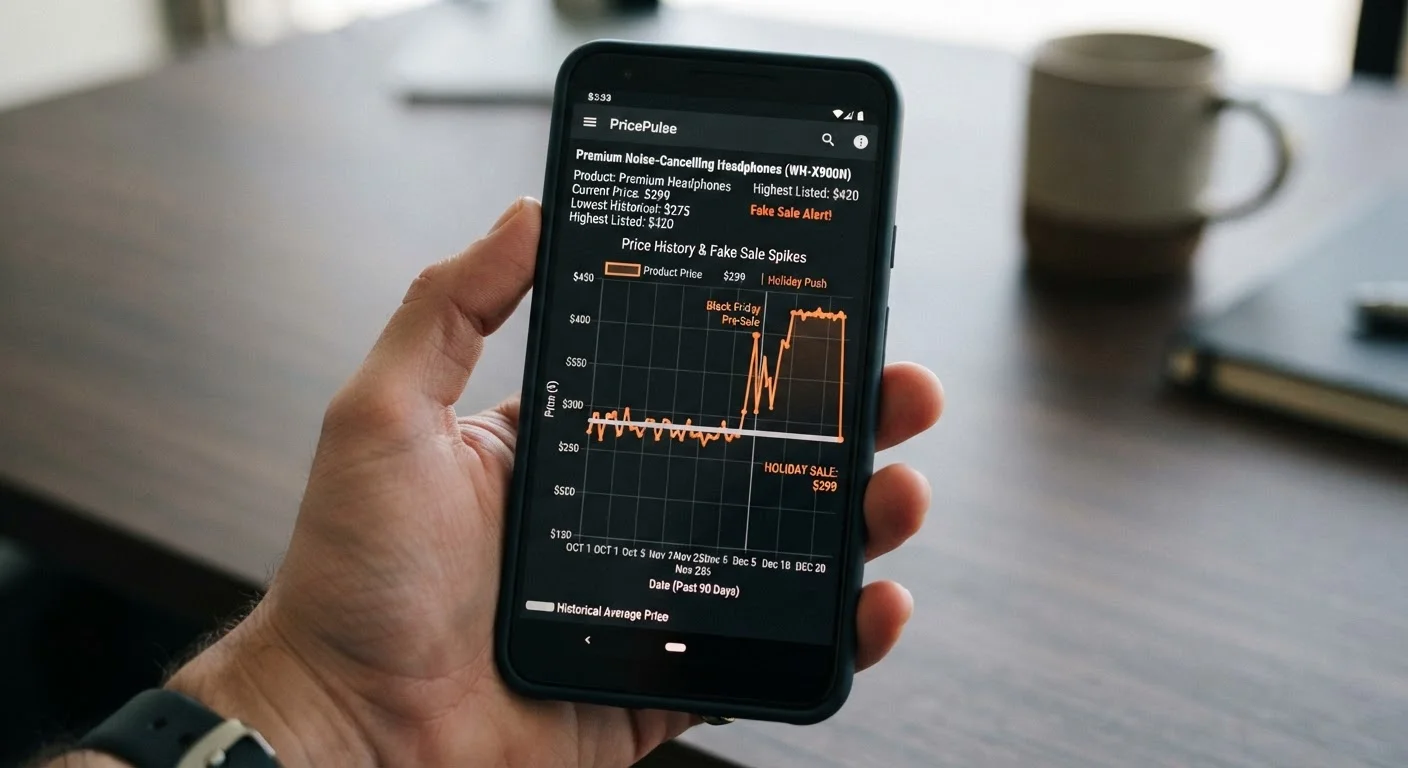
The mechanism is straightforward: a retailer prices an item at $200 for a brief period (sometimes as little as one week), then drops it to $129 during a sale and labels it "Was $200 - Now $129." The consumer perceives a $71 savings. The reality may be that the item sold for $119 consistently for the prior six months and the $200 price was set specifically to create the appearance of a discount.
Price history tools eliminate this manipulation entirely. CamelCamelCamel tracks Amazon's full price history and displays it as a graph - you can see immediately whether the "sale" price is actually lower than the historical average or just lower than a recently inflated anchor price. Keepa offers similar functionality with more granular data. These tools take about 30 seconds to use and they are the single most effective countermeasure against reference price inflation.
Myth
Cyber Monday always offers better deals on electronics than any other time of year.
Fact
January clearance events, Amazon Prime Day, and end-of-product-cycle discounts routinely match or beat Cyber Monday prices on most electronics categories.
Cyber Monday's reputation as the premier electronics discount day is largely a function of marketing, not pricing reality. The event originated when online retailers needed a narrative to compete with Black Friday's in-store foot traffic - and the "best online deals of the year" framing served that purpose. But the retail landscape has changed dramatically, and the pricing data hasn't kept up with the mythology.
Amazon Prime Day, which runs in July, has become a genuinely competitive electronics window. Wirecutter and The Verge's annual price tracking consistently shows Prime Day matching or beating Cyber Monday on categories like wireless earbuds, smart home devices, tablets, and streaming hardware. The advantage is that Prime Day has less consumer urgency baked in - prices aren't engineered around the same manufactured scarcity that characterizes the November window.
January clearance is the other underutilized window. Retailers need to zero out Q4 inventory, and the pressure is real and measurable - unlike the artificial urgency of a promotional event. This is particularly true for last year's flagship phone models, laptop configurations that weren't cleared during the holiday season, and smart home devices that launched with high initial prices.
The guide to identifying genuine Cyber Monday deals provides the specific verification steps you need before accepting any Cyber Monday electronics price as genuinely competitive.
Myth
Buying on sale day guarantees you the best price - prices won't drop further after the event ends.
Fact
Post-event and clearance pricing frequently drops below sale-day prices, particularly for items that don't sell through during the promotional window.
The urgency framing of major sale events - "today only," "limited quantities," "deal ends at midnight" - creates a powerful psychological pressure to buy immediately. Retailers design this pressure deliberately because it works. But for a significant portion of sale inventory, the price floor hasn't been reached on sale day.
Items that don't fully clear during a Black Friday or Cyber Monday window face a simple logistics problem: retailers don't want them in inventory heading into the new year. The result is post-event markdowns, often 10-25% below the already-discounted sale price, that appear in the week following the promotional period. This is especially common in apparel, home goods, and non-flagship electronics.
The category exception is genuine limited-quantity items - specific TV models, gaming console bundles, and popular toys that retailers stock in finite quantities and that reflect real demand. These items can sell through and not return at lower prices. But they represent a small fraction of total sale inventory.
A practical approach: for items that aren't subject to hard quantity limits, set a price alert at your target price and check back in the week after any major sale event. You may find the urgency was manufactured and the price comes to you rather than the other way around.
Myth
All retailers are offering comparable deals during the same holiday events.
Fact
Deal quality varies dramatically between retailers for the same product categories during the same event - comparison shopping across platforms is not optional, it's essential.
The assumption that all retailers are competing toward the same discount depth during a given holiday event leads shoppers to buy from their default retailer without cross-checking. This is one of the most consistently expensive habits in consumer behavior.
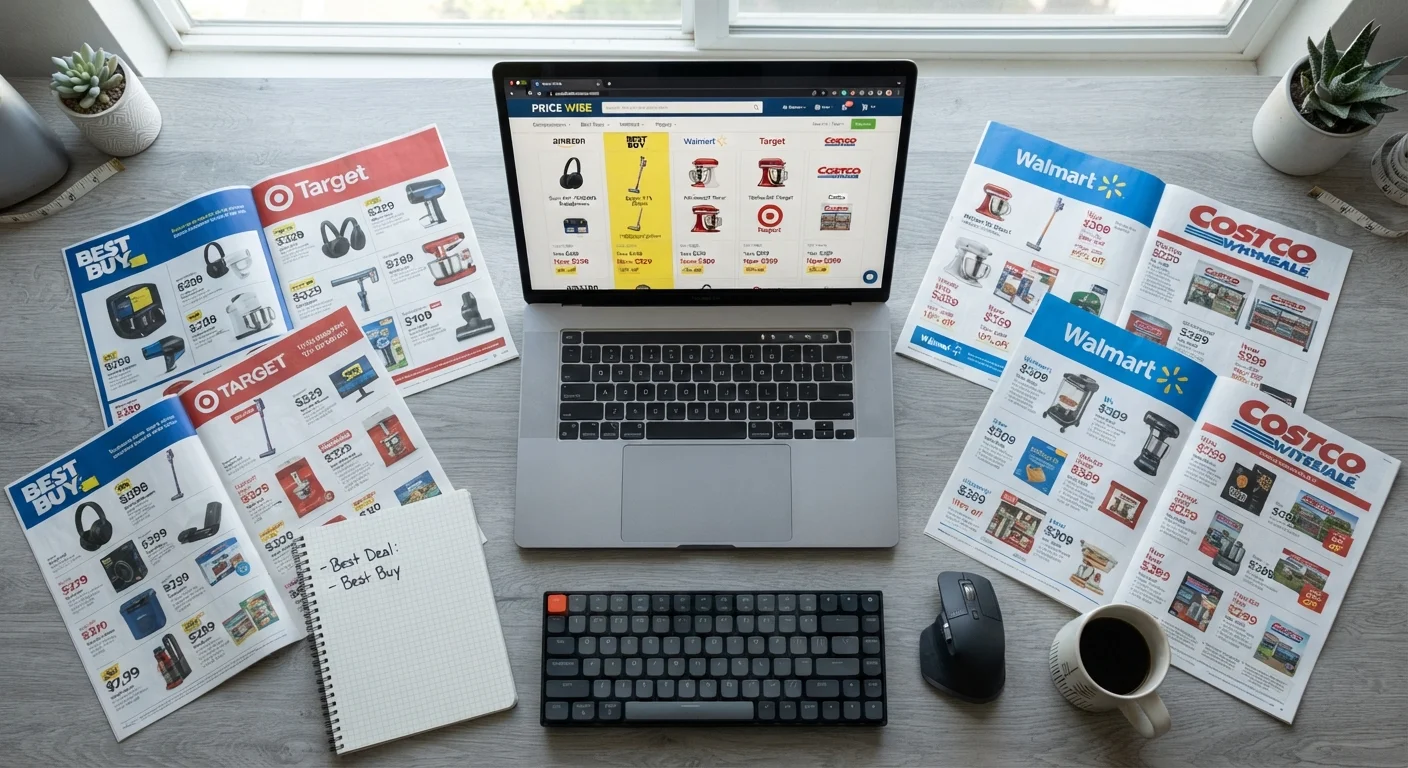
During Black Friday and Cyber Monday, it's common to see a 20-30 percentage point spread in discount depth for the same product category between major retailers. One retailer may be running a genuine 40% off promotion on a category while a competitor offers 15% on identical SKUs. The difference isn't random - it reflects each retailer's inventory position, margin tolerance, and strategic priorities for that event.
Comparison tools like Google Shopping, PriceGrabber, and retailer-specific cashback portals (TopCashback, Rakuten) can surface these discrepancies in minutes. Adding cashback rates into the comparison changes the math further - a 3% cashback from Rakuten on a $500 purchase is $15 back that a direct retailer purchase doesn't offer. These incremental differences compound meaningfully across a holiday shopping list.
Platform selection also matters beyond price. Return windows, seller reliability, and shipping costs all affect total cost of ownership in ways that a headline discount percentage obscures. The full breakdown of marketplace fees, seller trust, and return policies covers the non-price factors that determine whether a deal is actually good value.
Myth
Holiday sales are the only time worth waiting for - you should delay purchases year-round until November.
Fact
Several non-holiday events produce deeper discounts than Black Friday for specific categories, and holding purchases for months to catch a suboptimal window is a poor strategy.
The Black Friday gravitational pull causes some shoppers to defer purchases for months under the assumption that waiting until November will yield the best available price. For certain categories, this is exactly backwards.
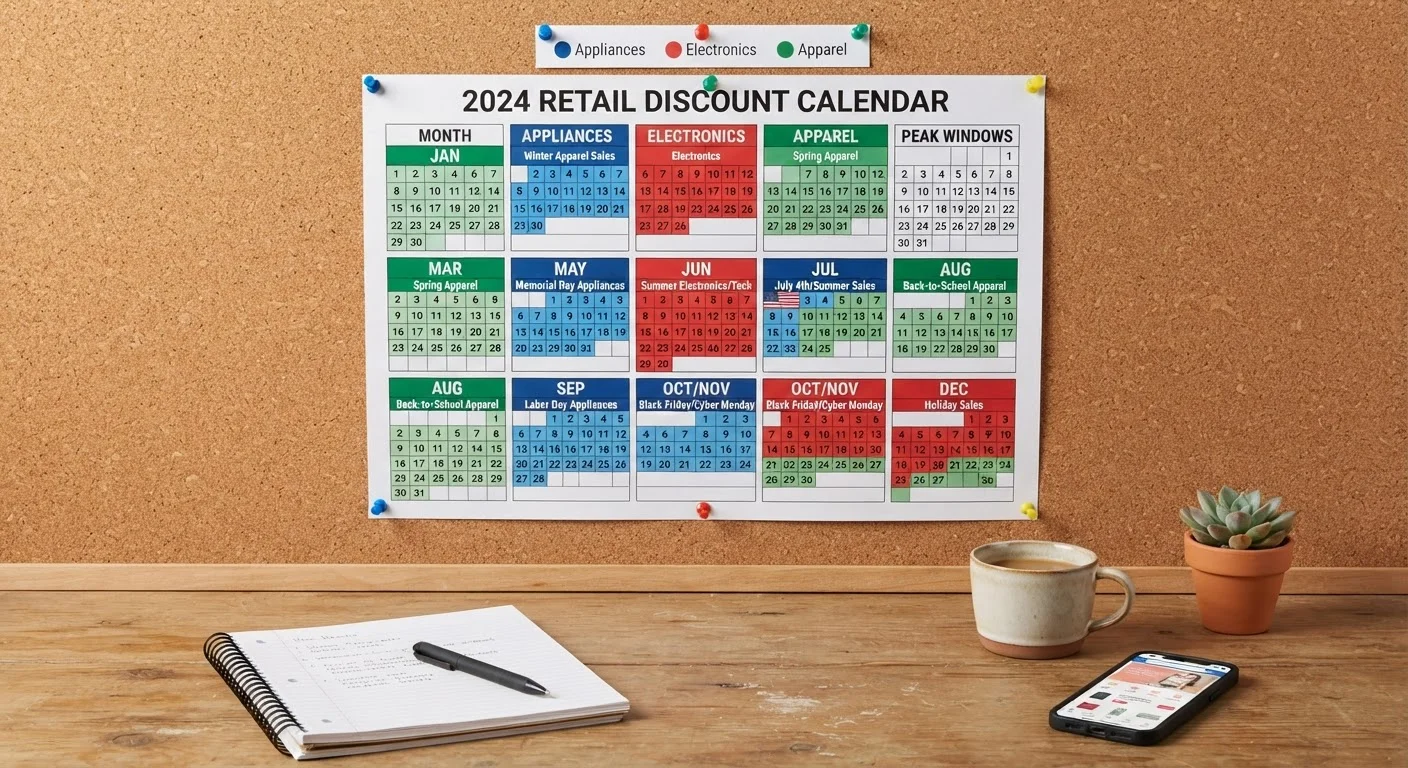
The correct framework is category-specific timing, not event-based timing. Here's how the calendar actually maps to discount depth by category:
- Appliances (large): Memorial Day, Labor Day - retailers clear floor models ahead of new inventory cycles
- Mattresses: Presidents' Day, Memorial Day - industry-wide promotional calendar is built around these dates
- Furniture: Labor Day, January clearance - end-of-quarter inventory pressure drives real discounts
- Televisions: January (post-CES), Black Friday - new model announcements drive price reductions on prior-year panels
- Laptops & phones: Back-to-school (July-August), Prime Day, January clearance
- Apparel: End-of-season clearance (February, August) - not Black Friday, which is primarily hard goods
- Outdoor/garden: End of summer (August-September) - inventory pressure peaks as shelf space transitions
Holding a mattress purchase from March until November to catch a Black Friday deal that is statistically weaker than the Memorial Day promotion you skipped is a real pattern. The comparison of Black Friday versus end-of-season sale timing provides the category-level data to build a purchase calendar that actually matches when prices bottom out.
Black Friday: The Most Myth-Dense Shopping Event of the Year
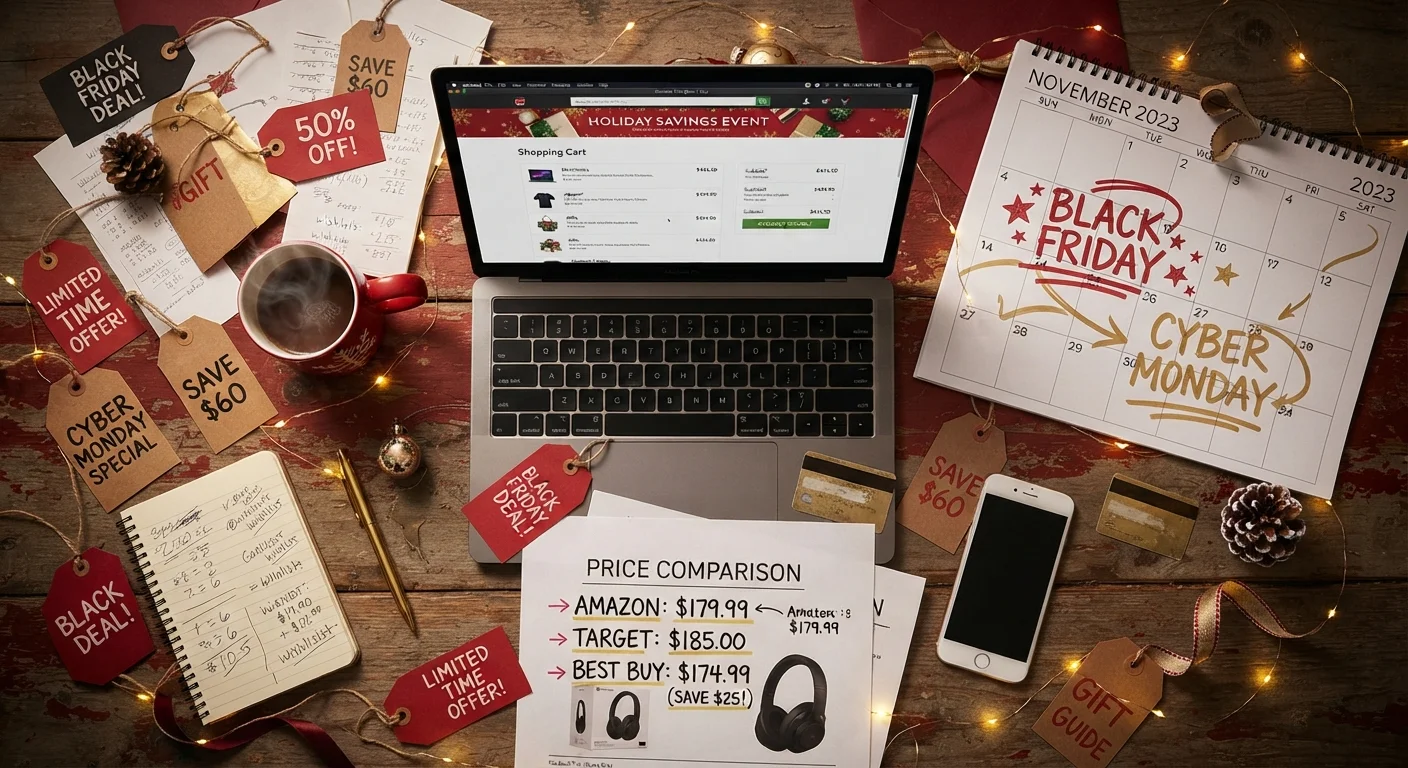
Black Friday has become a cultural institution, which is exactly why it generates more shopping mythology than any other retail event. The myths here aren't random - they're reinforced by retailer marketing, media coverage, and years of consumer habit. Understanding them is worth actual dollars.
65%
Black Friday prices not at annual lows
A 2023 analysis by consumer advocacy group Which? found that 65% of Black Friday 'deals' were available at the same price or cheaper at other points in the year.
$1,000+
Average holiday season overspend per household
The National Retail Federation estimates U.S. consumers consistently spend roughly $1,000 more than planned during the November-December shopping window.
30-50%
Typical appliance discounts on Memorial Day
Major appliance retailers including Best Buy and Home Depot regularly offer 30-50% off large appliances during Memorial Day, outpacing Black Friday margins in this category.
40%
Shoppers who skip price history checks
According to a 2022 NerdWallet survey, approximately 40% of online shoppers never use price tracking tools before completing a purchase during sale events.
The core problem with Black Friday is that it conflates marketing intensity with discount depth. A deal promoted across 40 email campaigns and a 200-page circular isn't automatically a better deal than one that appears quietly in a January inventory liquidation. Yet most shoppers treat visibility as a proxy for value - and that assumption is expensive.
If you want a systematic approach to distinguishing real Black Friday discounts from manufactured ones, this breakdown of why Black Friday prices aren't always the lowest of the year lays out the verification process clearly. For deal-finding strategies that go beyond the hype, the Black Friday tips hub is a solid starting point.
"Limited Time" Language Is Designed to Disable Rational Thinking
Urgency cues like "today only," "only 3 left," and countdown timers are behavioral design tools, not neutral information. When you encounter them, treat them as a signal to pause and verify - not to act. Add the item to your cart, run a price history check, and return in 20 minutes. For the majority of sale items, the deal will still be available, and you'll have made the decision on your terms.
Return Windows Often Shrink During Sale Events
Some retailers reduce return windows for items purchased during promotional periods - a detail buried in sale terms that can be expensive if the item is a gift or if you change your mind. Before buying during any holiday event, confirm the return policy specifically applies to sale purchases and check whether the window is standard or shortened. This is especially critical for electronics and appliances.
Cashback Portals Don't Always Stack With Sale Prices
Many retailers exclude promotional or sale-priced items from cashback portal eligibility - meaning the Rakuten or TopCashback rate you're counting on may not apply during Black Friday or Cyber Monday. Always verify cashback eligibility terms before routing through a portal during a sale event. The exclusions are real and often not surfaced prominently.
Cyber Monday: A Narrower Window Than Most Shoppers Realize
Cyber Monday started as a genuine phenomenon - online retailers discounting to compete with physical stores that dominated Black Friday foot traffic. That origin story is now mostly obsolete. Today, the event is a marketing construct that lasts anywhere from 24 hours to two weeks depending on the retailer, and the deals it surfaces are highly category-specific.
The myth that Cyber Monday is universally the best online shopping day ignores a simple fact: January and February clearance events routinely produce deeper discounts on the same electronics, bedding, and home goods that Cyber Monday promotes. The difference is that January clearance gets a fraction of the press coverage, so fewer shoppers show up - which means less competition for limited-quantity deals.
Price History Checks Are Non-Negotiable
Before completing any purchase during a Cyber Monday or Black Friday event, verify the price against at least 90 days of history using CamelCamelCamel or Keepa. Retailers commonly inflate 'original' prices in the weeks before sale events to manufacture the appearance of larger discounts. A 30-second check can reveal whether a deal is genuine or theatrical - and the answer will surprise you more often than you expect.
Before accepting any Cyber Monday price at face value, run it through a price history checker like CamelCamelCamel (for Amazon) or Honey. The anatomy of a real Cyber Monday deal goes deep on the specific signals that separate genuine markdowns from inflated 'sales.'
The Overlooked Holidays That Consistently Beat November's Hype
Ask most shoppers which holidays offer the best deals and they'll name Black Friday, Cyber Monday, and maybe Amazon Prime Day. That's a reasonable answer - but it's incomplete in ways that leave serious savings on the table.
The retail calendar has several events that consistently outperform November for specific categories, and they're underutilized precisely because the marketing spend behind them is lighter. Here's where the real category-specific windows live:
- Memorial Day & Labor Day: Appliances, mattresses, and furniture. Retailers use these holidays to clear floor inventory ahead of new model introductions. Discounts of 30-50% on major appliances are standard, not exceptional.
- Presidents' Day: Bedding, linens, and furniture. The annual "white sales" tradition is still alive and worth tracking at department stores and direct-to-consumer brands.
- Amazon Prime Day (July): Electronics and household staples. Prime Day has evolved into one of the most competitive electronics discount windows of the year - often beating Black Friday on specific tech categories.
- End-of-model-year automotive (August-October): New car incentives peak as dealers clear inventory ahead of next year's arrivals. This window is more predictable than Black Friday and more negotiable.
- January Clearance: Apparel, holiday decor, and housewares. Retailers need to zero out seasonal inventory. Discounts here frequently reach 60-70% with no manufactured urgency.
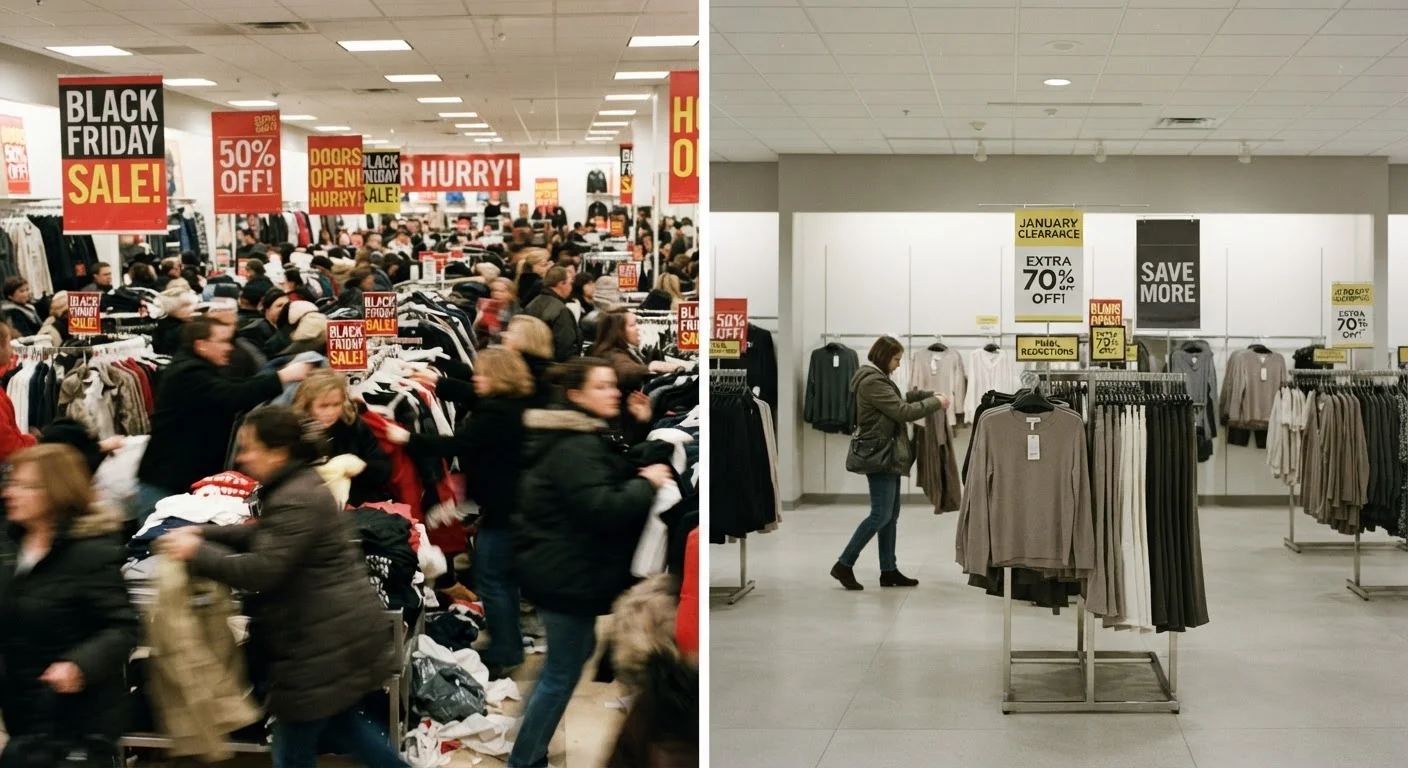
The pattern across all of these: lower consumer awareness + genuine inventory pressure = real discounts. Compare that to Black Friday, where high consumer awareness + retailer-controlled pricing = manufactured urgency.
For categories where timing is less obvious - and where marketplace platform selection matters as much as timing - the guide to marketplace fees, seller trust, and return policies adds important context about where to buy, not just when.
How to Build a Myth-Proof Shopping System
Debunking myths is useful. Building a system that doesn't require you to remember each myth individually is more useful. Here's a repeatable process that applies across every holiday event:
- Check price history before you buy anything. Use CamelCamelCamel, Keepa, or Honey's price history feature. A deal is only real if the current price is genuinely lower than the 90-day average - not the "was" price the retailer invented last week.
- Map your shopping list to the actual best calendar window for each category. Appliances in May or September. Tech in July or January. Apparel in January or end-of-season. Don't let Black Friday compress your entire list into a 48-hour window.
- Set price alerts, not shopping dates. Tools like Google Shopping alerts, CamelCamelCamel alerts, and retailer-specific wishlist notifications remove the urgency trap. You buy when the price hits your target, not when the calendar says you should.
- Factor in total cost, not sticker price. Shipping, return windows, and marketplace seller reliability all affect real value. A 20% discount from an unreliable seller with a 14-day no-return policy may cost more than full price from a retailer with free returns.
- Treat "limited time" and "limited quantity" language as signals to pause, not signals to rush. These phrases are designed to override rational evaluation. When you feel urgency, add the item to your cart and walk away for 20 minutes. If it's gone, it was the wrong deal.
Strategies to navigate Black Friday without the chaos can help you apply this framework specifically to the November window if that's where most of your shopping is concentrated. And if clearance shopping is part of your broader strategy, check whether clearance shopping myths are affecting your timing there too.
The bottom line: holiday sales are a tool retailers use to drive volume. Shoppers who understand the calendar, verify prices independently, and buy on their own terms - not the retailer's - consistently outperform those chasing the hype. The system isn't complicated. It just requires using it.