

Key Takeaways
Why Clearance Shopping Mythology Is So Expensive
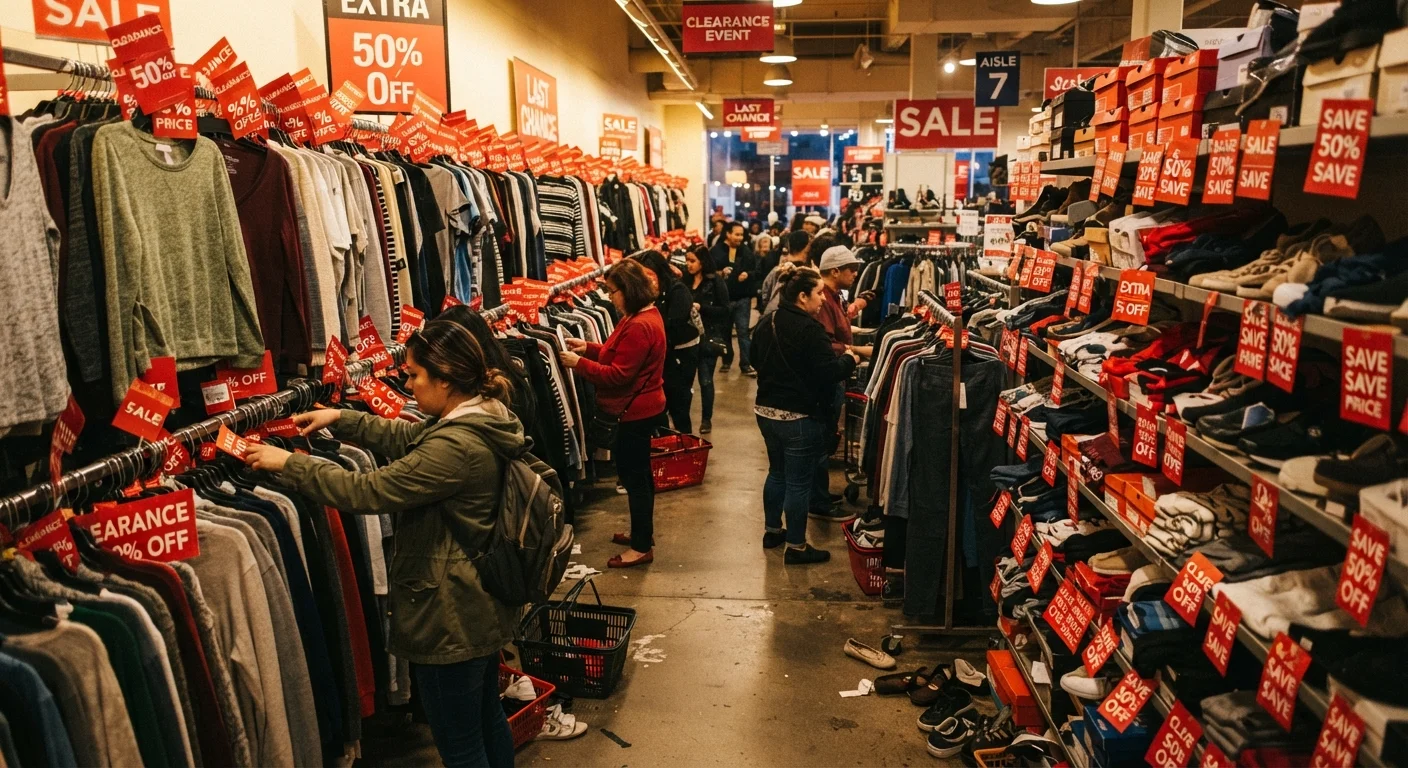
Clearance shopping has a reputation for being simple: show up at the end of the season, grab the discounted goods, save big. Retailers would love for you to keep believing that. The reality is that clearance pricing is a deliberate, phased system designed to move inventory efficiently - and it has very little to do with rewarding the patient shopper.
The myths around clearance aren't harmless. They shape when you shop, what you buy, and how much you're willing to pay. And most of them funnel you toward moments that benefit the store, not your wallet. Understanding the actual mechanics of how clearance works - how markdowns are scheduled, how stock is rotated, and how urgency is manufactured - is the difference between scoring genuine value and overpaying for leftovers.
This article breaks down the most costly clearance myths, corrects them with the mechanics retailers actually use, and gives you a framework for shopping clearance like someone who knows the system from the inside.
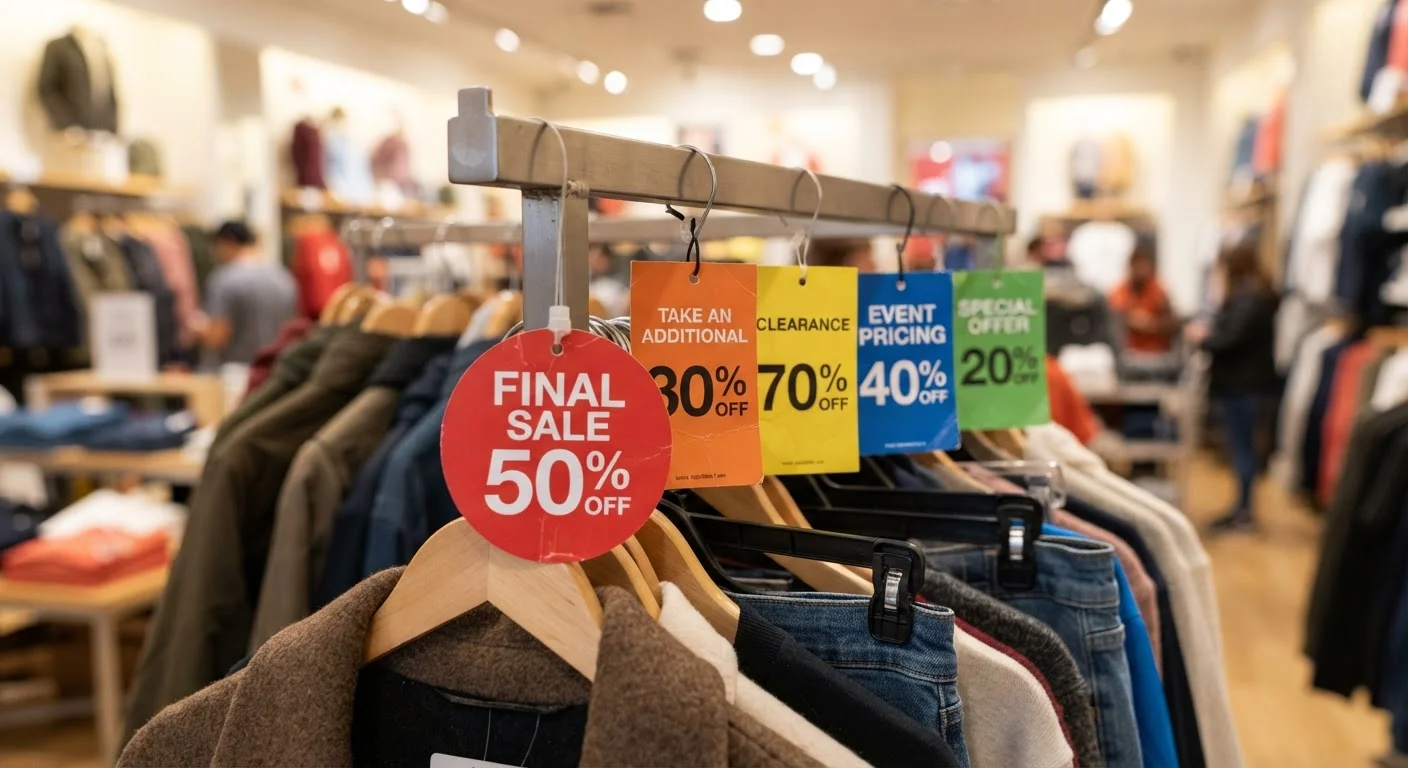
For context on how this compares to other deal-hunting strategies, see how clearance stacks up against Black Friday savings - the findings may surprise you.
The Core Myths, Corrected
Below are the most pervasive clearance shopping misconceptions, paired with the retail logic that actually governs how these discounts work. Each myth is something a reasonable, informed shopper might believe - which is exactly what makes them dangerous.
Myth
End-of-season is always the best time to shop clearance. Wait long enough and you'll get the steepest discount.
Fact
The deepest discounts and best selection typically peak several weeks before the season ends, not after it.
Retailers begin clearance markdowns when new seasonal inventory starts arriving - usually four to eight weeks before the calendar season changes. By the time the season officially ends, the desirable items in popular sizes are already gone. What remains is the least sellable stock, and retailers are often reluctant to discount it further because the cost of further markdowns exceeds the value of clearing it quickly.
Shopping too late means choosing between bad selection at moderate discounts, or poor quality at steep ones. The sweet spot is early-to-mid clearance cycle - when the first wave of markdowns has hit but selection is still reasonable. Late August is a prime example of when retailers slash prices hardest while stock is still worth buying.
Myth
A clearance price tag means you're getting the best available deal on that item.
Fact
Clearance pricing is set against the retailer's own original price, not the market price - the same item is often cheaper elsewhere.
Retailers calculate clearance discounts as a percentage off their own retail price. If that retail price was inflated to begin with, even a 50% clearance discount may not beat a competitor's regular price. This is especially common with name-brand apparel, small appliances, and seasonal home goods.
Before buying anything on clearance, run a quick price check against at least two other sources - a competing retailer, a marketplace like Amazon, and a price history tool like CamelCamelCamel or Honey. You'll frequently find that a "70% off" clearance tag still doesn't represent the market's best price.
This same dynamic plays out heavily during holiday sales events. Black Friday myths follow an identical pattern - deep percentage discounts that don't hold up to independent price verification.
Myth
Online clearance mirrors in-store clearance - same items, same timing, same prices.
Fact
Online and in-store clearance are managed as separate inventory systems with different markdown triggers, timing, and discount depths.
In-store clearance is driven by floor space pressure - when new merchandise arrives, old stock must physically leave the building. That urgency produces genuine, aggressive discounts. Online clearance has no such constraint. A retailer can warehouse clearance inventory and discount it slowly, which means online prices often lag behind in-store prices by weeks and may never reach the same markdown depth.
The advantage online clearance does have is selection breadth: you're accessing aggregated inventory from multiple store locations, not just what your local store stocked. For hard-to-find sizes or configurations, online clearance is frequently the only viable channel. Check both independently - never assume they match - and factor in return policy differences before committing.
Myth
If it's on clearance, buying more is always a smart move - stock up while you can.
Fact
Buying excess clearance inventory of the wrong items is one of the most reliable ways to spend more money, not less.
Clearance pricing creates a cognitive trap: the low price makes volume purchases feel rational regardless of whether you actually need multiples. This is exactly the response retailers engineer. A surplus of clearance items you don't use represents a 100% loss on the excess units - no discount offsets that.
A disciplined clearance stockpile strategy requires two things: a pre-existing list of items you genuinely consume at volume, and a verified price-per-unit comparison against your normal purchase channel. If you were already buying six units of something per year, buying a case at 60% off is a real win. If you're buying six units of something you'd normally buy one of, you've spent five units of money you didn't need to spend.
[warning_callout]Myth
Clearance items are always final sale - returning them isn't an option.
Fact
Return policies on clearance vary widely by retailer and item category; many clearance purchases are fully returnable.
The assumption that clearance means final sale leads shoppers to either avoid clearance purchases unnecessarily or accept items they should return. In reality, return policies on clearance items differ dramatically by retailer. Some treat clearance the same as regular merchandise. Others restrict returns to store credit only. A minority mark specific items as non-returnable.
The rule is simple: read the return policy before you buy, not after. Check the tag, ask an associate, or look up the retailer's stated policy online. A clearance item with a restricted return policy should be held to a higher certainty threshold before purchase - only buy it if you're confident it's right, because you won't have the option to fix the decision later.
Myth
Low clearance stock means you need to buy immediately before it sells out.
Fact
Retailers actively manage the appearance of scarcity on clearance floors as a sales tactic - low visible stock doesn't always mean true scarcity.
Clearance thinning is a documented retail practice: stores pull a portion of clearance stock off the floor to create the visual impression of scarcity. The goal is to accelerate purchases before the next markdown wave would naturally hit. The remaining inventory may be in the back stockroom or available online, but the floor display signals urgency that doesn't reflect actual availability.
Before making a scarcity-driven decision, ask a store associate whether additional stock exists in the back. Check the retailer's website for the same item. If it's genuinely gone from both channels, then scarcity is real. If it's available elsewhere at the same price, the urgency was manufactured. Treating scarcity as a trigger rather than a signal to verify is one of the most consistent ways shoppers overpay on clearance. The same tactic appears in holiday sale contexts - see holiday sale myths for how it plays out across other sale formats.
Myth
All clearance sections follow the same discount schedule, so you can apply one strategy everywhere.
Fact
Markdown cadence varies significantly by category, retailer, and even individual store location.
Apparel at a department store might mark down weekly during clearance. Electronics at a big-box retailer might hold the same clearance price for six weeks before a single additional cut. Home goods at a specialty chain might never receive a second markdown at all - the initial clearance price is the final price. Applying a single strategy across all of these produces inconsistent results.
The solution is category-specific knowledge. Observe how specific stores handle specific categories over time, or consult resources that have mapped these patterns. The markdown cycle field guide by category covers how these rhythms differ across major product types and gives you a concrete basis for setting purchase timing expectations.
Category matters here too. Apparel, electronics, and home goods each follow their own markdown rhythm. If you want a category-by-category breakdown of how those cycles differ, the markdown cycle field guide maps it out clearly.
The Markdown Schedule Retailers Don't Advertise
Most major retailers - especially department stores and big-box chains - operate on a predictable markdown cadence. Clearance items typically hit their first discount at 20-30% off, then step down in 10-15 percentage point increments every one to three weeks until they either sell out or get pulled from the floor.
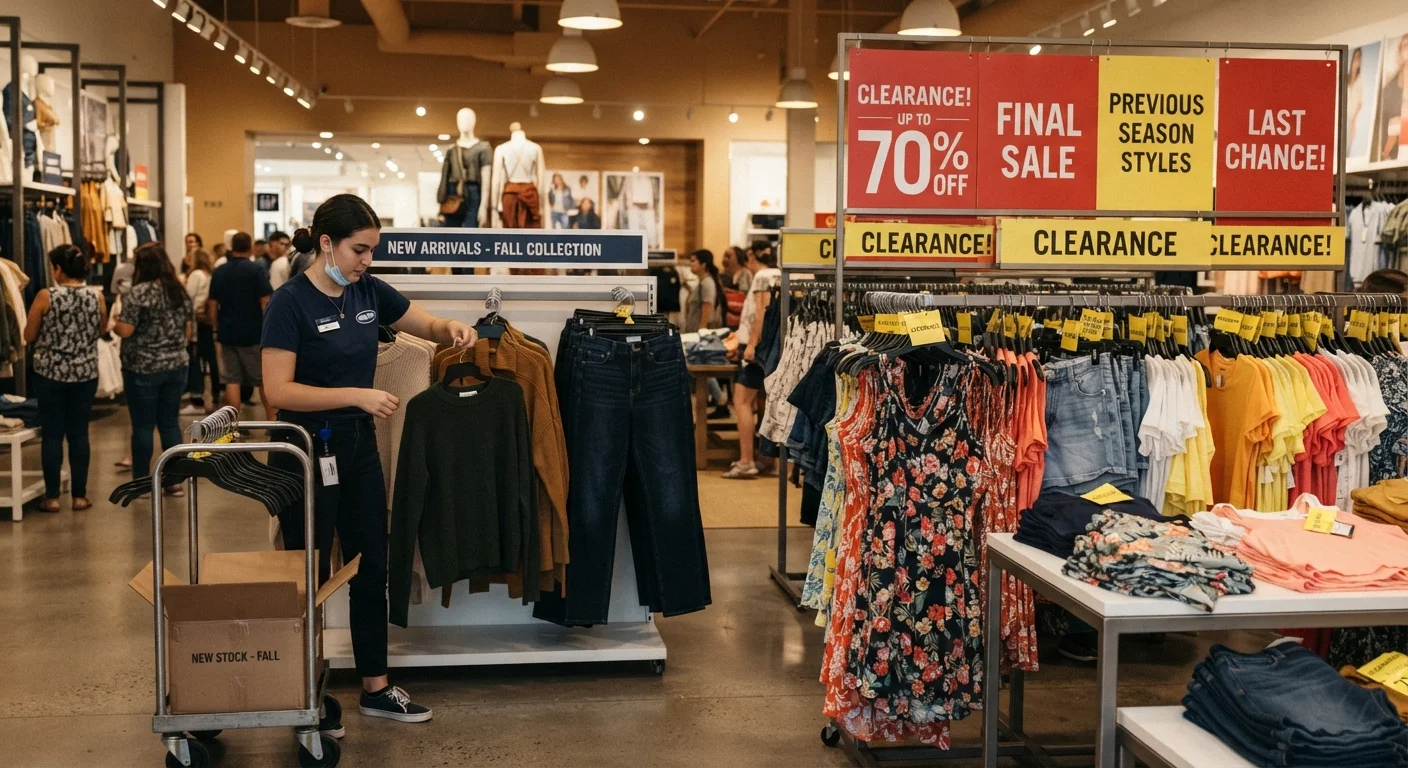
The critical insight: the final markdown is rarely on the same day the item first appears with a clearance tag. Shoppers who arrive on day one of a clearance event are paying a premium compared to those who return two weeks later. The risk, of course, is that desirable sizes and styles disappear before the deepest discount hits.
This is where knowing your categories pays off. High-demand items in popular sizes vanish fast; obscure sizes and colors often sit through multiple markdowns. If you're flexible on size or color, patience is a real financial strategy, not just a platitude.
4-8 weeks
Before season end when peak clearance begins
Most major retailers begin clearance markdown cycles when new seasonal inventory starts arriving, well ahead of the calendar season change.
10-15%
Typical markdown step-down per clearance wave
Clearance prices at major department stores typically decrease in 10-15 percentage point increments on a one-to-three-week cycle until stock clears.
~30%
Average first-wave clearance discount
Items entering a clearance cycle at major chains typically receive an initial markdown of 20-30% off original retail before stepping down further.
2-3x
Price difference between first and final clearance markdown
Items that survive multiple markdown waves often reach 50-70% off by the final round, compared to 20-30% at the first clearance tag.
Retailers also use a tactic called clearance thinning: pulling some inventory off the floor early to make the remaining stock look scarce, which accelerates purchasing before the deeper markdown would naturally hit. Recognizing this tactic helps you resist manufactured urgency.
If you're targeting a specific seasonal window, the winter clearance strategy guide and the pre-season-end shopping checklist both break down specific timing windows worth bookmarking.
Don't Let Clearance Pricing Override Your Actual Needs
The most expensive clearance purchase is the one you didn't actually need. Low prices lower the psychological barrier to buying, which is precisely the retail intent. Before adding a clearance item to your cart, ask: would I buy this at full price? If the answer is no, the clearance price is not saving you money - it's just reducing the size of an unnecessary expense.
Verify Scarcity Before Acting on It
Low stock on a clearance floor does not always reflect true inventory scarcity. Retailers routinely pull stock to the back room to create urgency on the floor. Before making a rushed purchase, ask a store associate about back stock and check the item online. If the item is genuinely unavailable across all channels, scarcity is real. If it's available elsewhere at the same price, the urgency is manufactured and you have time to make a deliberate decision.
Volume Buying Clearance Without a Plan Is a Budget Trap
Buying multiples of a clearance item feels like smart savings math, but excess inventory you don't use represents full losses on those units. Only stockpile clearance items you have a documented history of consuming at that volume. Buying six of something you'd normally use one of annually is spending five units of unnecessary money regardless of the per-unit price.
Online Clearance vs. In-Store: Two Different Games
Many shoppers assume that online clearance mirrors in-store clearance - same items, same timing, same depth of discount. It doesn't. Online and in-store clearance operate as largely separate inventory systems, with different triggers, different markdown frequencies, and different final prices.
In-store clearance is driven by physical floor space constraints. When a new season's merchandise needs to ship, the old stuff must move - fast. That creates genuine pressure to discount deeply. Online clearance, by contrast, carries no floor space penalty. Retailers can afford to be patient, which means online clearance prices often stay higher for longer, and the final markdown may be shallower than what you'd find in-store.
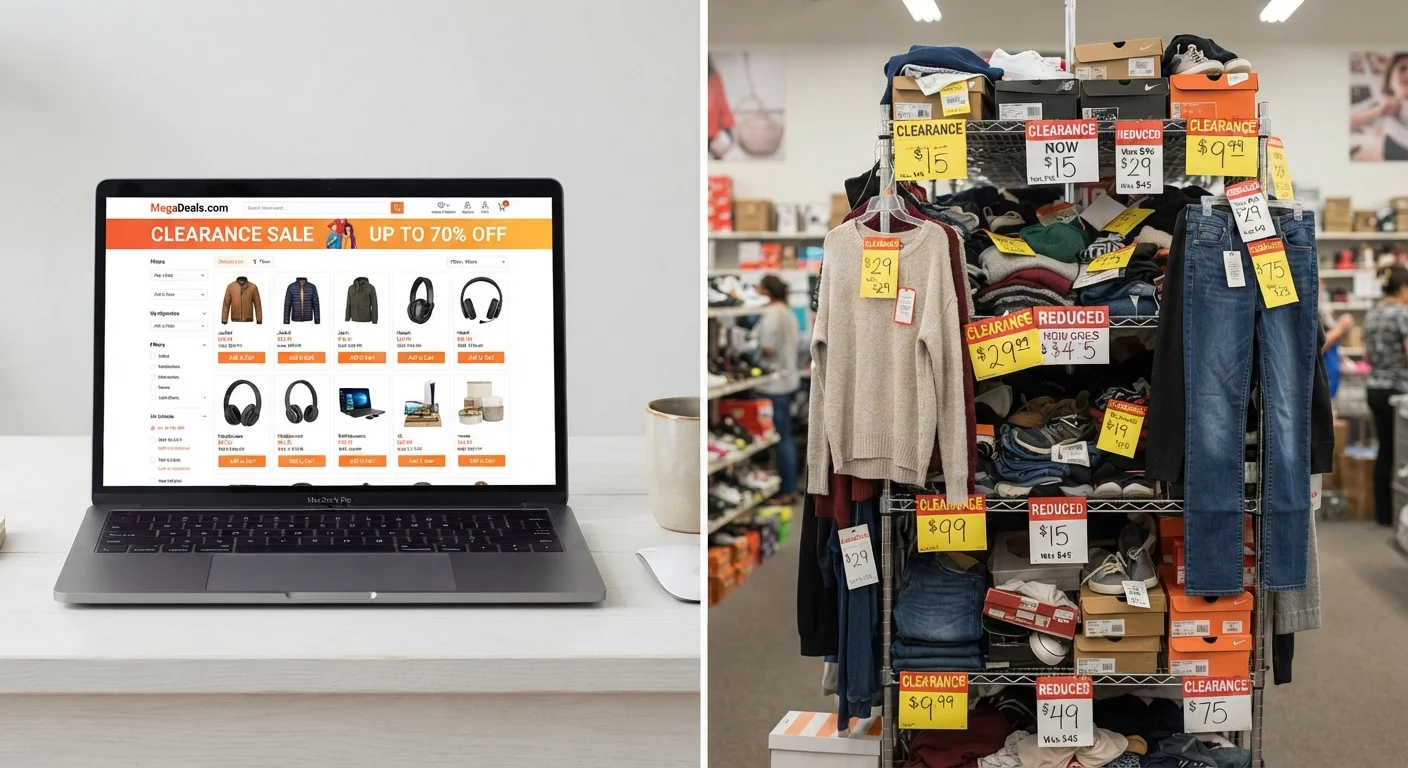
That said, online clearance wins in selection: you can access every store location's leftover stock, not just what your local store happened to receive. For rare sizes, uncommon configurations, or items that sold out locally, online clearance is often the only option.
The practical move is to check both channels independently rather than assuming one reflects the other. Set up price alerts on items you're tracking and compare across channels on a weekly basis. For platform-specific considerations - including how return policies affect the real cost of a clearance purchase - see what shoppers overlook on major platforms.
Clearance Return Policies Can Eliminate Your Safety Net
Many retailers restrict or entirely eliminate returns on clearance merchandise, meaning a wrong purchase is a permanent loss. Before buying any clearance item - especially apparel, electronics, or home goods - verify the return policy explicitly, either on the tag, the receipt, or the retailer's website. A 50% discount with no return option is a much higher-risk purchase than a 20% discount with a full return window. Never assume clearance policy matches regular merchandise policy at the same store.
Seasonal Timing: When Clearance Actually Peaks
The popular assumption is that clearance is deepest right when the season ends - the day after summer, or the week after Christmas. That's not how retail inventory cycles work. The deepest discounts typically appear several weeks before the calendar season ends, not after it.
Here's why: retailers begin clearance markdowns when new inventory starts arriving - which is usually four to eight weeks before the season officially turns. By the time the calendar flips, the best stock is already gone and what remains is the least desirable product at a price the store is still reluctant to cut further.
Late August is a textbook example: late August routinely produces the steepest summer discounts precisely because fall inventory is hitting shelves while summer goods still need to clear. Waiting until September means picking through what nobody else wanted.
The same dynamic applies to post-holiday. The week after Christmas does produce clearance deals - but the most aggressive markdowns on holiday-adjacent items (entertaining ware, decorative goods, seasonal apparel) often hit in the last week of December, not the first week of January.
Timing your purchases correctly is, by almost any measure, a more powerful savings lever than coupon stacking or cashback optimization. The data backs this up - see why timing outperforms discount-hunting tactics for the full analysis.
Building a Clearance Strategy That Actually Works
Clearance shopping stops being a gamble the moment you treat it as a system. Here's the framework that consistently outperforms impulse shopping the clearance rack:
- Map the markdown schedule for your target stores. Visit the same stores two to three weeks apart and photograph clearance prices on tracked items. You'll identify the markdown cadence within a month of observation.
- Know which categories are worth waiting on vs. buying early. Popular sizes and styles in apparel need to be bought early in the clearance cycle or not at all. Bulky items, home goods, and holiday décor can almost always be waited out for a deeper cut.
- Check both online and in-store independently. Never assume they match. The better deal can be on either channel depending on the item and the timing.
- Ignore manufactured urgency. Low stock displays and clearance countdown messaging are retail tools. Verify actual scarcity before letting it drive your decision.
- Factor in return policy before you buy clearance. Many retailers restrict or eliminate returns on clearance items. A non-returnable item at 40% off is a terrible deal if it doesn't fit your needs exactly.

For shoppers who extend their clearance hunting into secondhand and thrift channels, the same timing and selection principles apply. Where affordable decor actually hides covers sourcing channels worth adding to your rotation, and why thrift store gems end up in someone else's cart explains the timing mistakes that cost shoppers their best finds.
Clearance shopping done right isn't about luck or showing up at the right moment by accident. It's about understanding the system well enough that you can predict the right moment - and act on it deliberately.
For holiday-specific myths that follow the same manufactured-urgency playbook, see holiday sale myths that cost shoppers money every year. The patterns overlap more than most shoppers realize.