
Getting Dressed When Nothing Feels Right: Building Outfits from What You Already Own
Before reaching for anything new, learn how to unlock the combinations hiding in your current closet with a few practical styling strategies.
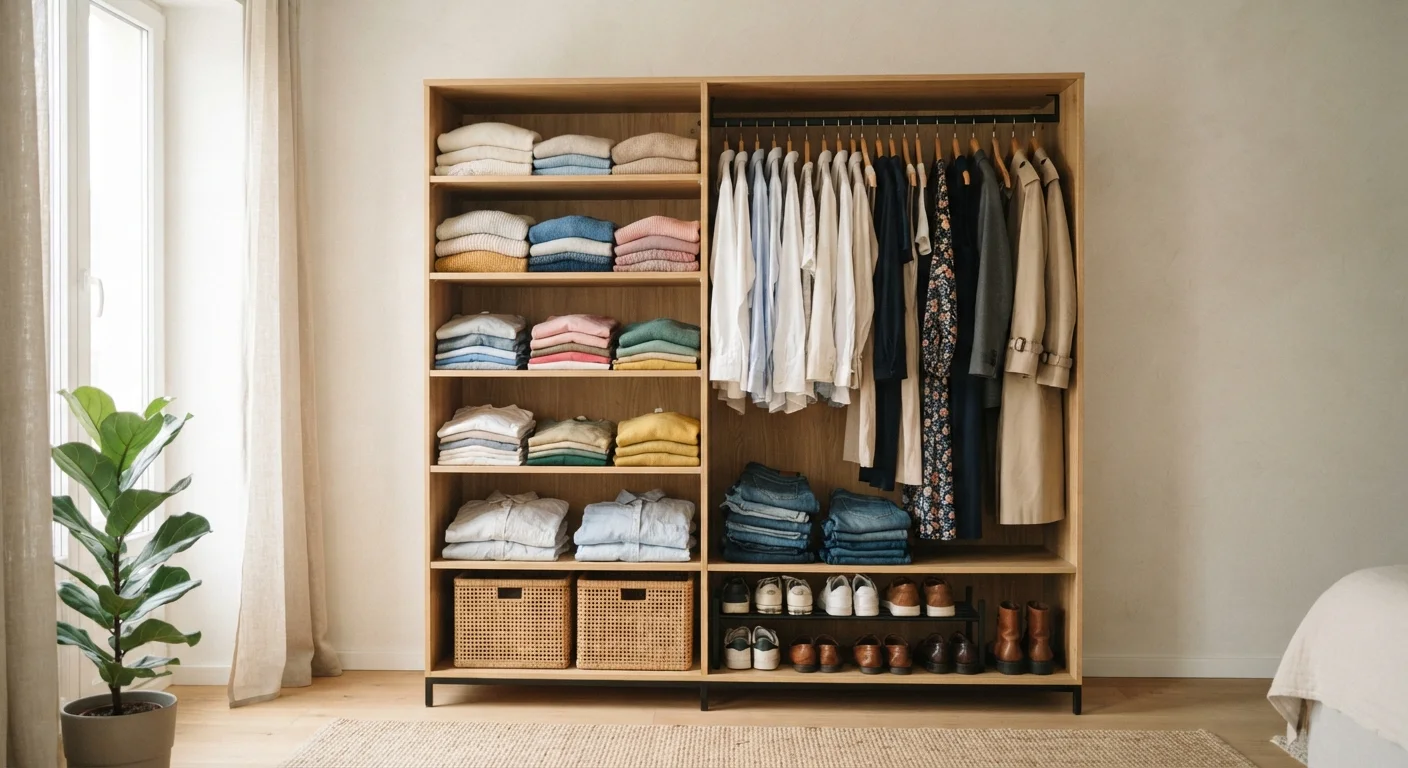
Photo: SaverSteals.com editorial
—— In This Article
Key Takeaways
- Most closets contain untapped outfit combinations — a systematic approach reveals them.
- Starting with a single anchor piece and building outward is a reliable outfit-construction method.
- Neutrals, fit, and color temperature are the three levers that make or break a combination.
- Accessories and layering can transform a familiar outfit into something that feels new.
- Knowing what you own prevents impulse purchases that add clutter without adding options.
Why Your Closet Feels Empty When It Isn't
The experience of staring at a full closet and feeling like there's nothing to wear is genuinely common — and it has less to do with how many clothes you own than with how they're organized and how you approach them. When every item is equally visible and equally accessible, the brain registers it all as noise rather than options. The result is decision fatigue before the day has even started.
There are usually a few structural reasons this happens: too many pieces that don't connect to anything else, items kept out of guilt rather than genuine use, and a habit of defaulting to the same three combinations while ignoring the rest. If this sounds familiar, you might recognize some of the patterns described in our piece on wardrobe mistakes that make getting dressed harder.
The good news is that you don't need a wardrobe overhaul or a shopping trip. You need a method. The steps below walk you through building a complete outfit from what you already own — using color, proportion, and layering as your tools.
What you will need
The Outfit-Building Method: Step by Step
Full-length mirror
Lets you evaluate proportions and overall silhouette as you build each combination.
Clothing rack or chair
Holds candidate pieces outside the closet so you can see them side by side.
Phone camera
Photograph outfits that work so you can recreate them quickly on busy mornings.
Pull everything out and do a quick visibility pass
Before you can build outfits, you need to see what you actually have. Quickly flip every hanger to face the same direction and pull folded items out of drawers. You don't need to do a full wardrobe audit right now — just make sure nothing is buried or hidden at the back. Pieces you can't see don't exist for outfit-building purposes.
Choose one anchor piece you actually want to wear today
Pick one item you feel drawn to — something you're genuinely in the mood for, not something you feel obligated to use. This becomes your anchor. Anchors can be anything: a pair of jeans, a patterned blouse, a blazer. The rest of the outfit will respond to this piece, not the other way around.
If you're unsure where to start, bottoms are often easier anchors than tops because they define your silhouette first. For more on how silhouette interacts with your shape, see our piece on dressing for your body shape.
Find two or three complementary pieces using the color temperature rule
Color temperature — whether a piece reads as warm (yellows, oranges, warm browns) or cool (blues, grays, purples) — is the single most useful filter for pairing clothes without formal color theory knowledge. Pieces that share the same temperature tend to look intentional together, even when the shades differ. Neutrals like white, black, and true navy bridge both camps.
Pull two or three potential companions for your anchor and check: do they share a temperature, or does one feel like it belongs to a different season entirely? For a deeper dive, our guide to color confidence and undertones explains exactly why some pairings click.
Check fit and proportion before committing
Put the combination on and stand in front of your mirror. Fit and proportion matter more than any individual item's quality. A loose top pairs better with a more fitted bottom, and vice versa — this balancing act is what creates a polished silhouette rather than a shapeless one. If both pieces are oversized, one of them needs to be tucked, belted, or swapped.
Also check length relationships: a cropped top changes how high-waisted a bottom reads; a long shirt can visually shorten legs unless it's tucked or half-tucked. These details are small but they shift the entire impression of the outfit.
Add one layer or one accessory — not both
Once the base combination works, consider whether a layer or a single accessory would add something useful. A jacket, cardigan, or open shirt adds depth and can shift the outfit's register from casual to smart-casual. For a breakdown of that difference, see our comparison of casual vs. smart-casual. If layering interests you more broadly, our piece on layering clothing across seasons covers it thoroughly.
Accessories — a belt, a scarf, a simple necklace — can ground the outfit or tie colors together. The key word is one. Piling on both a statement layer and multiple accessories tends to compete for attention. Pick the addition that does the most work and stop there. For guidance on when accessories help versus overwhelm, see accessories as a style tool.
Photograph the outfit and note what made it work
This is the step most people skip — and the one that pays dividends every rushed morning afterward. Take a quick photo of the finished outfit, ideally from head to toe. In a notes app or even a voice memo, record the specific combination and what you liked about it: the color pairing, the proportion balance, the layering choice.
Over time, these records reveal patterns in what actually works for you — patterns that are far more reliable than abstract style rules. They also help you identify genuine gaps, which is the more intentional starting point for any future shopping. That's a concept worth exploring further in our piece on cost-per-wear as a clothing value metric.
What to Do When Nothing Still Clicks
Sometimes you genuinely reach the end of the process and still feel stuck. That's useful information. If a piece consistently resists pairing with anything else in your wardrobe, it may be what stylists sometimes call an orphan — an item that works in theory but has no real counterparts in your actual closet. Orphans are worth setting aside rather than forcing.
If entire categories feel thin — say, you have many tops but almost no bottoms that feel current or well-fitted — that's a gap worth noting for intentional shopping later, rather than impulse-buying now. Building an everyday wardrobe from scratch is a useful companion if you find your closet needs more structural rethinking.
The '10-Second Rule' for Orphan Pieces
Hold the orphan item up and count to ten while scanning your closet for something that pairs with it naturally. If nothing comes to mind in that time, the piece is earning its place on effort alone — not utility. Consider moving it to a 'revisit' pile rather than letting it clog your decision-making every morning.
For guidance on how denim fits affect pairing options — one of the most common sticking points — our piece on denim fits decoded is a practical reference. And if you're curious about mixing prints once your basics are sorted, pattern mixing covers the informal logic that makes it work.

Style Editorial Team
Style Editorial Team is the collective byline for our editorial team and contributor network. Articles published under this byline or an editorial pen name are researched, written, and reviewed according to our editorial standards for clarity, consistency, and independence before publication.
View author profile