
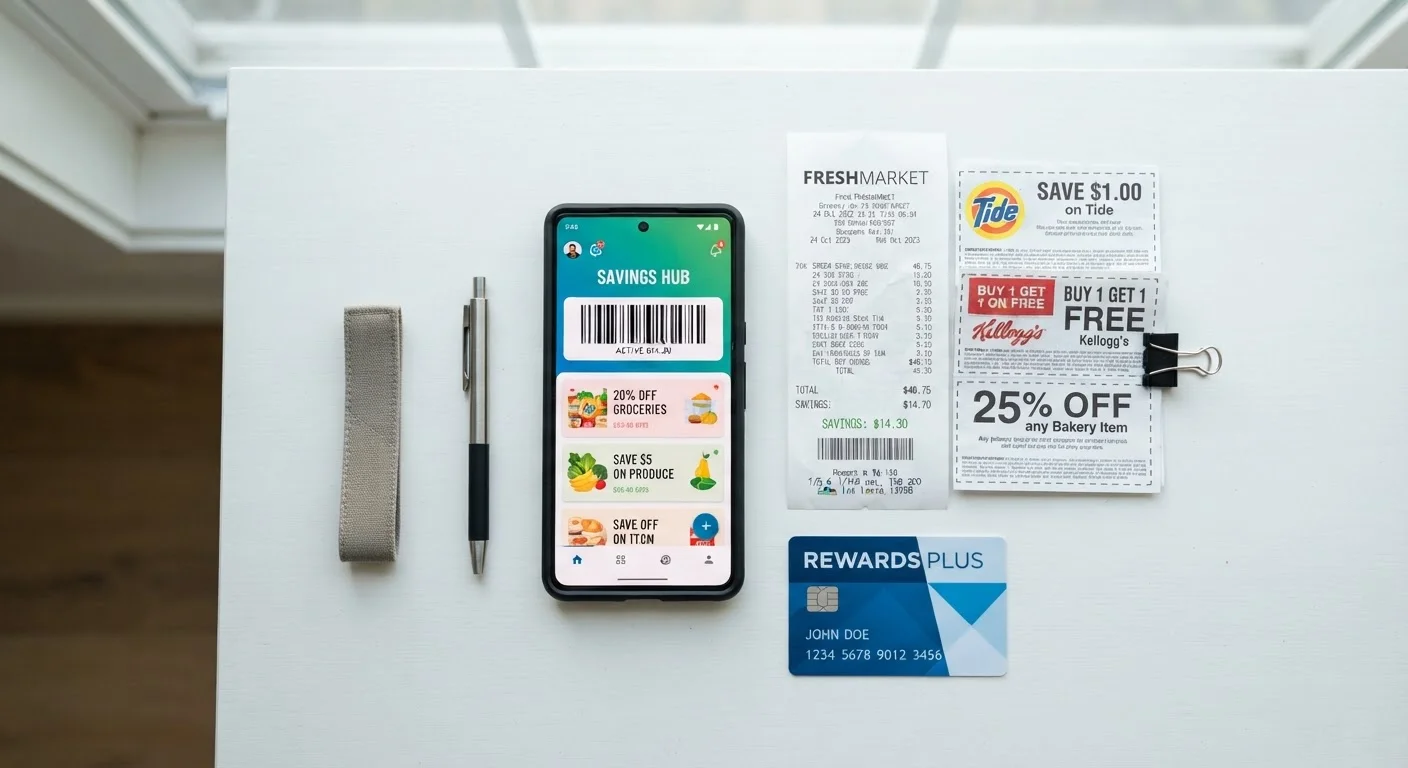
Key Takeaways
Summary
28 items · 10-25 minutes
Why You Need a Pre-Checkout Audit
Most coupon rejections aren't caused by bad coupons - they're caused by bad preparation. A shopper arrives at the register with a stack they assembled on the fly, and when one coupon conflicts with another or a policy they didn't read, the whole transaction stalls. The cashier gets frustrated, the line backs up, and the shopper usually surrenders savings just to move things along.
That's a preventable outcome. A systematic pre-checkout audit - run before you leave your house or before you click "place order" - closes the gaps that turn a promising stack into a failed one. This checklist covers every layer of a legal coupon combination: store coupons, manufacturer coupons, digital offers, cashback apps, loyalty rewards, and promo codes. Work through it in order, because sequence matters as much as selection.
If you're new to how these layers interact mechanically, start with Coupon Stacking Explained: How Layering Discounts Actually Works before running this audit - it'll make every step below more intuitive.

Tools You'll Need for a Complete Audit
Before working through the checklist, make sure you have the right tools staged. A coupon stack is only as strong as the infrastructure supporting it - missing an app or forgetting a loyalty login mid-transaction is a common reason savings evaporate at checkout.
Store Loyalty App
Clip digital store coupons, activate personalized offers, and link your loyalty account to transactions for automatic discount application.
Ibotta
Activate product-specific cashback offers before shopping and submit your receipt post-purchase to earn rebates on top of in-store discounts.
Rakuten (formerly Ebates)
Earn percentage-back cashback on online purchases by shopping through the Rakuten portal or activating the browser extension before checkout.
Fetch Rewards
Scan any grocery receipt to earn points on participating brands without pre-clipping specific offers - works as a passive savings layer.
Honey or Capital One Shopping
Automatically test and apply promo codes at online checkout to find the best available discount code without manual searching.
Coupons.com or RetailMeNot
Source printable manufacturer coupons and retailer-specific promo codes to supplement store and app-based discounts.
Retailer's Written Coupon Policy
Your authoritative reference for what stacking combinations are permitted - save a screenshot or PDF for use at the register if questioned.
Have all apps updated and accounts logged in before you start the audit. An expired session or an app that needs an update can cost you a clipped offer at the worst possible moment.
The Pre-Checkout Coupon Stacking Checklist
Work through each group in order. Items marked must are non-negotiable for a valid, rejection-proof stack. Should items meaningfully increase your savings in most situations. Nice-to-have items add incremental value when time allows.
Policy Verification
Coupon Eligibility Check
Digital Offers and App Setup
Stack Sequencing
Loyalty Rewards and Credit
Documentation and Backup
For a deeper look at which digital combinations consistently pay off and which trigger policy flags, see Stacking Digital Coupons: Getting the Most Out of Multiple Savings Tools at Once. It covers the layering logic behind cashback apps, store apps, and promo codes in detail.
Double-Check "One Coupon Per Transaction" Language
Some coupons restrict to one per transaction rather than one per item - a meaningful difference if you're buying multiples. If your coupon says "one per transaction," you'll need separate transactions to use it on multiple qualifying items. Attempting to apply it twice in one transaction will cause a register error and slow down your checkout considerably.
Cashback Apps Don't Always Cover Sale Items
Some cashback app offers explicitly exclude items already on sale or part of a store promotion. Read the offer terms within the app - not just the headline amount - before counting that layer in your stack. An assumed rebate that doesn't apply will throw off your expected savings calculation.
Coupon Stacking During Holiday Sales Often Has Restrictions
Major retail events like Black Friday, Cyber Monday, and back-to-school sales frequently suspend normal coupon stacking rules. Promotions during these periods often include language like "not valid with any other offer" - which can invalidate your store or manufacturer coupon even on a non-sale-price item.
Understanding Coupon Sequencing and Why Order Matters
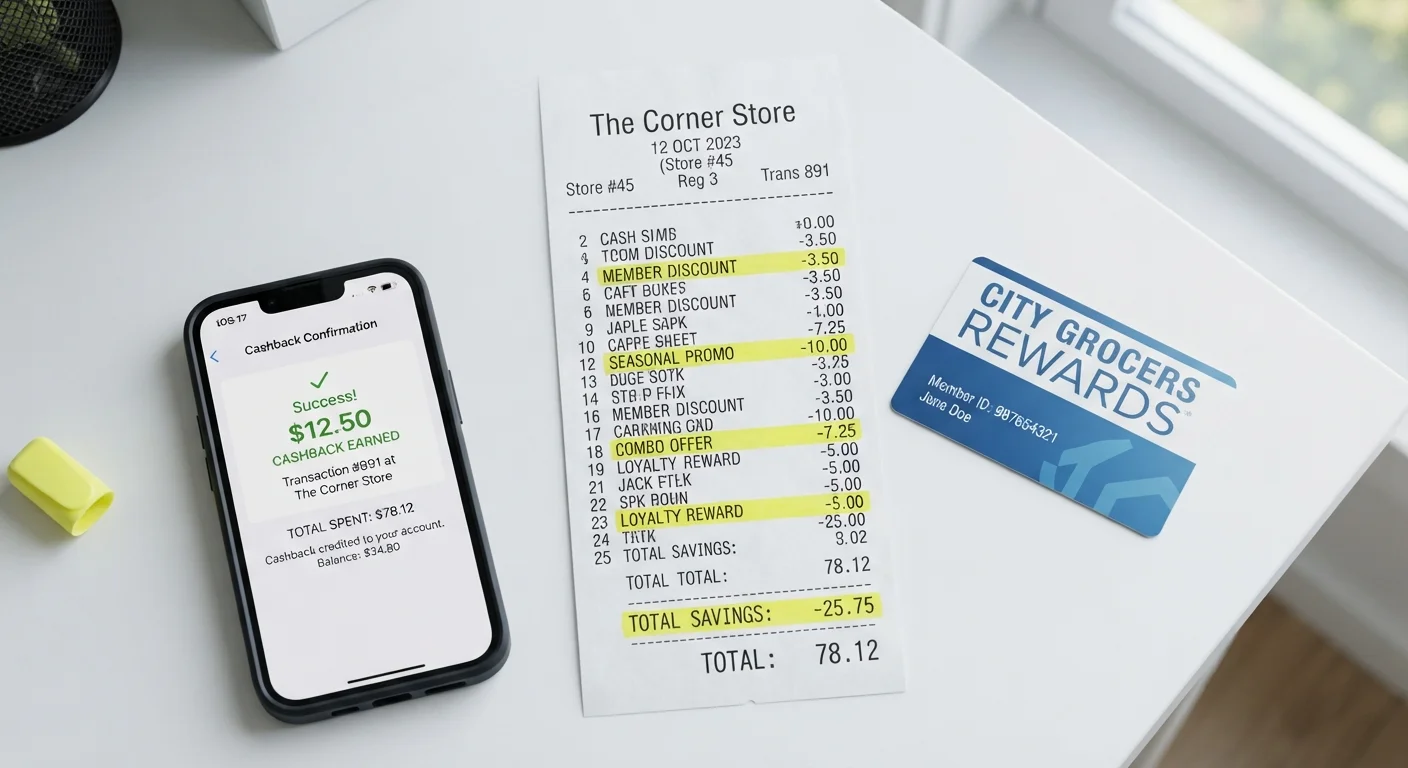
One of the least-understood aspects of coupon stacking is that discounts don't all apply to the same base price. The sequence in which coupons are processed determines how much each one actually saves you.
Here's the standard order most retailers follow:
- Store sale price is applied first, reducing the retail price.
- Store coupon reduces the sale price further.
- Manufacturer coupon applies after the store coupon, reducing the post-store-coupon price.
- Loyalty rewards or store credit may apply at this stage or at point of sale, depending on the retailer.
- Cashback apps (like Ibotta or Rakuten) apply post-transaction, as a rebate on the final price you paid.
Why does this matter? If a manufacturer coupon is for $1.00 off a $3.00 item, but the store sale already brought it to $2.50 and a store coupon knocked off another $0.75, the manufacturer coupon applies to $1.75 - which may trigger a beep if the coupon value exceeds the item price. That's not fraud; it's a sequencing outcome you need to anticipate.
Coupon Overage Can Trigger Fraud Flags
When the combined value of coupons applied to an item exceeds its selling price, the resulting overage can trigger an automated fraud alert in some POS systems - even when the stack is entirely legitimate. This is especially common with high-value manufacturer coupons on deeply discounted items. Always verify that your coupon values don't exceed the post-sale, post-store-coupon price of each individual item before you reach the register.
Never Alter or Reproduce Coupons
Photocopying, digitally editing, or reproducing coupons - even for personal use - constitutes coupon fraud and is prosecuted federally under wire fraud statutes. This includes sharing a single-use coupon code across multiple accounts or using a coupon that was generated for a different geographic region. Stick to coupons sourced directly from manufacturer websites, official store apps, or reputable aggregators.
Retailers vary in how they handle coupon overage. Some will adjust the coupon to the shelf price (called a courtesy adjustment), others will reject it, and a few will issue the overage as store credit. Know your retailer's policy before you build a stack where coupon values approach item cost.
If a cashier questions your stack even when it's legitimate, Why Your Coupon Stack Keeps Getting Rejected at the Register gives you a clear framework for resolving the situation without losing your savings.
Common Stacking Mistakes This Audit Prevents
Running this checklist isn't just about capturing savings - it's about preventing the specific errors that derail transactions and occasionally get shoppers flagged for misuse. Here are the failure modes this audit is designed to catch:
- Using two manufacturer coupons on one item. The most frequently violated rule. One manufacturer coupon per item, period. Two store coupons stacked is also typically prohibited unless the policy explicitly allows it.
- Applying a coupon to an excluded item. Coupons for "any variety" often exclude trial sizes, multipacks, or specific flavors. The fine print defines the eligible item - read it, not just the headline discount.
- Clipping a digital offer but forgetting to activate it. Many store apps require you to tap "clip" on each offer before checkout. Clipping after you've already scanned the item usually doesn't work retroactively.
- Missing the cashback app submission window. Ibotta and similar apps often require you to submit your receipt within 24-48 hours. A deal you forgot to submit is a deal you didn't get.
- Stacking during exclusion periods. Major sale events - Black Friday, back-to-school, anniversary sales - frequently exclude coupons entirely or restrict stacking. The promotion's terms will state this, but shoppers routinely miss it.
For a full breakdown of these pitfalls with retailer-specific examples, Stacking Coupons Without Getting Burned at the Register is worth bookmarking alongside this checklist.
If you shop grocery stores regularly, the Couponing Basics hub has retailer-specific stacking guides that map out exactly what combinations each major chain allows.
After Checkout: Closing the Loop on Your Stack
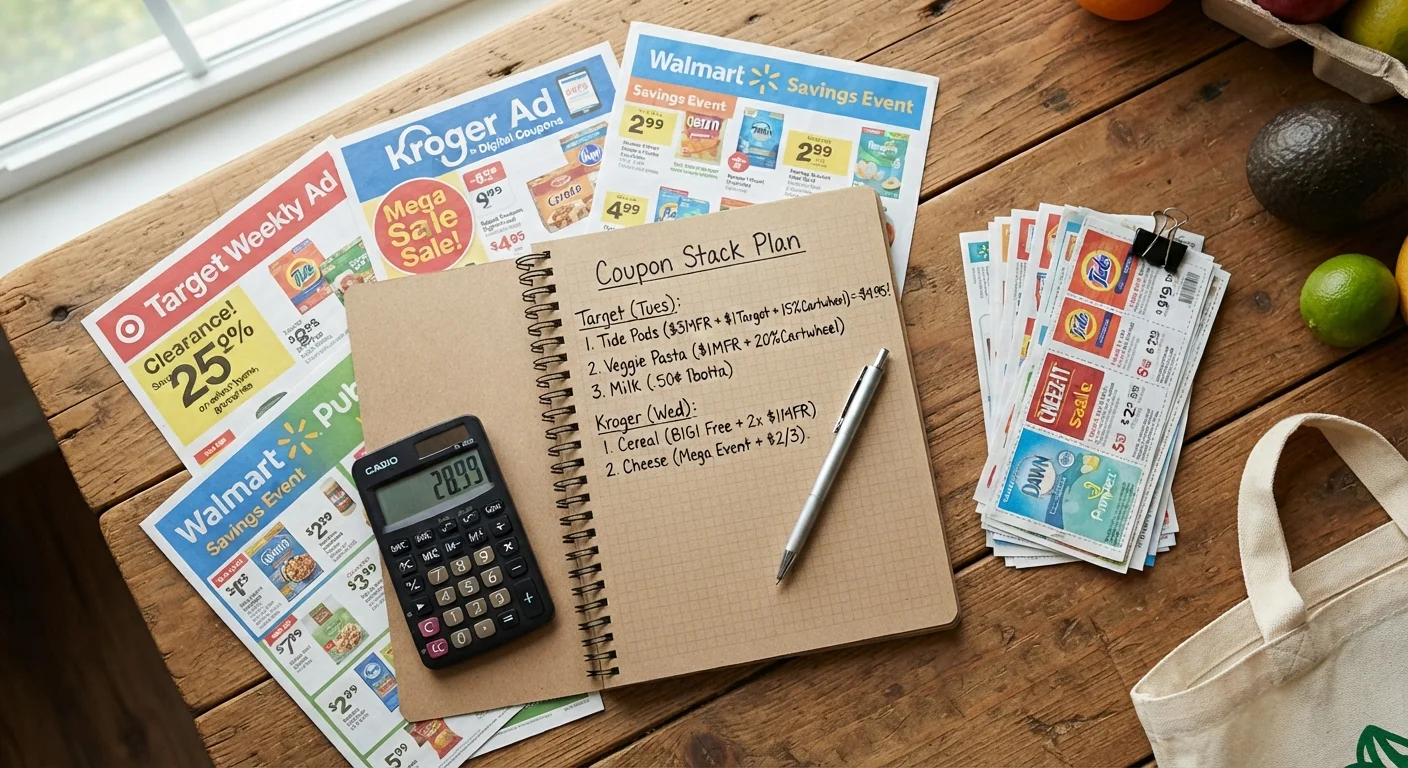
A coupon stack isn't complete at the register - it's complete when every post-purchase layer has been redeemed. Cashback apps, mail-in rebates, and loyalty point credits all require action after you pay, and forgetting them is the most common way shoppers leave money on the table.
Here's your post-checkout routine:
- Submit cashback receipts immediately
- Open Ibotta, Fetch, or whichever app you used before you leave the parking lot or close your browser tab. Receipt submission while the transaction is fresh takes under two minutes and prevents the common scenario of a receipt getting lost or a submission window closing.
- Verify loyalty points posted correctly
- Check your account within 24-48 hours. Points from store apps sometimes fail to post when the loyalty card wasn't properly linked to the transaction. Catching this quickly makes it easier to resolve with customer service.
- Screenshot or save your final receipt
- For any stack involving multiple discounts, a saved receipt is your dispute documentation if a rebate is denied or points go missing. Most retailers and cashback apps will ask for it.
- Note what worked for next time
- Keep a simple note - even a voice memo - documenting which combination of coupons, apps, and codes produced the best result on a specific product. Over time, this becomes a personal playbook that eliminates most of the audit time for repeat purchases.
Coupon stacking rewards shoppers who treat it as a repeatable system rather than a one-off effort. The audit above takes 10-25 minutes the first few times; experienced stackers run through it mentally in under five. The savings compound the more consistently you apply it.
For shoppers who also use loyalty programs as part of their overall strategy, Grocery vs. Retail vs. Brand Loyalty Programs: Where Consistent Shoppers Earn the Most breaks down which programs deliver the best return for regular spenders in each category.