

Key Takeaways
Option A
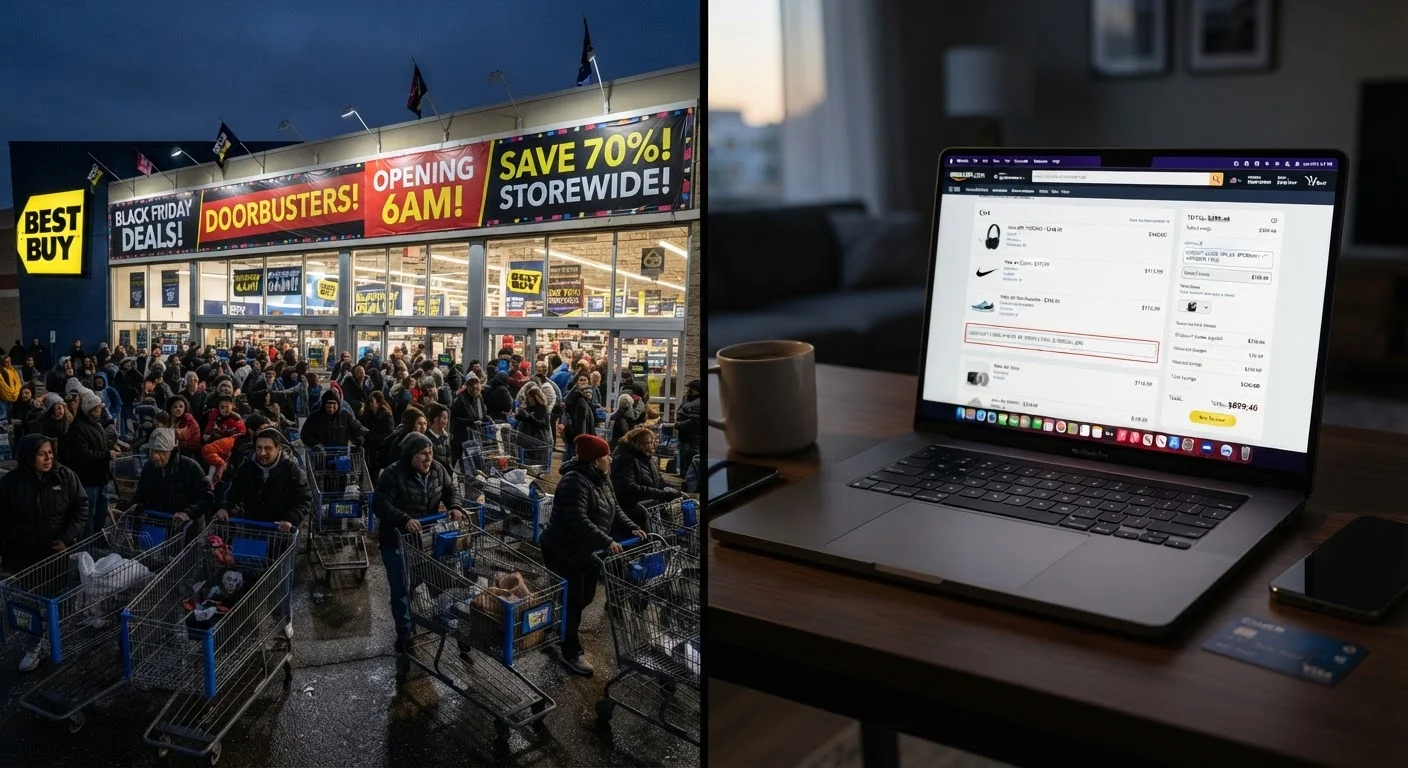
Black Friday In-Store Shopping
The high-stakes, high-reward channel for doorbuster hunters.
Best for: Shoppers who want the deepest one-day discounts on limited-quantity electronics, appliances, and toys and don't mind the early wake-up call.
Option B
Black Friday Online Shopping
The patient shopper's playground for stacked savings and wider selection.
Best for: Consumers who prioritize convenience, coupon stacking, and cashback layering across a multi-day sale window without leaving home.
If you're chasing a specific doorbuster item at the steepest possible discount
Black Friday In-Store Shopping
Doorbusters are physically stocked in finite quantities and rarely replicate online at the same price. Being there in person is the only reliable way to guarantee the deal.
If you want to maximize total savings through stacked discounts
Black Friday Online Shopping
Online checkout allows you to layer a cashback portal, a promo code, and a rewards credit card simultaneously - a triple-stack that in-store registers simply cannot replicate.
If you're buying large appliances or furniture
Black Friday Online Shopping
Retailers post competitive appliance and furniture pricing online, and you avoid the logistical headache of transporting bulky items yourself.
If same-day possession is critical - gifts, urgent needs, or inspecting before buying
Black Friday In-Store Shopping
Walking out with the item eliminates shipping risk, return shipping costs, and the anxiety of a package arriving after your event deadline.
If you're a casual shopper with a flexible list and limited time
Black Friday Online Shopping
The extended online sale window means you can shop at midnight or during a lunch break, and browser price-tracking extensions do much of the legwork for you.
Why the Channel You Choose Changes What You Can Save
Black Friday is not one event - it is two parallel markets running on different rules. In-store retail operates on manufactured scarcity: a fixed number of units, a fixed location, and a first-come-first-served clock. Online retail operates on manufactured urgency: countdown timers, rotating flash deals, and personalized promo codes designed to capture your checkout before you comparison-shop elsewhere.
Understanding that distinction is worth more than any single coupon. The shopper who treats both channels as interchangeable will chronically underperform - either standing in the cold for a deal they could have ordered from bed, or refreshing a product page that never drops to the doorbuster price they saw advertised in the circular.
Before diving into the channel-by-channel breakdown, make sure your wishlist and price benchmarks are already locked in. The Black Friday shopper's prep checklist covers exactly how to do that - from setting price alerts to ranking your targets by in-store-only versus online-available. Skipping that step is the primary reason shoppers overspend or miss the deals they actually wanted.

What In-Store Black Friday Does Better
The retail industry invented the doorbuster specifically to move foot traffic into physical locations. That calculus has not fundamentally changed: certain deals are exclusive to in-store purchase, priced below what any online channel will match, and intentionally limited to create social proof and foot traffic that benefits the entire store.
Doorbuster Pricing Is Genuinely Unmatched
A 65-inch TV priced at $199 in-store on Black Friday morning does not appear at $199 on the retailer's website. Period. Retailers use those units - typically 10 to 50 per store - as loss leaders. They accept the margin hit because the shopper who comes in for the TV also buys accessories, cables, an extended warranty, and walks past every other end-cap promotion in the building. Online, there's no equivalent margin recovery mechanism, so the price doesn't drop as far.
Immediate Possession and No Shipping Risk
When you need a gift by a specific date, in-store removes every logistical variable. No carrier delays, no porch theft, no "delivered to wrong address" support tickets. For high-value items - jewelry, gaming consoles, premium audio gear - being able to physically inspect the product before walking out also reduces the return rate significantly.
Price-Match Leverage on the Floor
Many retailers' price-match policies are easier to execute in person. A printed competitor ad, handed to a floor associate, often converts to an immediate price adjustment. Online price-match workflows typically require submitting a ticket, waiting for approval, and hoping the competitor price hasn't expired before the match is processed.
| Criterion | In-Store Black Friday | Online Black Friday |
|---|---|---|
| Doorbuster pricing | Best-in-class, quantity-limited | Rarely matches in-store doorbuster |
| Sale window length | Primarily one day | 4-7 days, often starts earlier |
| Discount stacking | Not possible at register | Portal + code + card rewards |
| Inventory selection | Limited to store stock | Full catalog, all sizes/colors |
| Immediate possession | Yes, walk out with item | 2-5 day shipping typical |
| Price-match ease | Fast with printed ad | Slower, approval-based process |
| Effort required | High - early start, travel, queues | Low - shop from any device |
| Open-box / floor-model access | Yes, often exclusive to in-store | Limited or none |
| Cashback portal earnings | Not applicable | 2-8% on most retailers |
| Return logistics | Bring item back in person | Ship back, may cost return fee |
Open-Box Deals Are an In-Store Exclusive
During Black Friday weekend, many large-format retailers quietly mark down returned and floor-model items that never appear on their websites. These open-box units are often in perfect or near-perfect condition and priced 15-40% below the already-discounted sale price. Ask a floor associate specifically about open-box inventory in the electronics and appliance departments - it's rarely signposted but frequently available.
Modified Return Windows Are Common on Black Friday Purchases
Many retailers apply special return deadlines to items bought during Black Friday sales, particularly electronics and seasonal goods. Some policies extend the window to January to accommodate gift-giving, while others shorten it to 15 or 30 days. Always read the return policy at the time of purchase - both in-store on the receipt and online in the order confirmation email - before assuming the standard policy applies.
Also worth noting: the in-store experience gives you access to open-box and clearance inventory that never appears online. Large-format retailers frequently mark down floor models and returned items exclusively for in-store shoppers during the Black Friday weekend rush.
What Online Black Friday Does Better
Online Black Friday has quietly become the dominant channel by transaction volume, and for rational reasons that go beyond convenience. The economics of stacking multiple discount mechanisms are simply not available at a physical register.
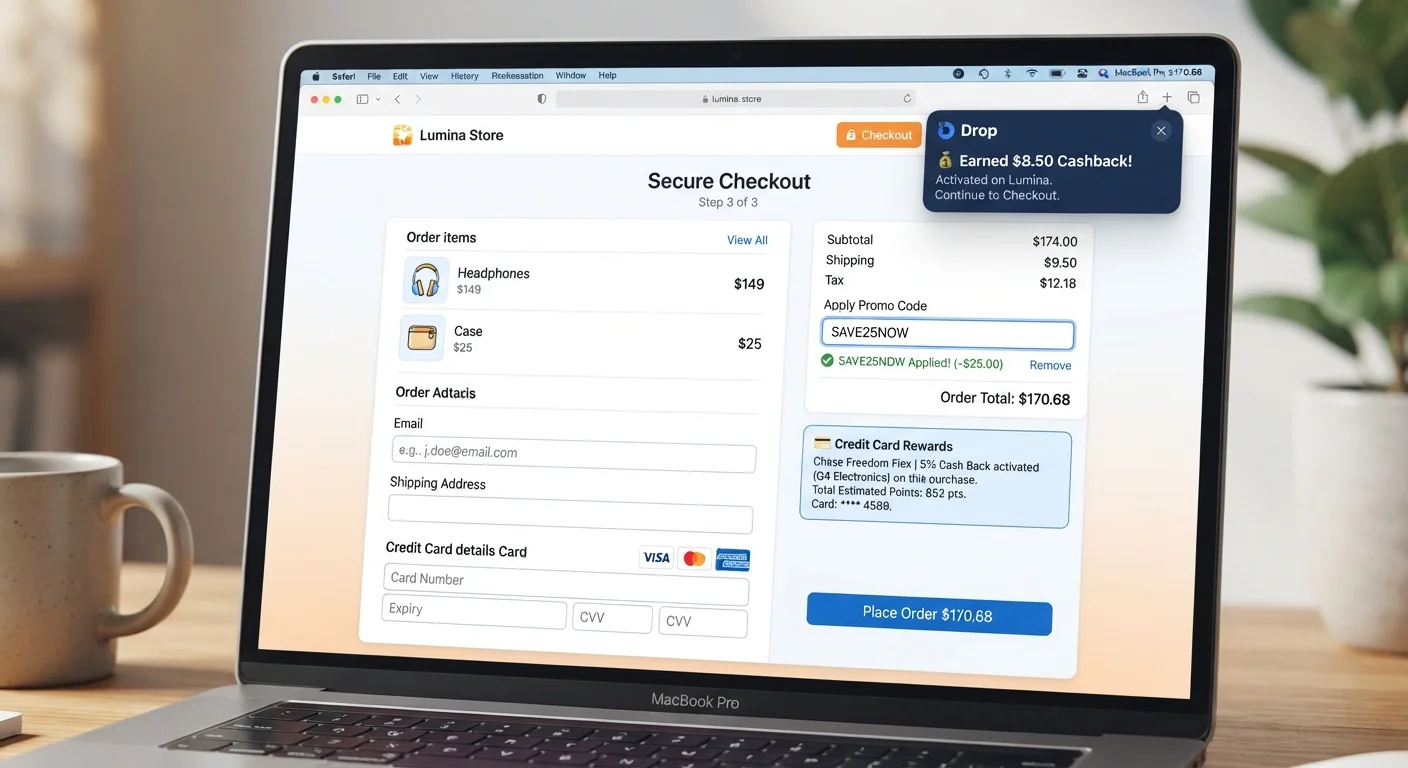
Discount Stacking Is Only Possible Online
The most powerful thing an online shopper can do is layer savings sources simultaneously. A typical stack looks like this: activate a cashback portal (Rakuten, TopCashBack, or similar) before clicking through to the retailer, apply a promo code at checkout, and pay with a credit card that earns 3-5% back on retail purchases. That combination regularly produces 10-18% in total savings on top of the already-discounted Black Friday price - without touching a single in-store doorbuster.
See the Black Friday tips hub for a deeper breakdown of which cashback portals are running elevated rates during the holiday window.
Extended Sale Windows Give You Time to Think
Retail chains now run their online Black Friday sales for four to seven days, starting as early as the Monday or Tuesday before Thanksgiving. That removes the time pressure that drives impulsive in-store decisions. You can add an item to your cart, sleep on it, check competitor prices in the morning, and return to purchase when a secondary price drop or promo code posts.
This patience also intersects with Cyber Monday strategy. Understanding how the two events differ - and which categories see steeper cuts on which day - is covered in detail in why Cyber Monday deals hit different.
Better Category Depth for Non-Doorbuster Items
For anything that isn't a headline TV or gaming console, online inventory breadth crushes in-store selection. Apparel, kitchen gadgets, software subscriptions, luggage, and bedding all see aggressive online pricing that rivals or beats the in-store circular - with full size and color availability rather than whatever's left on the rack after two hours of foot traffic.
76.2M
Online Black Friday shoppers in the US
According to the National Retail Federation's 2023 holiday report, over 76 million Americans shopped online on Black Friday - surpassing in-store traffic for the fourth consecutive year.
$9.8B
US online Black Friday revenue in 2023
Adobe Analytics recorded $9.8 billion in online Black Friday sales in 2023, a 7.5% increase year-over-year, driven largely by mobile purchases and early-access deals.
Up to 18%
Total savings via discount stacking online
Combining a cashback portal, promotional code, and a 3-5% rewards credit card routinely yields 10-18% in compounded savings on top of sale pricing - exclusive to online purchases.
4-7 days
Average online Black Friday sale window
Most major US retailers now run their online Black Friday promotions for four to seven days, beginning as early as the Tuesday before Thanksgiving, per industry tracking by RetailMeNot.
36%
Black Friday shoppers who use both channels
The NRF's 2023 holiday survey found that 36% of Black Friday shoppers intentionally split their purchases between in-store and online - the fastest-growing shopper segment.
Head-to-Head: How the Two Channels Compare
Comparing the two channels across the criteria that actually affect your outcome clarifies where to direct your effort. Not every shopper has the same risk tolerance, schedule, or target category - so map your specific situation against these dimensions before committing to a strategy.
| Criterion | In-Store Black Friday | Online Black Friday |
|---|---|---|
| Doorbuster pricing | Best-in-class, quantity-limited | Rarely matches in-store doorbuster |
| Sale window length | Primarily one day | 4-7 days, often starts earlier |
| Discount stacking | Not possible at register | Portal + code + card rewards |
| Inventory selection | Limited to store stock | Full catalog, all sizes/colors |
| Immediate possession | Yes, walk out with item | 2-5 day shipping typical |
| Price-match ease | Fast with printed ad | Slower, approval-based process |
| Effort required | High - early start, travel, queues | Low - shop from any device |
| Open-box / floor-model access | Yes, often exclusive to in-store | Limited or none |
| Cashback portal earnings | Not applicable | 2-8% on most retailers |
| Return logistics | Bring item back in person | Ship back, may cost return fee |
One dimension the table can't fully capture: the psychological cost. Standing in a queue at 4 a.m. in November is a real expenditure of energy and time. For shoppers who undervalue their own time, in-store doorbusters look like pure wins. For anyone who factors in that cost honestly, the online stack often comes out ahead even on headline-discounted items - especially once you add cashback portal earnings that a typical doorbuster shopper leaves on the table.
For context on how the same channel dynamics play out after the holiday rush, the department stores vs. online outlets during winter clearance comparison is worth reading. The mechanics shift once the urgency of Black Friday fades, and knowing that difference helps you decide whether to buy now or hold.
Building a Hybrid Strategy That Uses Both Channels
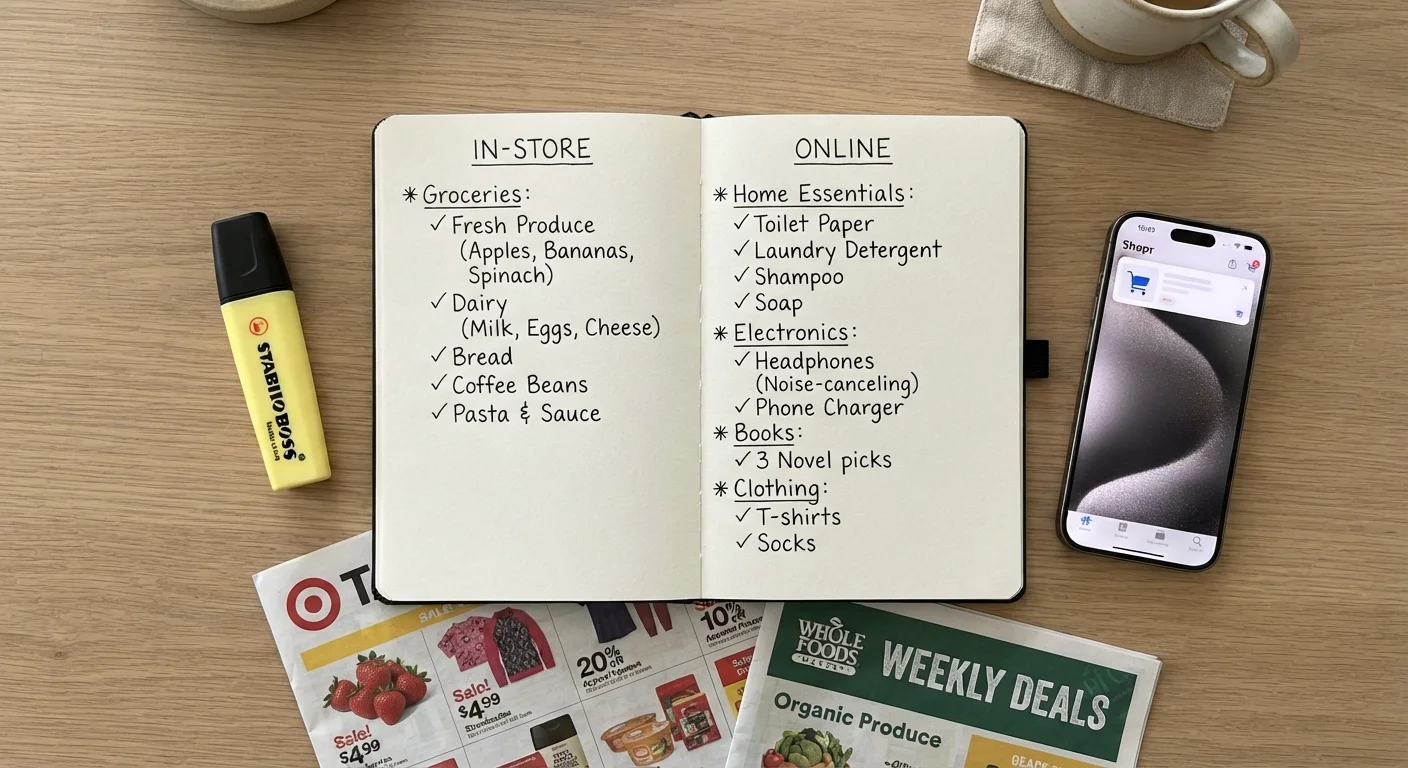
The highest-performing Black Friday shoppers don't pick a lane - they assign each item on their list to the channel where it wins. That requires a small amount of upfront sorting, but the payoff in both savings and reduced stress is significant.
Step 1: Categorize Your List by Deal Type
Go through your wishlist and label each item as either a likely in-store doorbuster (specific SKUs advertised in the weekly circular at steep, quantity-limited prices) or an online-competitive item (anything available in multiple SKUs, sizes, or colors with a price that's been declining through November). Doorbusters go on your in-store list. Everything else defaults to online until proven otherwise.
Step 2: Set Price Alerts for Your Online Targets
Tools like CamelCamelCamel for Amazon or the Honey browser extension for other retailers will notify you when a tracked item hits your target price. Set these alerts now - before Black Friday - so you're reacting to data, not marketing. Most online Black Friday pricing appears 48-72 hours before the official sale start date on major platforms.
Step 3: Activate Cashback Before Any Online Purchase
This step is consistently skipped by otherwise-savvy shoppers. Before clicking through to any retailer's website, open your cashback portal, search for the retailer, confirm the current rate, and click through from there. The session cookie tracks your purchase. Missing this step costs you 2-8% cashback that requires zero additional effort to capture.
Step 4: For In-Store, Know Before You Go
Print or screenshot the advertised doorbuster price, know the store's rain-check and price-match policies, and have a backup item in mind if your target sells out. Queue times vary dramatically by location - a suburban big-box store may have 40 people at opening versus 400 at an urban flagship. The early access vs. doorbusters comparison is worth reading if you're weighing whether the pre-sale window is a better use of your time than the opening-day queue.
Also consider whether waiting for end-of-season sales would serve some of your targets better than Black Friday at all - Black Friday vs. end-of-season sales breaks down which categories are better served by each window.
Common Mistakes That Cost Shoppers Money on Both Channels
The strategy gaps are predictable. Avoiding them costs nothing and typically saves between $50 and $200 per Black Friday shopping session.
- Assuming in-store prices are always lower. For categories like large appliances, mattresses, and furniture, online Black Friday pricing is routinely equal to or better than in-store. Always check both before committing to a trip.
- Ignoring shipping thresholds. If your online order misses free-shipping minimums by $5, paying $8.99 for shipping negates meaningful savings. Either add a low-cost item you'd have bought anyway or consolidate orders to clear the threshold.
- Not reading return policies before buying. Black Friday purchases from some retailers have modified return windows - especially on electronics. An item bought in-store on November 29 may need to be returned before December 26. Know the window before you buy, not after.
- Chasing deals on items not on your list. A 60% discount on something you didn't need is not savings - it's spending. Every dollar spent on an unplanned purchase at a discount is a dollar unavailable for a planned purchase at an even better discount elsewhere.
- Skipping the cashback portal on large purchases. A $900 laptop purchase through a cashback portal running a 5% holiday promotion is $45 back with zero extra steps. At scale, this is the easiest money left on the table in all of consumer shopping.
Open-Box Deals Are an In-Store Exclusive
During Black Friday weekend, many large-format retailers quietly mark down returned and floor-model items that never appear on their websites. These open-box units are often in perfect or near-perfect condition and priced 15-40% below the already-discounted sale price. Ask a floor associate specifically about open-box inventory in the electronics and appliance departments - it's rarely signposted but frequently available.
Modified Return Windows Are Common on Black Friday Purchases
Many retailers apply special return deadlines to items bought during Black Friday sales, particularly electronics and seasonal goods. Some policies extend the window to January to accommodate gift-giving, while others shorten it to 15 or 30 days. Always read the return policy at the time of purchase - both in-store on the receipt and online in the order confirmation email - before assuming the standard policy applies.
The discipline to shop from a list rather than from an adrenaline-fueled walk through a sale environment is the real skill that separates efficient Black Friday shoppers from ones who spend more than planned and return half of it in January.