

Key Takeaways
Coupon Stacking
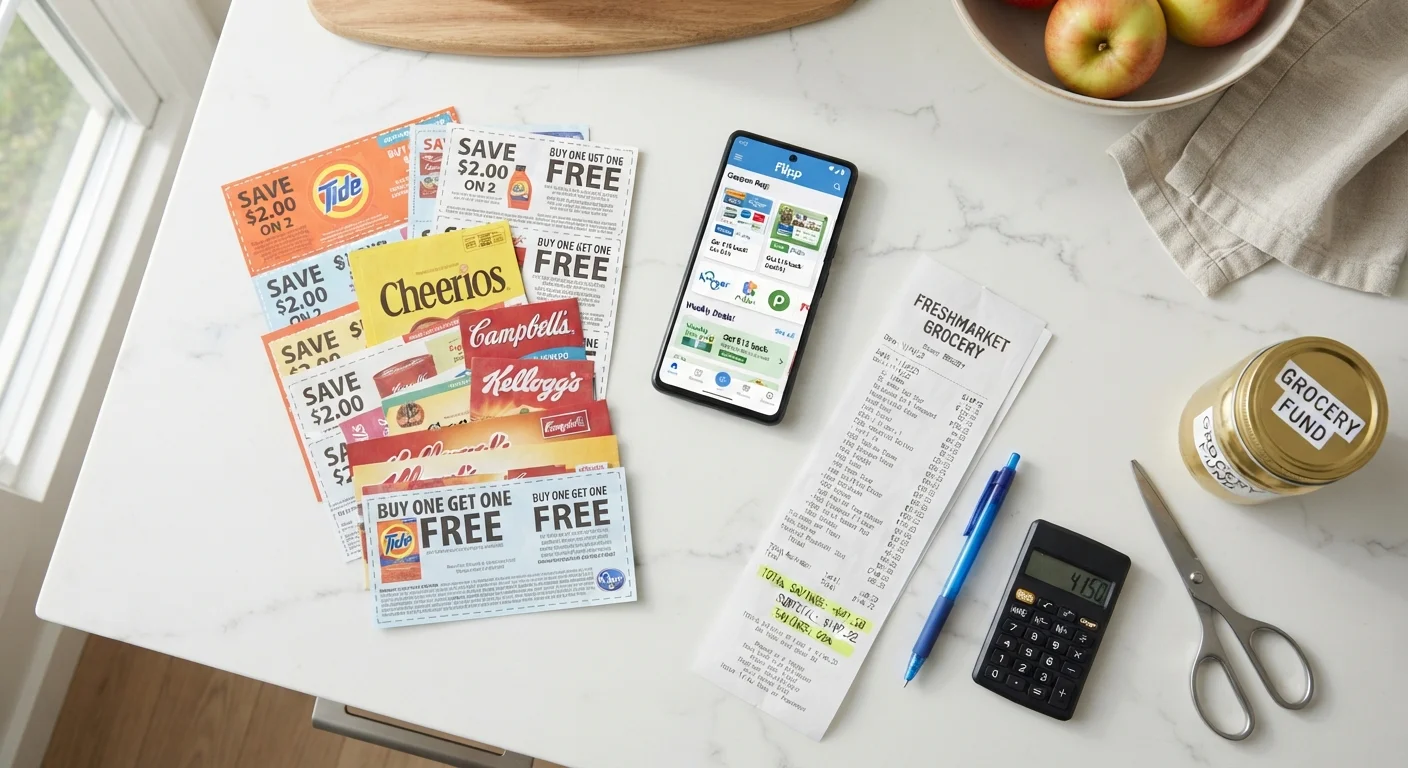
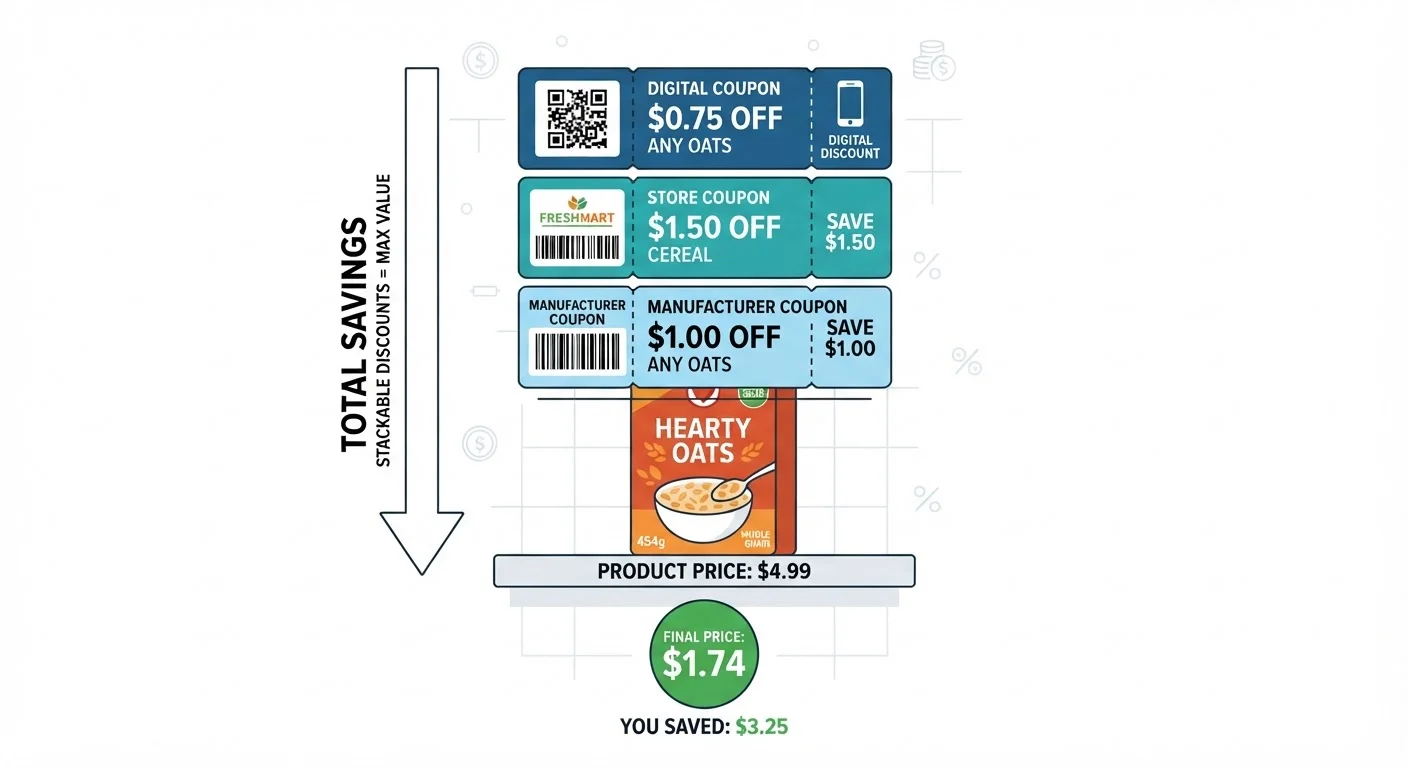
Coupon stacking is the practice of using more than one coupon or discount on a single item or purchase. By combining a manufacturer coupon with a store coupon and a digital offer simultaneously, shoppers can reduce the price of an item far below what any single coupon would achieve alone. Most major grocery chains allow at least two of these discount types on one item, and some permit three or more.
The legality and mechanics of stacking depend on each coupon's issuer: manufacturer coupons are funded by the brand, while store coupons are funded by the retailer - so using both simultaneously doesn't create a conflict of interest, which is why most stores permit the combination.
The Three-Layer Savings Model
Coupon stacking works because the discounts in play come from different budgets. Understanding those sources is the foundation of the entire strategy.
- Manufacturer coupons - issued by the brand (Procter & Gamble, Kellogg's, etc.) and reimbursed to the retailer after purchase. These appear in Sunday newspaper inserts, on brand websites, and through apps like Coupons.com.
- Store coupons - issued and funded directly by the retailer. You'll find them in store circulars, mailers, and loyalty app offer sections. Because the retailer absorbs this cost itself, using it alongside a manufacturer coupon doesn't create a double-dip problem.
- Digital coupons - loaded to a store loyalty account. These function identically to paper store coupons in most systems. Clip them in the app, swipe your loyalty card at checkout, and they deduct automatically.
A true three-layer stack combines all three: a manufacturer coupon, a store or digital coupon, and then a cashback app rebate applied after purchase. Each layer addresses a different part of the payment chain, which is why stacking them is permitted in most retail environments.
For a deeper look at how these categories interact - including which fine print clauses typically block certain combinations - see what can actually stack.
How to Build a Stacked Deal Step by Step
Effective stacking is a repeatable process, not a one-off stroke of luck. Here's the system that consistent savers use every week:
- Identify sale items first. Check the store's weekly circular before you plan anything else. Sale prices combined with coupons produce exponentially better results than coupons applied to full-price items. Focus your stack-building on items already discounted 20% or more.
- Match a manufacturer coupon. Search the brand's website, SmartSource inserts, or Coupons.com for a coupon on the sale item. Print it or save it to your phone. Check the expiration date and any purchase minimums carefully.
- Layer a store or digital coupon. Open the store's app and clip any available offer for the same product. If none exists, check the paper circular for store coupons. Some stores allow you to stack two manufacturer coupons if you're buying two qualifying items - read the policy to confirm.
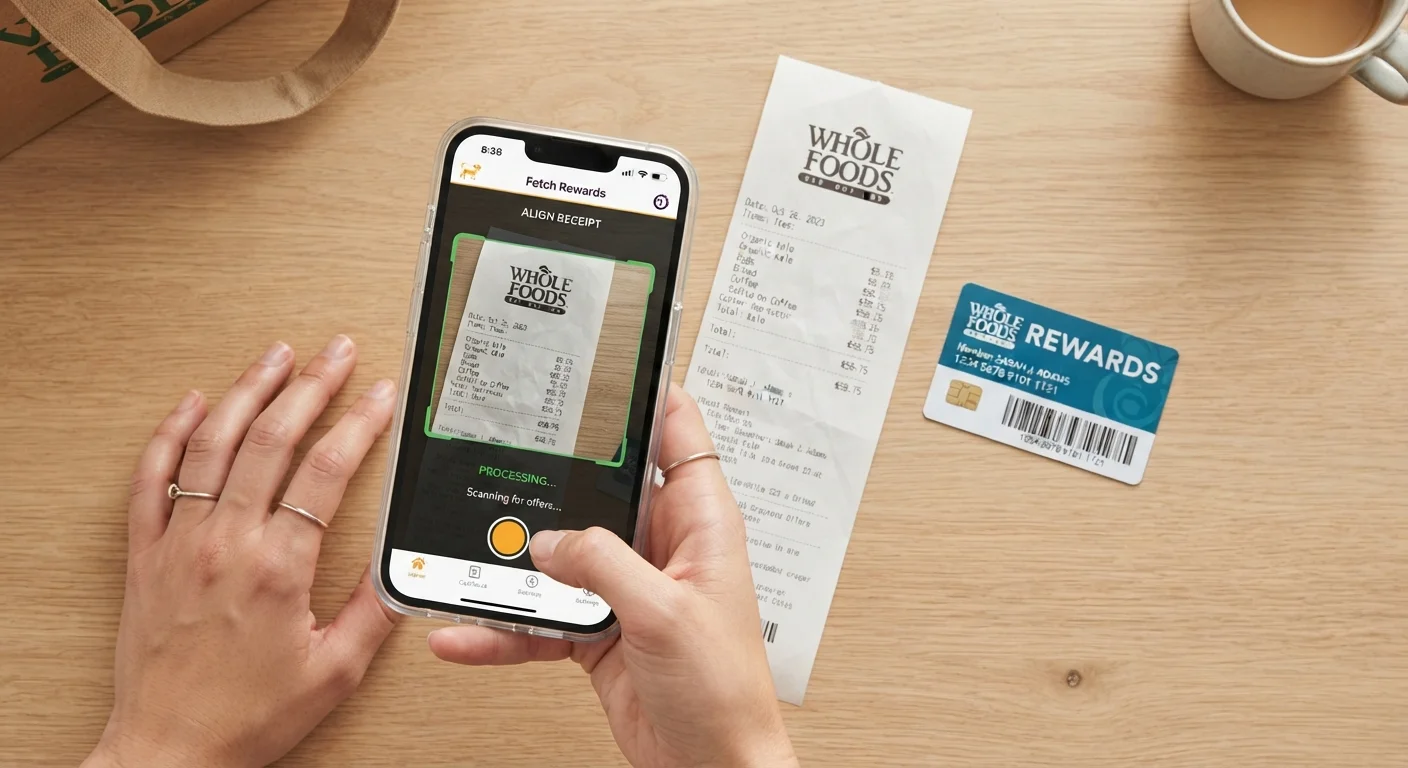
- Add a cashback rebate. Before you shop, open Ibotta, Fetch Rewards, or a similar app and unlock the offer for that product. After purchase, upload your receipt or sync your loyalty account. The rebate deposits to your app balance, functioning as a fourth savings layer.
- Time to checkout correctly. Hand the cashier your manufacturer coupon before digital coupons process. Most POS systems deduct loyalty/digital coupons automatically when you swipe your card. If the system applies coupons out of order, it can occasionally cause a coupon to reject - present paper coupons last if you notice conflicts.
40-50%
Average grocery savings for consistent stackers
Experienced coupon stackers who combine sale prices with manufacturer, store, and digital coupons routinely report cutting their weekly grocery bill by 40-50%.
$1,800+
Annual savings possible with weekly stacking
A household saving $35 per week through systematic coupon stacking accumulates over $1,800 in annual grocery savings, according to coupon community tracking data.
89 million
U.S. households using digital coupons annually
According to Statista, approximately 89 million U.S. households used digital coupons in 2023, reflecting the mainstream shift from paper to app-based discounts.
$0.49
Effective cost achievable on $3.99 staples
When a sale price, manufacturer coupon, doubled store coupon, and cashback rebate align on a common grocery staple, costs regularly drop below $0.50 per unit.
3x
Savings multiplier vs. single-coupon use
Shoppers who stack three discount types consistently save roughly three times more per item than those using only a single coupon or sale price.
This five-step loop is the backbone of the coupon stacking system that experienced shoppers repeat every single week.
Print the Store Policy Before You Shop
Download and print the coupon policy for every store you regularly shop at. Keep a copy in your coupon binder or the notes app on your phone. When a cashier or manager questions a valid stack, calmly referencing the store's own written policy resolves the situation far faster than arguing from memory.
Set Calendar Reminders for Expiring Coupons
High-value manufacturer coupons that expire before the item goes on sale are a common source of frustration and waste. Add expiration dates to your phone calendar with a three-day warning. That reminder lets you either adjust your shopping timing or decide to let the coupon lapse rather than buying something you don't need.
Where to Source Each Coupon Layer
The limiting factor for most beginners isn't strategy - it's not having enough coupons to build a solid stack. Here's where to find each type reliably:
Manufacturer Coupons
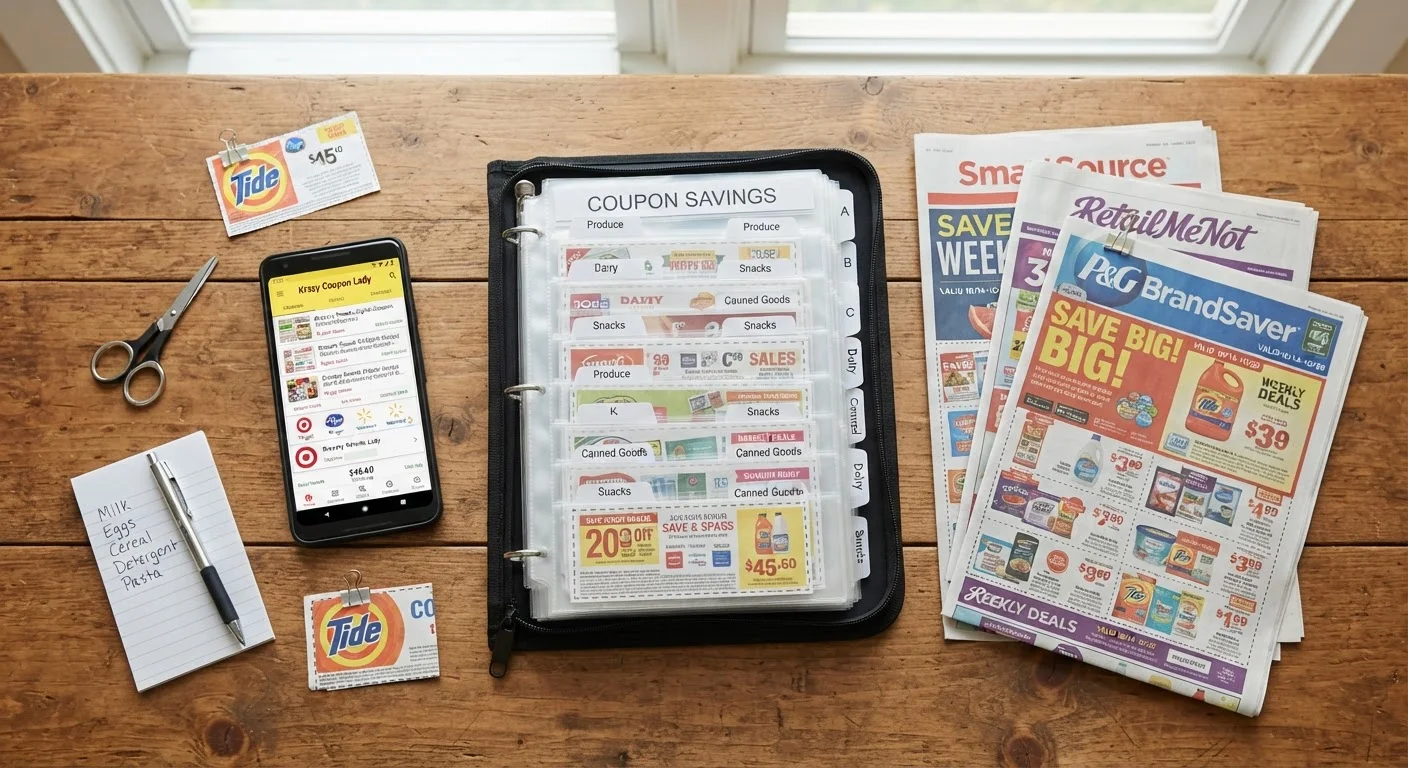
- Sunday newspaper inserts (SmartSource, RetailMeNot Everyday, P&G brandSAVER) - still among the highest-value sources
- Brand websites and apps - many brands offer exclusive digital coupons through their own platforms
- Coupons.com / CouponSherpa - aggregators that pull printable manufacturer coupons across categories
- Coupon trading communities - Facebook groups and Reddit's r/coupons are active swap networks where members share or trade inserts
Store Coupons
- Weekly circular - the most direct source; available in-store, by mail, and on the retailer's website
- Store loyalty app - Kroger, Publix, Albertsons, and most major chains maintain a digital coupon library within their apps
- Store mailers - some chains mail personalized discount booklets based on your purchase history
Digital and Cashback Layers
- Ibotta - the largest grocery cashback app; offers rebates on hundreds of products weekly
- Fetch Rewards - scan any receipt for points; no pre-selecting required
- Checkout 51 - weekly rebate offers, particularly strong on produce and fresh items
- Store loyalty cashback - chains like Kroger offer fuel points and digital cash-back tied to loyalty purchases
A Note on Coupon Insert Subscription Services
If your local paper doesn't reliably include coupon inserts, consider a clipping service. Sites like Klip2Save and Coupon Clippers sell specific inserts for a small fee - often worth it when a high-value insert contains coupons that will save you $10-20 on products you regularly buy. Factor in the insert cost when calculating your net savings.
Digital Coupon Limits Per Transaction
Most store apps cap how many times a digital coupon can be used - typically once per loyalty account per transaction, sometimes up to five times per day. If you're buying multiples of the same item to take advantage of a sale cycle, check whether you need to run separate transactions to fully use your coupons.
For the online equivalent of this sourcing system - using promo codes, site coupons, and cashback browser extensions together - our stacking promo codes, coupons, and cashback guide covers the full workflow.
Store Policies: What's Actually Allowed
No stacking system works without knowing the rules of the specific store you're shopping. Policies vary significantly across chains, and the fine print matters more than any general guideline.
Common Policy Patterns
| Store Type | Manufacturer + Store Stack | Digital + Paper Stack | Double Coupons |
|---|---|---|---|
| Major grocery chains (Kroger, Publix) | Generally allowed | Generally allowed | Rare, promotional only |
| Warehouse clubs (Costco, Sam's) | Manufacturer only; no store coupons | Limited | Not offered |
| Drug stores (CVS, Walgreens) | Allowed with ExtraBucks/rewards system | Allowed via app | Not standard |
| Mass merchandise (Target, Walmart) | Allowed; Target Circle acts as store coupon | Allowed | Not offered |
Before your next trip, locate and read the store's coupon policy - most chains post it on their website. Print it and bring it with you. Cashiers are occasionally misinformed about what's permitted, and a printed policy settles disputes calmly and quickly.
“The coupon policy is the rulebook. Every store has one. If you haven't read it, you're playing a game you don't fully understand.”
— Jill Cataldo, Syndicated couponing columnist and author
For a detailed breakdown of where each chain draws the line, stacking coupons without getting burned at the register covers the most common policy traps and how to avoid them.
Maximizing Stacks During Double-Coupon Events and Sales Cycles
The highest-value stacks don't happen randomly - they happen when you time your purchases to align with multiple discounts simultaneously. There are two timing strategies worth internalizing:
1. The Sale + Stack Window
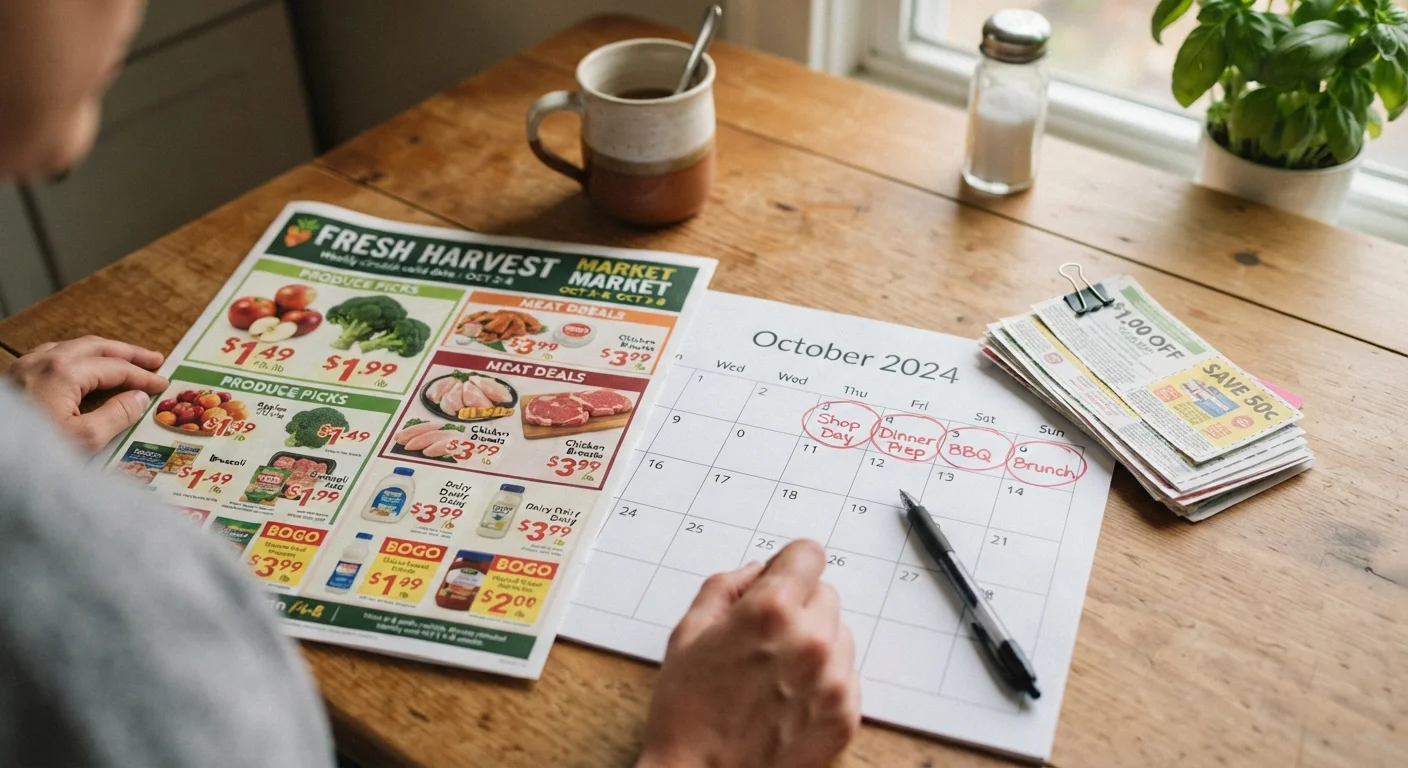
Most grocery items cycle through a sale price every 6-12 weeks. When a product hits its lowest sale price, that's the moment to deploy your full coupon stack. Buying three or four of the item during that window at maximum discount is almost always more economical than buying one unit at full price four times over the cycle.
2. Double-Coupon Events
Some chains periodically run double-coupon promotions where manufacturer coupon values are doubled by the store (e.g., a $0.50 coupon becomes a $1.00 deduction). These events are increasingly rare but still appear at regional chains. Stack a doubled manufacturer coupon with a store coupon and a sale price and you're routinely looking at 60-80% off a single item.
Reading the Sale Cycle
Track prices using a price-tracking app or a simple spreadsheet. After 8-10 weeks of logging what you buy, sale patterns become predictable. You'll stop buying pasta at $1.89 because you'll know it hits $0.99 every six weeks and your coupon can bring it to $0.49.
For a parallel look at timing digital stacks across online retailers, our stacking digital coupons guide walks through which combinations consistently pay off.
Common Mistakes That Kill a Coupon Stack
Even experienced shoppers make stacking errors that cost them money or slow down the checkout line. These are the most frequent problems and exactly how to prevent them:
- Ignoring size restrictions. Manufacturer coupons often specify a minimum size (e.g., "16 oz. or larger"). Buying the cheaper smaller size voids the coupon entirely. Read the full description, not just the product name.
- Stacking two manufacturer coupons. This is almost never permitted. One manufacturer coupon per item is the standard rule. Attempting to use two will result in a register rejection.
- Missing the digital clip. A digital coupon that isn't clipped in the app before purchase won't apply at checkout. Some systems allow post-purchase clipping within 24 hours - know whether your store does this before relying on it.
- Mismatched loyalty accounts. Cashback apps like Ibotta can link to your store loyalty account for automatic tracking, but if your loyalty number differs from your receipt or account, credits won't post. Verify account connections regularly.
- Letting coupons expire during a slow sale cycle. If the sale price on an item doesn't appear before your coupon expires, don't force the purchase. Only buy what you'd actually use at a price that makes sense.
Print the Store Policy Before You Shop
Download and print the coupon policy for every store you regularly shop at. Keep a copy in your coupon binder or the notes app on your phone. When a cashier or manager questions a valid stack, calmly referencing the store's own written policy resolves the situation far faster than arguing from memory.
Set Calendar Reminders for Expiring Coupons
High-value manufacturer coupons that expire before the item goes on sale are a common source of frustration and waste. Add expiration dates to your phone calendar with a three-day warning. That reminder lets you either adjust your shopping timing or decide to let the coupon lapse rather than buying something you don't need.
The mechanics of how layering discounts actually works goes deeper on why some of these errors trigger fraud flags at the register and how POS systems process coupon types.
Building a Weekly Stacking Routine
Coupon stacking delivers consistent results when it's treated as a weekly system rather than a sporadic activity. Here's a realistic routine that takes about 20-30 minutes per week:
- Thursday or Friday: Review the upcoming weekly circular (most stores publish it Wednesday or Thursday). Flag the best sale items.
- Coupon matching (15 min): Cross-reference your flagged sale items against your clipped digital coupons and any paper inserts you have. Tools like the Krazy Coupon Lady or Hip2Save's match-up posts do this work for you across major chains.
- App prep (5 min): Clip digital coupons in your store app. Unlock Ibotta offers for the products on your list. Set up Fetch for passive scanning.
- Shopping with a sorted list: Organize your list by store section. Note which coupons apply to each item. Stack awareness at shelf level - confirm the correct size and variety before dropping it in the cart.
- Post-purchase (5 min): Scan your receipt in Fetch and Ibotta within 24 hours of purchase. Confirm your digital coupon deductions on the receipt before leaving the store.
Stick to this loop for four consecutive weeks and you'll have a reliable baseline understanding of your local store's sale cycles, coupon availability, and the combinations that yield the deepest discounts on the products you actually buy. For hub-level guidance on the full range of stacking strategies, stacking coupons