
Building an Everyday Wardrobe from Scratch
A comprehensive starting point for anyone assembling a functional, versatile wardrobe—covering foundations, fit, color, and how pieces relate to each other.
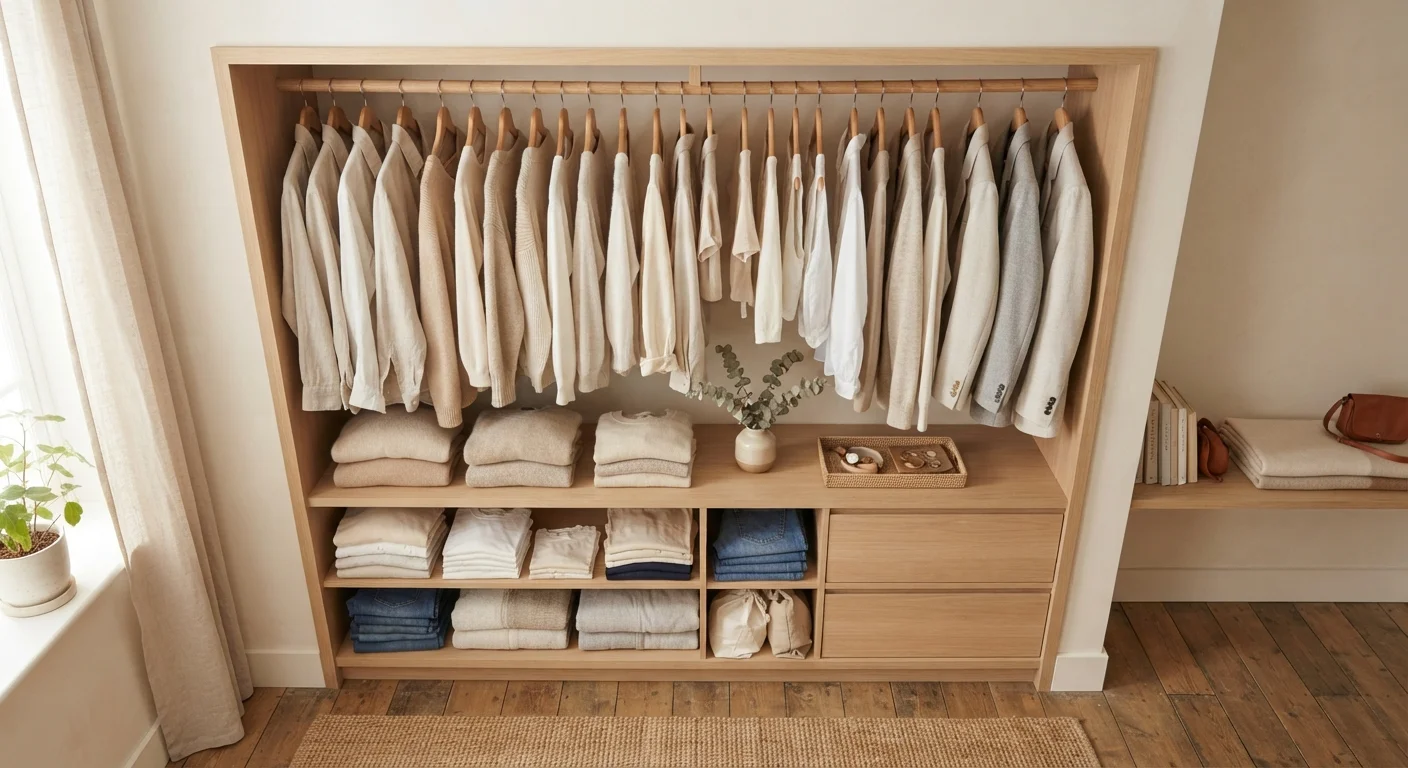
Photo: SaverSteals.com editorial
—— In This Article
Key Takeaways
- Map your real daily activities before buying a single piece.
- Fit matters more than price—well-fitted basics outperform expensive ill-fitting clothes.
- A simple neutral color palette makes mixing and matching effortless.
- Think in outfit combinations, not individual items, when adding anything new.
- Fabric choice affects comfort, longevity, and how a garment holds up to your routine.
- Build slowly and intentionally—gaps fill themselves when you know what you already have.
Start With Your Actual Life
Before a single item enters your cart or dressing room, the most useful thing you can do is map out what your days actually look like. A wardrobe built for someone else's life—or a fantasy version of your own—creates a closet full of clothes you never wear.
Ask yourself: How often do you dress casually versus professionally? Do you spend most of your time indoors, outdoors, commuting, or some combination? What activities eat up the majority of your week? If your honest answer is jeans-and-a-shirt five days out of seven, that's your signal—your wardrobe should reflect that reality, not fight it.
This groundwork also helps you spot gaps before you spend. If you already do a wardrobe audit first, you'll have a clear picture of what you own, what you actually reach for, and what's quietly taking up space.
Write It Down Before You Shop
Spend five minutes jotting down what you actually do in a typical week and what you wear for each activity. This simple exercise makes it much easier to shop with purpose rather than impulse. Even a rough list on your phone works—the goal is clarity, not perfection.
The Foundation Pieces Worth Knowing
"Foundation pieces" are garments that show up reliably in many different outfits. They're not glamorous by definition, but they're workhorses. For most people building from scratch, these categories are worth covering first:
- Well-fitted trousers or jeans in a neutral tone (dark navy, black, or mid-grey)
- Plain crew or V-neck tops in white, grey, and navy
- A versatile button-down shirt that can be worn tucked, untucked, or layered open
- A mid-layer or jacket—a clean chore coat, simple blazer, or denim jacket depending on your climate and lifestyle
- One dress or smart trousers for occasions that call for something more intentional
- Comfortable, clean footwear in at least two registers: casual and slightly elevated
Whether this list maps onto your life exactly is less important than the principle: identify the categories your day requires, then fill them intentionally. For a deeper look at what this approach can look like, the capsule wardrobe concept offers a useful framework—though it's worth understanding it clearly before committing.
80%
Clothes worn only 20% of the time
Research and wardrobe studies consistently suggest most people regularly wear a small fraction of what they own—highlighting the value of intentional building.
~$1,700
Average annual U.S. apparel spend per household
According to the U.S. Bureau of Labor Statistics Consumer Expenditure Survey, American households spend substantially on clothing each year, making intentional choices important.
Fit: The Factor That Outweighs Everything Else
Fit is the single variable that most affects whether a garment looks and feels good on your body. A well-fitted piece in an ordinary fabric will almost always outperform a poorly fitted piece in a premium one.
General fit principles to carry with you:
- Shoulders: On any structured top or jacket, shoulder seams should sit at the edge of your shoulder bone—not drooping down your arm or pulling inward.
- Chest and torso: You should be able to move freely without pulling at seams, but there shouldn't be excess fabric bunching between buttons.
- Trouser length and rise: These are highly personal, but hems that drag or rise that gaps at the back will consistently undermine an otherwise solid outfit.
Minor tailoring—hemming trousers, taking in a side seam—is often more affordable than people expect and can transform a piece that's close but not quite right. Don't let "it's almost right" become an excuse to keep clothes you'll never wear; that's one of the wardrobe habits that quietly make dressing harder.
When trying on any structured garment, lift your arms overhead and reach forward—if the shoulder seams pull dramatically or the back rides up, that fit issue won't resolve with wear.
Fit problems that show up under basic movement are structural; they rarely improve and often worsen, making this a fast, reliable in-store test.
Before buying, turn the item inside out and check seam finishing, stitching density, and lining quality—these details reveal construction quality that the outside won't show you.
Loosely finished seams and widely spaced stitching are common signals of garments that will fray, pull, or distort quickly with regular washing.
Building a Color System That Works Together
You don't need a rigid color theory education to build a wardrobe that mixes well. What you do need is a rough system—a loose set of colors that you enjoy and that interact with each other naturally.
A practical starting point for most people:
- Anchor colors (2–3 neutrals): These are the backbone. Think black, white, navy, grey, khaki, or camel. Most of your foundation pieces should live here.
- Accent colors (1–2 tones you genuinely like): A muted olive, a dusty terracotta, a soft burgundy—something that gives your wardrobe personality without complicating mixing.
- One or two statement pieces: Brighter or more distinctive items that work with your anchors but stand out on their own.
The goal is that nearly anything from column one can pair with nearly anything from column two. When everything mostly goes together, getting dressed becomes much faster and lower-stakes. If you're working from an existing closet, building outfits from what you already own can help you see the combinations you're missing.
How Pieces Relate: Thinking in Outfits, Not Items
One of the most common wardrobe-building pitfalls is shopping for individual items without thinking about what they'll actually wear with. A striking piece that pairs with nothing you own is a piece that sits unworn.
Before adding anything new, ask: What three things do I already own that this works with? If you can't name them quickly, that's useful information. The item might not belong in your wardrobe yet—or at all.
Thinking in outfits also helps you spot genuine gaps. Maybe you have plenty of tops but only one pair of bottoms that works for anything other than weekends. Or you have great casual pieces but nothing that handles the occasional dinner or work presentation. Those are real gaps worth filling.
For a more structured take on outfit versatility and how layering extends your range across seasons, layering effectively across seasons is worth a read.
“People tend to think they have nothing to wear because they have too much—but none of it works together. A small collection with real coherence beats a large one built on impulse.”
— Style Editorial Team, Fashion and Wardrobe Editors
Fabric, Care, and Longevity
The fabric a garment is made from affects how it feels, how it holds up to repeated wearing and washing, and how long it stays looking decent. It's worth paying attention to even if you're not especially interested in textiles.
Natural fibers like cotton and linen tend to breathe well and feel comfortable against skin, though they can wrinkle easily and may shrink if not cared for properly. Synthetic fibers like polyester resist wrinkles and often hold their shape longer, but can feel less comfortable in warm conditions and may pill over time. Blends are often a middle ground. How natural fibers and synthetics actually compare in everyday wear is worth understanding before you invest in pieces you hope will last.
Care matters as much as fabric. Following care label instructions—washing in cold water, air-drying where specified—extends the life of almost any garment meaningfully.
Don't Over-Wash Your Clothes
Washing garments more frequently than needed is one of the fastest ways to shorten their lifespan. Many items—jeans, blazers, knitwear—can be aired out and spot-cleaned between washes rather than laundered after every wear. Check the care label and default to gentler treatment when in doubt.
Building Gradually Without Getting Overwhelmed
A functional wardrobe doesn't materialize all at once, and that's fine. Trying to build everything in one shopping trip often leads to impulse decisions and pieces that don't quite work together.
A more manageable approach: identify your single biggest gap—the category where you're constantly reaching for something that isn't there—and fill that first. Then step back and wear what you have for a few weeks before identifying the next gap. This slower pace tends to produce better decisions because you understand your real patterns rather than imagined ones.
Budget is worth thinking about too. The framing of investing in basics sounds simple, but what actually constitutes a "basic" and whether spending more delivers better results is more nuanced than the advice implies. Separately, thinking about cost-per-wear as a measure of clothing value can help you evaluate purchases with a clearer head than price tags alone allow.
Start with your life, build around your actual needs, and let the wardrobe grow from there. The goal is a closet you use—not one that impresses on paper.

Style Editorial Team
Style Editorial Team is the collective byline for our editorial team and contributor network. Articles published under this byline or an editorial pen name are researched, written, and reviewed according to our editorial standards for clarity, consistency, and independence before publication.
View author profile