

Key Takeaways
Our Verdict
Rakuten wins outright for pure cashback value - its rates are consistent, the payout is real money, and its retailer network is extensive. Honey fills a specific niche for coupon code hunters and price-drop watchers on Amazon. Capital One Shopping is the best standalone choice for price comparison and purchase protection, particularly for shoppers who prioritize deal alerts over cashback accumulation. For most people, the optimal setup is Rakuten active for cashback with Capital One Shopping running passively for price checks.
| Best for | Recommended |
|---|---|
| Shoppers who want maximum cashback paid in real money | Rakuten |
| Coupon hunters who primarily shop Amazon and want price history | Honey |
| Price-conscious shoppers who want purchase protection alerts | Capital One Shopping |
| Power shoppers wanting the best of all approaches | Rakuten + Capital One Shopping |
How Each Extension Actually Makes You Money
Before you can pick the right tool, you need to understand what each one is actually doing when it pops up at checkout. They're not all running the same playbook.
Honey (owned by PayPal since 2020) primarily works as a coupon code aggregator. When you reach a checkout page, it automatically tests a database of promo codes and applies whichever one delivers the largest discount. It also runs a secondary rewards program called Honey Gold, where you accumulate points redeemable for gift cards. Separately, Honey's Droplist feature tracks Amazon prices over time.
Rakuten (formerly Ebates) operates as a cashback portal first. When you activate Rakuten before shopping at a participating retailer, Rakuten earns an affiliate commission from that retailer and splits it with you as cashback. Rates are clearly posted and paid quarterly in real cash - via PayPal or paper check. Rakuten also surfaces coupon codes, but that's secondary to its core cashback function.
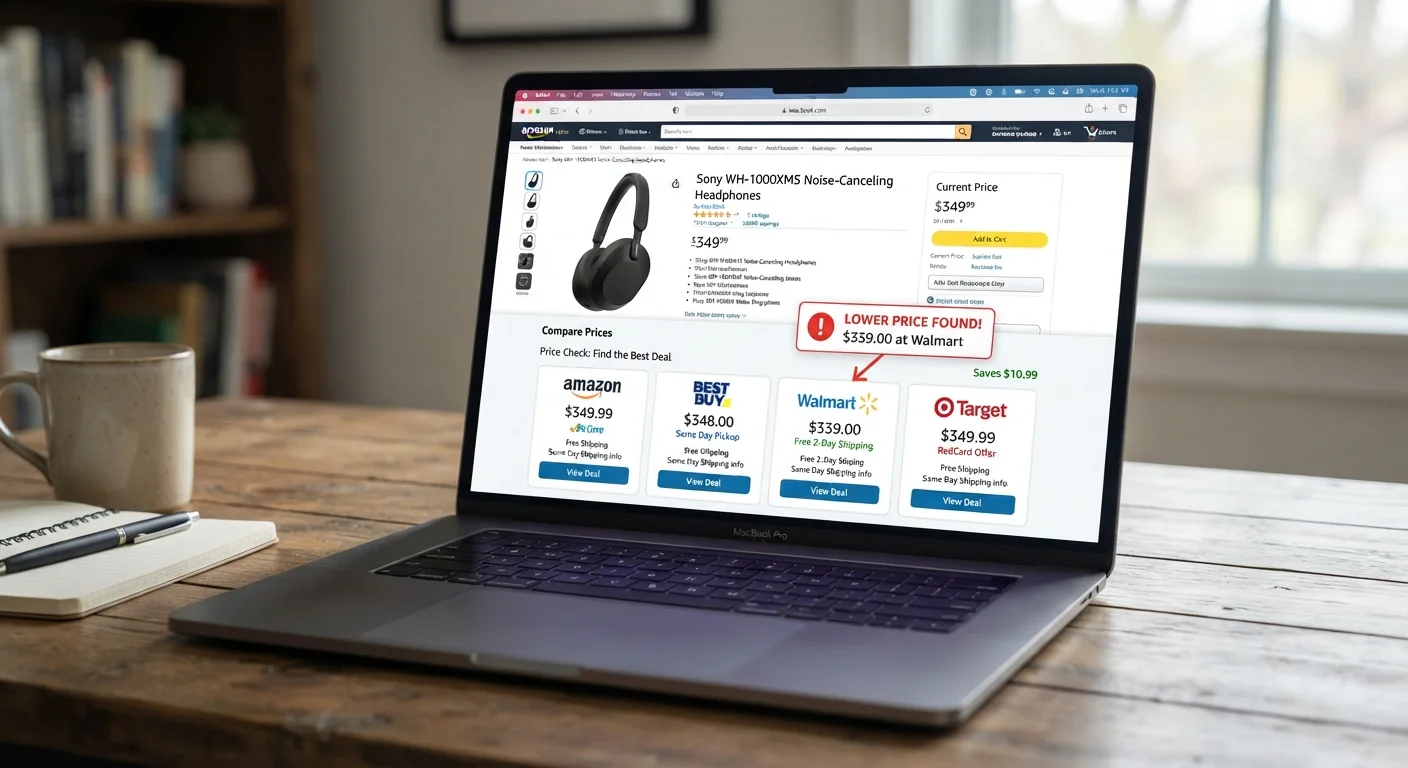
Capital One Shopping (formerly Wikibuy, acquired by Capital One in 2018) focuses on price comparison. It scans competing retailers when you're viewing a product and alerts you if the same item is available for less elsewhere. It also tests coupon codes at checkout and runs its own rewards program paying out in gift cards. Importantly, you do not need to be a Capital One cardholder to use it.
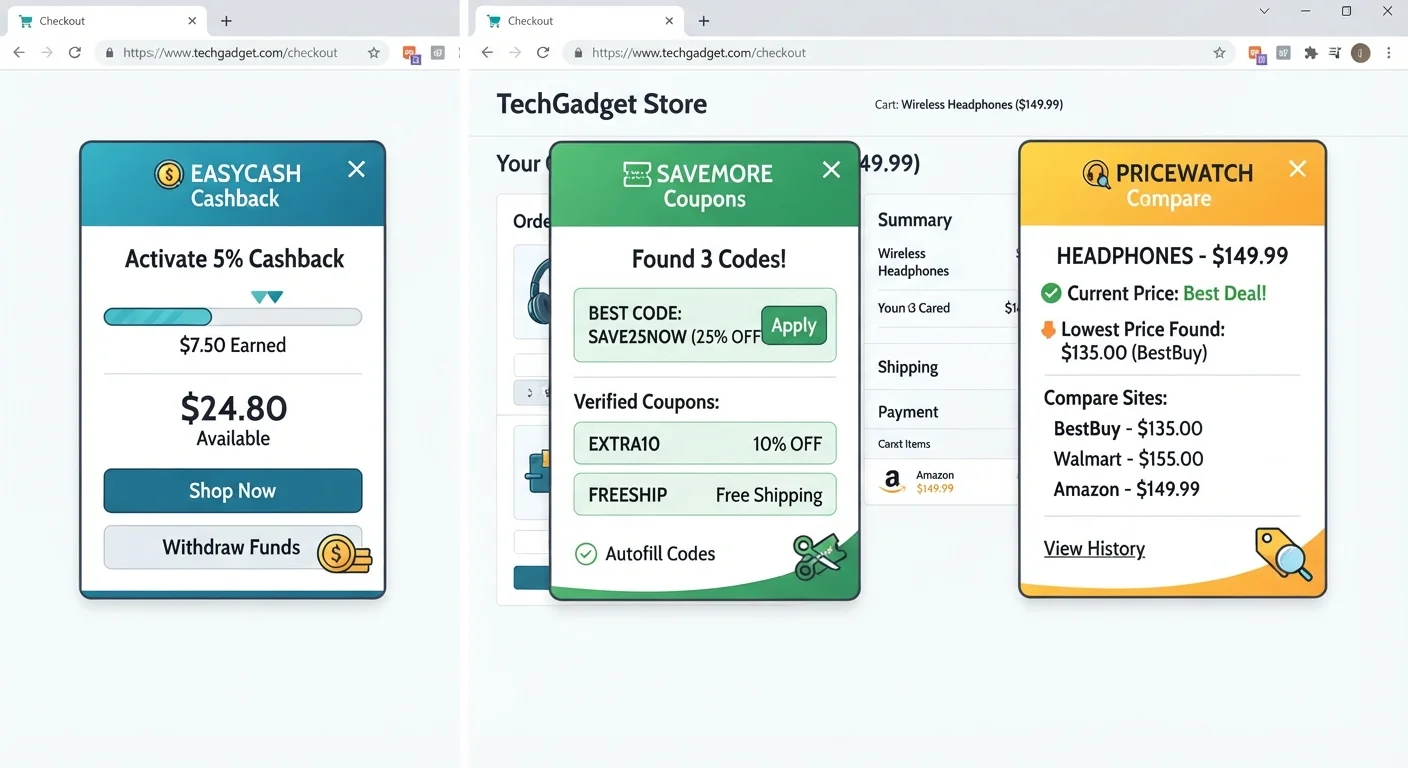
See our breakdown of exactly what happens behind the scenes when any of these extensions activates at checkout - the mechanics matter for understanding why conflicts happen.
Cashback Rates and Payout: Where the Real Money Lives
Cashback is the metric that moves the needle most over time. Here's how the three compare on what actually lands in your pocket.
Rakuten
Rakuten consistently posts cashback rates between 1% and 15% at major retailers, with occasional double-cashback events pushing rates temporarily higher. Payout arrives as a "Big Fat Check" (physical or PayPal) every quarter as long as your balance exceeds $5.01. Because Rakuten is paying you from its affiliate commission, the rates are tied to real agreements - they don't fluctuate based on gift-card margins. That's meaningful. When Rakuten says 8% at a given retailer, you're getting 8% of your purchase back in cash.
Honey Gold
Honey Gold awards points, not cash. You typically earn 1-3 Gold points per dollar spent, and 1,000 points equals roughly $10 in gift cards. That's an effective rate of 1-3%, which trails most Rakuten rates before you even account for the gift card restriction. Honey's real value is the coupon codes, not the points - if a promo code saves you 20% on a purchase, that dwarfs what Honey Gold would have returned.
Capital One Shopping Rewards
Capital One Shopping offers credits redeemable for gift cards, similar to Honey Gold. Earning rates are modest and vary by retailer. Like Honey Gold, the ceiling is gift cards - not cash. The program is best treated as a bonus rather than a primary savings strategy.
| Honey | Rakuten | Capital One Shopping | |
|---|---|---|---|
| Primary function | Coupon code testing | Cashback portal | Price comparison |
| Cashback payout type | Gift cards (Honey Gold) | Cash (PayPal or check) | Gift cards |
| Typical cashback rate | 1-3% (Gold points) | 1-15% cash | Modest, varies by retailer |
| Coupon code testing | Excellent - auto-applies best code | Good - verified partner codes | Good - improving database |
| Amazon integration | Strong (Droplist, price history) | Weak (low/no cashback) | Strong (price comparison) |
| Retailer coverage | Broad (coupon); narrower (cashback) | 3,500+ partners | Major retailers only |
| Price tracking | Yes - Droplist + history graph | No | Yes - real-time comparison |
| Privacy risk level | Moderate (PayPal ecosystem) | Moderate (global affiliate data) | Higher (financial institution) |
| Conflicts with other tools | Yes - can override Rakuten cookie | Yes - sensitive to last-click | Lower conflict risk |
| Best for | Coupon hunters, Amazon shoppers | Consistent cashback earners | Price-conscious comparison shoppers |
For a deeper look at how Rakuten's cashback rates compare against other major portals, the Rakuten vs. TopCashback vs. Honey Gold comparison covers rate reliability and payout trust scores across all three.
Coupon Code Performance: Who Finds the Best Codes
Coupon testing is where Honey built its reputation, and the competition hasn't fully caught up.
Honey's database of promo codes is vast - the result of years of crowdsourcing and user submissions. More importantly, it tests codes in sequence and applies the one that delivers the largest cart discount, not just the first one that works. This distinction matters: a code that saves you $15 beats a code that saves you 5% on a $200 order, and Honey's algorithm accounts for that.
Capital One Shopping also tests coupon codes automatically and has improved meaningfully in recent years. In head-to-head tests across major retailers (Target, Walmart, Best Buy, Nordstrom), both tools perform comparably - but Honey still edges ahead on niche and mid-tier retailers where its crowdsourced database has more depth.
Rakuten surfaces coupon codes on retailer pages, but its code-testing capability is not automatic in the same way. It relies more on partnerships with retailers for verified codes rather than crowdsourced testing. This means Rakuten codes tend to work reliably - but it may surface fewer of them.
Maximize Rakuten With Double Cashback Events
Rakuten runs frequent double-cashback promotions at popular retailers, sometimes tripling standard rates for 24-72 hours. Set up email alerts from Rakuten or check the "Special Offers" section before any planned large purchase. Timing a $500 electronics buy during a double-cashback event can net $40-$60 back instead of $20-$30.
Audit Your Cashback Dashboard Monthly
Missing cashback is more common than most shoppers realize - browser issues, ad blockers, and cookie conflicts all cause dropped tracking. Rakuten allows you to file a missing cashback claim, but only within a set window (usually 30 days from purchase). Mark a recurring calendar reminder to check your dashboard and submit any missing credits before the window closes.
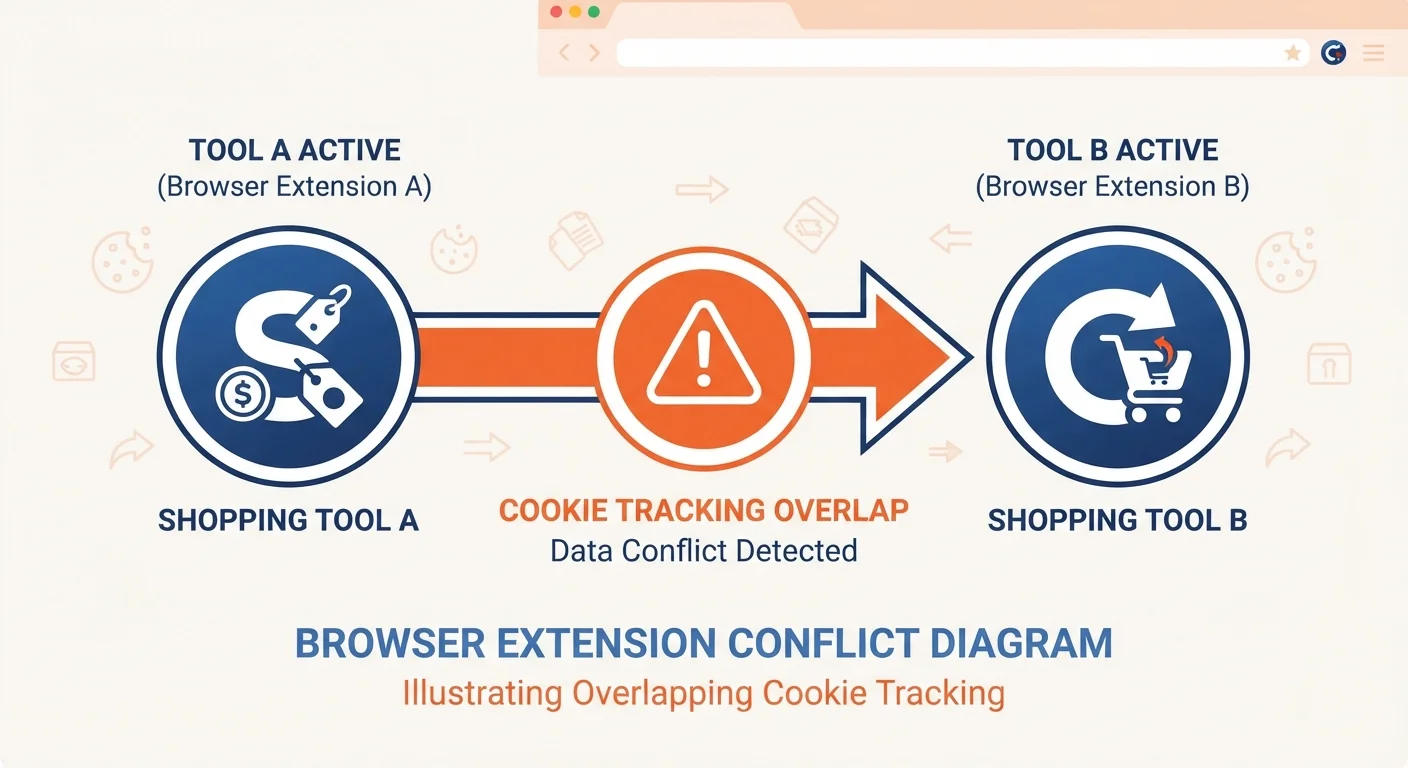
One real-world nuance: when Honey applies a coupon code, it can occasionally override the affiliate tracking cookie that Rakuten needs to credit your cashback. This is why many experienced shoppers use Rakuten for cashback activation and a separate coupon source rather than running both extensions simultaneously. Our article on the hidden costs of free coupon extensions covers this cookie-conflict problem in detail.
Retailer Coverage and Where Each Tool Breaks Down
No extension works everywhere, and gaps in coverage are where shoppers quietly lose money they think they're earning.
Rakuten lists over 3,500 participating retailers. Coverage is strongest in apparel, electronics, travel, and home goods. Key gaps include most grocery delivery services, many local or regional retailers, and direct-to-consumer brands that don't participate in affiliate programs. Rakuten also has limited utility on Amazon - the cashback rate there has historically been low or absent.
Honey works on a broader range of sites for coupon testing because it doesn't require a formal partnership - it just tries codes. For price tracking and Honey Gold cashback, coverage is narrower. Honey's Amazon integration is its strongest feature set: Droplist price tracking, price history graphs, and Amazon-specific coupon surfacing all work well there.
Capital One Shopping shines specifically in price comparison across Amazon, Walmart, Target, Best Buy, and other major e-commerce players. Its alerts when a lower price exists elsewhere are genuinely useful and often accurate. It's less useful on specialty sites or smaller retailers where cross-site comparison isn't feasible.
3,500+
Retailers in Rakuten's cashback network
Rakuten publicly lists over 3,500 participating stores across apparel, travel, electronics, and home goods categories.
Up to 15%
Maximum standard Rakuten cashback rate
Rakuten's posted cashback rates at top retailers reach 15%, with occasional double-cashback promotions exceeding that ceiling.
$30M+
PayPal's acquisition price for Honey (2020)
PayPal acquired Honey for approximately $4 billion in 2020, signaling the commercial value of shopping behavior data.
1 in 3
Shoppers who experience missing cashback credits
Industry estimates suggest roughly one-third of cashback portal users encounter at least one missing or untracked credit per year.
~$150
Average annual Rakuten earnings for active users
Rakuten has reported that engaged members earn an average of over $100-$150 per year through consistent cashback activation.
If you're weighing whether a browser extension is even the right vehicle for your savings strategy, browser extensions vs. mobile cashback apps is worth reading - especially if you do significant shopping on your phone.
Privacy Trade-Offs: What Each Extension Collects
All three extensions require broad permissions to function - they need to read page content to detect when you're at a checkout. The data collection differences between them are real and worth knowing.
Honey collects data on every page you visit where it's active, including the products you view, prices, and purchase history. Since PayPal's acquisition, that data feeds into PayPal's broader consumer profile ecosystem. Honey's privacy policy permits sharing data with PayPal affiliates for marketing purposes.
Rakuten's data collection is focused on transactions and shopping activity. Rakuten is clear that it tracks purchases through its portal to credit cashback, but it also collects browsing data on partner sites. As a publicly traded Japanese company (Rakuten Group), it operates under different regulatory pressures than U.S.-only companies.
Capital One Shopping collects purchase and browsing data and, as a Capital One product, that data has the potential to inform their financial services business - including credit decisions, though Capital One states it does not use extension data for credit underwriting. Still, the data is feeding into a financial institution's ecosystem, which is a different risk profile than a pure e-commerce tool.
Cookie Conflicts Can Erase Your Cashback
Running Honey and Rakuten simultaneously on the same shopping session is the most common way shoppers lose cashback credit. Honey's auto-coupon function can fire last at checkout, placing its affiliate cookie over Rakuten's and diverting the commission. If you're relying on Rakuten cashback for a purchase, disable Honey on that retailer tab before completing checkout - or use Rakuten's own coupon codes instead.
Honey Gold Is Not Cash - Plan Accordingly
Many shoppers accumulate Honey Gold points expecting to redeem them flexibly, only to find a restricted gift card catalog. Points expire after 90 days of account inactivity, and redemption minimums apply. If you're evaluating Honey as a cashback tool, adjust your mental math: Honey Gold at 1-3% in gift cards is not equivalent to Rakuten's 1-15% in real money.
The full breakdown of what coupon extensions cost you in data covers exactly what each tool's privacy policy permits and how to minimize exposure if you decide to keep using them.
Stacking Strategies: Getting More From Multiple Tools
Using one extension well beats using three extensions poorly. But the right combination, used correctly, genuinely outperforms any single tool.
The Rakuten + Capital One Shopping Combination
This is the most practical pairing for most shoppers. Keep Rakuten active for cashback at participating retailers - it earns you real money with no gift card friction. Run Capital One Shopping in the background for price comparisons and purchase protection alerts. These two tools conflict less frequently than Honey and Rakuten because Capital One Shopping's primary function (price comparison) doesn't require the same affiliate tracking interaction that can disrupt Rakuten.
When to Add Honey
If you shop heavily on Amazon and want price history graphs and Droplist monitoring, Honey adds genuine value there - Rakuten doesn't have meaningful Amazon cashback, so there's no conflict to worry about. Disable Honey on non-Amazon sites where you're relying on Rakuten cashback.
The Cookie Conflict Rule
The core risk with running multiple extensions is last-click attribution. Most affiliate programs, including Rakuten's, credit the last affiliate cookie placed before purchase. If Honey fires after Rakuten at checkout, Honey's cookie can overwrite Rakuten's, and your cashback disappears. The safe rule: whichever extension is earning you cashback should be the last one active before you complete checkout. Disable others on that retailer's site for that session.
For a direct comparison between Rakuten and Honey specifically - including which one wins for different shopping profiles - see Rakuten vs. Honey: which cashback tool fits your shopping style.
Price Tracking and Deal Alerts: The Underrated Feature Set
Beyond cashback and coupons, all three extensions offer some form of price monitoring - and this is where Capital One Shopping genuinely pulls ahead.
Capital One Shopping's price comparison widget appears directly on product pages and shows current prices at competing retailers in real time. It also sends alerts when tracked items drop in price. For major appliances, electronics, and furniture - categories where price swings of 15-30% are common - this feature alone can justify installing the extension.
Honey's Droplist is specifically built for Amazon price tracking. Add an item to your Droplist at a target price, and Honey notifies you when Amazon hits that price. The price history graph visible on Amazon product pages (powered by Honey) gives useful context on whether a "sale" is actually a discount or a manufactured markdown. For a more granular Amazon price tracking comparison, CamelCamelCamel vs. Honey vs. Keepa is the right next read.
Rakuten doesn't offer meaningful price tracking. It surfaces deal pages and cashback rates but isn't built for price monitoring. If that's a priority, Rakuten alone won't cover it.
Which Extension Should You Actually Install
Here's the decision framework, cut short:
- Install Rakuten if: you want the highest consistent return on everyday spending and you'll actually remember to activate it before shopping. The quarterly payout in real money compounds meaningfully over a year of regular use.
- Install Capital One Shopping if: you shop across multiple retailers and want passive price alerts without doing manual research. It's the most useful tool for someone who shops without a specific plan.
- Install Honey if: Amazon is your primary shopping destination and you want price history and Droplist monitoring. Its coupon code testing is also strongest for mid-tier and specialty retailers.
- Run Rakuten + Capital One Shopping together if: you're a regular online shopper who wants both cashback and price protection without managing complex stacking rules.
Maximize Rakuten With Double Cashback Events
Rakuten runs frequent double-cashback promotions at popular retailers, sometimes tripling standard rates for 24-72 hours. Set up email alerts from Rakuten or check the "Special Offers" section before any planned large purchase. Timing a $500 electronics buy during a double-cashback event can net $40-$60 back instead of $20-$30.
Audit Your Cashback Dashboard Monthly
Missing cashback is more common than most shoppers realize - browser issues, ad blockers, and cookie conflicts all cause dropped tracking. Rakuten allows you to file a missing cashback claim, but only within a set window (usually 30 days from purchase). Mark a recurring calendar reminder to check your dashboard and submit any missing credits before the window closes.
Whatever combination you choose, build the habit of checking your cashback portal dashboard monthly. Untracked transactions, missing cashback credits, and unclaimed balances are common - and avoidable with a quick monthly review. Rakuten specifically allows you to submit a missing cashback claim within a set window; don't let that window close.
For shoppers building a broader savings system, the cashback portals hub and cashback apps hub are good starting points for understanding where extensions fit into a larger deal-finding strategy.