
Casual vs. Smart-Casual: Where the Line Actually Falls
Two of the most commonly misread dress codes compared side by side, with clear examples of what each one typically calls for in real settings.
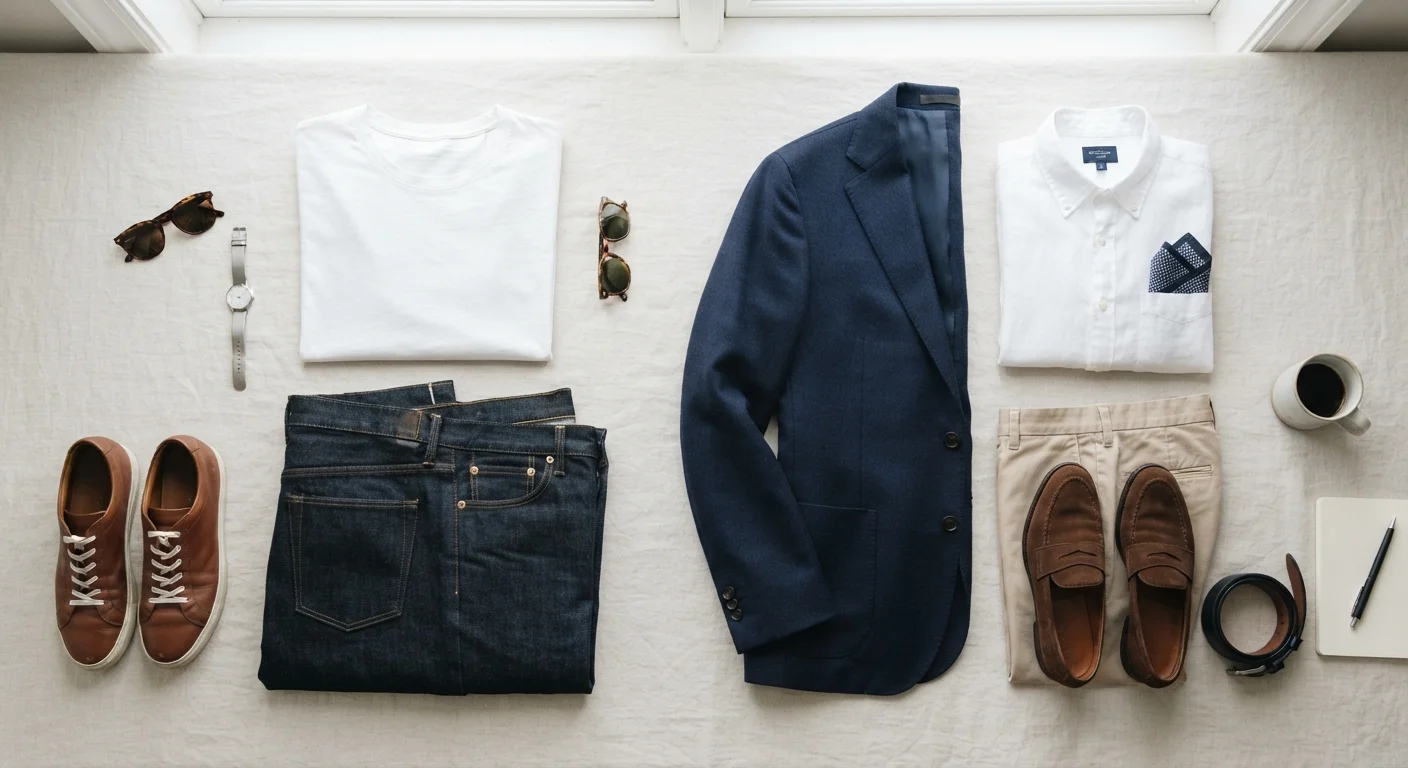
Photo: SaverSteals.com editorial
—— In This Article
Key Takeaways
- Casual prioritizes comfort and has very few rules about fit, fabric, or coordination.
- Smart-casual requires intentional choices — fit, fabric, and cohesion all matter more.
- The defining difference is often footwear and how well pieces are put together.
- Most smart-casual looks are built by elevating one or two elements of a casual base.
- Context clues like venue, host, and industry norms help decode which code applies.
Why These Two Codes Get Confused
"Casual" and "smart-casual" sit next to each other on the formality spectrum, which is exactly why they get tangled. Both reject ties and tuxedos. Both allow jeans — sometimes. The difference isn't a dramatic leap; it's a shift in intentionality.
Casual dress is the absence of a code. It's dressing for yourself, your comfort, and the moment — without a checklist. Smart-casual, by contrast, is a genuine dress code: relaxed in spirit but deliberate in execution. It asks you to look like you thought about it, even if only for five minutes.
Part of the confusion stems from how inconsistently these terms get used. A restaurant labeling itself "smart-casual" may mean something different from a company using the same phrase for its workplace policy. That's why context — venue, industry, region — always matters alongside the label itself. When you're uncertain, building an outfit from what you already own with a focus on fit and cohesion is a reliable starting point.
What Each Code Actually Looks Like
| Criterion | Casual | Smart-Casual |
|---|---|---|
| Jeans | Any wash, fit, or distressing | Dark wash, well-fitted, no rips |
| Tops | Tees, hoodies, sweatshirts | Button-downs, polos, structured knits |
| Footwear | Athletic sneakers, sandals, slides | Loafers, leather sneakers, Chelsea boots |
| Outerwear | Hooded sweatshirts, puffer jackets | Blazers, sport coats, structured jackets |
| Fabric tone | Performance, jersey, fleece acceptable | Natural fibers and structured weaves preferred |
| Fit expectation | Relaxed, oversized fine | Proportionate, intentional silhouette |
| Overall vibe | Personal, expressive, comfort-first | Polished but approachable, deliberate |
At its core, casual is defined by freedom. Graphic tees, hoodies, athletic-inspired pieces, distressed denim, and sneakers all belong. Fit is often relaxed — even oversized. There's room for personal expression and experimentation, from bold prints to unexpected combinations. If something is comfortable and feels like you, it's probably casual-appropriate.
Smart-casual Fabric makes a bigger difference than many people realize. Natural fibers like cotton and linen tend to read as more polished at the same price point than performance synthetics — a linen shirt elevates an outfit in ways a moisture-wicking tee typically won't, even if both are technically clean and wrinkle-free. Three things reliably separate a casual look from a smart-casual one, regardless of the specific garments involved: The One-Swap Upgrade Rule You don't need an entirely separate wardrobe for smart-casual. In most cases, swapping just one casual element — most often shoes or outerwear — into something more structured moves your outfit across the line. A clean pair of leather loafers replacing athletic sneakers can reframe the same chinos-and-crewneck combination from weekend errand to dinner-ready. When you're working within a smart-casual dress code, a useful shortcut is to start with one reliable casual piece — a well-fitting dark jean or a clean crewneck — and build upward from there. Swapping one element (shoes, outerwear, or a top layer) toward the polished end of the spectrum often moves the whole outfit into smart-casual territory without requiring a full wardrobe overhaul. Dress codes don't exist in a vacuum — they respond to context. Here's a quick framework for decoding which one applies: One practical tip: when an invitation specifies "smart-casual," it's almost always safer to interpret that as the higher end of the range rather than the lower. A blazer you can remove is far less stressful than realizing you're underdressed once you've arrived. As you build a wardrobe that handles both codes comfortably, understanding what genuinely flatters your frame — rather than following rigid rules — helps you invest in the versatile pieces that do double duty across both categories.The Details That Tip the Scale
Reading the Room: When Each Code Applies

Style Editorial Team
Style Editorial Team is the collective byline for our editorial team and contributor network. Articles published under this byline or an editorial pen name are researched, written, and reviewed according to our editorial standards for clarity, consistency, and independence before publication.
View author profile