
Why 'Invest in Basics' Is More Complicated Than It Sounds
The advice to buy quality basics is common, but what counts as a basic, and does spending more actually deliver? A grounded look at the idea.
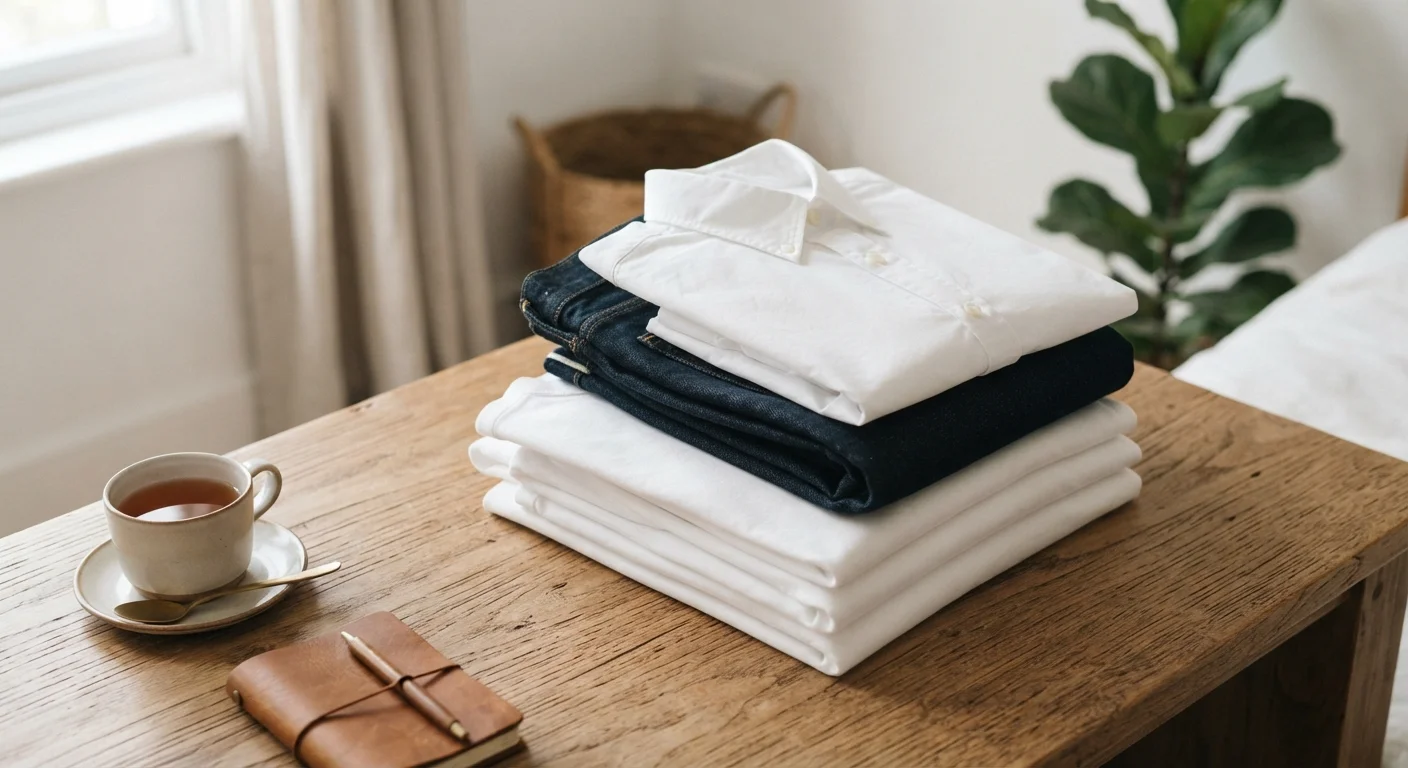
Photo: SaverSteals.com editorial
—— In This Article
Key Takeaways
- What counts as a "basic" is highly personal and varies by lifestyle, body type, and climate.
- Higher price does not automatically equal higher quality or longer wear life.
- Fit matters more than fabric cost — an affordable piece that fits well usually outperforms an expensive one that doesn't.
- The real value of a basic comes from how often and how long you actually wear it.
- Building a wardrobe foundation works better as an ongoing process than a one-time spending event.
The Advice Everyone Gives — and What It Glosses Over
"Invest in your basics" is one of the most repeated pieces of style advice out there — and also one of the vaguest. The implication is usually straightforward: skip the trendy impulse buys and put your money into timeless, versatile pieces that will last for years. It's sound logic in principle. But in practice, the guidance skips several genuinely tricky questions: Which pieces count as basics? How much is worth spending? And does paying more actually get you better results?
If you've ever stared at two nearly identical white t-shirts — one priced at $18 and another at $95 — and felt uncertain about which one you're supposed to be "investing" in, you're not missing something. The advice just isn't as clear as it sounds.
For a broader starting point on putting a wardrobe together, building an everyday wardrobe from scratch covers the full picture, including how basics relate to the rest of your closet.
Basics Are Personal, Not Universal
The first complication: "basics" aren't a fixed list. Style guides tend to offer a canonical roster — white tee, dark jeans, trench coat, ballet flat — as though these items apply equally to everyone. They don't.
A person who works outdoors in a physical job has different wardrobe anchors than someone in a corporate office. Someone who lives in a humid Southern climate has different layering needs than someone in the Upper Midwest. Body proportions, personal color palettes, and even laundry habits all affect which pieces will actually function as workhorses in a real wardrobe.
This isn't a reason to ignore the concept — it's a reason to define your own basics rather than borrowing someone else's list. A genuine basic for you is a piece you reach for repeatedly, that works across multiple settings, and that fits well enough that you don't spend mental energy adjusting it throughout the day.
Define Your Basics Before You Shop
Before buying anything labeled a "wardrobe essential," spend ten minutes listing the pieces you actually reach for most in your current closet. Those are your real basics. Shopping to reinforce or replace those specific items is almost always more useful than following a generic list.
Does Price Equal Quality? The Honest Answer
This is where the "invest" framing gets slippery. Price and quality do correlate — but only loosely, and not linearly. A $90 t-shirt may use a heavier, longer-staple cotton that holds its shape and color through repeated washing. Or it may cost $90 primarily because of where it was sold, which influencer posted it, and how minimal the branding looks.
Research consistently shows that consumers overestimate the quality signal that price alone provides — a pattern well documented in both food and apparel. The same skepticism that applies to store brands versus name brands in grocery shopping is worth bringing to clothing. What research actually shows about store brands and name brands illustrates how often perceived quality gaps don't hold up under scrutiny.
~60%
Garments never or rarely worn after purchase
Industry estimates suggest a significant share of purchased clothing sees minimal use, pointing to a gap between shopping intention and actual wear patterns.
3x
Longer average lifespan with proper garment care
Textile care research suggests that correct washing, drying, and storage practices can substantially extend the functional life of clothing regardless of original price point.
What does predict durability more reliably than price? Seam construction, fiber content, weight of fabric, and — above all — fit. A piece that fits poorly will be abandoned regardless of cost. A well-fitted, mid-range piece that you actually wear three times a week will deliver more value per dollar than an expensive one that feels slightly off and gets passed over.
Thinking About Cost Per Wear — and Its Limits
One framework that helps is cost per wear: divide the price of an item by how many times you realistically expect to wear it. A $120 jacket worn 80 times over three years costs $1.50 per wear. A $40 trendy top worn four times before it falls out of rotation costs $10 per wear. By this measure, the more expensive item is actually the better value.
It's a useful lens, but it has limits. It requires honest self-assessment about your actual habits — not optimistic projections. And it favors spending more on items you know you'll wear repeatedly, which takes some wardrobe self-knowledge to get right.
That self-knowledge is also why building a wardrobe foundation works better as a gradual process than a single shopping haul. Replacing a worn-out piece with a more thoughtful choice, over time, tends to yield better results than attempting to overhaul everything at once — a principle that echoes smart approaches to other kinds of incremental decision-making, whether in everyday smart shopping or longer-term planning.
“The most sustainable garment is the one you already own and keep wearing. Longevity comes from fit, care, and genuine use — not from the price tag or the label.”
— Orsola de Castro, Co-founder of Fashion Revolution, advocate for sustainable fashion practices
A More Practical Way to Approach It
Rather than treating "invest in basics" as a blanket instruction to spend more, it helps to reframe the idea: spend intentionally on pieces that earn consistent use, and be skeptical of anything — at any price point — that doesn't genuinely fit your life.
That means trying things on (or ordering with easy returns), understanding your own color preferences and fit quirks, and resisting the version of the advice that turns into a guilt trip every time you buy something affordable. A $22 t-shirt that you love and wear constantly is a better basic than a $110 one sitting unworn on a shelf.
The goal isn't a perfect wardrobe built in one ambitious weekend. It's a functional, comfortable closet that makes getting dressed feel easy — assembled at whatever pace and budget actually works for you.
"Basic" Doesn't Mean Boring
The category of basics isn't about dressing without personality — it's about building a reliable foundation that makes the rest of your wardrobe work. Plenty of people find basics in bold solids, interesting textures, or structured silhouettes. The "neutral palette only" interpretation is a preference, not a rule.
Frequently Asked Questions

Style Editorial Team
Style Editorial Team is the collective byline for our editorial team and contributor network. Articles published under this byline or an editorial pen name are researched, written, and reviewed according to our editorial standards for clarity, consistency, and independence before publication.
View author profile