
Wardrobe Math: Cost-Per-Wear as a Smarter Way to Judge Clothing Value
The price tag on clothing tells you almost nothing about its value. Cost-per-wear is a cleaner metric—here's how to use it.
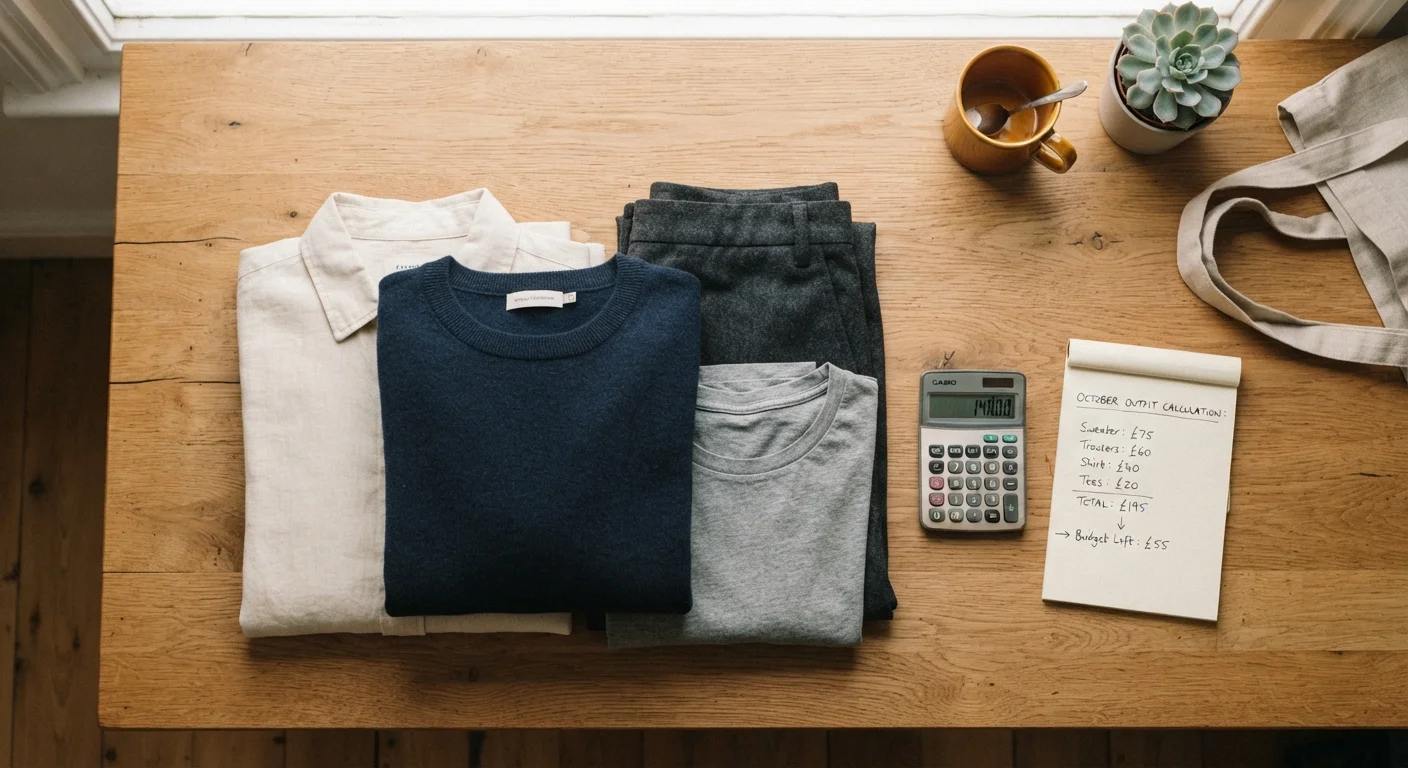
Photo: SaverSteals.com editorial
—— In This Article
Key Takeaways
- Cost-per-wear divides an item's price by how many times you wear it — lower is better.
- A high price tag doesn't mean poor value if the item gets worn consistently and frequently.
- Items worn rarely, regardless of price, almost always represent poor value by this metric.
- Versatility and durability are the two biggest drivers of a low cost-per-wear.
- The formula works best as a buying decision tool, not a justification for impulse spending.
Why the Price Tag Misleads You
When you're standing in a store or scrolling through a product page, the price tag feels like the whole story. But the purchase price of clothing measures only one thing: what you pay at checkout. It says nothing about how often you'll reach for that item, how long it will hold up, or whether it will still fit into your life six months from now.
This is where cost-per-wear (CPW) becomes a more honest lens. Rather than asking "is $85 too much for this?" you're asking "how much will each time I wear this actually cost me?" Those are very different questions with very different answers.
The math is simple: Cost-Per-Wear = Purchase Price ÷ Number of Wears. The challenge — and the value — is in estimating the denominator honestly before you buy, and tracking it honestly after.
For a broader look at how per-unit math reveals true value across categories, see how unit price math works in everyday shopping.
Running the Numbers: What CPW Actually Looks Like
Consider two jackets. The first costs $60 and feels like a good deal — but it's a bold color and a very specific silhouette. You wear it four times before it stops feeling right. CPW: $15.
The second jacket costs $180 and feels like a stretch. It's a neutral, well-constructed piece that works for commuting, casual dinners, and weekend errands. You wear it 90 times over three years. CPW: $2.
The expensive jacket is, by this measure, dramatically cheaper. This isn't an argument for always spending more — it's an argument for thinking differently about what "affordable" actually means.
~30%
Clothing items never worn after purchase
Industry research and consumer surveys consistently suggest that a significant share of clothing purchased goes unworn, contributing to both financial waste and closet clutter.
7–10x
CPW difference between worn vs. unworn items
A regularly worn item purchased at twice the price of a rarely worn alternative will typically cost far less per use over a 12-month period.
$1,700+
Average annual U.S. clothing spend per household
According to the U.S. Bureau of Labor Statistics Consumer Expenditure Survey, American households spend substantially on apparel each year — making per-wear efficiency a meaningful financial consideration.
CPW also exposes the real cost of wardrobe clutter. That $35 clearance top you wore once? It cost $35 per wear. The $150 pair of dark jeans you've worn 75 times? Two dollars. Most closets contain a mix of both, and most people are surprised by which items fall where.
Before adding anything new, it's worth doing a wardrobe audit to see where your current items actually land on the CPW spectrum.
What Makes Cost-Per-Wear Low: Versatility and Durability
Two qualities consistently drive CPW down: how many different ways you can wear something, and how long it physically holds up.
Versatility multiplies wears. A white oxford shirt that works with jeans, dress trousers, under a sweater, or tucked into a skirt will accumulate wears far faster than a sequined top reserved for specific occasions. Before buying, a useful question is: "How many outfits in my current closet does this work with?" If the honest answer is two or fewer, the item faces a steep uphill climb on CPW.
Durability extends the runway. A well-constructed seam, quality fabric, and a design that doesn't read as immediately trend-driven all contribute to an item staying wearable — and worn — for longer. An item that pills, fades, or falls apart after a season never gets the chance to accumulate enough wears to justify any price.
Test Versatility Before You Buy
Before purchasing a new item, mentally pair it with at least five things already in your closet. If you can't reach five realistic combinations, the item will likely struggle to accumulate wears — and its CPW will reflect that. This single habit filters out a large share of impulse purchases before they happen.
This framing connects closely to the logic behind capsule wardrobes: a smaller set of versatile, durable pieces worn frequently will almost always outperform a larger collection of rarely-worn items on a per-wear basis.
Using CPW as a Buying Filter (Without Overthinking It)
Cost-per-wear is most useful as a pre-purchase filter, not a post-purchase regret calculator. Before adding something to your cart, ask yourself three quick questions:
- How often, realistically, will I wear this? Be honest. "At least once a week" and "probably a few times a year" are very different trajectories.
- Does it work with what I already own? Items that need additional purchases to become wearable (a specific shoe, a particular bag) have a hidden cost that CPW doesn't capture on its own.
- Is the quality consistent with how long I expect to wear it? A delicate fabric on a piece you plan to wear constantly is a mismatch that will show up in wear counts quickly.
CPW is not a justification for spending more than your budget allows — it's a way to make comparisons within your budget more meaningful. And it pairs naturally with strategies for getting more use from what you already own before reaching for something new.
For anyone building from the ground up, the foundations of an everyday wardrobe are the exact items where CPW thinking pays off most — because foundational pieces get worn constantly. And understanding which common wardrobe habits quietly undermine value can help you avoid spending that never converts to actual wears.
This article is for general informational purposes only and does not constitute financial or personal finance advice. For guidance tailored to your own budget and circumstances, consider consulting a qualified financial professional.
Frequently Asked Questions

Shopping Editorial Team
Shopping Editorial Team is the collective byline for our editorial team and contributor network. Articles published under this byline or an editorial pen name are researched, written, and reviewed according to our editorial standards for clarity, consistency, and independence before publication.
View author profile