
The Capsule Wardrobe: What It Actually Means and Whether It Works
Capsule wardrobes promise simplicity, but what do they really involve? A clear-eyed look at the concept, its origins, and how it plays out in real life.
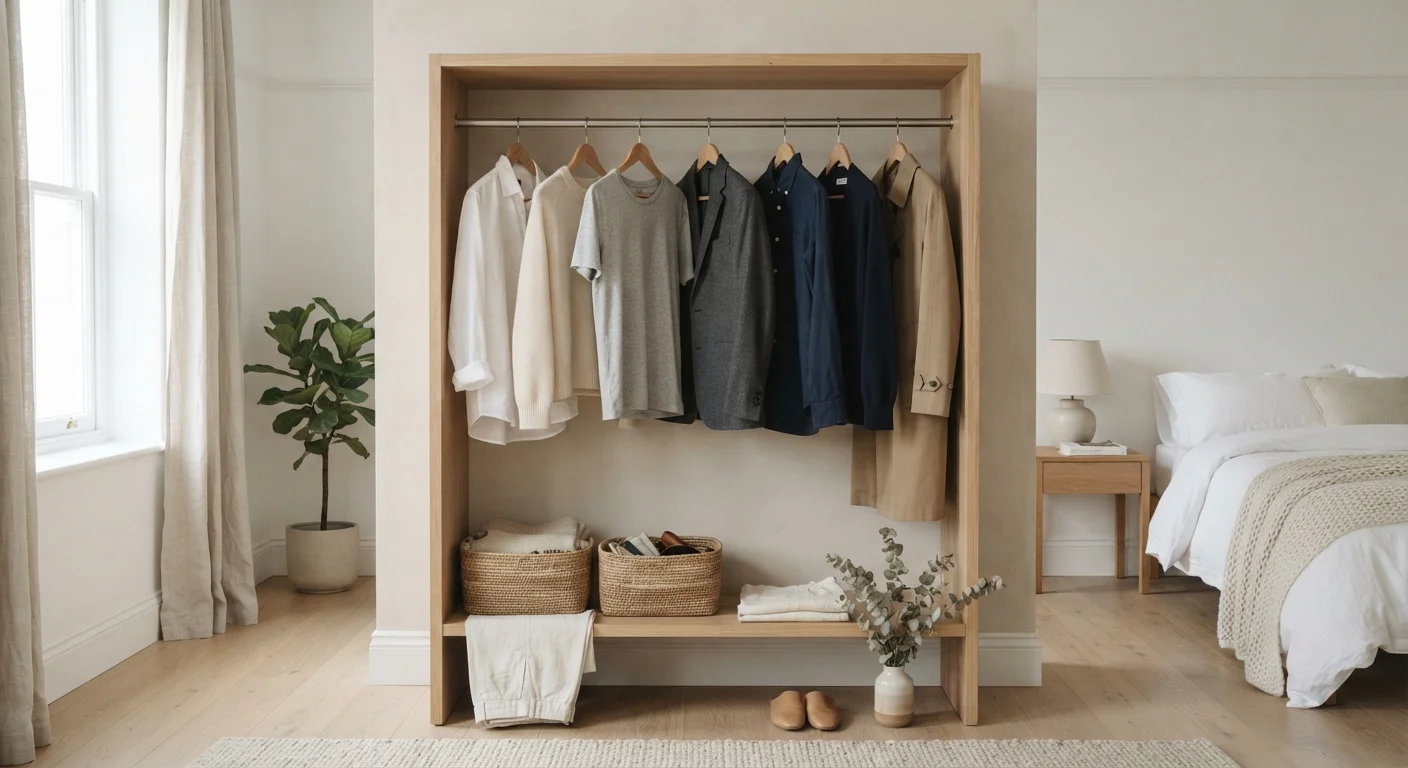
Photo: SaverSteals.com editorial
—— In This Article
Key Takeaways
- A capsule wardrobe is defined by intentionality, not a specific item count.
- The concept originated in 1970s London fashion and has evolved significantly since.
- It works best when built around your actual lifestyle, not an idealized version of it.
- Neutral colors and versatile silhouettes are common foundations, but aren't mandatory.
- A capsule approach can reduce morning stress and impulse shopping over time.
- It is a framework, not a rigid set of rules — adapt it to fit you.
Where the Concept Comes From
The capsule wardrobe has a surprisingly specific origin. London boutique owner Susie Faux introduced the term in the 1970s to describe a small collection of enduring, high-quality pieces that could be refreshed seasonally with a few trend-forward additions. The goal was practical: help women dress well without constant shopping.
The idea gained a wider American audience in 1985 when Donna Karan released her "Seven Easy Pieces" — a workwear-focused system designed around a bodysuit as a foundational layer. While the specific pieces look dated now, the underlying logic — a small set of items engineered to work together — remains the same.
Since then, the concept has been repackaged endlessly in lifestyle media, often with ever-more-specific item lists. That rigidity is actually a departure from the original intent, which was always about thoughtful editing rather than following a formula.
No Standard Item Count Exists
Online capsule wardrobe guides often assign a specific number — 30, 37, 40 pieces — as if it were scientifically derived. It isn't. Those numbers are editorial conventions, not rules. Your lifestyle, climate, and how frequently you do laundry all affect what a realistic capsule looks like for you specifically.
What It Actually Involves in Practice
Building a capsule wardrobe is less about shopping and more about editing. The practical steps generally look like this: audit what you already own, identify what you genuinely wear, remove what you don't, and fill in only the gaps that matter. Our guide on reviewing what you own walks through exactly that process.
Most capsule frameworks share a few structural ideas:
- Versatility over novelty: Each piece should combine with several others, not just one specific outfit.
- Consistent fit and quality: Items that fit well and hold up to regular wear naturally get used more.
- A coherent color story: Not necessarily all-neutral, but a palette where pieces don't clash or strand each other.
What a capsule wardrobe does not require: donating everything you own, buying expensive basics, or committing to a monochrome aesthetic. Those are stylistic choices, not prerequisites.
Try a One-Month Wear Test First
Before editing your wardrobe, spend a month tracking what you actually reach for. Turn all hangers backward at the start; flip them forward when you wear the item. At the end of 30 days, the untouched pieces tell you more than any style quiz can. This makes the editing stage faster and more honest.
Does It Actually Work?
The honest answer: it depends on how well the capsule reflects your real life, not your aspirational one. A capsule built around a lifestyle you wish you had — more minimalist, more polished, fewer casual Saturdays — will feel restrictive and impractical within weeks.
When it works well, a capsule wardrobe tends to reduce the daily friction of getting dressed. Fewer irrelevant options means less visual noise and faster decisions. Research on decision fatigue suggests that reducing low-stakes choices can free up mental energy for more important ones — though individual experience varies.
~20%
Clothing worn regularly from the average closet
Industry estimates and wardrobe studies frequently cite that most people regularly wear only about 20% of what they own, though exact figures vary by study.
85%
Clothing items discarded before being worn 30 times
According to data from the Ellen MacArthur Foundation's 2017 report on the circular fashion economy, the majority of garments are discarded well before reaching their useful wear lifespan.
3x
Higher wear rate for intentionally chosen pieces
Fashion sustainability researchers have generally found that deliberately selected wardrobe items — chosen for versatility and fit — are worn significantly more often than impulse purchases.
It also tends to curb reactive shopping. When you know your wardrobe well and understand what actually fills a gap, you're less likely to buy duplicates of things you already own or pieces that don't connect to anything. That aligns well with thinking about clothing in terms of cost-per-wear rather than sticker price.
Where capsule wardrobes tend to break down: highly varied lifestyles, seasonal climates that demand genuinely different gear, or cases where the initial curation was rushed. If you find yourself constantly working around your capsule rather than through it, that's useful feedback — not failure. See common wardrobe habits that create friction if the process feels harder than it should.
How to Make It Work for You
The most useful reframe: think of the capsule wardrobe as a principle rather than a prescription. The principle is that a smaller, more intentional wardrobe serves most people better than a larger, more chaotic one. How you apply that principle should reflect your climate, your schedule, and your actual taste.
A few approaches that tend to help in practice:
- Start with what you wear, not what you think you should wear. If you reach for the same five items every week, those are your capsule's foundation — even if they're jeans and a hoodie.
- Build around occasions, not aesthetics. Map your typical week and make sure your wardrobe covers those real situations, not magazine scenarios.
- Give it a season before judging it. The gaps in a capsule usually reveal themselves within a few weeks of real use.
For anyone starting with a genuinely sparse wardrobe, building an everyday wardrobe from scratch covers how to think about foundations, fit, and color relationships before adding individual pieces. And if the closet you already own feels like a puzzle you can't solve, building outfits from what you already own is worth a read before you change anything at all.
“A capsule wardrobe is not about restriction — it's about knowing yourself well enough to stop acquiring things that don't serve you.”
— Susie Faux, London boutique owner and originator of the capsule wardrobe concept
Frequently Asked Questions

Style Editorial Team
Style Editorial Team is the collective byline for our editorial team and contributor network. Articles published under this byline or an editorial pen name are researched, written, and reviewed according to our editorial standards for clarity, consistency, and independence before publication.
View author profile