
Men's Hair Grooming: A Practical End-to-End Reference
From scalp care and product selection to haircut maintenance and beard grooming, this guide covers the full spectrum of men's everyday hair care.
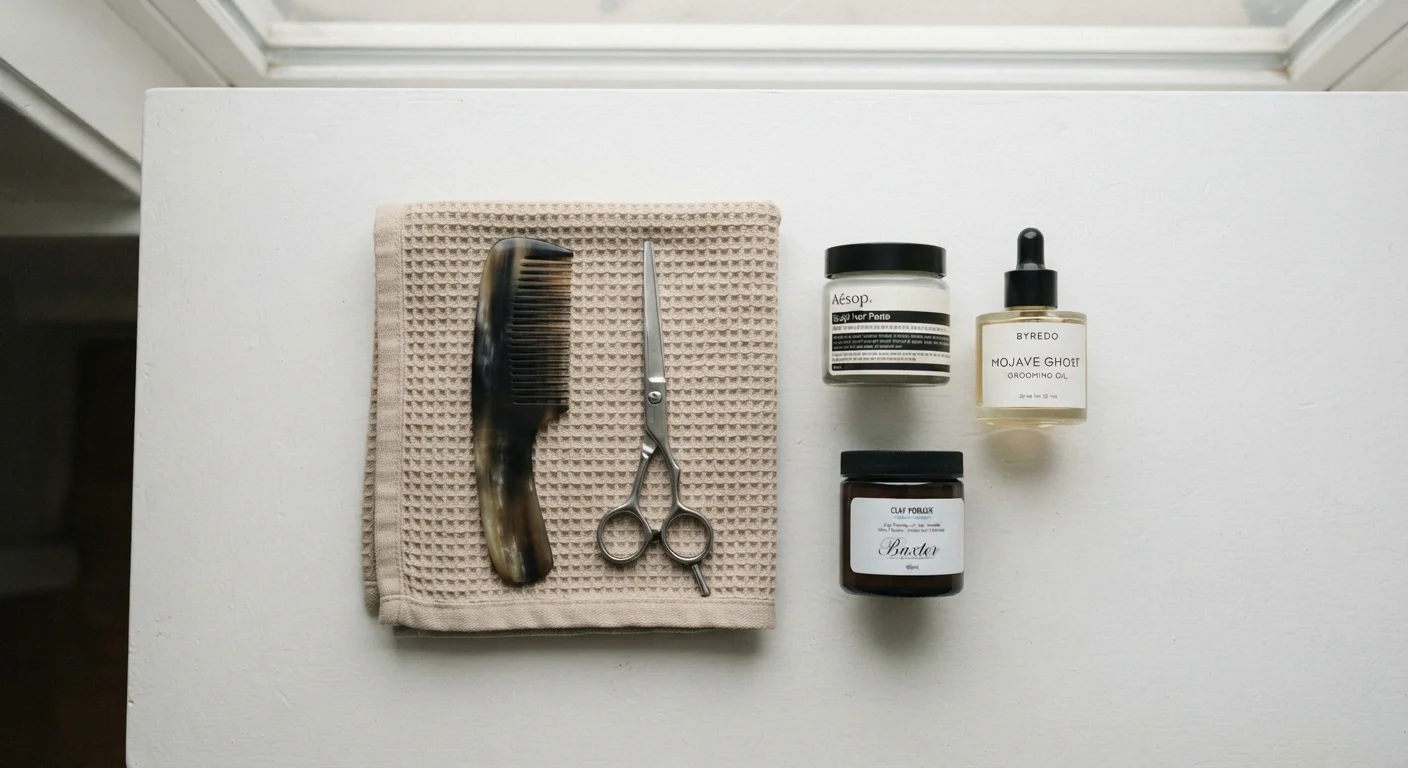
Photo: SaverSteals.com editorial
—— In This Article
Key Takeaways
- Knowing your hair type and scalp condition is the foundation of any effective grooming routine.
- Washing frequency should match your scalp's oil production, not a fixed daily schedule.
- Product choice matters less than application technique — a little goes a long way.
- Regular trims and at-home upkeep extend the life of any haircut significantly.
- Beard care requires dedicated tools and a separate moisturizing step from head hair.
- Noticeable hair thinning warrants a conversation with a healthcare professional, not a DIY fix.
Understanding Your Hair Type and Scalp
Before buying a single product or booking a cut, take a few minutes to assess what you're actually working with. Men's hair spans a wide range — fine and straight, thick and wavy, coily and dense — and each type responds differently to moisture, heat, and product. If you have textured or curly hair, the guide to grooming textured hair covers curl-specific techniques in much more depth.
Equally important is your scalp type. A dry scalp tends to flake and feel tight; an oily scalp may look greasy by mid-afternoon. Combination scalps — oily at the roots, drier at the ends — are common and often misread. Run a clean tissue along your scalp a few hours after washing: significant oil transfer indicates an oily scalp, little to none suggests dry or normal.
If you're unsure of your hair type, assess it on the second day after washing — that's when your hair's natural texture and oil behavior show up most clearly, without the influence of fresh product.
Freshly washed hair can appear finer or drier than it really is, leading to product and routine choices that don't match actual needs.
Ask your barber to show you — not just describe — the product they're using and how they apply it. Watching the technique live is worth more than any tutorial.
Application method accounts for most of the difference between a professional-looking result and a product that just sits on top of the hair.
Washing and Conditioning the Right Way
Daily shampooing isn't a grooming virtue — it's often a mistake. Shampoo strips the scalp's natural sebum (oil), and over-washing can trigger rebound oil production, leaving hair looking worse over time. A general rule: oily scalps may need washing every one to two days, while normal to dry scalps often do well with two to three washes per week.
When you do shampoo, focus on the scalp — not the length of the hair. Work product in with your fingertips (not nails) using gentle circular motions, then let the rinse carry cleanser through the ends. Conditioner works in reverse: apply from mid-shaft to ends and leave it on for one to three minutes before rinsing. Conditioning the scalp directly can weigh fine hair down or contribute to buildup.
Cold Water Rinse for Extra Shine
Finishing your rinse with a brief blast of cool water can help smooth the hair cuticle, which lies flatter when cooled. This reduces frizz and adds a subtle sheen. It doesn't need to be ice-cold — just noticeably cooler than your shower temperature.
Split ends are a real concern for longer styles. Whether to trim or treat is a worthwhile question — the split ends guide breaks it down clearly.
Choosing and Using Hair Products
The styling product aisle can feel overwhelming, but the logic is straightforward once you match product to purpose. Clays and pastes offer high hold with a matte finish — good for textured, defined styles. Pomades range from light to firm hold and typically add shine. Creams and lotions work well for looser styles or adding softness to coarse hair. Gels provide strong hold and are best used sparingly to avoid the crunchy look.
50–100
Strands shed daily considered normal
Dermatology sources generally cite this range as typical daily hair shedding for most adults.
3–5 weeks
Time before a haircut loses shape
Most professional stylists recommend scheduling maintenance trims within this window to keep a cut looking intentional.
2–3x/week
Recommended wash frequency for normal scalps
Many hair care professionals suggest this frequency as a starting point, adjusting based on individual scalp oil production.
Application technique matters more than brand. Start with a small, pea-sized amount — you can always add more. Emulsify the product between your palms before working it through slightly damp or dry hair, depending on the product's instructions. If you want to decode exactly what's inside the bottle, the hair product label guide is a solid next read.
Haircut Maintenance Between Visits
Most haircuts start looking shapeless within three to five weeks. A few at-home habits can meaningfully extend that window. First, keep a soft-bristle brush or wide-tooth comb on hand and use it daily — consistent brushing helps train hair to lie the way your cut was designed.
For styles with defined lines around the ears or neck, a basic trimmer can help maintain edges between barber visits. If you're newer to at-home grooming overall, building a grooming routine from scratch is a good primer on setting up those habits sustainably.
Avoid Over-Trimming at Home
At-home trims work best for minor touch-ups — not reshaping. Cutting too much off the top or attempting complex fade lines without professional training can result in uneven lengths that are difficult to fix. When in doubt, trim less than you think you need and revisit after a day.
Longer hair benefits from protective measures: avoid tight elastic bands that cause breakage, limit heat tool use, and let hair air-dry when possible. These small habits compound over time.
Beard and Facial Hair Grooming Basics
Beard care is a separate practice from head hair care, and treating it as an afterthought shows. Facial hair is coarser and curlier than scalp hair for most men, and the skin beneath is prone to dryness, ingrown hairs, and irritation — especially after shaving.
Core beard grooming involves three things: regular trimming to maintain shape, washing the beard with a gentle cleanser two to three times per week, and moisturizing the skin underneath. A dedicated beard oil or balm helps soften coarse hair and condition the skin. Comb or brush the beard daily to train growth direction and distribute product evenly.
Beard Wash vs. Face Wash vs. Shampoo
These aren't interchangeable. Regular shampoo can be too harsh for facial skin, and standard face wash may not adequately clean coarse beard hair. A gentle, sulfate-free beard wash or a mild multipurpose cleanser formulated for the face strikes the best balance for most men.
For shaving, a sharp, clean blade is non-negotiable — dull blades drag and increase razor burn risk. Shave in the direction of hair growth when possible, especially if you're prone to ingrown hairs or sensitive skin.
Hair Loss Awareness and Scalp Health
Some degree of daily hair shedding — generally cited in dermatology literature as roughly 50 to 100 strands — is normal. Androgenetic alopecia (commonly called male-pattern baldness) affects a significant portion of men and typically follows a recognizable pattern starting at the temples or crown. It's hereditary and progressive, though its rate varies widely.
If you notice sudden, patchy, or accelerated loss, that warrants a visit to a dermatologist or primary care provider rather than a self-directed treatment plan. The hair loss patterns and causes overview — while focused on women — explains many of the same underlying mechanisms and underscores why early evaluation matters for anyone.
Persistent Scalp Issues Need Professional Attention
Conditions like seborrheic dermatitis, psoriasis, and fungal infections can all present as dandruff or itching — and they require different treatments. Self-treating with over-the-counter dandruff shampoos for extended periods without improvement is a signal to see a dermatologist, not to try the next product on the shelf.
Scalp health supports everything else in this guide. Address persistent dandruff, itching, or inflammation with a healthcare provider rather than cycling through over-the-counter products indefinitely. A scalp issue ignored often becomes a grooming problem compounded.
This article provides general grooming and hair care information for educational purposes only. It is not medical advice. For concerns about hair loss, scalp conditions, or any health-related symptoms, please consult a qualified healthcare professional.

Style Editorial Team
Style Editorial Team is the collective byline for our editorial team and contributor network. Articles published under this byline or an editorial pen name are researched, written, and reviewed according to our editorial standards for clarity, consistency, and independence before publication.
View author profile