
Trimming vs. Treating: Addressing Split Ends the Right Way
Can leave-in conditioners repair split ends, or is the scissors the only real fix? A clear look at what actually works and why.
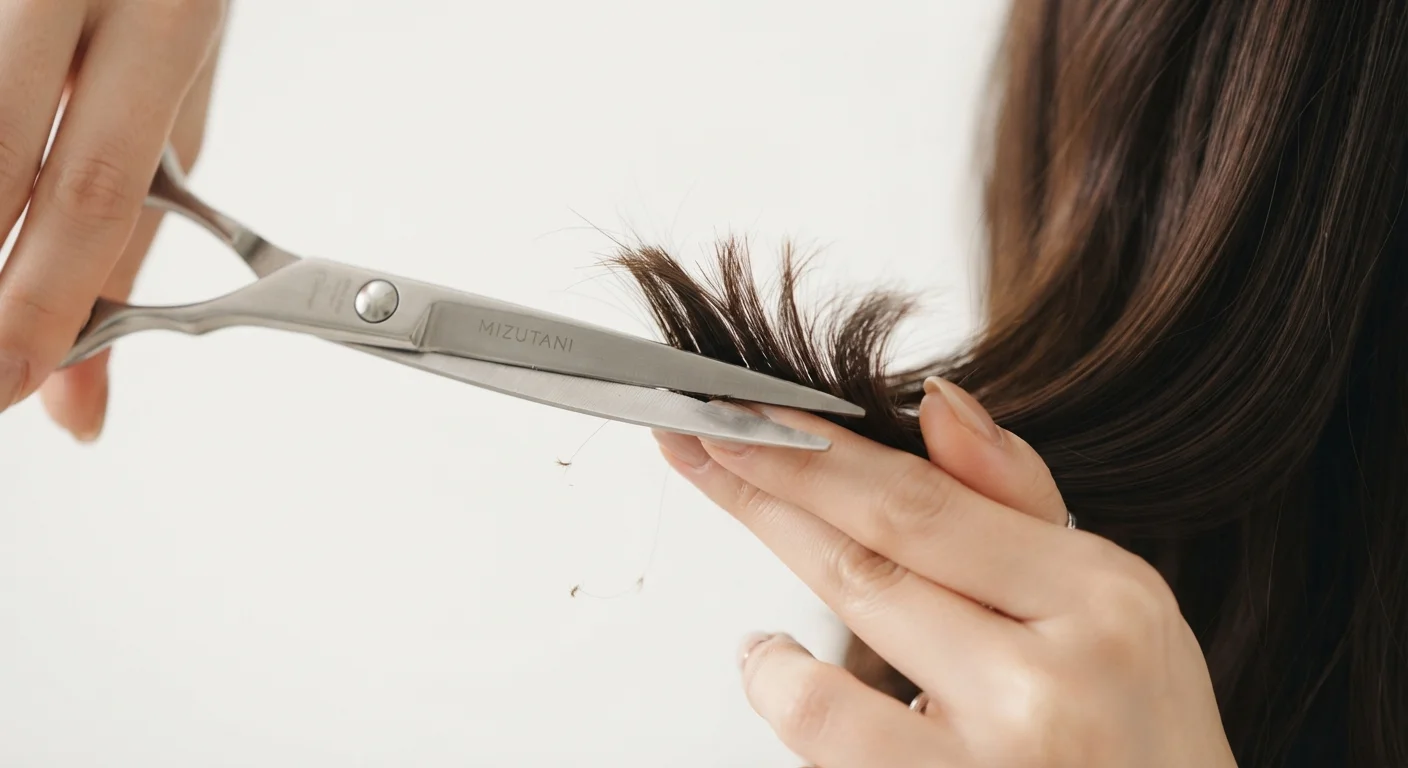
Photo: SaverSteals.com editorial
—— In This Article
Key Takeaways
- Trimming is the only method that fully removes a split end — no product can reverse the structural damage.
- Leave-in conditioners and bond-building treatments can temporarily seal and smooth splits, buying time before a cut.
- Treating without ever trimming allows splits to travel further up the hair shaft, worsening damage over time.
- A balanced routine combines regular trims with protective conditioning habits to maintain long-term hair health.
- Hair texture, styling habits, and heat use all influence how quickly split ends develop and return.
What a Split End Actually Is
A split end — or trichoptilosis — occurs when the protective outer layer of a hair strand, called the cuticle, wears away at the tip. Once the cuticle is gone, the inner cortex fibers fray and separate. This doesn't happen overnight; it's the cumulative result of heat styling, friction, chemical processing, dryness, and mechanical stress like aggressive brushing or tight elastics.
Understanding that split ends are a form of structural damage — not just a cosmetic nuisance — is the key to making smart decisions about how to address them. The hair strand is not living tissue beyond the scalp. It cannot repair itself the way skin heals a cut. That distinction shapes everything else in this comparison.
For a broader picture of how scalp health influences the quality of the hair that grows from it, see our article on what your scalp is telling you about your hair health.
Trimming: What It Does and Doesn't Do
A trim physically removes the damaged section of hair. There is no ambiguity here — once the split end is cut off, it's gone. This is the only method that genuinely resolves the problem rather than masking it.
The critical variable is how much to cut. Snipping just above the visible split is ideal; cutting significantly more than necessary sacrifices healthy hair without benefit. Some stylists use a technique called dusting — removing only a few millimeters to clear frayed tips without noticeable length loss.
What trimming doesn't do: it doesn't prevent new splits from forming. If the habits that caused splitting — excessive heat, rough towel-drying, skipping moisture — remain unchanged, ends will split again regardless of how often you trim. Think of trimming as resetting the clock, not fixing the underlying routine.
| Criterion | Trimming | Treating |
|---|---|---|
| Removes split ends permanently | Yes — physical removal | No — temporary smoothing only |
| Prevents new splits forming | No — habits must change too | Yes — reduces friction and dryness |
| Immediate visible results | Yes — clean, even ends | Yes — smoother appearance |
| Preserves hair length | Sacrifices a small amount | No length lost |
| Frequency needed | Every 8–16 weeks (varies) | Daily or near-daily |
| Works on all hair types | Yes | Yes — formulas vary by type |
| Long-term damage control | High — stops upward splitting | Moderate — slows progression |
Treating: What Products Can (and Can't) Accomplish
A wide range of products — leave-in conditioners, hair oils, bond-building treatments, and split-end serums — are marketed to address split ends. It's worth being precise about what they actually do.
Temporarily seal and smooth: Some formulas contain ingredients like silicones or plant-based oils that coat the hair shaft and hold frayed cuticle edges together visually. This reduces frizz and the appearance of splitting. The effect washes out and does not structurally repair the strand.
Reduce further damage: This is where treatments genuinely shine. Moisturizing leave-ins and protective oils reduce friction, increase elasticity, and help hair resist the mechanical stress that causes splitting in the first place. Bond-building treatments — a category that works at the molecular level within the cortex — may help reinforce weakened strands, though research on consumer-grade products is still developing.
Treatments are prevention and management tools, not cures. Using them consistently between trims is smart haircare. Using them instead of ever trimming allows existing splits to migrate up the strand, eventually causing more breakage and more length loss than a timely trim would have.
A Note on Bond-Building Products
Bond-building treatments have grown significantly in popularity and are sometimes described as capable of "repairing" hair. To be precise: these products can help reinforce weakened disulfide bonds within the hair's cortex, potentially improving strength and reducing future breakage. However, they do not reattach a strand that has already physically split at the tip. They are best understood as a preventive and strengthening tool, most effective when used consistently as part of an ongoing routine rather than as a one-time fix.
If your hair is color-treated or chemically relaxed, your shampoo choice also affects how quickly ends degrade. Our sulfate-free vs. traditional shampoo comparison explains how cleansing habits influence overall strand integrity.
Building a Routine That Uses Both
The trimming-vs-treating debate is something of a false choice. Most hair types benefit from both, used strategically.
A general framework many hair professionals suggest: trim every 8–12 weeks if you use heat regularly, or every 12–16 weeks if you air-dry and keep styling minimal. In between, use leave-ins and protective products consistently — especially at the ends, which are the oldest and most vulnerable part of every strand.
Hair texture matters here too. Tightly coiled or textured hair tends to be naturally drier at the ends because sebum from the scalp has further to travel down the curl pattern. This means both more frequent moisture treatments and vigilant trimming of any splits before they cause breakage. Our textured hair grooming guide covers tools and techniques specifically suited to coily and curly hair types.
Protective styling can also extend the life of freshly trimmed ends — provided styles aren't too tight or left in too long. See protective styles and long-term hair health for guidance on doing that safely.
90%
Of hair damage occurs at the ends
Hair care educators and trichologists consistently note that tips are the oldest, most exposed part of each strand and bear the cumulative impact of styling and environmental stress.
8–12 weeks
Commonly recommended trim interval for heat-styled hair
This general guideline is widely cited by professional stylists, though individual needs vary based on hair texture, heat frequency, and overall hair health.
30%+
Reduction in breakage with regular conditioning
Research on hair fiber strength suggests that consistent moisturizing and conditioning practices can meaningfully reduce mechanical breakage, though results vary by product formulation and hair type.

Style Editorial Team
Style Editorial Team is the collective byline for our editorial team and contributor network. Articles published under this byline or an editorial pen name are researched, written, and reviewed according to our editorial standards for clarity, consistency, and independence before publication.
View author profile