
The Everyday Skincare Routine: Cleanser, Moisturizer, SPF — and Why That Order Matters
A plain-language walkthrough of a foundational skincare routine, including why layering products in the right order makes a real difference.
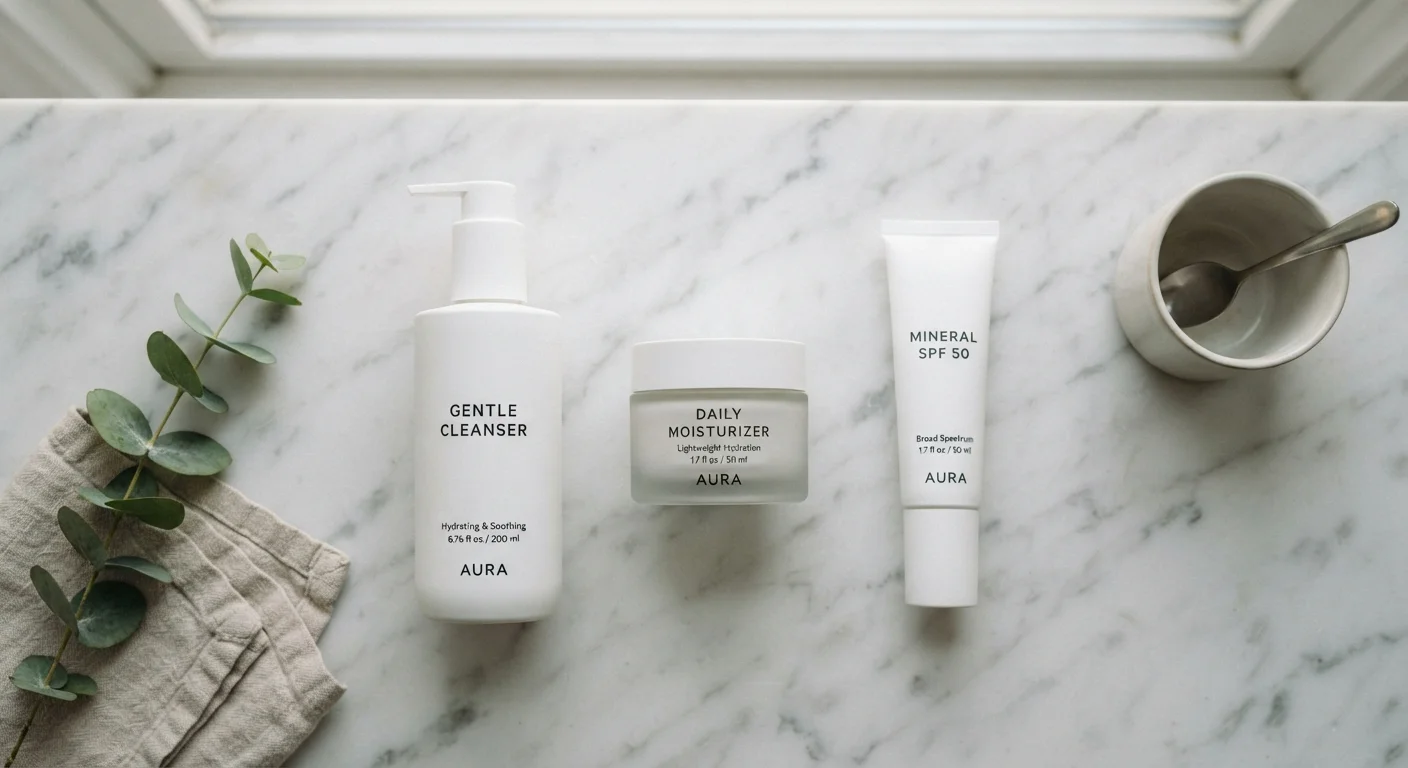
Photo: SaverSteals.com editorial
—— In This Article
Key Takeaways
- A foundational skincare routine needs only three products: cleanser, moisturizer, and SPF.
- Layering order matters because it affects how well each product absorbs and performs.
- Sunscreen goes on last in a morning routine — after moisturizer, never underneath it.
- Skin type and sensitivities should guide product choices, not marketing claims.
- Consistency over time outperforms any single high-end product used sporadically.
Why Three Products Are Genuinely Enough to Start
Skincare aisles and social media feeds can make a simple routine feel impossible to pin down. There are toners, essences, serums, facial oils, eye creams — and a confident voice telling you each one is essential. The reality? For most people most of the time, a well-executed three-step routine covers the foundational bases.
The core logic is straightforward: cleansing removes what doesn't belong on your skin, moisturizing supports what your skin needs to stay healthy, and SPF protects against the environmental factor most consistently linked to premature skin aging and skin damage. Everything else — actives, treatments, specialty products — builds on this foundation, not the other way around.
This doesn't mean additional products have no value. Ingredients like retinol, vitamin C, and niacinamide have solid research behind them for specific concerns. But adding them before you've mastered the basics is like learning guitar solos before you know a chord. If you're curious about what's actually inside those extra products, our guide to reading a skincare ingredient list breaks it down without the chemistry overwhelm.
What you will need
The Tools You'll Use
You genuinely don't need a cabinet full of products to start. Here's what a solid foundational routine actually requires — and one note worth keeping in mind: price does not reliably predict performance. A well-formulated drugstore moisturizer often contains the same functional ingredients as a prestige version at a fraction of the cost. If you're curious about how formulation quality actually works, drugstore and department store formulas are closer than you'd think.
Gentle facial cleanser
Removes surface debris, excess oil, and environmental residue without stripping the skin's moisture barrier.
Facial moisturizer
Replenishes hydration and helps reinforce the skin barrier after cleansing.
Broad-spectrum facial sunscreen (SPF 30+)
Shields skin from UVA and UVB rays as the final protective layer of a morning routine.
Soft facial towel or clean cotton cloth
Used to gently pat — not rub — skin dry after cleansing.
The Routine, Step by Step
The sequence below is for a morning routine. At night, the process is similar — cleanser and moisturizer still apply — but SPF is skipped and replaced with a night-specific moisturizer or treatment if you use one. Understanding why AM and PM routines differ is worth its own read: see morning vs. night skincare for more detail.
Cleanse with lukewarm water and a gentle formula
Wet your face with lukewarm water — not hot, which can strip natural oils. Apply a small amount of cleanser (roughly a dime-sized amount) and massage gently in circular motions across your face and along the jawline for about 30 to 60 seconds. Rinse thoroughly, then pat skin dry with a clean towel. Rubbing can cause unnecessary friction and irritation.
If your skin feels tight or squeaky-clean after washing, that's a sign the cleanser may be too harsh. A well-formulated cleanser leaves skin feeling clean but comfortable.
Apply moisturizer to damp (not soaking) skin
Within about 60 seconds of patting your face dry, apply your moisturizer. Skin that's slightly damp — not wet — absorbs humectant ingredients like glycerin and hyaluronic acid more effectively, since they work by drawing and holding water.
Use upward, gentle strokes and don't forget the neck. You don't need a thick layer — a pea-to-quarter-sized amount is typically sufficient depending on the formula's consistency. Let it absorb for roughly a minute before moving to the next step.
Apply sunscreen as the final morning step
Dispense enough sunscreen to cover your full face and neck — dermatologists commonly suggest about a nickel-sized amount for the face alone, though this varies by formula type (mineral vs. chemical). Apply it evenly and allow it to settle before applying any makeup.
For morning routines, this is your last skincare step. SPF in makeup or tinted moisturizer is generally not considered sufficient on its own, as most people don't apply enough product to reach the labeled protection level. A dedicated sunscreen gives you reliable, consistent coverage.
Sunscreen Is a Non-Negotiable Last Step
Applying moisturizer over sunscreen dilutes the SPF film and significantly reduces its protective effectiveness. Always apply sunscreen as the final step in your morning routine, after moisturizer has had a moment to settle. This applies regardless of skin tone — UV exposure affects all skin types. For a deeper look at common SPF misunderstandings, see Sunscreen Myths That Dermatologists Wish Would Disappear.
Getting the Order Right — and Why It Isn't Arbitrary
Product layering order in skincare follows a general principle: apply thinnest-to-thickest, and place anything that needs to absorb into the skin before anything that sits on top of it. This is why cleanser always comes first (it's rinsed off entirely), moisturizer comes second (it absorbs into the upper layers of skin), and sunscreen comes last (it needs to form an uninterrupted film on the surface to work correctly).
Disrupting that sequence doesn't just feel wrong — it can meaningfully reduce how well your products function. Moisturizer applied over sunscreen physically interrupts the UV-filtering layer. Sunscreen applied before moisturizer creates a barrier that reduces how much the moisturizer can absorb. The order isn't a marketing convention; it reflects how each formula is actually designed to interact with your skin.
New to Layering? Start Simple
Before adding serums, toners, or actives to your routine, get comfortable with the core three: cleanser, moisturizer, SPF. Introducing too many products at once makes it impossible to identify what's helping or what might be causing irritation. Once your skin has adjusted — typically a few weeks — you can consider expanding. See our practical self-audit guide before adding anything new.
If you're thinking about introducing active ingredients — things like niacinamide, AHAs, or eventually retinol — layering order becomes even more important. Our guide on skincare ingredient layering covers what to combine and what to keep apart.
Patch Test Before Starting Any New Product
If you're introducing a new cleanser, moisturizer, or sunscreen, apply a small amount to your inner arm or behind your ear for a day or two before using it on your full face. This is especially important for people with sensitive or reactive skin. Redness, itching, or bumps are signals to discontinue use and consult a dermatologist.
This article is for general informational and educational purposes only. It is not a substitute for professional dermatological advice. If you have a skin condition, persistent irritation, or specific concerns, consult a qualified dermatologist or healthcare provider.

Style Editorial Team
Style Editorial Team is the collective byline for our editorial team and contributor network. Articles published under this byline or an editorial pen name are researched, written, and reviewed according to our editorial standards for clarity, consistency, and independence before publication.
View author profile