
Morning vs. Night Skincare: Why the Same Products Don't Always Belong in Both Routines
Some ingredients belong only at night; others are essential by day. Here's how AM and PM routines differ — and why it matters.
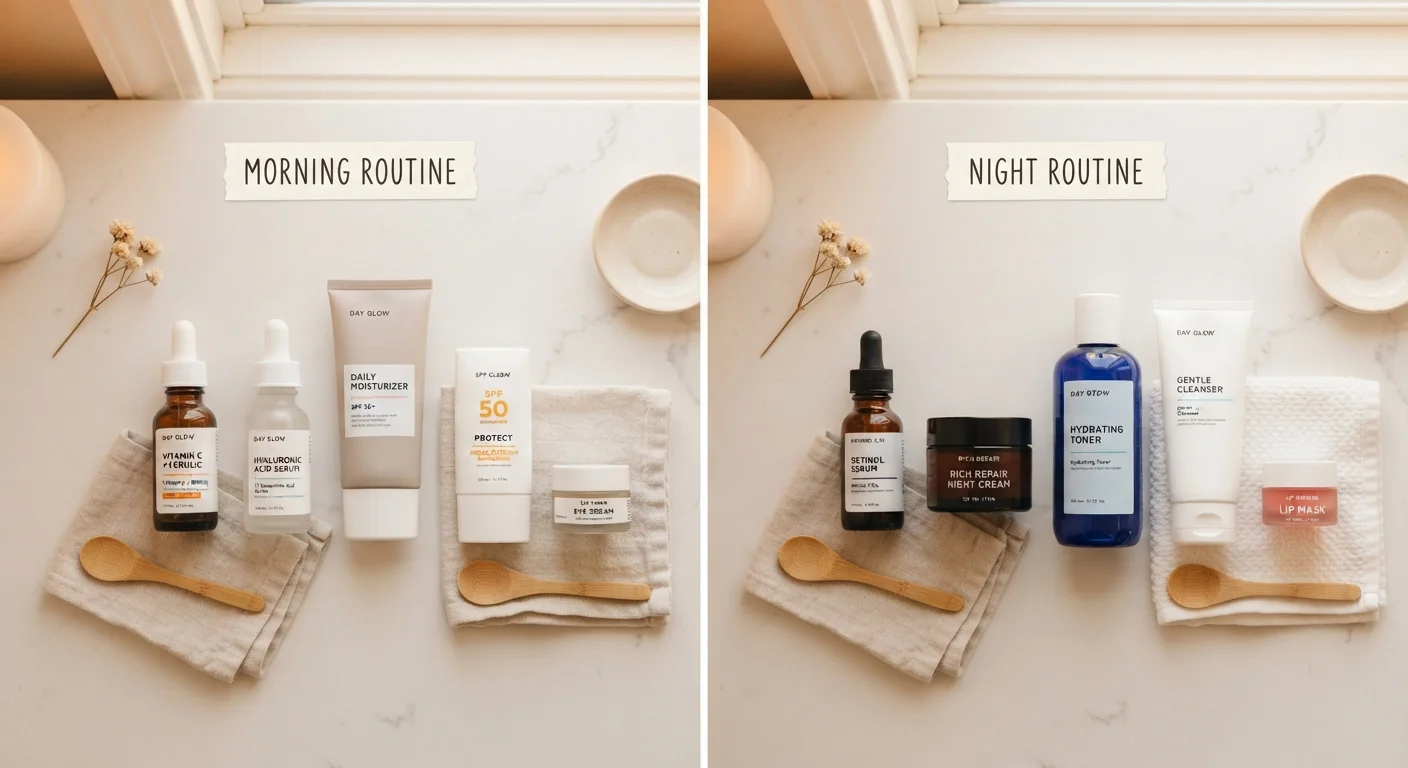
Photo: SaverSteals.com editorial
—— In This Article
Key Takeaways
- Morning routines should focus on protection — especially SPF — while night routines prioritize repair and renewal.
- Some active ingredients like retinol and AHAs can increase sun sensitivity and belong only in a PM routine.
- Vitamin C and antioxidant serums are most effective in the morning, where they reinforce sunscreen against UV damage.
- You don't need entirely separate product drawers — just a clear understanding of which ingredients go when.
- Doubling up on certain actives morning and night can cause irritation rather than better results.
Why Timing Isn't Just a Preference — It's Science
Skin doesn't behave the same way at 7 a.m. as it does at 11 p.m. During the day, your skin is in defense mode — working to shield you from UV radiation, environmental pollution, and free radicals. At night, it shifts into repair mode, ramping up cell turnover and collagen synthesis while you sleep.
This biological rhythm, sometimes called the skin's circadian cycle, has real implications for when certain ingredients are most effective — and when some can actually work against you. Building separate AM and PM routines isn't about owning more products; it's about using what you already have at the right time. For a deeper look at ingredient compatibility in general, see our guide to skincare ingredient layering.
| Criterion | Morning Routine | Night Routine |
|---|---|---|
| Primary goal | Protect and defend | Repair and renew |
| SPF required | Yes — essential | No |
| Retinol / retinoids | Avoid — photosensitive | Yes — ideal timing |
| Vitamin C / antioxidants | Yes — boosts UV defense | Less effective |
| Exfoliating acids (AHA/BHA) | Avoid — increases UV sensitivity | Yes — safe at night |
| Moisturizer weight | Light to medium | Medium to rich |
| Hyaluronic acid | Works well | Works well |
| Cleanser | Gentle rinse | Thorough — removes SPF and makeup |
What Your Morning Routine Should Be Doing
The AM routine has one overarching job: protect. That means layering ingredients that defend against damage rather than aggressively treating it. Here's what earns a place in your morning lineup:
- Antioxidants (like vitamin C): Applied in the morning, antioxidant serums help neutralize free radicals triggered by UV exposure and pollution, reinforcing what your SPF is doing. They're less effective at night when oxidative stress isn't occurring.
- Lightweight moisturizer: Something that hydrates without pilling under makeup or feeling heavy by midday.
- Broad-spectrum SPF: This is non-negotiable. Dermatologists widely agree that daily sunscreen use is one of the most effective ways to prevent premature skin aging — full stop. If you're curious about what goes under that SPF, our everyday skincare routine guide explains the layering logic clearly.
90%+
Of visible skin aging attributed to UV exposure
The American Academy of Dermatology notes that the majority of premature skin aging is caused by sun exposure, underscoring why daily SPF is foundational.
~2x
Skin cell turnover rate during sleep vs. daytime
Research in chronobiology suggests skin cell regeneration peaks during sleep hours, explaining why PM actives can be more effective when applied at night.
What to leave out in the morning: retinol, most exfoliating acids (AHAs/BHAs), and heavy occlusive creams that can interfere with how products sit on skin throughout the day.
What Your Night Routine Should Be Doing
At night, the gloves come off — in the best way. Without sunlight in the picture, you can introduce ingredients that are either photosensitive (meaning UV exposure reduces their effectiveness or causes unwanted reactions) or simply too heavy for daytime wear.
- Retinol and retinoids: These vitamin A derivatives accelerate cell turnover and are widely studied for their role in addressing fine lines and uneven texture. They break down in sunlight and can increase sun sensitivity, so night is the right time.
- Exfoliating acids (AHAs like glycolic and lactic acid; BHAs like salicylic acid): These remove dead skin cells and can leave skin temporarily more vulnerable to UV damage — another reason to reserve them for PM use.
- Richer moisturizers and overnight masks: Skin loses more moisture overnight through a process called transepidermal water loss. A heavier cream or occlusive layer helps lock hydration in while repair processes run.
One thing worth knowing: more isn't more. Using strong actives every single night without building up gradually can lead to irritation or a compromised skin barrier. If you're new to retinol or acids, starting a few nights per week and increasing slowly is a widely recommended approach — though it's worth discussing with a dermatologist for personalized guidance.
This article is for general informational purposes only and does not constitute medical or dermatological advice. Consult a qualified skincare professional or dermatologist for guidance tailored to your skin type and concerns.
The Overlap: Products That Work Fine Either Way
Not everything is time-sensitive. A few workhorses belong comfortably in both routines:
- Gentle cleansers: Cleansing in the morning removes oils and sweat accumulated overnight. At night, it removes SPF, makeup, and the day's environmental buildup.
- Hyaluronic acid serums: This humectant pulls moisture into the skin and isn't photosensitive, making it a flexible player in AM or PM routines.
- Niacinamide: A versatile ingredient that can calm redness, support the skin barrier, and regulate oil production — with no timing restrictions.
The key is avoiding the assumption that if a product is good for you, using it twice a day makes it twice as good. With actives especially, that logic tends to backfire. For related reading on how your morning habits set the tone for the rest of your day, our piece on building a morning routine for mental health is worth a look — the same principle of intentionality applies. And if you're wondering what else to layer into your morning look, what makeup primers actually do is a practical follow-up read.
A Note on Sensitive or Reactive Skin
If your skin tends toward sensitivity, you may not need — or tolerate — active ingredients like retinol or exfoliating acids at all, let alone at night. A simplified routine of cleanser, moisturizer, and SPF can be entirely appropriate and effective. When in doubt about introducing new actives, a board-certified dermatologist can help you identify what your skin actually needs rather than what's trending.

Style Editorial Team
Style Editorial Team is the collective byline for our editorial team and contributor network. Articles published under this byline or an editorial pen name are researched, written, and reviewed according to our editorial standards for clarity, consistency, and independence before publication.
View author profile