
Carry-On vs. Checked Bag: What Actually Goes Where
Understand TSA rules, airline size limits, and packing logic to decide what belongs in your carry-on versus your checked luggage.
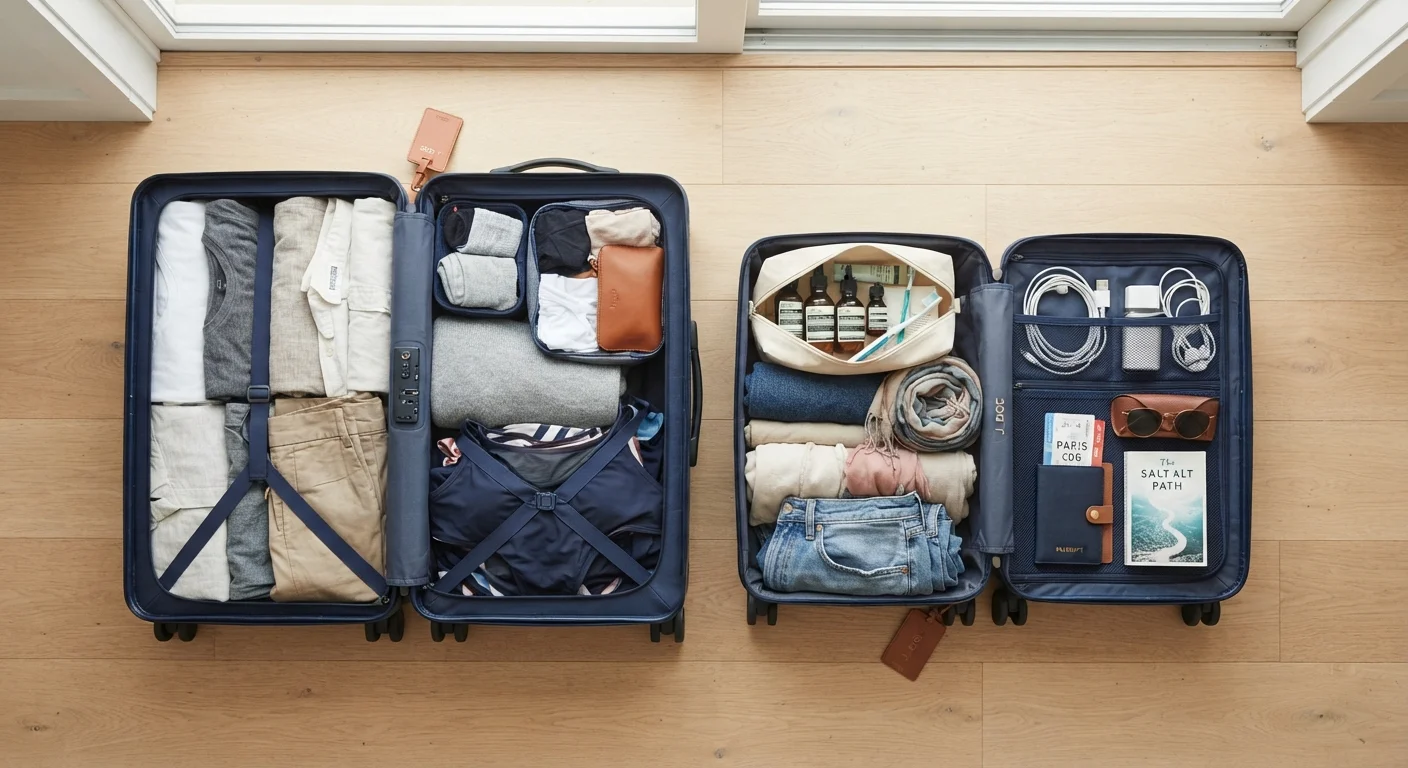
Photo: SaverSteals.com editorial
—— In This Article
Key Takeaways
- Carry-ons must meet TSA liquid rules: containers of 3.4 oz or less, all fitting in one quart-sized bag.
- Airline size and weight limits for carry-ons vary — always verify before you fly.
- Checked bags allow full-size liquids, sharp objects, and larger gear that can't go in the cabin.
- Certain items — medications, valuables, electronics — generally belong in your carry-on regardless of trip length.
- Checked bag fees add real cost to a trip; factor this into your planning.
The Core Rules That Govern Each Bag
Before deciding what goes where, it helps to understand the rules that constrain each option. Carry-ons are subject to two overlapping rule sets: TSA security requirements and your airline's size and weight policies.
TSA liquids rule: Any liquid, aerosol, gel, cream, or paste in a carry-on must be in a container of 3.4 ounces (100 ml) or less. All such containers must fit in a single, clear, quart-sized, zip-top bag — one bag per passenger. This applies whether you're carrying shampoo, toothpaste, or sunscreen. Full-size containers must go in your checked bag. For a deeper look at what TSA rules actually say versus what travelers assume, see our common airport myths guide.
Airline size limits: Most U.S. airlines allow a carry-on up to roughly 22 x 14 x 9 inches, but this is not universal. Budget carriers and some regional aircraft have smaller limits, and weight caps vary. Check your specific airline's policy before you pack — overhead bin space is not guaranteed, and gate agents do enforce limits during full flights.
Checked bag dimensions and weight: Most airlines allow checked bags up to 62 linear inches (length + width + height) and 50 lbs before oversize or overweight fees kick in. What you gain is freedom from TSA liquid restrictions and the ability to pack items prohibited in the cabin, such as sharp tools, certain sporting goods, and full-size toiletries.
| Criterion | Carry-On Bag | Checked Bag |
|---|---|---|
| Liquid rules | 3.4 oz max per container, 1 quart bag | Full-size containers allowed |
| Size limits | Typically ~22×14×9 in (varies by airline) | Up to 62 linear inches typically |
| Weight limit | Varies; often 15–25 lbs | Usually up to 50 lbs |
| Fees | Usually free (first bag, most carriers) | Typically $30–$45+ per bag each way |
| Sharp items allowed | No | Yes (most types) |
| Access during flight | Yes — overhead bin or under seat | No — unavailable until baggage claim |
| Loss/delay risk | Minimal — stays with you | Low but possible; delays do occur |
What Should Always Go in Your Carry-On
Certain items belong in your carry-on regardless of how long you're traveling. This isn't just about convenience — it's about managing risk. Checked bags are occasionally delayed or misrouted, and contents are outside your control once they leave your hands.
- Medications: Prescription and over-the-counter medications should travel with you in the cabin. TSA generally allows medically necessary liquids above 3.4 oz in carry-ons, though additional screening may apply. For a full breakdown of the rules around flying with medications, see our guide to flying with medications.
- Electronics and valuables: Laptops, cameras, jewelry, and passports should stay with you. Checked bag theft and damage, while not common, do occur — and airlines' liability for valuables is limited.
- One day's change of clothes: If your checked bag is delayed, having a fresh outfit in your carry-on buys you time without an emergency shopping trip.
- Anything irreplaceable: Documents, keepsakes, items specific to your trip — keep them close.
Liquids Rules Have a Medical Exception
TSA allows medically necessary liquids, gels, and aerosols in carry-ons in quantities exceeding 3.4 oz, subject to additional screening. This includes items like liquid medications, gel ice packs for medications, and certain medical devices. Notify the TSA officer at the checkpoint and be prepared for additional inspection. Policies can change, so verify current guidance at tsa.gov before you travel.
If you travel frequently and want to move through security faster, it's worth understanding programs like TSA PreCheck. Our TSA PreCheck and Global Entry explainer covers eligibility and what each program actually provides.
What Works Better in a Checked Bag
A checked bag is not just for overflow — for certain trips, it's genuinely the practical choice.
~4 million
Checked bags mishandled by U.S. airlines annually
According to U.S. Department of Transportation Air Travel Consumer Reports, U.S. airlines mishandle millions of bags each year — a key reason to keep essentials in your carry-on.
$30–$45+
Typical one-way checked bag fee, major U.S. carriers
Checked bag fees vary by airline, ticket class, and loyalty status; round-trip fees can add $60–$90 or more to your travel cost before other charges.
- Full-size toiletries: If you need a full bottle of shampoo, conditioner, or sunscreen, check it. Decanting into travel-size containers works for short trips but becomes tedious for two-week travels.
- Sharp or restricted items: Straight razors, certain tools, sporting knives, and similar items are prohibited in carry-ons but allowed in checked bags. Check TSA's published prohibited items list for specifics.
- Bulky clothing or gear: Coats, boots, and travel pillows eat up carry-on space fast. If you're heading somewhere that requires heavy clothing, a checked bag lets you pack more practically.
- Gifts and souvenirs: TSA may need to open wrapped gifts for inspection. If you're carrying gifts, check them or leave them unwrapped.
One practical consideration: checked bag fees add real cost to a trip. Our breakdown of airline fees explains what to expect beyond the base fare, including how baggage pricing varies by carrier and ticket type.

Travel Editorial Team
Travel Editorial Team is the collective byline for our editorial team and contributor network. Articles published under this byline or an editorial pen name are researched, written, and reviewed according to our editorial standards for clarity, consistency, and independence before publication.
View author profile