
Common Airport Myths That Confuse American Travelers
From arriving 'three hours early' to assumptions about TSA liquids rules — separating airport folklore from what the rules actually say.
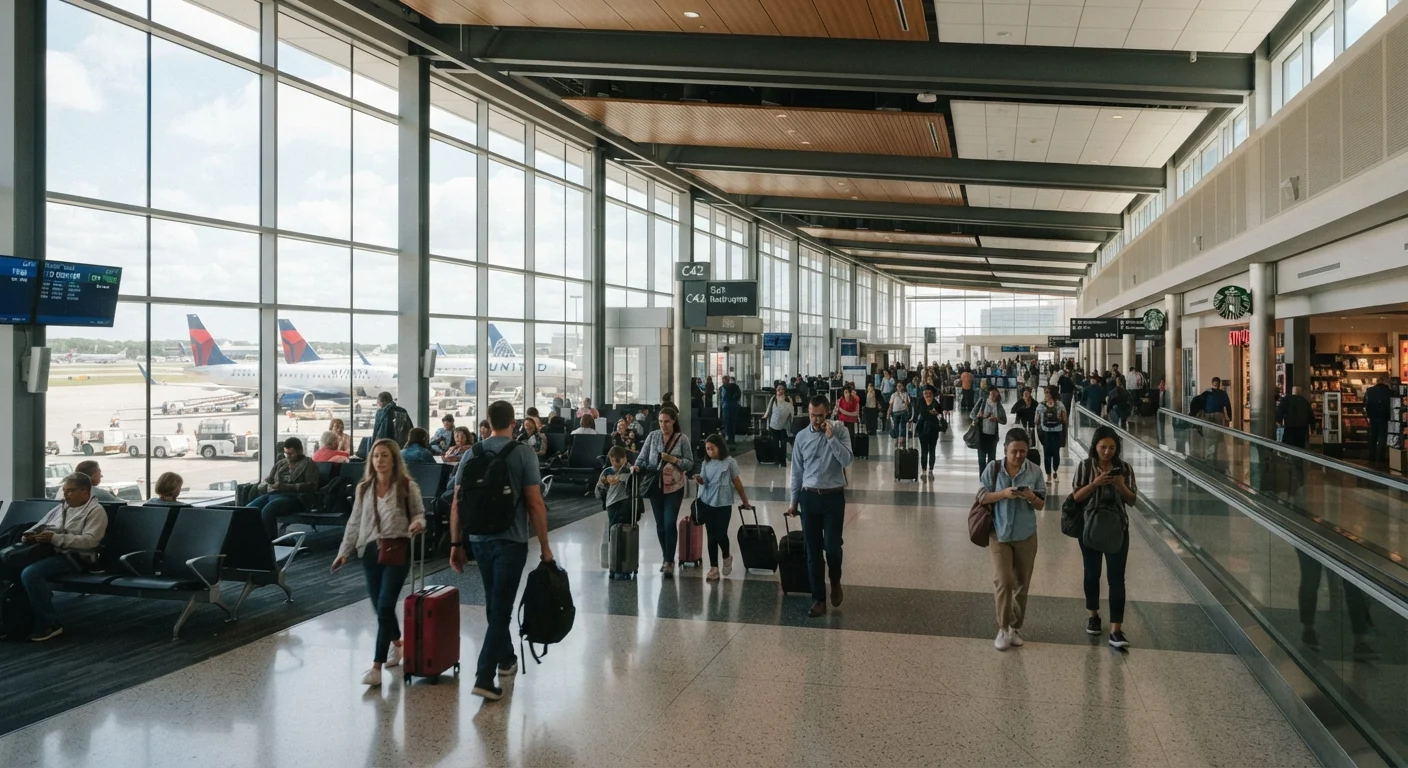
Photo: SaverSteals.com editorial
—— In This Article
Key Takeaways
- The TSA 3-1-1 liquids rule applies to containers, not total liquid volume per se.
- Arriving two hours early is sufficient for most domestic flights at mid-size airports.
- TSA PreCheck lanes significantly reduce security time but are not available on every flight.
- Removing shoes at security is not always required — it depends on your screening program.
- Clear plastic bags for liquids must be quart-sized, but any resealable quart bag qualifies.
Why Airport Myths Persist
Airport procedures change more often than most travelers realize. Rules updated after security incidents, new technology rollouts, and program expansions often take years to filter into everyday travel culture. The result: a layer of folklore that passengers repeat to each other in good faith, even when the underlying rule has shifted. This article addresses the most common misconceptions American travelers encounter — from security screening to arrival timing — and explains what TSA and airline policies actually say.
Myth
You must always arrive three hours early for a domestic flight.
Fact
Two hours is the standard TSA recommendation for domestic flights; three hours is typically reserved for international departures.
The Transportation Security Administration advises domestic travelers to arrive two hours before departure. The three-hour guideline applies to international flights, where check-in, customs documentation, and longer security queues are more common. That said, variables like airport size, peak travel periods (holidays, summer), and whether you have checked bags can justify arriving a little earlier. For a small regional airport on a Tuesday morning, 90 minutes may genuinely be enough. The key is to factor in your specific airport and travel day rather than defaulting to the most cautious blanket rule.
Myth
All liquids must fit in a single quart-sized bag, and you can only bring one.
Fact
TSA's 3-1-1 rule requires liquids in containers of 3.4 oz (100 ml) or less, all fitting in one quart-sized clear bag — but the rule is about container size, not liquid type.
The 3-1-1 rule is widely misunderstood. Each passenger is permitted one quart-sized, clear, resealable bag containing containers that are each 3.4 oz or smaller. The confusion often arises because travelers think the rule limits the types of liquid or the total volume — it does not. You can carry many small containers as long as they all fit in that one bag. Gel-based items like toothpaste, hair gel, and liquid mascara all count. For a deeper breakdown of what goes in your carry-on versus your checked bag, see our guide to carry-on versus checked bag packing.
Myth
You always have to remove your shoes at airport security.
Fact
Shoe removal is required under standard TSA screening, but enrollees in TSA PreCheck are not required to remove their shoes.
The shoe-removal rule stems from post-9/11 security protocols, but it is not universal. Travelers enrolled in TSA PreCheck can keep their shoes on, as well as their belts and light jackets, and laptops and liquids can stay in their bags. Children 12 and under and adults 75 and older also receive modified screening that typically does not require shoe removal. If you fly frequently and find security friction frustrating, exploring enrollment in a trusted traveler program is worth understanding. Our explainer on TSA PreCheck and Global Entry covers who qualifies and what it actually gets you.
Myth
Medications must be in their original pharmacy bottles or TSA will confiscate them.
Fact
TSA does not require medications to be in original containers, though having labels can help clarify contents and speed screening.
TSA policy does not mandate that prescription medications remain in original pharmacy packaging. However, keeping medications labeled is a practical safeguard: it can reduce questions at the checkpoint and is sometimes required by destination countries or state laws. Liquid medications are exempt from the 3-1-1 rule but must be declared to officers separately. Travelers carrying controlled substances should be aware that some states have their own laws around transport. For a full picture of how to handle medications at security, refer to our article on flying with medications.
Myth
Checked bags are thoroughly inspected only if flagged by the X-ray machine.
Fact
TSA conducts both automated screening and random physical inspections of checked baggage regardless of X-ray results.
Many travelers assume their checked bag will only be opened if something suspicious appears on the screen. In practice, TSA uses a combination of automated X-ray technology and random physical inspections. If your bag is opened and inspected, TSA is required to leave a Notice of Inspection inside. This is routine and does not indicate wrongdoing. What it means practically: avoid locking checked bags with non-TSA-approved locks, since officers are authorized to cut them if access is needed. TSA-recognized Travel Sentry locks allow screeners to open and relock bags without damage.
Timing, Fees, and What You Might Be Overlooking
Beyond security screening, airport myths extend to how travelers think about costs and logistics. A common belief is that fees printed on a ticket are the full story. In reality, airlines frequently add charges for seat selection, checked bags, carry-on bags (on certain fare classes), and flight changes that are not visible at the time of initial booking. Understanding these is part of realistic trip planning.
93 million
TSA PreCheck-eligible travelers screened annually
According to TSA data, tens of millions of travelers use dedicated PreCheck lanes each year, reflecting significant adoption of trusted traveler programs.
3.4 oz
Maximum liquid container size in carry-on
TSA's 3-1-1 rule has been in effect since 2006 and applies to all standard domestic and international departures from US airports.
For a clear accounting of what charges to anticipate beyond the base fare, our breakdown of flying fees most travelers don't see coming is a useful reference before you book. And if you're weighing whether to check a bag at all, our carry-on versus checked bag guide walks through the actual decision logic.
TSA Rules Are Enforced at Officer Discretion
While published TSA guidelines set the standard, individual security officers retain discretion to flag items or request additional screening. This means an item technically permitted under policy may still be subject to review. If you are uncertain about a specific item, check the TSA's 'What Can I Bring?' tool on tsa.gov before your travel date — not just before you pack.
This article provides general information about TSA and airline policies. Rules can change; always verify current requirements directly with the TSA website or your airline before traveling.

Travel Editorial Team
Travel Editorial Team is the collective byline for our editorial team and contributor network. Articles published under this byline or an editorial pen name are researched, written, and reviewed according to our editorial standards for clarity, consistency, and independence before publication.
View author profile