
The Real Cost of Flying: Fees Most Travelers Don't See Coming
Seat selection, baggage, change fees, and more — a clear breakdown of the extra charges airlines add beyond the base fare.
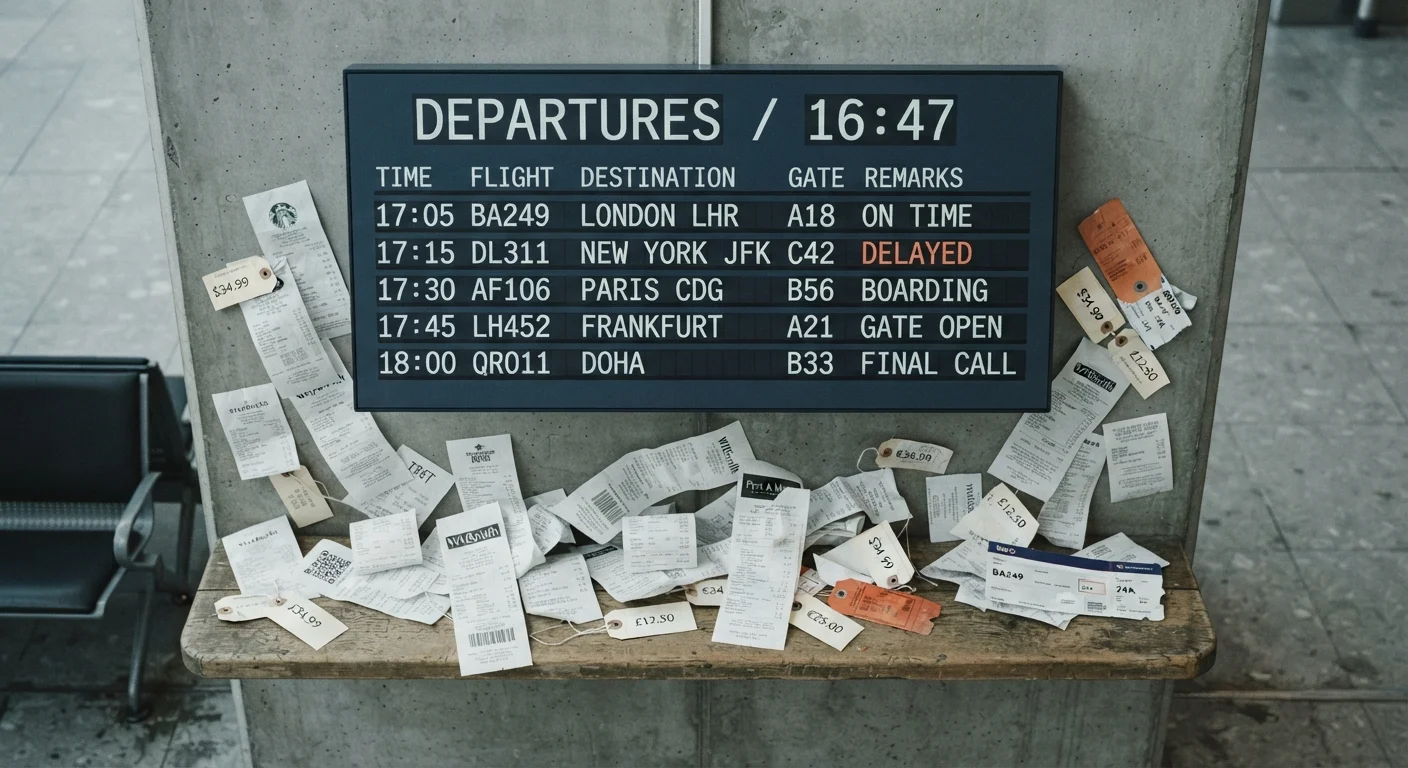
Photo: SaverSteals.com editorial
—— In This Article
Key Takeaways
- The advertised base fare rarely reflects what most travelers actually pay for a complete trip.
- Baggage fees, seat selection, and change fees are among the most common add-on charges.
- Fare class (basic economy vs. standard economy) dramatically affects which fees apply.
- Travelers can reduce ancillary costs by understanding what's included before booking.
- Comparing total trip cost — not just base fares — leads to more accurate budgeting.
What You See vs. What You Pay
When an airline advertises a $79 fare from Chicago to Atlanta, that number represents the base price — before taxes, surcharges, and the growing list of optional charges that now define modern air travel. For many travelers, the gap between the advertised price and the final receipt can be significant, sometimes doubling the initial cost.
This isn't accidental. Over the past two decades, airlines have progressively shifted from bundled pricing — where one ticket price included most services — to an à la carte model where nearly every feature is priced separately. Understanding how this system works is the first step to budgeting a flight accurately. For a broader look at how hidden costs work across other purchases, see how online price comparisons can mislead.
$7.0B+
Annual U.S. airline baggage fee revenue
According to the U.S. Bureau of Transportation Statistics, U.S. airlines collectively collected over $7 billion in baggage fees in a recent reporting year.
$3.8B+
Annual U.S. airline reservation/cancellation fee revenue
The Bureau of Transportation Statistics tracks reservation change and cancellation fees as a separate category, which have totaled billions annually in recent years.
~30%
Share of airline revenue from ancillary fees
Industry analysts estimate ancillary fees — including baggage, seat upgrades, and services — account for roughly 30% or more of total revenue at some U.S. carriers.
The Most Common Fees Broken Down
Checked Baggage Fees
Checked bag fees are one of the largest ancillary revenue sources for U.S. airlines. Charges for a first checked bag on domestic flights typically range from $30 to $40 each way, with fees increasing for additional bags or overweight items. Knowing what qualifies as a carry-on versus a checked bag matters — see carry-on vs. checked bag guidelines for a clear breakdown.
Seat Selection Fees
Most airlines now charge passengers to choose a specific seat in advance. Standard seat selection fees can range from a few dollars to $50 or more, depending on the route and seat location. Preferred seats near the front or with extra legroom (sometimes called "Comfort Plus" or "Main Cabin Extra" depending on the carrier) carry even higher premiums. Passengers who skip seat selection are assigned a seat at check-in — often in a less desirable location.
Carry-On Bag Fees (Basic Economy)
On certain fare classes — particularly basic economy — some airlines charge for carry-on bags that exceed personal item dimensions. This is less common on major legacy carriers but standard on several ultra-low-cost carriers. Always check the specific baggage policy for your fare class before packing.
Change and Cancellation Fees
While many major U.S. airlines relaxed change fees on standard economy fares in recent years, basic economy tickets typically remain non-changeable or carry a fee. When changes are permitted, you may receive a travel credit rather than a cash refund. Flight credits often come with expiration dates, so factor that into your planning.
Priority Boarding and Other Add-Ons
Airlines increasingly monetize boarding order, early check-in access, in-flight Wi-Fi, and even printed boarding passes at the airport. These costs are easy to overlook individually but accumulate quickly across a trip.
Compare Total Cost, Not Just the Base Fare
When comparing flights across airlines or booking platforms, add up the base fare, expected baggage fees, seat selection, and taxes for each option before deciding. A flight that appears $40 cheaper may end up costing more once fees are applied. Taking five minutes to tally the full cost per itinerary is one of the most effective ways to avoid overpaying.
How Fare Class Changes Everything
Airline fares are not a single category — they exist on a spectrum, commonly from basic economy at the bottom to full-fare economy, premium economy, business, and first class above. The fare class you book determines not just your seat quality, but which fees apply, whether changes are permitted, and what's included in the ticket price.
Basic economy fares are typically the lowest advertised prices — the ones that appear prominently in search results. But they come with strict limitations that can add cost or inconvenience: no advance seat selection on most carriers, no changes, and sometimes no carry-on bag. For travelers with flexible schedules and minimal luggage, basic economy can represent genuine value. For most others, the restrictions create hidden costs.
“The proliferation of ancillary fees has made it genuinely difficult for consumers to comparison-shop on price alone. The ticket price is increasingly just the entry point to a much larger transaction.”
— Consumer travel policy analyst, Aviation consumer policy researcher
Standard economy fares cost more upfront but typically include advance seat selection, the ability to change your flight (sometimes for a fee), and carry-on baggage. Running a side-by-side cost comparison — base fare plus anticipated add-ons for each fare class — often reveals that the cheapest-looking ticket isn't always the least expensive total trip. Timing matters too; see peak season travel tradeoffs for how demand affects pricing across the board.
Practical Ways to See the Full Picture Before You Book
Accurate trip budgeting starts before you click "book." Here are the steps travelers can take to surface the real cost of a fare:
- Check the airline's baggage fee page directly. Fee schedules are published on every major carrier's website. Look up fees for your specific fare class, not just the general policy.
- Add up seat selection costs. If you need to sit with a travel companion or prefer a specific seat, price out that selection before comparing fares across airlines.
- Read the fare rules. Fare rules explain what's changeable, what's refundable, and what's included. They're usually accessible during checkout before purchase is confirmed.
- Account for taxes and airport fees. Government taxes and airport facility charges are mandatory and added to every ticket. These are typically shown before final payment but not in the headline fare.
- Consider loyalty program benefits. Frequent flyer status or co-branded credit cards sometimes include a free checked bag or priority boarding. Understanding how airline loyalty programs work can help you determine whether those benefits offset program costs.
For travelers weighing whether to handle booking themselves or work with an expert, booking a flight vs. using a travel agent is worth reading before your next trip.
Frequently Asked Questions

Travel Editorial Team
Travel Editorial Team is the collective byline for our editorial team and contributor network. Articles published under this byline or an editorial pen name are researched, written, and reviewed according to our editorial standards for clarity, consistency, and independence before publication.
View author profile