
Packing the Car Smarter: Organization Strategies for Long Hauls
A well-packed car is safer and less stressful. These practical organization approaches keep essentials accessible and clutter minimal.
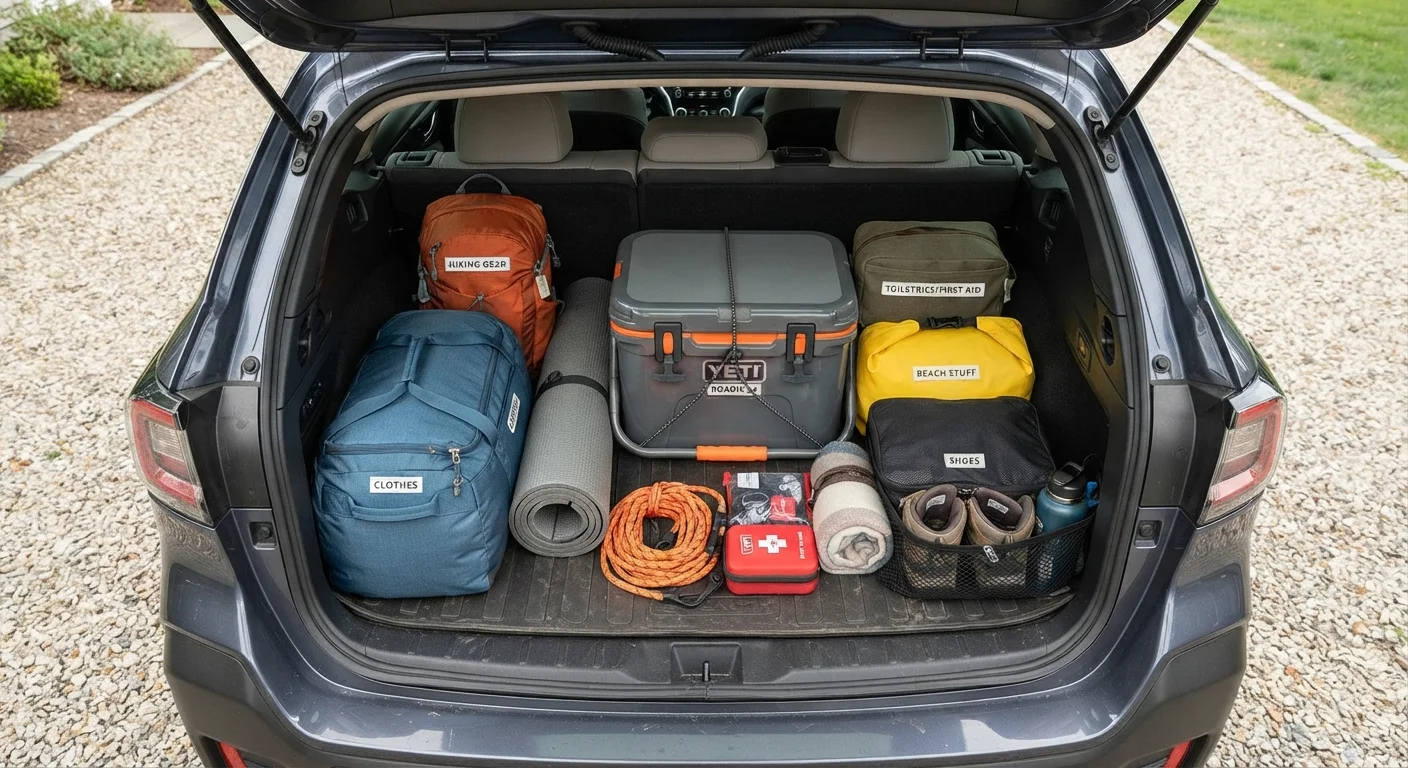
Photo: SaverSteals.com editorial
—— In This Article
Key Takeaways
- Zone your car into driver, passenger, and cargo areas to control access and reduce clutter.
- Heaviest items should sit low and centered in the trunk to maintain vehicle stability.
- Keep a dedicated 'grab zone' for items you'll need without stopping — snacks, maps, chargers.
- Soft bags pack more efficiently than rigid suitcases in irregular trunk spaces.
- Label or color-code bags by person or day to eliminate unpacking everything at each stop.
Why Car Packing Strategy Actually Matters
A disorganized car is more than just annoying — it's a subtle safety issue. Items that shift during braking, bags that block mirrors, or a frantic search through cargo at highway speed all introduce risk that's entirely avoidable. Good packing also means less physical and mental fatigue: when you know exactly where everything is, the trip flows instead of lurches.
Before you load the first bag, it's worth pairing your packing plan with a solid pre-departure vehicle check. The road trip readiness checklist covers documents, safety gear, and supplies that should be accounted for before anything goes in the trunk. If you're traveling with children, the dynamics of what needs to be accessible change significantly — planning for kids on long drives adds another layer of organization worth reading before you pack.
What you will need
The tools below aren't luxury items — they're low-cost infrastructure that makes every step of the loading process more controlled.
Collapsible storage bins or crates
Create fixed zones in the trunk that prevent bags from shifting during transit.
Soft-sided duffel bags
Compress and conform to irregular trunk shapes far better than hard-shell luggage.
Seat-back organizer
Holds passenger essentials — tablets, water bottles, snacks — within reach without floor clutter.
Cargo net or trunk divider
Prevents loose items from rolling or sliding and keeps zones separated.
Reusable zip-top bags or packing cubes
Compress clothing and separate items by day, person, or category inside larger bags.
Small cooler or insulated tote
Keeps food and drinks accessible without requiring a full trunk unpack at rest stops.
Step-by-Step: How to Pack the Car
Never Block Rear Visibility or Airbags
Stacking luggage above the seatback line obstructs your rear view and can turn cargo into dangerous projectiles in a sudden stop or collision. Keep the load below the window line in the cargo area and never place items on the rear window shelf or on top of seats where side airbags deploy.
Map your car's zones before touching a single bag
Mentally divide the vehicle into three functional zones: the driver zone (documents, phone mount, sunglasses), the passenger zone (entertainment, snacks, comfort items), and the cargo zone (luggage, gear, emergency supplies). Assigning purpose to each space before loading prevents the default chaos of shoving things wherever they fit.
Load heavy items first, low and centered
The heaviest items — full luggage bags, a loaded cooler, camping gear — go directly on the trunk floor, positioned as close to the center of the vehicle as possible. Low and centered weight keeps your car's handling predictable. Stacking heavy items high shifts the center of gravity and affects cornering and braking performance.
Build upward with lighter, compressible items
Once your heavy base layer is set, fill gaps and stack upward with lighter soft bags, rolled clothing, and flexible items. Packing cubes let you compress clothing tightly and slot them into odd-shaped cavities. Think of it like a three-dimensional puzzle — irregular voids are opportunities, not wasted space.
Create a dedicated grab zone for in-transit essentials
Designate a small, immediately accessible area — typically a tote bag placed on the rear seat floor or a seat-back organizer — for everything you'll reach for without stopping: charging cables, road snacks, a water bottle per person, paper maps or a printed itinerary, and any medication needed during the drive. If it's needed in motion, it belongs here, not buried in the trunk.
Secure loose items with a cargo net or bungee system
Even carefully packed trunks shift during hard braking or tight turns. A cargo net anchored to the trunk's tie-down hooks keeps everything in place. For smaller loose items — road atlases, flashlights, first-aid kits — use a collapsible bin or crate rather than letting them roll freely. Loose hard objects become hazards in a sudden stop.
Label or color-code bags by traveler or day
If you're traveling with multiple people or stopping at several destinations, identical-looking black bags in a packed trunk create genuine frustration. Use colored luggage tags, colored zip ties, or patterned bag covers to distinguish each person's gear at a glance. For multi-night trips, packing a separate small bag per overnight stay means you only carry what you need into each accommodation — your main luggage stays in the car.
Do a final walk-around and sightline check
Before departing, stand at the driver's door and confirm you have a clear rear view through the mirror. Walk around the vehicle to verify nothing is resting on the roof that shouldn't be, no bags are hanging out of a partially closed trunk, and exterior cargo carriers are locked and level. This 60-second check is the last safety gate before hitting the road.
Pack in Reverse Departure Order
Think through what you'll need first at your destination — overnight bag, toiletries, snacks — and load those items last so they sit closest to the trunk opening. Anything not needed until the final destination goes in first, deepest in the cargo area. This simple habit eliminates the dreaded full unpack at a roadside motel.
Roof Cargo Adds Risk If Overloaded
Every vehicle has a roof load rating — check your owner's manual before mounting a cargo carrier. Exceeding that limit stresses the mounting points and raises the vehicle's center of gravity, which can affect handling, especially at highway speeds or during emergency maneuvers. Distribute weight evenly and verify carrier straps before every drive day.
If you're still refining your overall road trip habits, road trip safety habits worth building addresses the bigger picture — from fatigue management to pre-trip preparation — and pairs naturally with a smarter packing approach. And if you're curious how car packing logic compares to air travel, the carry-on vs. checked bag breakdown is a useful contrast for frequent mixed-mode travelers.

Travel Editorial Team
Travel Editorial Team is the collective byline for our editorial team and contributor network. Articles published under this byline or an editorial pen name are researched, written, and reviewed according to our editorial standards for clarity, consistency, and independence before publication.
View author profile