
Sulfate-Free vs. Traditional Shampoo
Sulfate-free and conventional shampoos cleanse differently. See how each affects scalp oil, color, curl patterns, and everyday hair health.
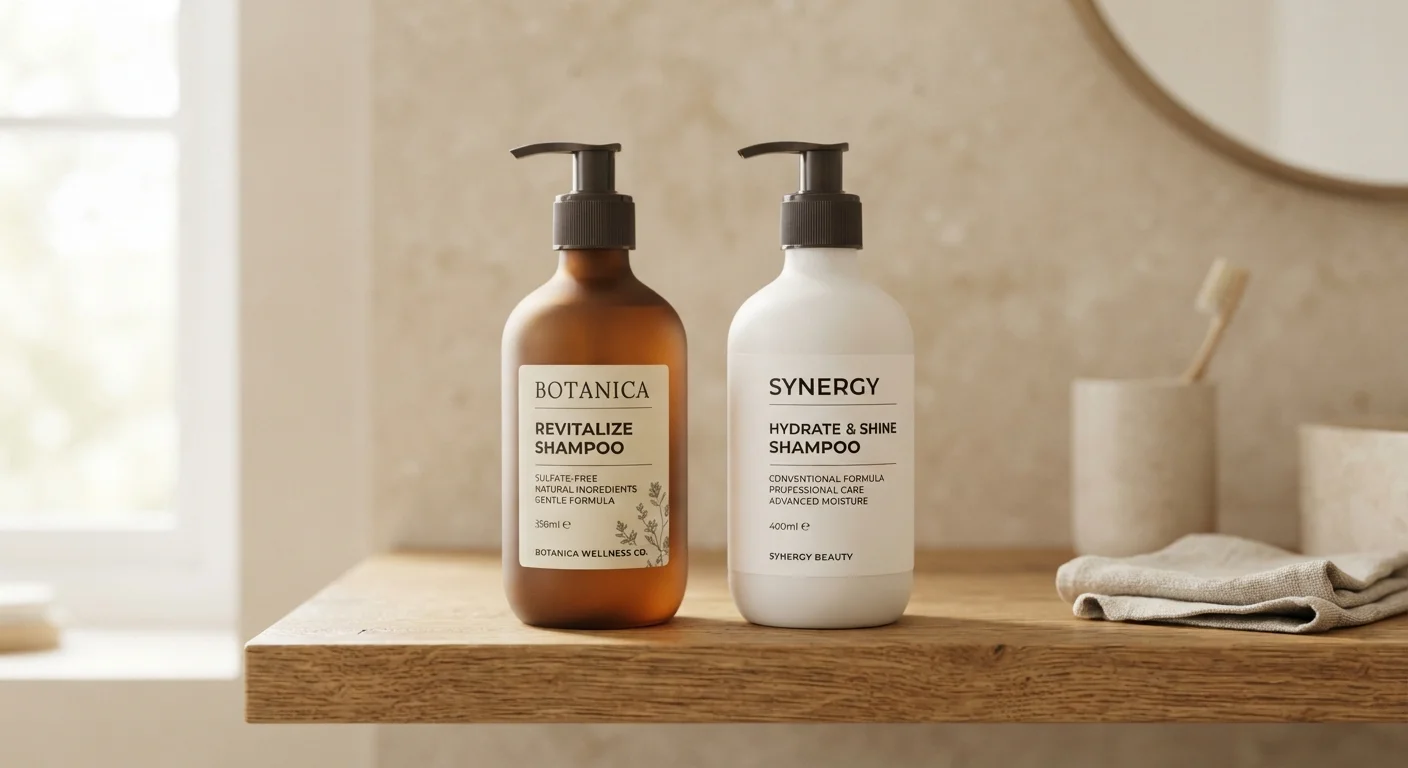
Photo: SaverSteals.com editorial
—— In This Article
Key Takeaways
- Sulfates are surfactants that create lather and remove oil — they're effective but can be drying for some hair types.
- Sulfate-free formulas use milder cleansing agents that preserve moisture, particularly beneficial for textured or color-treated hair.
- Traditional shampoos generally outperform sulfate-free options for deep cleansing oily scalps or heavy product buildup.
- Your scalp type, hair texture, and styling habits should guide which formula works best for you.
- Neither formula is universally superior — the right choice depends entirely on your individual hair and scalp needs.
What Sulfates Actually Do
Sulfates are a class of surfactants — surface-active agents — that bond to both water and oil simultaneously. This chemistry is what creates that satisfying lather and lifts grease, dirt, and styling residue from the scalp. The most common examples in conventional shampoos are sodium lauryl sulfate (SLS) and sodium laureth sulfate (SLES), with SLES generally considered milder than SLS.
The cleansing power of sulfates is real and well-established. For people with oily scalps or those who use dry shampoo, leave-in silicones, or thick styling creams, sulfates can feel like a reset button. The problem is that they don't always distinguish between the oils you want removed and the ones your hair needs. Over time — especially with frequent washing — this can leave hair feeling rough, brittle, or stripped. See our guide on washing frequency for more on how often you're actually cleansing matters as much as what you're using.
Not All Sulfate-Free Labels Mean the Same Thing
A shampoo marketed as "sulfate-free" simply means it skips the specific sulfate surfactant family — but it can still contain other cleansing agents that vary significantly in mildness. Some alternatives, like ammonium lauryl sulfate, sit closer to traditional sulfates in terms of strength. Reading the full ingredient list gives you a more accurate picture than relying on front-label claims alone.
How Sulfate-Free Formulas Cleanse Instead
Sulfate-free shampoos rely on alternative surfactant families — commonly cocamidopropyl betaine, sodium cocoyl isethionate, or decyl glucoside. These are derived from different source materials and interact with the hair and scalp more gently, producing less lather but still effectively removing surface-level dirt and light buildup.
The trade-off is cleansing intensity. Sulfate-free shampoos generally won't cut through heavy silicone buildup or a week's worth of dry shampoo in one wash. If you use silicone-containing products, it's worth knowing that pairing a silicone-heavy conditioner with a sulfate-free shampoo can gradually build up residue — something our article on ingredient pairings to avoid covers in depth.
For textured hair especially, that gentler action is a meaningful advantage. Textured hair grooming fundamentals — including co-washing and the LOC method — often pair naturally with sulfate-free cleansers precisely because moisture retention is central to the routine.
| Criterion | Sulfate-Free Shampoo | Traditional Shampoo |
|---|---|---|
| Lather | Low to moderate | High, rich foam |
| Cleansing strength | Mild; best for light buildup | Strong; removes heavy residue |
| Moisture retention | Higher — less stripping | Lower — can remove natural oils |
| Color-treated hair | Gentler on dye molecules | May accelerate color fade |
| Textured/coily hair | Generally preferred | Can cause dryness over time |
| Oily scalp | May feel insufficient | More effective cleanse |
| Scalp sensitivity | Lower irritation potential | SLS may irritate some scalps |
| Silicone buildup removal | Less effective | Cuts through silicones well |
What the Research Says — and Where It Gets Complicated
Dermatological literature generally supports that sodium lauryl sulfate is more irritating than its ethoxylated cousin SLES, and that gentler alternatives produce less barrier disruption on sensitive skin. However, research specifically on long-term hair shaft outcomes from shampoo choice alone is limited — most studies focus on scalp skin rather than the fiber itself.
Color longevity is one area where the evidence leans clearly toward sulfate-free formulas. The physical mechanism is straightforward: sulfates swell the hair cuticle more aggressively, allowing dye molecules to escape faster. This doesn't mean traditional shampoos are harmful — just that they may accelerate fade in color-treated hair.
~40%
Faster color fade with sulfate cleansers
Cosmetic chemistry research indicates sulfate-based shampoos can contribute to significantly faster color loss compared to gentler alternatives, due to cuticle-swelling effects.
SLS vs. SLES
Irritation difference between common sulfate types
Dermatological literature consistently identifies sodium lauryl sulfate (SLS) as more irritating to skin barrier function than the ethoxylated variant SLES, though individual responses vary.
For scalp conditions like dandruff or seborrheic dermatitis, the picture is more nuanced. Some medicated anti-dandruff shampoos require sulfates to deliver active ingredients properly, meaning a blanket switch to sulfate-free could actually underperform for certain conditions. If your scalp is giving you consistent signals something is off, understanding what your scalp is telling you is a helpful starting point — and consulting a dermatologist is always the right call for persistent issues.

Style Editorial Team
Style Editorial Team is the collective byline for our editorial team and contributor network. Articles published under this byline or an editorial pen name are researched, written, and reviewed according to our editorial standards for clarity, consistency, and independence before publication.
View author profile