
Fabric Glossary: What Every Clothing Label Is Actually Telling You
From modal to merino to modal blends, a plain-language guide to the fabrics you'll find on clothing labels and what they mean for comfort and care.
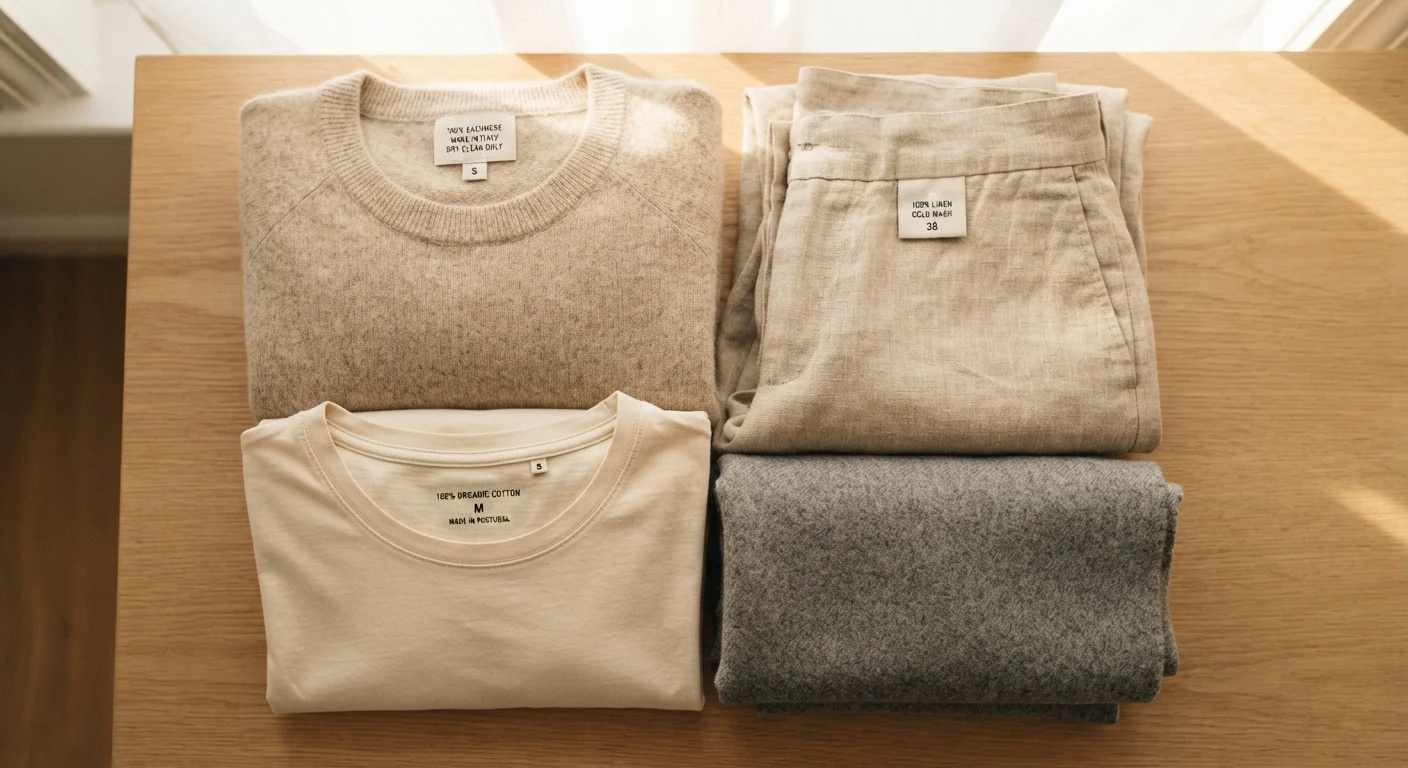
Photo: SaverSteals.com editorial
—— In This Article
Why Fabric Composition Actually Matters
That small sewn-in tag at the back of your collar or waistband isn't just a scratchy nuisance — it's a roadmap to how your garment will feel, perform, and hold up in the wash. Fabric composition (the list of fibers and their percentages) determines everything from breathability and drape to whether something needs to be hand-washed or dry-cleaned.
Most shoppers skip straight past this information, which is why clothes end up shrunk, stretched out, or pilling after a few wears. Learning to read a fabric label takes less than a minute and saves real frustration. See our plain-English guide to care symbols for the complementary skill of decoding those tiny icons.
| Most common fabric on labels | Cotton (including blends) (U.S. fiber consumption data, National Cotton Council) |
| Elastane typical blend percentage | 1–5% (Industry standard for stretch garments) |
| Lyocell production water use | Closed-loop solvent recycling (~99%) (Lenzing AG production documentation) |
| Merino wool fiber diameter | Under 24 microns (softer than standard wool) (Woolmark fiber specifications) |
| Rayon shrinkage risk | High in hot water or machine drying (General textile care guidelines) |
| Linen wash cycles to peak softness | Gets noticeably softer after several washes (Textile care industry guidance) |
The Fabric Glossary: Plain Definitions for Every Common Label Term
Below you'll find clear definitions for the fibers you're most likely to encounter on U.S. clothing labels. For the complete set, see the glossary reference at the bottom of this page.
Modal
A type of rayon made from beech tree pulp. It's soft, breathable, and resists shrinking better than standard rayon, making it popular in underwear, loungewear, and T-shirts.
Merino Wool
A fine-grade wool from Merino sheep that is much softer and less scratchy than conventional wool. It regulates body temperature well and is often used in activewear and base layers.
Lyocell (Tencel)
A semi-synthetic fiber made from wood pulp using a closed-loop production process. It's silky, breathable, and widely regarded as more environmentally considerate than standard rayon.
Polyester
A synthetic petroleum-derived fiber known for durability, wrinkle resistance, and moisture-wicking properties. It dries quickly but may trap heat and is less breathable than natural fibers.
Elastane (Spandex / Lycra)
A highly elastic synthetic fiber that stretches significantly and returns to its original shape. It's added in small percentages to other fabrics to improve fit and range of motion.
Rayon (Viscose)
A semi-synthetic fiber made from plant cellulose that mimics the softness and drape of natural fibers. It tends to wrinkle easily, may shrink in hot water, and requires gentle care.
Linen
A natural fiber made from the flax plant. It's highly breathable and gets softer with each wash, though it wrinkles easily. Ideal for warm-weather clothing.
Nylon
A strong, lightweight synthetic fiber that resists abrasion and dries quickly. Commonly used in hosiery, activewear, and outerwear linings.
Cashmere
A luxury natural fiber combed from cashmere goats. It is exceptionally soft and lightweight but requires careful hand-washing or dry cleaning to maintain its quality.
Acrylic
A synthetic fiber engineered to mimic wool. It is inexpensive and colorfast but less breathable and more prone to pilling than natural wool.
Pima / Supima Cotton
A premium variety of extra-long-staple cotton that produces a finer, softer, and more durable yarn than standard cotton. Supima is a trademark indicating American-grown Pima.
Fleece
A knit synthetic fabric, typically polyester, brushed to create a soft, insulating surface. It is lightweight, quick-drying, and a common choice for mid-layer outerwear.
For a side-by-side look at how natural and synthetic fibers compare in real-world wear, check out our article on natural fibers vs. synthetics in everyday clothing.
Blends, Percentages, and What the Numbers Tell You
A label reading '100%' of any fiber is the exception in modern clothing. Most garments combine two or more fibers to hit the right balance of performance and cost. Here's a quick cheat sheet for common blend logic:
- Cotton + Polyester: Cuts down on wrinkles and speeds up drying while keeping the softness of cotton. Common in everyday T-shirts and work shirts.
- Cotton or Wool + Elastane: Adds stretch without sacrificing the natural fiber feel. Standard in fitted jeans, leggings, and performance tees.
- Wool + Nylon: Boosts durability in high-wear areas like sock heels or sweater elbows.
- Modal or Lyocell + Cotton: Upgrades softness and drape. Often found in elevated basics and loungewear.
Blends Are the Norm, Not the Exception
Most clothing today is made from at least two fibers — a natural base like cotton or wool combined with a synthetic like elastane or polyester. These blends are intentional: they balance softness, stretch, durability, and price. When reading a label, look at the full fiber breakdown rather than focusing on just the dominant material. A '95% cotton, 5% elastane' label means stretch performance, while '60% cotton, 40% polyester' signals more wrinkle resistance and faster drying.
~60%
Share of global fiber production that is synthetic
According to Textile Exchange's Preferred Fiber & Materials Market Report, synthetic fibers — primarily polyester — account for roughly 60% of total fiber output worldwide.
1–5%
Elastane content that transforms a garment's stretch
Even a small percentage of elastane or spandex blended into cotton or denim dramatically increases flexibility and shape retention, according to textile industry standards.
3x
Longer fiber length in Pima vs. standard cotton
Extra-long-staple Pima cotton fibers are roughly three times the length of standard cotton, contributing to a smoother, stronger, and longer-lasting fabric.
After you've mastered fiber identification, laundry habits make a big difference in longevity. Our article on dryer sheets, fabric softener, and wool dryer balls explains how each care product interacts with different fabric types.
Quick Reference: Care Tips by Fiber Type
Knowing your fiber helps you make smarter decisions at home and at the store. Here are general care considerations — always check your specific garment's label for the final word:
| Fiber | Wash Temp | Dryer-Safe? | Key Watch-Out |
|---|---|---|---|
| Cotton | Cold to warm | Usually yes | Can shrink on high heat |
| Linen | Cold to warm | Low heat only | Wrinkles easily |
| Wool / Merino | Cold, gentle | Usually no | Felts and shrinks in heat |
| Rayon / Modal | Cold, delicate | No or low heat | Shrinks; may lose shape |
| Lyocell (Tencel) | Cold, gentle | Low heat | May wrinkle; soften with gentle cycle |
| Polyester / Nylon | Cold to warm | Low heat | Can pill; retains odors over time |
| Cashmere | Hand wash cold | Never | Very delicate; lay flat to dry |
| Elastane blends | Cold | Low or no heat | High heat degrades stretch |
If decoding labels feels similar to reading another kind of ingredient list, you might also enjoy our piece on reading a hair product label — the skill set translates surprisingly well.
Reading a Laundry Care Label Without a Decoder Ring
Once you know your fabrics, the next step is understanding the care symbols. This guide translates every laundry label icon into plain English.
Natural Fibers vs. Synthetics in Everyday Clothing
A deeper comparison of how cotton, linen, polyester, and nylon actually perform for comfort, longevity, and everyday wear.

Style Editorial Team
Style Editorial Team is the collective byline for our editorial team and contributor network. Articles published under this byline or an editorial pen name are researched, written, and reviewed according to our editorial standards for clarity, consistency, and independence before publication.
View author profile