
Dryer Sheets, Fabric Softener, and Wool Balls: What's the Difference?
Three products promise softer laundry, but they work very differently. Compare how each affects fabric, static, and long-term care.
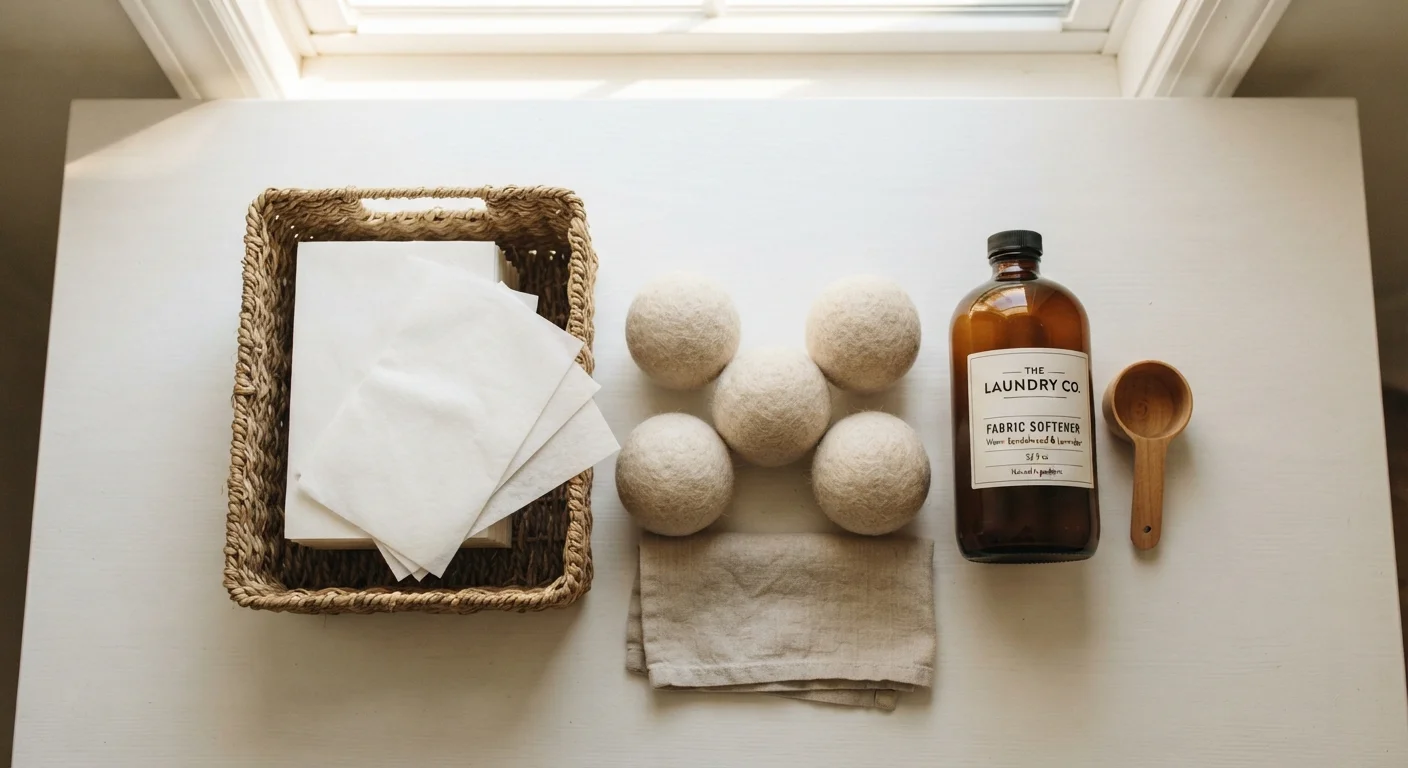
Photo: SaverSteals.com editorial
—— In This Article
Key Takeaways
- Fabric softener is added during the wash cycle and coats fibers with a conditioning chemical layer.
- Dryer sheets reduce static and add scent in the dryer, but can leave residue on certain fabrics.
- Wool dryer balls are reusable, chemical-free, and help reduce drying time by improving air circulation.
- None of these products is ideal for every fabric — athletic wear, microfiber, and flame-resistant items need special care.
- The right choice depends on your fabric types, sensitivities, and priorities around cost and sustainability.
How Each Product Actually Works
These three products share a common goal — making laundry feel softer and less staticky — but the way they get there is quite different.
Fabric softener (liquid or dryer sheet's wash-cycle cousin) is added during the rinse phase. It works by depositing a thin layer of positively charged lubricating agents onto negatively charged fabric fibers. This coating reduces friction between fibers, which is what creates that soft, smooth feel. It also helps fibers lie flat rather than standing up, which reduces static.
Dryer sheets are coated with a blend of surfactants, fragrances, and lubricating compounds. Heat from the dryer activates the coating, releasing it onto fabrics as they tumble. The result is reduced static, a light scent, and a degree of softening — though the effect is generally less intensive than liquid softener. They also help prevent lint and pet hair from clinging to clothes.
Wool dryer balls work mechanically rather than chemically. As they tumble in the dryer alongside your laundry, they physically separate fabric layers, improving hot air circulation. This reduces drying time and softens fabrics through agitation — no coatings, no fragrance (unless you add essential oils). A set of wool balls can typically be used for hundreds of loads before needing replacement.
| Fabric Softener | Dryer Sheets | Wool Dryer Balls | |
|---|---|---|---|
| Where it's used | Wash cycle (rinse stage) | Dryer | Dryer |
| How it works | Chemical coating on fibers | Heat-activated chemical release | Mechanical agitation |
| Reduces static | Yes | Yes, effectively | Moderately |
| Contains fragrance | Usually (fragrance-free available) | Usually (fragrance-free available) | No (can add essential oils) |
| Safe for athletic wear | No — clogs wicking fibers | No — same concern | Yes |
| Reusable | No (single use per load) | No (single use) | Yes — hundreds of loads |
| Upfront cost | Low | Low | Higher initial investment |
| Long-term cost | Ongoing per load | Ongoing per load | Low after initial purchase |
| Chemical-free | No | No | Yes |
| May reduce drying time | No | No | Yes, modestly |
Fabric Compatibility: What Each Can (and Can't) Do
One of the most important factors most people overlook is how these products interact with specific fabric types. Getting this wrong can actually damage garments or reduce their performance over time.
Avoid fabric softener on:
- Athletic and moisture-wicking fabrics — The coating clogs the tiny pores that allow sweat to escape, reducing the fabric's performance.
- Microfiber cloths — Softener residue fills the microscopic fibers that give microfiber its cleaning power.
- Flame-resistant children's sleepwear — Liquid softener can compromise the flame-resistant finish. Always check the care label.
- Towels (with heavy use) — Repeated softener application can gradually reduce absorbency over time.
Dryer sheets carry many of the same caveats. They're similarly discouraged for moisture-wicking gear and microfiber. Some people also notice waxy buildup on items dried repeatedly with sheets.
Wool dryer balls are the most broadly compatible option. Because they contain no chemical coatings, they're generally safe across fabric types, including performance fabrics and delicates — though for very delicate items, checking the care label is always wise. For guidance on reading those labels, see how to decode laundry care symbols.
When in Doubt, Skip the Softener
If you're unsure whether a fabric can handle softening products, the safest approach is to skip them entirely for that item. Performance wear, delicates, and anything with a special finish or flame-resistant treatment are better washed and dried without any chemical softening additives. The care label is your most reliable guide.
Cost, Convenience, and Environmental Footprint
Beyond performance, many households factor in ongoing cost and environmental impact when choosing between these options.
~1,000+
Loads per set of wool dryer balls
Manufacturers commonly cite 1,000 or more loads of useful life for quality wool dryer balls before they need replacement.
Up to 25%
Potential drying time reduction with dryer balls
Some testing suggests wool dryer balls can reduce drying time by separating fabric layers and improving hot air flow, though results vary by load type and dryer.
Dryer sheets are single-use by design, which means consistent ongoing spending and a stream of waste. They're widely available and inexpensive per sheet, but the cost compounds over hundreds of loads per year.
Fabric softener is sold in bulk and costs less per load than dryer sheets at higher volumes, but it's a liquid product with plastic packaging and chemical formulations. Some formulations include ingredients that environmental and health researchers have flagged for further study, though regulatory assessments vary.
Wool dryer balls carry a higher upfront cost than a box of dryer sheets, but a quality set can last for several years of regular use. They produce no per-load waste and contain no synthetic chemicals. They may also reduce drying time measurably — which lowers energy use over time, though actual savings vary by dryer type and load size.
If sustainability is a priority in your household decisions, the comparison with other single-use home products is instructive — similar tradeoffs appear in categories like paper towels vs. cloth alternatives.
For households washing a variety of fabric types — including synthetics and natural fibers — understanding how each material responds to laundry products is also useful context. Our overview of natural fibers vs. synthetic fabrics covers how different materials behave in everyday use.
Don't Use Dryer Sheets on Microfiber
Microfiber cleaning cloths depend on microscopic fiber structures to trap dirt and absorb liquid. Dryer sheets and fabric softener coat those fibers and significantly reduce their effectiveness. Wash and dry microfiber items separately without any softening products to preserve their performance.
Sensitivities, Scent, and Special Considerations
For households with sensitive skin or fragrance allergies, the choice can narrow quickly. Both dryer sheets and fabric softener typically contain fragrance compounds and preservatives that can cause irritation in some individuals. Fragrance-free versions of both products exist, though they still contain chemical softening agents.
Wool dryer balls are naturally fragrance-free, making them a common recommendation for people managing skin sensitivities — though those with wool allergies should be aware that shedding fibers, while minimal, are a consideration.
For baby clothes and items worn by people with eczema or contact dermatitis, dermatologists commonly suggest washing with fragrance-free detergent and skipping softening additives altogether, or using wool balls as a gentler option. This falls under general laundry guidance — always consult a healthcare provider for specific skin condition management.
One area where dryer sheets genuinely stand out: heavy static in dry climates or winter months. If static is a persistent problem — particularly with synthetic blends — dryer sheets tend to be more effective at neutralizing it than wool balls alone.
Understanding the fabric composition of your most-worn garments can also help you predict how they'll respond to these products. Our article on what makes bed sheets feel comfortable illustrates how fiber type and finish affect fabric behavior more broadly.

Shopping Editorial Team
Shopping Editorial Team is the collective byline for our editorial team and contributor network. Articles published under this byline or an editorial pen name are researched, written, and reviewed according to our editorial standards for clarity, consistency, and independence before publication.
View author profile