
Reading a Laundry Care Label Without a Decoder Ring
Those tiny symbols on clothing tags actually contain all the washing instructions you need. Here's a plain-English breakdown of each one.
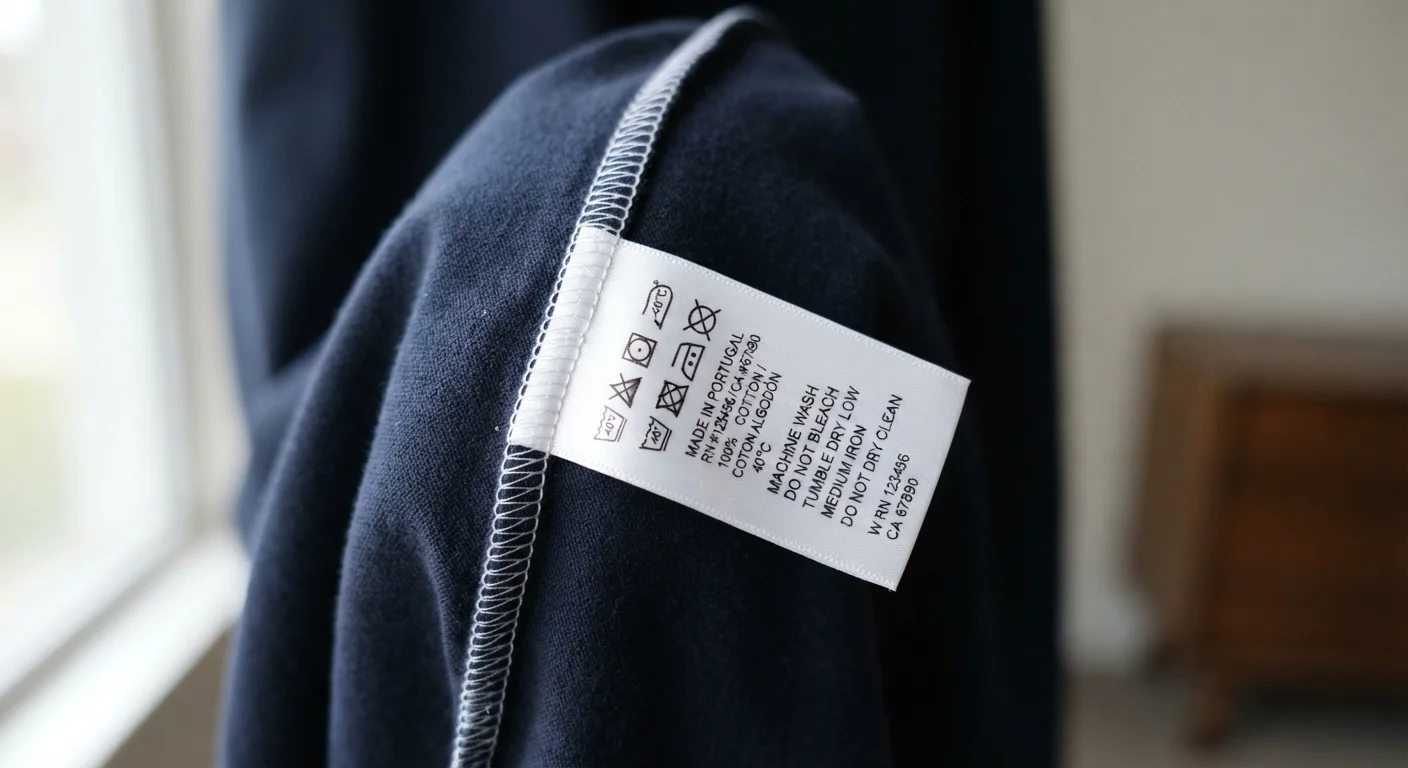
Photo: SaverSteals.com editorial
—— In This Article
Why Care Labels Exist and What They're Based On
In the United States, the Federal Trade Commission (FTC) requires that most garments sold domestically carry a permanent care label with laundering instructions. Those instructions follow a standardized system of symbols developed by ASTM International and broadly aligned with international ISO standards — meaning the same core symbols appear on clothing worldwide, though written instructions may differ by country.
The goal is simple: follow the label's guidance and the garment should survive washing without shrinking, fading, or losing its shape. Ignore it, and you're taking a calculated risk. This guide translates each category of symbol into plain English so you can make a confident call every laundry day.
If you find decoding product labels generally useful, the same logic applies elsewhere — see our guide on reading a skincare ingredient list for a parallel breakdown.
| U.S. regulatory body | Federal Trade Commission (FTC) (FTC Care Labeling Rule) |
| Symbol standard | ASTM D5489 / ISO 3758 (ASTM International) |
| Number of symbol categories | 5 (wash, bleach, dry, iron, dry clean) |
| Temperature scale used on symbols | Celsius (°C) (Aligns with international ISO standard) |
| X through any symbol means | Do not perform that action |
The Five Symbol Categories, Decoded
1. Washing (the tub symbol)
A basin with water represents machine or hand washing. Numbers inside indicate the maximum water temperature in Celsius (30°C ≈ cold, 40°C ≈ warm, 60°C ≈ hot). A hand dipping into the tub means hand wash only. An X through the tub means do not wash — the garment needs dry cleaning or spot treatment only. Dots inside the tub are a simplified alternative: one dot means cold, two dots warm, three dots hot.
2. Bleaching (the triangle symbol)
An empty triangle means any bleach is safe. A triangle with diagonal lines means only non-chlorine (oxygen-based) bleach. An X through the triangle means no bleach at all — commonly seen on dyed or delicate fabrics.
3. Drying (the square symbol)
A square with a circle inside represents tumble drying. Dots inside the circle indicate heat level: one dot is low heat, two dots medium, three dots high. An X over the circle means air dry only. A plain square (no circle) signals flat drying. A square with a curved top line means hang to dry. A square with three vertical lines means drip dry. These distinctions matter most for wool, silk, and structured knits.
4. Ironing (the iron symbol)
An iron shape with dots inside signals the safe heat setting: one dot for low (synthetics), two for medium (wool), three for high (cotton and linen). An X through the iron means do not iron. An X over the steam vents means no steam — steam can cause watermarks on certain fabrics like taffeta.
5. Dry Cleaning (the circle symbol)
A plain circle means dry clean. Letters inside — A, F, P, W — tell the dry cleaner which cleaning solvents are safe to use; you don't need to memorize these, but passing the garment to a professional with the label intact lets them make that call. An X through the circle means do not dry clean.
Care label
A permanent tag sewn into a garment that provides laundering instructions required by FTC regulation. It must be legible for the life of the garment.
Non-chlorine bleach
Also called oxygen or color-safe bleach, this is a gentler alternative to chlorine bleach that is safe for most colored fabrics when the label permits bleaching with restrictions.
Tumble dry
Machine drying in a rotating drum dryer. Dot indicators on the symbol specify the appropriate heat level to avoid shrinkage or damage.
Dry clean
A professional cleaning process that uses chemical solvents rather than water. Required for garments whose construction or fiber content cannot tolerate moisture.
Flat dry
Laying a garment horizontally on a surface to dry, rather than hanging it. Used for knits and other fabrics that can stretch out of shape when hung wet.
Common Scenarios and What to Do
Labels sometimes combine instructions that seem contradictory or overly cautious. Here are a few situations readers frequently encounter:
- "Dry clean only" on a fabric you'd normally wash: This instruction is legally the manufacturer's recommendation, not always a hard technical requirement. That said, following it protects you if the garment fails — the retailer generally has no obligation to replace a garment damaged when care instructions weren't followed.
- No label at all: Labels can be cut out for comfort. When in doubt, treat the fabric type as your guide — our fabric glossary explains how common materials behave in the wash.
- Conflicting written and symbol instructions: FTC rules require that written instructions and symbols agree. If they appear to conflict, the written instruction typically takes precedence, but contacting the retailer is a reasonable step for expensive garments.
When "Dry Clean Only" Is on Everything
Some manufacturers apply "dry clean only" labels conservatively to limit liability rather than because the fabric strictly requires it. However, testing a garment at home without professional cleaning can void any warranty or return option if damage occurs. For high-value or irreplaceable pieces, following the label as written is the lower-risk choice.
The laundry products you use matter too. If you're uncertain whether fabric softener, dryer sheets, or wool balls are appropriate for a given garment type, our comparison of dryer laundry products explains how each one works and where each fits.

Shopping Editorial Team
Shopping Editorial Team is the collective byline for our editorial team and contributor network. Articles published under this byline or an editorial pen name are researched, written, and reviewed according to our editorial standards for clarity, consistency, and independence before publication.
View author profile