
Pantry Stocking Done Right: When Bulk Buying Makes Sense and When It Doesn't
Buying in bulk saves money in some cases and quietly wastes it in others. Use these principles to tell the difference before you load the cart.
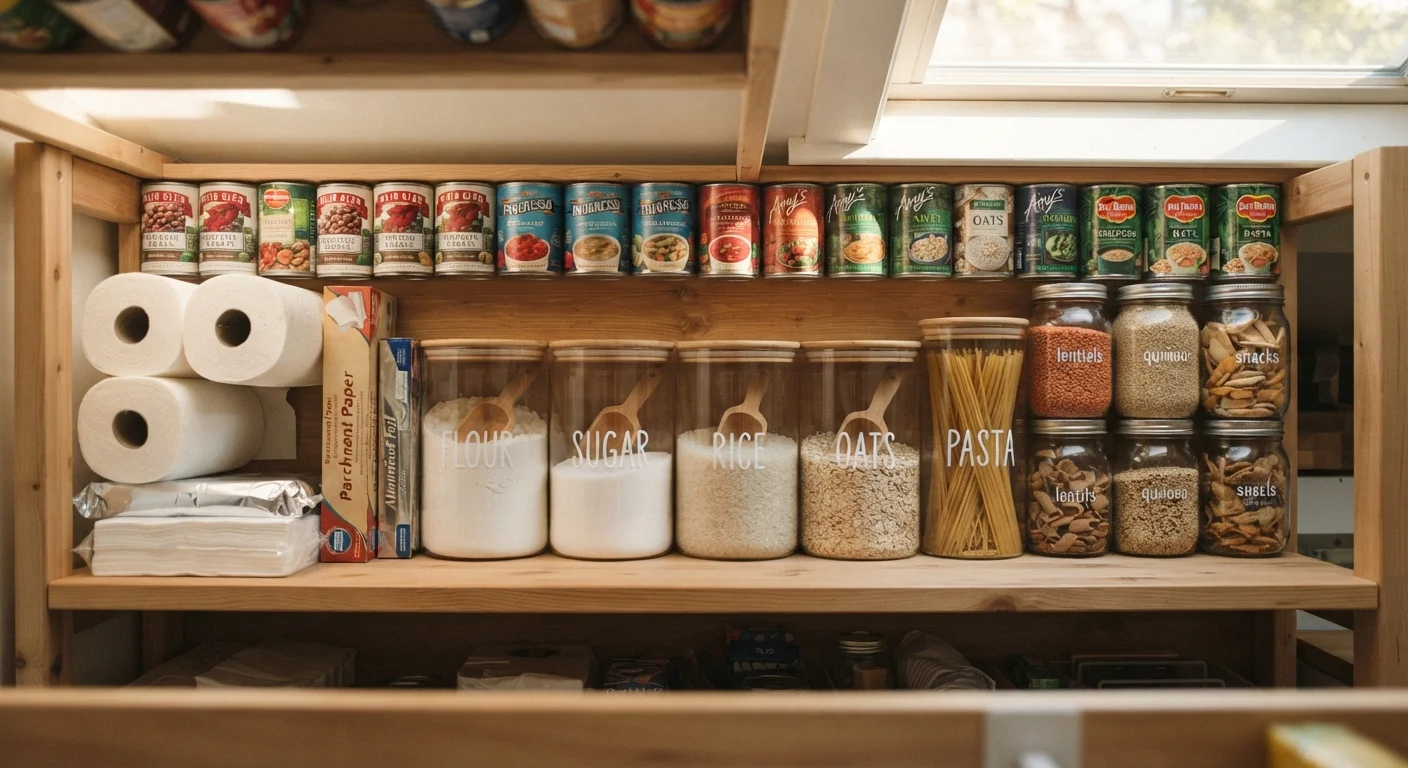
Photo: SaverSteals.com editorial
—— In This Article
Key Takeaways
- Bulk buying saves money only on items you use consistently before they expire or degrade.
- Storage space, household size, and usage rate all determine whether bulk is actually a value.
- Unit price alone doesn't tell the full story — factor in spoilage, quality loss, and upfront cash outlay.
- Some categories almost always reward bulk buying; others quietly drain your budget through waste.
- A short checklist applied before loading the cart prevents the most common bulk-buying mistakes.
The Core Problem With Bulk Buying
The pitch is simple: pay less per unit by buying more. Warehouse stores and bulk aisles have built entire business models around this logic, and for certain products it holds up perfectly. But the savings calculation breaks down the moment an item expires on the shelf, goes stale before you finish it, or takes up space you don't have.
Bulk buying is a tool, not a universal strategy. Whether it works for you depends on what you're buying, how fast you use it, how you store it, and how much cash you can reasonably tie up at once. Getting that judgment right is what separates a genuinely stocked pantry from an expensive storage problem.
For a broader look at how timing affects what you pay, see how seasonal price cycles work — bulk and seasonal strategies often overlap in useful ways.
Best Practices for Deciding Before You Buy
Apply these principles consistently and you'll know within seconds whether a bulk purchase is likely to pay off or silently cost you more.
Calculate and compare unit price — not shelf price
A lower sticker price doesn't mean a lower cost per use. Unit price (price per ounce, per sheet, per serving) is the only number that makes bulk comparisons meaningful. Retailers don't always make this easy to find, so do the division yourself.
Audit your actual usage rate before committing
Bulk value is only real if you use the product at the rate you assume. Overestimating consumption is one of the most common and costly bulk-buying errors. A two-year supply of something you use monthly is rarely the deal it appears.
Check expiration and quality degradation windows before buying
Shelf life isn't just about safety dates — many products lose potency, flavor, or effectiveness well before they technically expire. Buying more than you can use within that quality window turns savings into waste.
Only buy in bulk what you've already tested and like
Bulk quantities of an untested product create a high-waste risk if the item doesn't suit your taste, skin, or home. Small formats exist partly to let you evaluate before scaling up.
Factor in storage cost and capacity honestly
Bulk items require physical space. If that space doesn't exist, you'll crowd out other items, create clutter that leads to forgotten inventory, or end up using valuable storage that costs money (rented storage, for example) to house pantry goods.
Treat bulk buying as a cash-flow decision, not just a savings decision
Spending $80 on a bulk pantry run ties up cash that might have been needed elsewhere. The per-unit savings only matter if the upfront outlay doesn't create a budget shortfall elsewhere in the month.
If you're also thinking through household supplies specifically, this breakdown of household bulk buys covers the category in close detail.
Categories That Usually Reward Bulk Buying
Certain product types consistently deliver on the bulk promise because they combine long shelf life, stable quality over time, and steady household usage rates.
- Dry staples — rice, pasta, dried beans, oats, and lentils store well for a year or more in sealed containers and are used regularly in most households.
- Canned and shelf-stable goods — canned tomatoes, coconut milk, tuna, and similar items have multi-year shelf lives and consistent per-use costs.
- Paper products and cleaning supplies — toilet paper, paper towels, dish soap, and laundry detergent don't expire meaningfully, don't degrade with storage, and get used at a predictable rate. (For a closer look at paper product choices, see paper towels vs. cloth towels.)
- Frozen proteins and vegetables — if your freezer has capacity, bulk protein purchases at a lower unit price are one of the more reliable bulk wins in the grocery category.
~30%
U.S. household food waste by weight
The USDA estimates that American households waste roughly 30–40% of the food supply, much of it from overbuying perishables and items that go unused.
10–30%
Typical unit-price savings on bulk dry goods
Consumer research generally finds unit-price reductions of 10–30% on shelf-stable pantry staples when purchased in bulk vs. standard sizes, though this varies widely by category and retailer.
Pairing your bulk pantry strategy with nutritional awareness helps you stock smart rather than just stock big — this grocery walkthrough is a useful companion.
Categories That Frequently Disappoint
These are the product types where the math looks attractive but often unravels in practice.
Watch Out for "Bulk" Packaging That Isn't Cheaper
Not every large-format product carries a genuine unit-price advantage. Some retailers charge the same — or even slightly more — per ounce for their warehouse-size packages compared to a sale price on a standard size elsewhere. Always check the unit price rather than assuming a larger package is the better deal. Store brand vs. name brand research is also worth reading alongside bulk comparisons — the brand you buy in bulk matters too.
- Produce and fresh items — perishables spoil fast. Unless you have a clear plan to use every unit, the discount evaporates with the food.
- Specialty or seasonal ingredients — that bulk jar of tahini or the large bag of a grain you tried once may linger for years. Usage consistency matters more than price per ounce.
- Items you haven't tested at full size — buying a gallon of a cleaning product or a giant bottle of olive oil before you know you like it is a gamble that frequently loses.
- Products with evolving formulas or personal preferences — toiletries like shampoo, skincare, or supplements fit this category. Your needs or preferences may shift before you finish a bulk supply.
Convenience packaging carries a different but related trap — paying a premium for pre-portioned or single-serve items. The quiet cost of convenience packaging walks through when that trade-off is and isn't worth it.
Quick Wins to Put This Into Practice
These actions take minutes and prevent the most common bulk-buying regrets.
If you're building a broader shopping and budgeting framework, budgeting basics is a practical place to anchor your pantry spending decisions within your overall household spending plan.

Shopping Editorial Team
Shopping Editorial Team is the collective byline for our editorial team and contributor network. Articles published under this byline or an editorial pen name are researched, written, and reviewed according to our editorial standards for clarity, consistency, and independence before publication.
View author profile