
The Quiet Cost of Convenience Packaging
Pre-cut, pre-portioned, and single-serve packaging can double your cost per serving. Here's what you're paying for and when it's worth it.
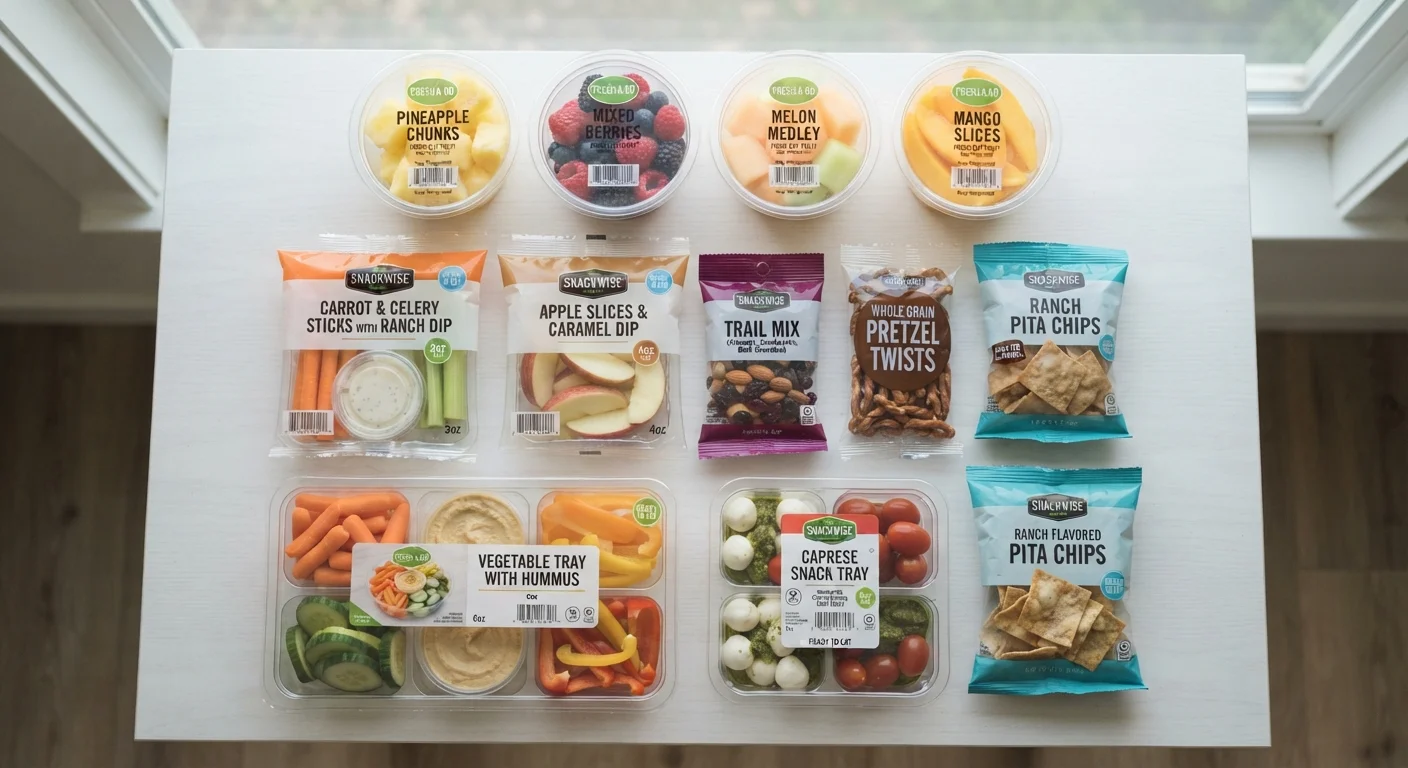
Photo: SaverSteals.com editorial
—— In This Article
Key Takeaways
- Convenience packaging typically costs 30–100% more per serving than whole or unpackaged equivalents.
- The premium is sometimes justified — it reduces waste, saves prep time, and supports portion control.
- Comparing unit prices is the fastest way to measure the true cost gap between formats.
- Households with limited storage, small serving sizes, or tight schedules benefit most from convenience formats.
- Buying whole and prepping in batches at home is the most consistent way to lower per-serving costs.
Reduces food waste in small households
A single-person or two-person household may not finish a full bunch of kale before it wilts. A pre-washed, portioned bag sized to one or two meals wastes less, which can offset part of the price premium.
Saves meaningful prep time on busy days
Pre-cut vegetables, shredded cheese, and portioned proteins can reduce active meal prep by 10–20 minutes — a real benefit for households where that time is a genuine constraint.
Supports portion control without measuring
Single-serve packaging removes the need to measure servings manually, which is useful for people managing caloric intake, feeding children, or packing lunches consistently.
Extends usable shelf life in some formats
Modified atmosphere packaging used in pre-cut produce and deli items slows oxidation, giving items a longer window before spoilage — relevant for infrequent shoppers.
Lowers barrier to cooking at home
Pre-prepped ingredients reduce the friction of starting a meal from scratch, which for some households means the difference between cooking dinner and ordering out.
Significantly higher cost per serving
Pre-cut, portioned, or single-serve formats routinely cost 30–100% more per unit weight or serving than their whole-format equivalents — a gap that compounds quickly across a week of groceries.
Generates substantially more packaging waste
Individual wrappers, trays, and modified-atmosphere bags use far more plastic and cardboard per serving than whole or bulk items, contributing to household waste volume.
Shorter window after opening compared to whole foods
Once pre-cut produce or portioned proteins are opened, they often degrade faster than intact equivalents because cut surfaces expose more area to air and bacteria.
Premium persists even on sale
Discounts on convenience formats are typically calculated off a higher base price, meaning a sale item can still be more expensive per pound than its whole equivalent at full price.
Locks in portion sizes that may not match your needs
A four-pack of single-serve yogurts or a fixed-weight tray of pre-sliced meat may not align with how much you actually use, leading to either overconsumption or waste.
What Convenience Packaging Actually Costs
Walk past the pre-cut melon at your grocery store and you're looking at a product that may cost two to three times more per pound than the same whole fruit a few feet away. That gap is the convenience premium — the price retailers charge for washing, cutting, portioning, and packaging work that would otherwise fall to you.
The markup varies by category. Pre-shredded cheese, single-serve oatmeal packets, washed salad greens, and portioned nut butter pouches all carry premiums that range from modest to dramatic. To measure it yourself, the most reliable method is unit price comparison — looking at cost per ounce, per serving, or per pound rather than package price. Our guide to unit price math walks through exactly how to read shelf tags and run the numbers in seconds.
2–3×
Cost premium for pre-cut produce
Consumer price comparisons across major US grocery chains consistently show pre-cut fruit and vegetables costing two to three times more per pound than whole equivalents.
~40%
Average premium for single-serve snack formats
Analysis of shelf unit prices at major US retailers shows single-serve snack packs typically cost 30–50% more per ounce than the equivalent full-size package.
The key insight is that you're not paying for the food — you're paying for the labor, the packaging materials, the modified atmosphere that extends shelf life, and the retail real estate the product occupies. Understanding that breakdown helps you decide which premiums are worth carrying.
The Real Advantages of Pre-Portioned Products
Reduces food waste in small households
A single-person or two-person household may not finish a full bunch of kale before it wilts. A pre-washed, portioned bag sized to one or two meals wastes less, which can offset part of the price premium.
Saves meaningful prep time on busy days
Pre-cut vegetables, shredded cheese, and portioned proteins can reduce active meal prep by 10–20 minutes — a real benefit for households where that time is a genuine constraint.
Supports portion control without measuring
Single-serve packaging removes the need to measure servings manually, which is useful for people managing caloric intake, feeding children, or packing lunches consistently.
Extends usable shelf life in some formats
Modified atmosphere packaging used in pre-cut produce and deli items slows oxidation, giving items a longer window before spoilage — relevant for infrequent shoppers.
Lowers barrier to cooking at home
Pre-prepped ingredients reduce the friction of starting a meal from scratch, which for some households means the difference between cooking dinner and ordering out.
None of these advantages are trivial. A solo diner who buys a whole head of cauliflower and uses a quarter of it before it turns has not saved money — they've spent more. Convenience formats can also make it easier to stick to a grocery plan by reducing the number of prep steps that cause people to reach for takeout instead. For households tracking portions for health reasons, pre-measured packaging removes a layer of daily decision-making.
Context matters too. At the office, on a road trip, or packing a child's lunch, a single-serve format may be the only practical option — and in that context, the premium is the cost of the format, not an avoidable expense.
Where Convenience Packaging Works Against You
Significantly higher cost per serving
Pre-cut, portioned, or single-serve formats routinely cost 30–100% more per unit weight or serving than their whole-format equivalents — a gap that compounds quickly across a week of groceries.
Generates substantially more packaging waste
Individual wrappers, trays, and modified-atmosphere bags use far more plastic and cardboard per serving than whole or bulk items, contributing to household waste volume.
Shorter window after opening compared to whole foods
Once pre-cut produce or portioned proteins are opened, they often degrade faster than intact equivalents because cut surfaces expose more area to air and bacteria.
Premium persists even on sale
Discounts on convenience formats are typically calculated off a higher base price, meaning a sale item can still be more expensive per pound than its whole equivalent at full price.
Locks in portion sizes that may not match your needs
A four-pack of single-serve yogurts or a fixed-weight tray of pre-sliced meat may not align with how much you actually use, leading to either overconsumption or waste.
The core problem is that the scenarios where convenience packaging hurts your budget are also the most common ones. If you cook regularly for two or more people, have adequate kitchen time on one or two days a week, and have storage space for whole ingredients, the math almost never favors the pre-cut version.
It's also worth noting that the sale price on convenience items can obscure the gap. A 20% discount on pre-portioned chicken strips still leaves it more expensive per pound than whole thighs at full price. Promotions on packaged goods are designed to compete on perception, not on actual value delivered.
The Spoilage Offset Is Real — But Limited
A common argument for convenience packaging is that it prevents waste, and that waste offsets the higher price. This logic holds when you genuinely would have thrown out the whole-format item. But for regularly consumed staples bought on a weekly schedule, spoilage rates for whole ingredients are typically low enough that the cost premium isn't recovered. Honest self-assessment about your actual kitchen habits matters more here than general rules. See pantry stocking principles for a broader framework on when format choices affect waste.
When to Pay the Premium — and When to Skip It
Rather than treating convenience packaging as uniformly wasteful or uniformly useful, the more practical approach is category-by-category evaluation. A few questions help clarify the decision:
- Do you reliably use the whole package before it spoils? If not, the savings from bulk or whole formats disappear with the food.
- Does the prep time actually create a problem in your week? If you batch-cook on weekends, pre-cut vegetables offer little marginal benefit.
- Is the portion size a feature, not just a limitation? Single-serve formats are genuinely useful when portion control is a goal or necessity.
- How large is the unit price gap? A 15% premium for pre-washed salad greens is a different conversation than a 90% premium for pre-sliced apples.
For frequently purchased staples — cheese, grains, cooking vegetables — buying whole and storing or prepping in batches consistently delivers lower per-serving costs. For produce you've historically wasted or snacks tied to specific use cases, the convenience format may earn its price. The household supplies bulk buying guide applies similar logic to non-food categories and is worth reading alongside this one.
If you want to build this kind of evaluation into your regular grocery habit, connecting it to your broader spending picture helps. The budgeting basics hub covers how to track category-level spending so these small per-unit differences become visible over time.

Shopping Editorial Team
Shopping Editorial Team is the collective byline for our editorial team and contributor network. Articles published under this byline or an editorial pen name are researched, written, and reviewed according to our editorial standards for clarity, consistency, and independence before publication.
View author profile