
Paper Towels vs. Cloth Towels: When Each One Makes More Sense
Paper or cloth? This side-by-side look at cost, hygiene, and environmental impact helps you decide which belongs in your kitchen.
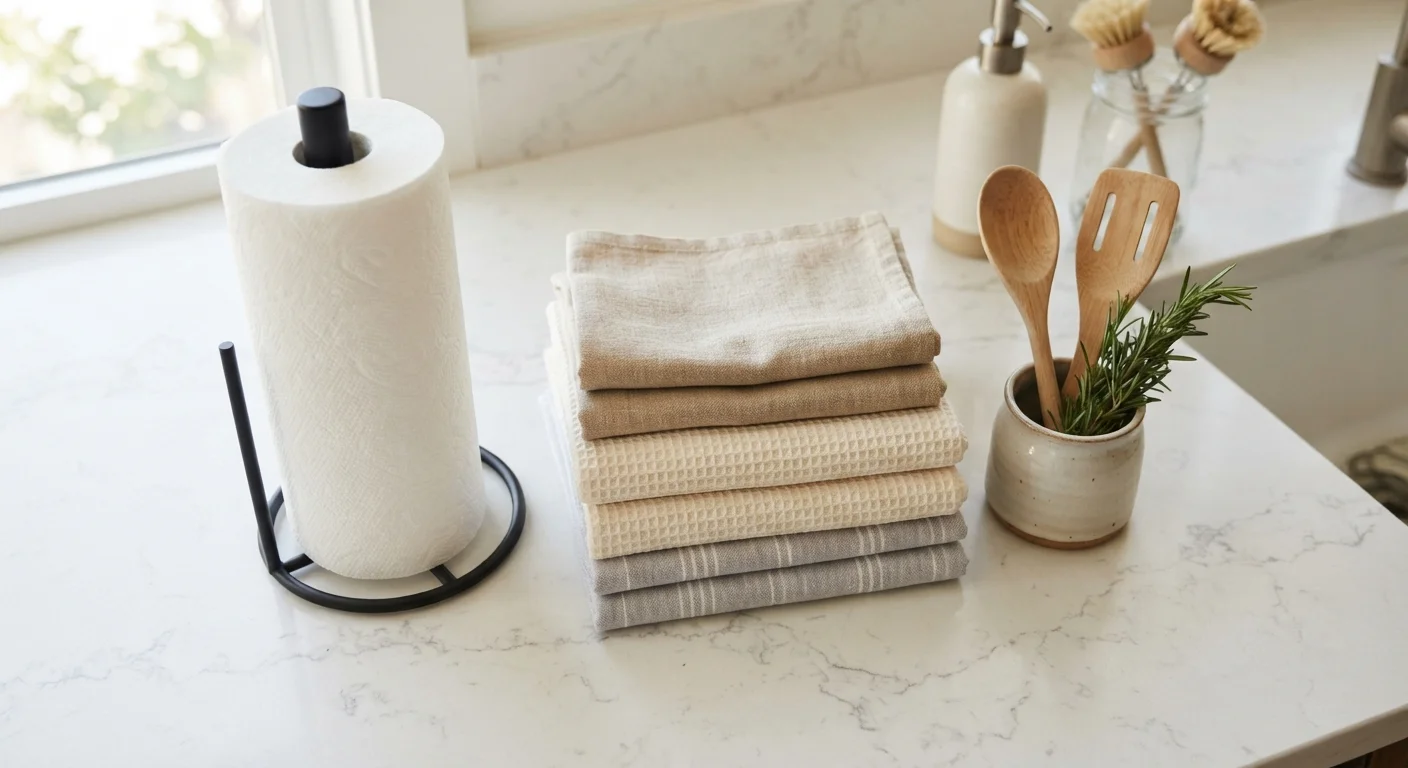
Photo: SaverSteals.com editorial
—— In This Article
Key Takeaways
- Paper towels carry a higher long-term cost but excel in single-use hygiene situations.
- Cloth towels are more economical over time but require consistent washing to stay sanitary.
- Neither option is universally superior — the right choice depends on the task at hand.
- A hybrid approach — keeping both on hand — suits most households well.
- Environmental impact varies depending on how cloth towels are laundered and how paper towels are sourced.
The Real Cost Difference Over Time
On a per-unit basis, paper towels are inexpensive. But households that use them as a default tool for nearly every kitchen task go through them quickly. A family that runs through two or more rolls per week can spend a meaningful amount annually — well over $100 in many cases — on a consumable that's used once and discarded.
Cloth towels, by contrast, involve an upfront purchase but spread that cost across hundreds or thousands of uses. A set of a dozen cotton towels, properly cared for, can last several years. The ongoing cost is absorbed into laundry rather than the shopping cart.
If you're thinking about where paper towels fit in a broader household budget, see our look at which household supplies are actually worth buying in bulk — paper towels are a product where bulk buying math deserves scrutiny.
~$100–$180
Estimated annual household paper towel spend
U.S. household spending data and retail pricing suggest the average American family spends roughly this range on paper towels each year, depending on usage habits.
80%+
Reduction in paper towel use after switching to cloth
Consumer surveys on household waste reduction suggest most households that adopt cloth towels for routine tasks cut their paper towel consumption by the majority.
Hygiene: Where Paper Towels Have a Clear Edge
Cloth towels are hygienic when laundered frequently in hot water, but they accumulate bacteria between washes — particularly when left damp near a sink. A towel used to dry hands, wipe a counter, and then dry hands again is doing triple duty in a way that isn't ideal from a contamination standpoint.
Paper towels sidestep this entirely. Because each sheet is used once and discarded, there's no opportunity for bacteria to transfer between uses. For specific high-risk tasks — handling raw meat, cleaning up after a sick family member, or dealing with mold — paper towels are the more defensible sanitary choice.
Keeping Cloth Towels Hygienic
Cloth towels should be washed in hot water every two to three days at minimum if used for hand-drying near the kitchen sink. Damp towels left bundled or folded are a common source of bacterial buildup. Designating separate towels for different tasks — hands, dishes, counters — and replacing them when they develop a persistent odor are practical steps most household guides recommend.
That said, cloth towels used exclusively for one purpose (a dedicated hand towel, a counter-wiping towel, a dish-drying towel) and washed every few days are reasonably hygienic for those specific applications.
Environmental Impact: More Complicated Than It Looks
The instinct that cloth towels are always the greener option is broadly correct, but the picture is more nuanced than a simple paper-versus-fabric comparison. Paper towels generate solid waste and require wood pulp, water, and energy to produce. Some are made from recycled content, which improves their profile, but they still leave the supply chain with every roll.
Cloth towels avoid landfill waste, but manufacturing them — particularly cotton — is resource-intensive. And frequent machine washing in hot water has its own water and energy footprint. The cloth towel advantage strengthens when towels are washed in full loads, at lower temperatures where effective, and replaced only when genuinely worn out.
For readers thinking about fabric materials more broadly, our article on natural fibers versus synthetics in everyday clothing explores how different materials hold up and what their production involves.
Head-to-Head Comparison
The table below captures the key differences at a glance across the criteria that matter most to most households.
| Criterion | Paper Towels | Cloth Towels |
|---|---|---|
| Upfront cost | Low per roll | Moderate for a set |
| Long-term cost | High (ongoing repurchase) | Low (durable, reusable) |
| Hygiene for high-risk tasks | Excellent (single-use) | Requires frequent washing |
| Convenience | Very high — grab and toss | Moderate — needs laundering |
| Environmental waste | Higher (disposable) | Lower when washed efficiently |
| Absorbency | Varies by product | Generally high, improves with use |
| Best use case | Spills, raw food, illness cleanup | Daily drying and general wiping |
The Case for Using Both
Most households don't need to choose one and abandon the other. A practical approach is to use cloth towels as the default — for hand-drying, general surface wiping, and drying dishes — while keeping paper towels available for the specific tasks where single-use genuinely matters.
This hybrid model reduces paper towel consumption substantially without asking anyone to reach for a cloth when dealing with something that warrants disposal. It also keeps laundry load manageable, since towels aren't being cycled through for every minor task.
If you tend to shop with a list, it's also worth thinking about how you stock these items. Our guide on shopping with a list versus shopping by feel can help you plan household supplies more intentionally. And for cloth towel care, the principles behind fabric softeners and dryer alternatives are worth understanding to keep your towels absorbent and long-lasting.

Shopping Editorial Team
Shopping Editorial Team is the collective byline for our editorial team and contributor network. Articles published under this byline or an editorial pen name are researched, written, and reviewed according to our editorial standards for clarity, consistency, and independence before publication.
View author profile