
Grocery Store Layout Is Designed Against You — Here's How to Navigate It
Supermarkets use deliberate design to influence spending. Understand the tactics at play and shop with a clearer head.
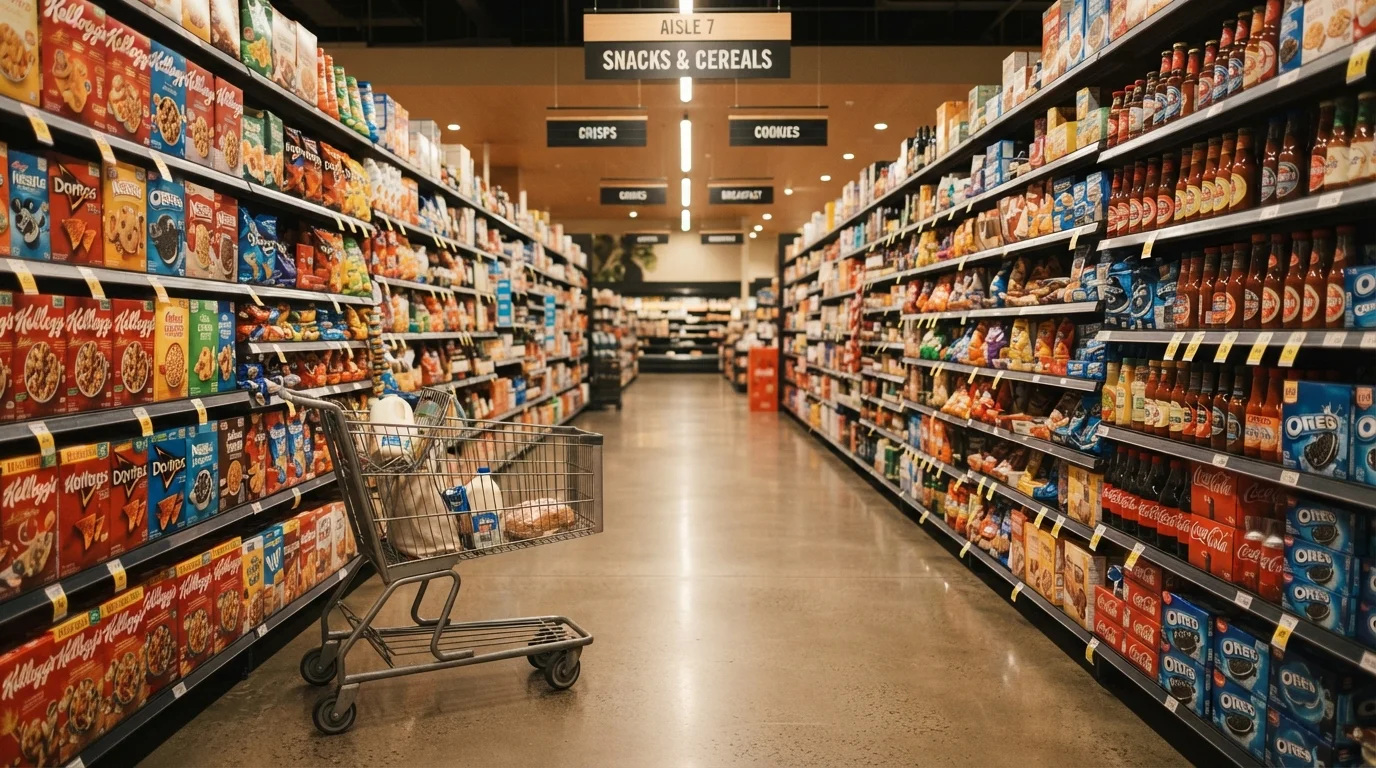
Photo: SaverSteals.com editorial
Key Takeaways
- Grocery store layouts are deliberately engineered to maximize the time and money shoppers spend.
- Common assumptions about "deals" and product placement are often the result of retailer strategy, not shopper luck.
- Simple behavioral shifts — like shopping with a list and moving counter-clockwise — can meaningfully reduce impulse spending.
- End-cap displays and eye-level shelves do not reliably indicate the best value products.
- Understanding store design doesn't require cynicism — just awareness and a small amount of pre-trip planning.
Why Store Design Is Worth Understanding
Most shoppers enter a grocery store with a rough mental list and leave having spent more than intended. That gap between plan and reality isn't random — it reflects decades of retail design research aimed at extending dwell time and increasing basket size. Environmental psychology, sensory cues, and product placement all work together in ways that are largely invisible to the average shopper.
This isn't about assigning bad faith to retailers — it's standard commercial practice. But understanding the mechanics puts shoppers in a better position to make deliberate choices. The myths below address some of the most persistent misunderstandings about how supermarkets actually work. For a look at how decision fatigue compounds these effects, see how retailers exploit shopping fatigue.
Myth
End-cap displays feature the best deals in the store.
Fact
End-caps are premium paid placement positions — the products there are not necessarily discounted or better value.
Manufacturers pay slotting fees for end-cap visibility, much like they do for prime shelf positions. The prominent placement signals marketing priority, not consumer value. Some end-cap items are on promotion, but many are simply full-price products benefiting from high-traffic exposure. Comparing the end-cap unit price against the same product mid-aisle — or against the store-brand equivalent — will often reveal the gap.
Myth
Products at eye level are the most popular or highest quality.
Fact
Eye-level shelf space is the most expensive real estate in the store, purchased by brands — not awarded by merit.
Retailers charge manufacturers for premium shelf positioning. Products placed at adult eye level (roughly 4–5 feet from the floor) receive the most visual attention and highest sales volume, which is precisely why brands compete for that space. Lower shelves often hold store-brand or value alternatives with equivalent or better unit pricing. A brief look at knee or floor level frequently turns up the same product category at a lower per-unit cost.
Myth
The perimeter of the store is where all the healthy food lives.
Fact
The perimeter houses fresh departments by necessity of refrigeration and logistics — healthfulness varies significantly within those sections.
Produce, meat, dairy, and deli counters line the perimeter largely because they require refrigeration infrastructure and frequent restocking from loading docks, not because retailers curated them for nutrition. The perimeter also includes bakery sections, prepared foods, and deli counters with high-sodium or high-calorie options. Interior aisles, meanwhile, contain legumes, whole grains, canned fish, and other staples with strong nutritional profiles. The perimeter-versus-interior framing is a useful rough guide but shouldn't substitute for reading labels.
Myth
Loyalty card discounts represent genuine savings off a fair regular price.
Fact
Regular "shelf" prices are sometimes set artificially high to make loyalty-card prices appear more valuable than they are.
Retail pricing strategy frequently involves setting a reference price higher than the competitive market rate, then positioning the loyalty or member price as a discount from that inflated baseline. The result is that shoppers feel rewarded for using their card when the loyalty price may simply reflect the actual competitive price. Comparing unit prices across store types — discount grocers, warehouse clubs, conventional supermarkets — provides a more reliable sense of true market value than comparing a loyalty price to the same store's non-member shelf price.
Myth
Grocery stores are laid out the same way everywhere, so you can apply the same navigation strategy.
Fact
Store layouts vary deliberately by chain, format, and even individual location — there is no universal floor plan.
While certain conventions exist (dairy at the back, produce near the entrance in many U.S. stores), chains actively test and vary layouts to optimize traffic flow for their specific customer base and store footprint. A discount grocer, a full-service supermarket, and a warehouse-format store operate on fundamentally different floor-plan logic. Assuming a familiar layout in an unfamiliar store leads to more aisle traversal and more exposure to unplanned purchase triggers. When shopping somewhere new, a brief clockwise walk of the perimeter before pulling a cart can help you build a mental map before committing to a path.
Practical Strategies That Actually Help
Knowing the myths is useful. Translating that awareness into habits is what actually changes your spending.
~60–70%
Share of grocery purchases that are unplanned
Consumer behavior research has long indicated that the majority of in-store grocery purchases are decided at the shelf rather than planned before entry — a figure that underscores how much store environment shapes behavior.
4–5 ft
Height of prime eye-level shelf space
Retail merchandising studies consistently identify the zone between roughly 4 and 5 feet from the floor as generating the highest product visibility and purchase rates — the space brands pay the most to occupy.
Shop the perimeter with purpose, not habit. The perimeter-first rule has merit — fresh produce, proteins, and dairy are typically located there — but walking the perimeter aimlessly still exposes you to display cues. Move with intention: identify the sections you need, navigate directly, and treat interior aisles as specific destinations rather than browsing zones.
Use a structured list — but leave room for genuine substitutions. A written or app-based list reduces cognitive load and gives you an anchor against impulse additions. That said, a rigid list can make you miss a legitimate value swap (e.g., a seasonal vegetable at a lower price than what you planned). Shopping with a list versus shopping by feel explores this trade-off in detail.
Check unit prices, not shelf prices. Most U.S. grocery stores are required to display unit pricing on shelf tags. The unit price — cost per ounce, per liter, per count — is the only reliable comparison metric. A larger package isn't always cheaper per unit, and store-brand products at mid-shelf frequently undercut the unit price of both national brands and "sale" items. Before committing to bulk purchases, understand when bulk buying actually saves money.
Shop on a full stomach and with a time constraint. Hunger amplifies the appeal of sensory cues — the bakery smell, the sample station. A mild time pressure (a realistic mental deadline, not artificial stress) discourages lingering in non-essential aisles. These are small behavioral adjustments with documented effects on impulse purchasing in consumer behavior literature.
"Sale" Signage Doesn't Always Mean Lower Price
Red tags, "special buy" labels, and multi-unit pricing (e.g., "3 for $5") create urgency and the perception of savings without necessarily representing a price reduction. Multi-unit offers in particular rarely require you to buy the stated quantity to get the per-unit price — but the framing encourages higher volume purchases. Always verify the single-unit price before loading the cart.
For shoppers focused on both value and nutrition, a section-by-section grocery walkthrough offers a complementary approach to filling a cart thoughtfully. If you're working to align grocery spending with a broader budget, the principles in Budgeting Basics provide useful grounding.

Shopping Editorial Team
Shopping Editorial Team is the collective byline for our editorial team and contributor network. Articles published under this byline or an editorial pen name are researched, written, and reviewed according to our editorial standards for clarity, consistency, and independence before publication.
View author profile