
Shopping Fatigue Is Real — And Retailers Know How to Exploit It
Decision fatigue makes people spend more and think less. Learn how it happens in retail environments and what helps counteract it.
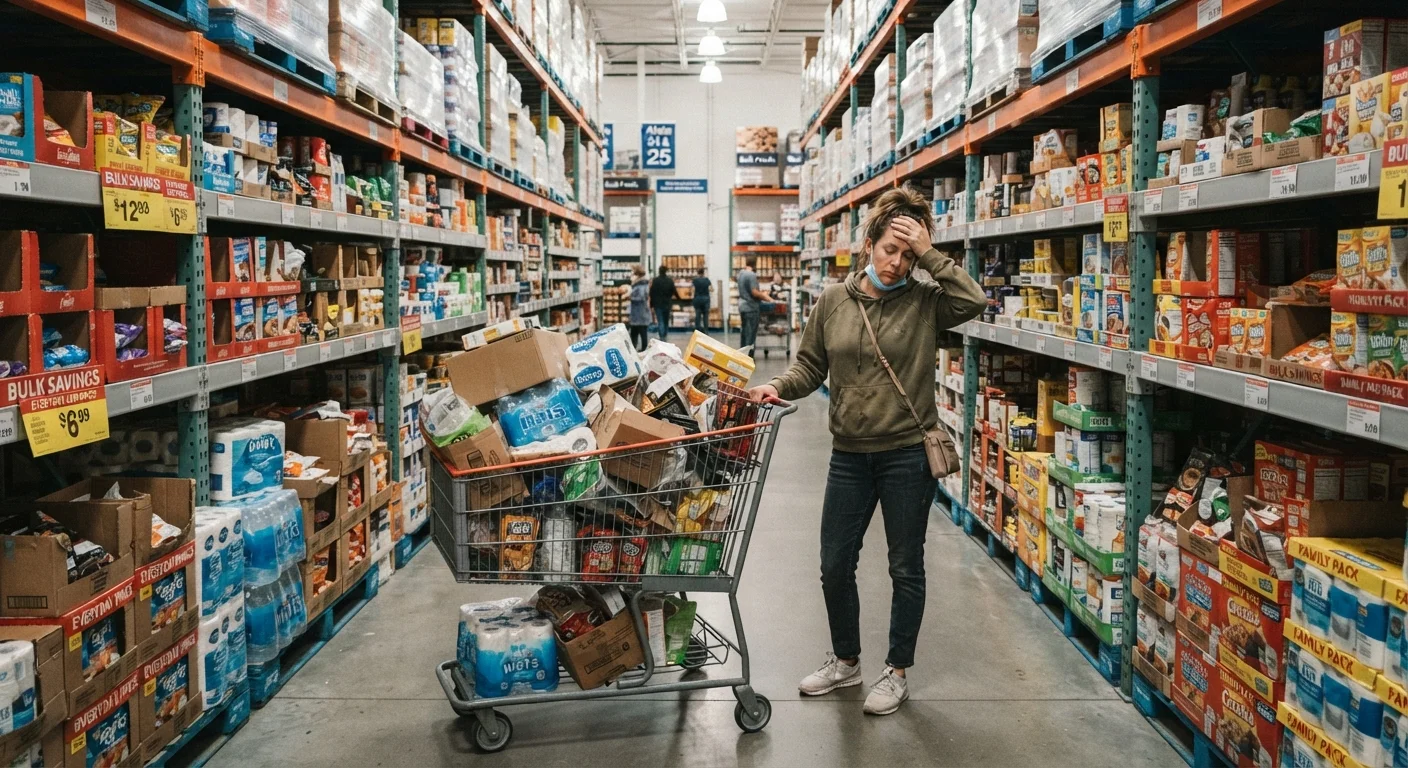
Photo: SaverSteals.com editorial
—— In This Article
Key Takeaways
- Every choice you make in a store slightly depletes your mental energy for the next one.
- Retailers deliberately structure environments to maximize decision points and exploit fatigue.
- Shopping with a list and a time limit are among the most effective defenses.
- Fatigue-driven purchases often lead to buyer's remorse and budget overruns.
- Recognizing the tactics in play helps you shop with a clearer, more deliberate mindset.
Why Every Choice in a Store Costs You Something
Your brain treats each purchasing decision like a small withdrawal from a finite account. Early in a shopping trip, you're sharp — weighing ingredients, comparing unit prices, scanning labels. An hour later, you're tossing things into the cart because you just want to be done. That's not laziness. That's decision fatigue doing exactly what the science predicts it will do.
The problem compounds in modern retail. A typical supermarket carries tens of thousands of distinct products. A single clothing retailer may offer hundreds of variations of one item. Each variation — each size, color, price tier, and feature set — is another micro-decision your prefrontal cortex has to process. At some point, your brain starts cutting corners. It simplifies, defaults, and eventually just gives in.
This matters to your wallet. Fatigue-driven purchases tend to be higher-margin, lower-necessity items — the things you'd have passed on if you'd encountered them first. Understanding that this process is happening is the first step to interrupting it. See how grocery store layouts deliberately exploit this pattern to understand the full picture.
35,000+
Daily decisions the average adult makes
Commonly cited estimates in behavioral science literature suggest adults make tens of thousands of decisions each day, of which shopping environments contribute a disproportionate share.
~40,000
Products in a typical large supermarket
According to the Food Marketing Institute, the average supermarket carries around 30,000–40,000 distinct SKUs, each representing a potential decision point for shoppers.
The Retail Tactics Designed to Drain You
Shopping fatigue isn't an accident retailers are trying to prevent — it's often an outcome they're structuring environments to produce. A few of the most common tactics:
- Artificial variety: Offering 40 versions of the same product isn't consumer-friendly — it's a fatigue accelerator. The more options you sort through, the less carefully you evaluate each one.
- Checkout aisle placement: Low-cost impulse items appear precisely where your decision-making resources are most depleted. After navigating a full store, resisting a $4 candy bar or a $12 magazine requires energy you may no longer have.
- Price anchoring and complexity: Tiered pricing, bundle deals, and loyalty discounts create mental load that encourages shoppers to stop calculating and just pick something.
- Time pressure cues: "Limited quantities" signs and countdown timers on websites add urgency that short-circuits careful evaluation entirely.
Online retail has its own version of this playbook. Infinite scroll, "frequently bought together" prompts, and algorithmically curated suggestions are all designed to keep you in a decision-making loop until fatigue tips you toward a purchase you hadn't planned.
Pre-decide Before You Walk In
Spend five minutes before any shopping trip writing down exactly what you need and a rough ceiling for what you're willing to spend. This single habit displaces many in-store decisions before fatigue can affect them. Treat anything not on the list as requiring a 24-hour waiting period before purchase.
Practical Ways to Shop With Your Judgment Intact
You can't eliminate decision fatigue, but you can structure your shopping to minimize it. A few approaches that make a meaningful difference:
- Shop with a specific list. The more pre-decisions you make at home, the fewer you need to make in the store. A list isn't just organizational — it's a cognitive shield. This is especially relevant for routine purchases like groceries and household staples.
- Set a time and a spending ceiling before you go. Open-ended shopping trips are fatigue factories. Knowing you have 45 minutes and a firm budget limit keeps you focused and reduces exposure to fatigue triggers.
- Shop early, not late. Research generally supports that decision-making quality is higher earlier in the day, when mental resources are fresher. Evening grocery runs after a full workday are particularly high-risk for impulse spending.
- Limit comparison shopping in the moment. Comparing three options with similar value differences is useful; comparing twelve is usually just exhausting. Use pre-trip research to narrow your options before you're standing in an aisle.
When it comes to categories where a bit of planning pays off — like bulk pantry items — fatigue can lead to both overbying and underthinking. The principles for smart bulk buying are worth reviewing before a large stock-up trip. And for non-perishables with predictable price cycles, aligning purchases with seasonal patterns can reduce the number of in-the-moment decisions you need to make at all.
Online Shopping Isn't a Fatigue-Free Zone
It's easy to assume that shopping from home is lower-stress than going to a physical store. But digital environments introduce their own fatigue triggers — infinite scroll, constant personalized recommendations, and one-click purchasing that removes friction deliberately. The same pre-planning strategies apply to online sessions: set a goal, set a limit, and close the tab when you've found what you came for.
The Bigger Picture: Fatigue Across Your Whole Life
Shopping fatigue doesn't arrive in isolation. It draws from the same pool of cognitive resources you use to make decisions at work, manage your schedule, and navigate daily choices about meals, clothing, and routines. A cluttered wardrobe that makes getting dressed unnecessarily difficult every morning is spending a little of that resource before you've even left the house.
The lesson is systemic: the more you can reduce low-stakes decision load in advance — through routines, lists, pre-set budgets, and simplified options — the more cognitive capacity you retain for choices that actually deserve it. Retailers are sophisticated operators who understand this dynamic deeply. Shoppers who understand it too are in a considerably stronger position.
This article is for informational and educational purposes only. It does not constitute financial or medical advice. For questions about managing spending or cognitive health, consider speaking with a qualified financial adviser or healthcare professional.
Frequently Asked Questions

Shopping Editorial Team
Shopping Editorial Team is the collective byline for our editorial team and contributor network. Articles published under this byline or an editorial pen name are researched, written, and reviewed according to our editorial standards for clarity, consistency, and independence before publication.
View author profile