
Building a Cohesive Home Aesthetic Without Overspending
Proven approaches for creating a consistent, intentional home style on a limited budget, from colour strategy to phased purchasing.
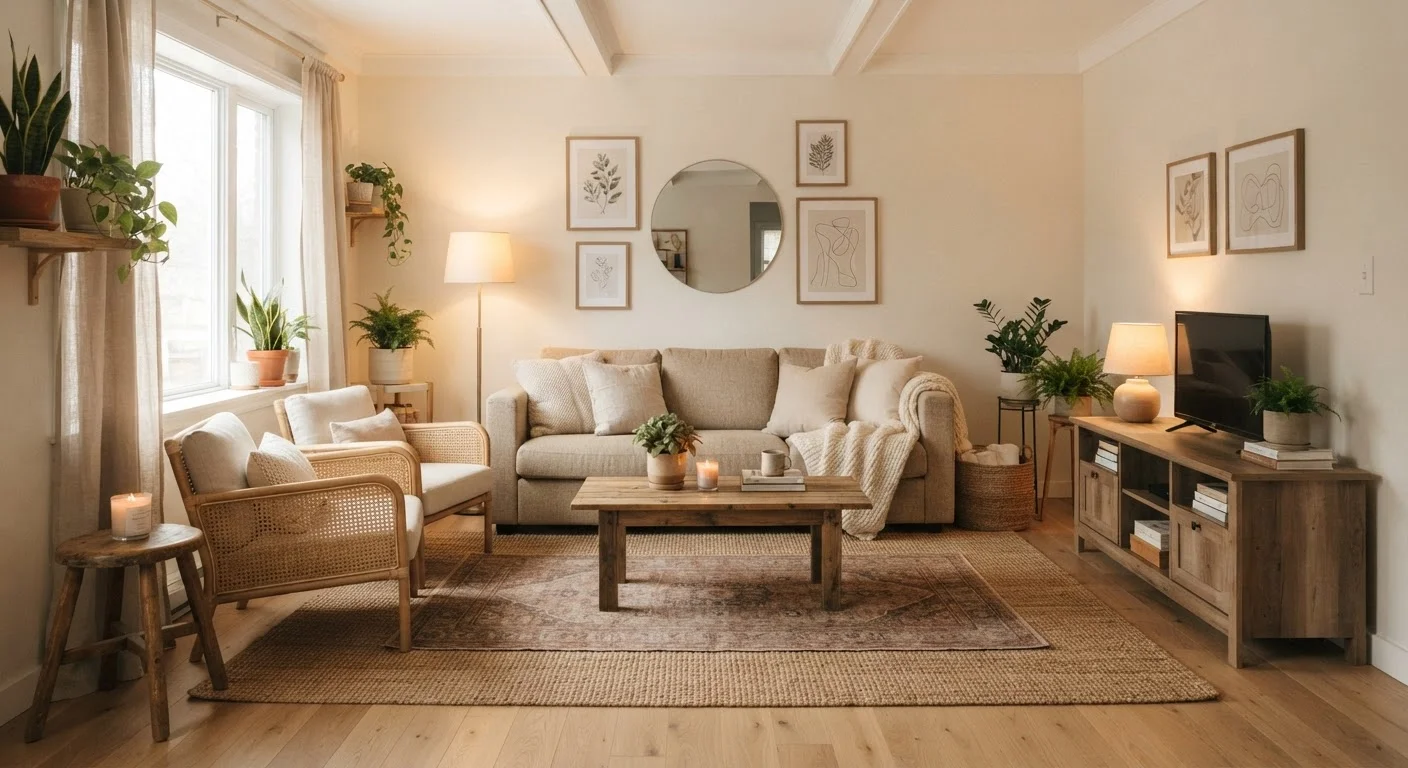
Photo: SaverSteals.com | Explore More. Shop Smarter. editorial
—— In This Article
Key Takeaways
- A defined colour palette acts as a unifying thread across all rooms, regardless of budget.
- Phased purchasing prevents impulse buys and allows you to prioritise high-impact pieces first.
- Rearranging existing furniture and textiles can dramatically shift a room's look at no cost.
- Investing in a few neutral anchor pieces lets you refresh a space with low-cost accents over time.
- Secondhand and thrift sources are reliable channels for finding cohesive, quality pieces affordably.
Start With a Colour Strategy, Not a Shopping Cart
Before purchasing anything new, establish a colour palette of two to three core tones that will travel through every room. This single decision does more to create visual cohesion than any individual item you could buy. Choose tones that work with your existing flooring, fixed cabinetry, and architectural features — those elements are expensive to change and should anchor your palette, not fight it.
Once you have a palette, use it as a filter. An item that falls outside those tones requires justification; one that fits earns its place automatically. This approach removes indecision at the point of purchase and reduces the chance of buying pieces that look mismatched once they're home. For a deeper look at how neutral versus trend-led choices affect long-term cost, see our comparison of neutral and trend-led décor.
Test Your Palette With Paint Swatches First
Before committing to a wall colour or large textile, purchase sample swatches or paint testers and live with them for several days under different lighting conditions. Morning and evening light can shift a tone dramatically. This small upfront step prevents costly repainting or returns.
Audit What You Already Own Before Spending Anything
Many rooms feel incoherent not because they lack items, but because existing items are poorly arranged or underused. Walk through each room and identify what already fits your chosen palette. Textiles — cushions, throws, curtains — can often be redistributed between rooms to create balance without any spend.
Furniture placement has an outsized effect on how a space reads. Pulling sofas away from walls, grouping items intentionally, and removing visual clutter can transform a room's perceived quality. Rearranging what you already own is one of the highest-leverage steps you can take before committing any budget. Also consider running through a room-by-room planning checklist to measure and prioritise before buying a single new item.
Build Around Neutral Anchors, Layer With Low-Cost Accents
A reliable budgeting structure for home aesthetics is to spend more deliberately on neutral, durable anchor pieces — a sofa, a rug, a bed frame — and then use inexpensive, swappable accents to add character and seasonal variety. Accent pieces such as cushions, vases, and small artwork are far cheaper to replace than structural furniture, and swapping them is how a space evolves without a full overhaul.
Secondhand markets, estate sales, and thrift stores are consistently productive sources for neutral anchor pieces at a fraction of retail price. The key is patience: identify what you need, define the size and tone parameters precisely, then source it over time rather than buying whatever is available immediately. Small décor changes with measurable impact — such as swapping bulb colour temperature or layering a textured throw — can reshape how a space reads for very little outlay.
60–70%
Typical secondhand discount vs. retail on solid-wood furniture
Consumer resale market research consistently shows that secondhand solid-wood or neutral upholstered pieces trade at significant discounts relative to new retail equivalents.
3×
Rooms where redistributing existing items resolved a styling gap
Interior design practitioners commonly observe that most households have enough objects to furnish their spaces — the gap is usually organisation and placement, not volume.
Phase Your Purchases to Stay Coherent and On Budget
Buying everything at once is rarely the most cost-effective approach, and it often produces a mismatched result because decisions are rushed. A phased strategy — prioritising one or two rooms or one category at a time — allows you to live with early choices before committing to the next round. It also means you can take advantage of end-of-season pricing cycles rather than paying full price for everything simultaneously.
Sequence purchases by impact: items that affect the most-used areas of a room first, followed by finishing elements. This mirrors the logic behind staggering furniture purchases over time — a method that can meaningfully lower your total spend by spreading decisions and allowing better-informed choices at each stage.
Keeping a running list of what each room still needs — organised by priority — prevents impulse purchases that feel justified in the moment but disrupt the overall aesthetic later. Treat the list as a live document, revisiting it each time a new item is considered.
Phasing Works Best With a Written Plan
A phased approach loses its budget benefits if each new purchase is made impulsively rather than against a plan. Keep a shared document or simple notebook listing each room's remaining needs in priority order. Review it before every purchase to confirm the item advances the plan rather than diverting from it.

Home & Garden Editorial Team
Home & Garden Editorial Team is the collective byline for our editorial team and contributor network. Articles published under this byline or an editorial pen name are researched, written, and reviewed according to our editorial standards for clarity, consistency, and independence before publication.
View author profile