
Neutral vs. Trend-Led Décor: Which Approach Stretches a Budget Further
Chasing décor trends can be expensive. Compare the long-term cost and versatility of neutral palettes against seasonal trend pieces.
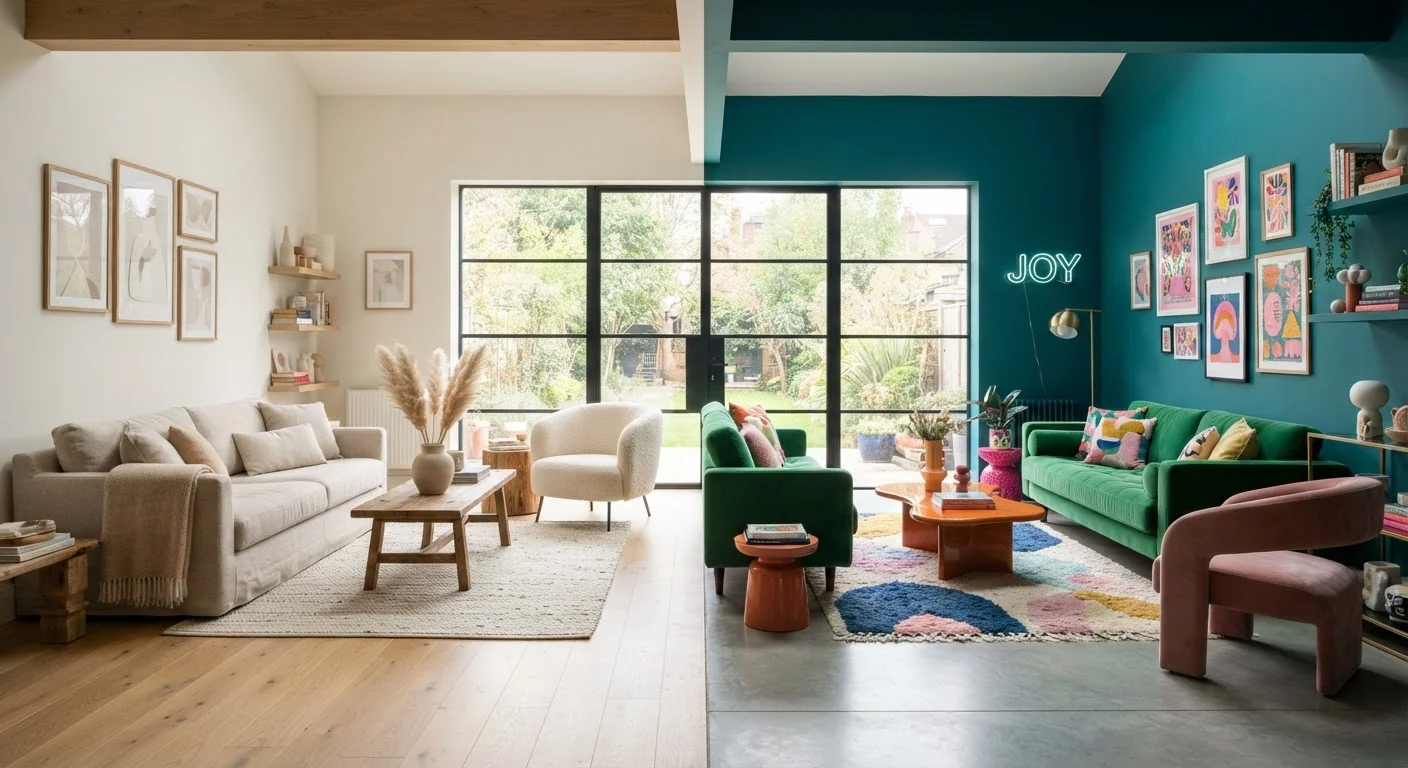
Photo: SaverSteals.com | Explore More. Shop Smarter. editorial
—— In This Article
Key Takeaways
- Neutral décor tends to have a lower total cost over time due to fewer replacements.
- Trend-led pieces carry higher turnover costs but can be mitigated by focusing on low-cost accessories.
- Mixing a neutral base with selective trend accents is a widely used budget strategy.
- Durability and material quality matter more with trend-led pieces to avoid repeat spending.
- Resale value of neutral furniture and fixtures is generally stronger than that of trend-specific items.
How Each Approach Affects Your Wallet Over Time
The appeal of trend-led décor is easy to understand — a space that looks current and carefully styled can feel rewarding. But each trend cycle introduces a hidden cost: the expectation of replacement. When a colour or motif falls out of favour, items purchased specifically for that look often feel dated rather than adaptable.
Neutral décor sidesteps much of this pressure. White, beige, warm grey, and earthy tones have remained design staples across decades precisely because they don't anchor a room to a specific moment. A linen-coloured sofa or an oak-finish side table can survive multiple trend cycles without looking out of place — and without requiring you to buy a replacement.
The financial implication is straightforward: neutral pieces tend to have a longer effective lifespan, which lowers their cost-per-year-of-use. As our analysis of décor value over time explores, a lower sticker price doesn't always translate to lower total spending if replacement happens repeatedly.
| Criterion | Neutral Décor | Trend-Led Décor |
|---|---|---|
| Lifespan of major pieces | 5–15+ years typical | 1–4 years before feeling dated |
| Replacement frequency | Low — driven by wear | Higher — driven by style cycles |
| Resale value | Generally stronger | Weakens as trend fades |
| Upfront cost | Comparable — varies by quality | Comparable — varies by quality |
| Flexibility across rooms | High — moves between spaces | Lower — context-specific |
| Risk of buyer's remorse | Lower | Higher for large items |
| Best applied to | Furniture, textiles, walls | Accessories, soft furnishings |
Where Trend-Led Décor Can Still Make Sense Financially
Trend-led decorating isn't inherently wasteful — context matters significantly. The key variable is where you apply trend spending. Large, structural purchases — a sectional sofa, a dining table, a bedroom dresser — are expensive to replace and difficult to resell at strong prices once they look dated. Applying trend logic to these items carries real financial risk.
Smaller, low-cost items are a different story. Throw pillows, vases, candles, art prints, and seasonal textiles can be swapped at minimal expense. If a terracotta or sage-green moment passes, replacing a set of cushion covers costs a fraction of what it would cost to replace upholstered furniture. This is the strategy that high-impact, low-cost décor adjustments rely on: change what's easy and inexpensive, leave structural pieces untouched.
3–4 years
Average sofa replacement cycle for trend-focused buyers
Interior design industry surveys suggest trend-motivated buyers replace upholstered seating significantly sooner than wear-driven buyers.
~20%
Typical resale value loss for trend-specific furniture
Secondhand market data indicates heavily trend-specific pieces often recover a smaller proportion of their original cost compared to neutral alternatives.
One practical approach is to build a neutral base — walls, major furniture, flooring — and treat trend-led pieces as rotating accessories. This hybrid strategy captures the visual interest of current design without committing your budget to items likely to feel stale within a few seasons.
Making a Neutral Palette Feel Intentional, Not Bland
A common concern with neutral décor is that it can read as flat or characterless. This is largely a texture and layering challenge rather than a colour one. Rooms built on neutral palettes gain depth through varied materials: linen, wool, wood grain, ceramic, and woven rattan all sit within neutral territory while creating visual complexity.
Investing in a few well-chosen higher-quality neutral pieces — rather than many inexpensive ones — also tends to produce better long-term results. For guidance on building a consistent look without overspending at any single point, strategies for a cohesive home aesthetic on a limited budget offers a structured starting point. Similarly, if you're working with a room from scratch, a realistic guide to budget room decorating covers the foundational decisions that set a neutral scheme up for success.
The practical advantage is that neutral rooms also photograph and resell well — a consideration worth keeping in mind if you plan to move or update your space down the line.
Phasing Your Purchases to Reduce Financial Pressure
Whether you favour neutral or trend-led décor, how you spread purchases over time has a significant effect on your budget. Buying everything at once — even at seemingly reasonable prices — adds up quickly and leaves little room for adjustment if your tastes or circumstances change.
A phased approach lets you evaluate each piece in the context of what you already own, avoid impulse decisions, and take advantage of seasonal pricing patterns in home goods. As staggering furniture purchases over time illustrates, spreading buying decisions lowers your total spend more reliably than chasing individual discounts.
For neutral-leaning decorators, phasing is particularly compatible: each new piece joins an existing palette without requiring other items to be updated simultaneously. For trend-led decorators, phasing helps avoid the common pattern of buying an entire themed look at once — only to want to change it entirely when the next trend arrives.
This article is for informational purposes only. Pricing patterns and design trends can vary by region and change over time. Always verify current costs before making purchasing decisions.

Home & Garden Editorial Team
Home & Garden Editorial Team is the collective byline for our editorial team and contributor network. Articles published under this byline or an editorial pen name are researched, written, and reviewed according to our editorial standards for clarity, consistency, and independence before publication.
View author profile