
Small Décor Changes That Make a Measurable Difference to a Room
A curated look at high-impact, low-cost adjustments — from lighting swaps to textile layering — that reshape how a space reads.
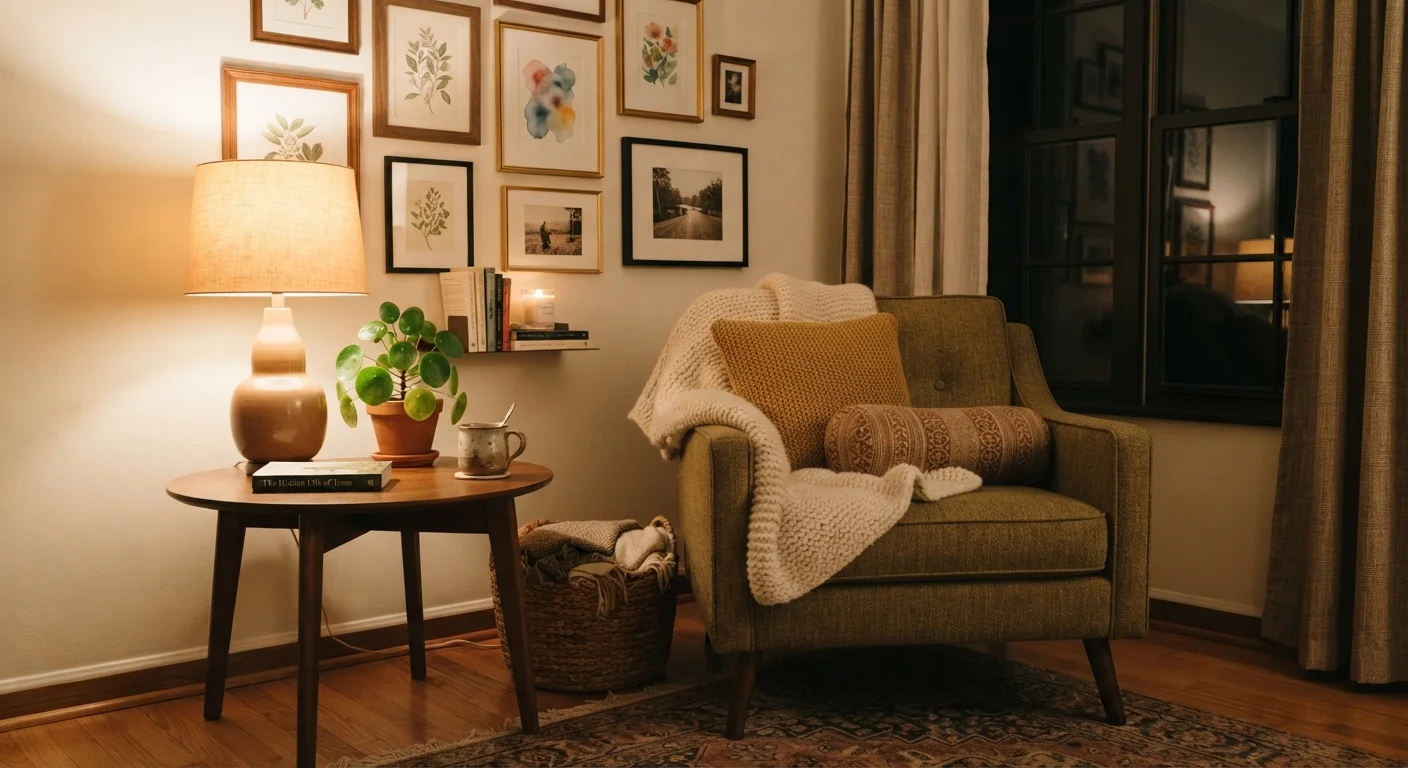
Photo: SaverSteals.com | Explore More. Shop Smarter. editorial
—— In This Article
Key Takeaways
- Swapping bulb color temperature is one of the fastest ways to change how a room feels emotionally.
- Layering textiles adds perceived warmth and dimension without requiring new furniture.
- Strategic mirror placement can visually expand a room and redistribute natural light.
- Grouping décor in odd numbers creates visual interest that single items rarely achieve.
- Replacing dated hardware on cabinets or doors offers a high-impact upgrade at minimal cost.
- Introducing one cohesive accent color through small objects can unify an otherwise disjointed space.
Why Small Changes Deserve More Credit
Most people assume that a meaningful room transformation requires a renovation budget or at minimum a furniture haul. In practice, the changes that register most strongly with the eye are often the smallest — and the least expensive. Lighting tone, textile weight, hardware finish, and object arrangement all influence how a space reads, sometimes more than the furniture itself.
If you haven't already exhausted the zero-cost options, rearranging what you already own is a logical first step. But when a room still feels flat after a layout refresh, targeted low-cost additions can produce measurable results. The seven strategies below are ordered by typical ease of execution, not by impact — because the right move depends entirely on what your room is currently missing.
A note on color and style consistency
Individual changes work best when they serve a shared direction. Before adding new objects or textiles, it helps to have a loose sense of the palette and mood you're working toward. Decorating on a tight budget covers how to establish that foundation before making any purchases.
Seven Adjustments That Reshape How a Space Reads
Adjust your bulb color temperature
Lighting color temperature — measured in Kelvins — has a direct effect on how warm or cold a room feels. Bulbs in the 2700K–3000K range produce a warm, amber-toned light suited to living rooms and bedrooms. Bulbs at 4000K and above emit a cooler, bluer light that reads as clinical in residential spaces.
If a room feels uninviting despite decent furniture, swapping cool bulbs for warm ones is often the single fastest fix available. The swap costs only a few dollars per bulb and requires no tools.
Swapping cool bulbs for warm ones may be the fastest, cheapest room fix available.
Layer textiles rather than replace them
A single throw or one set of cushions rarely reads as styled — it reads as functional. Layering textiles with varied textures (a knit throw over a linen sofa, velvet cushions alongside cotton ones) adds visual depth that signals intentionality. This works because the eye responds to contrast in texture the same way it responds to contrast in color.
Mixing two or three complementary textures at different price points almost always produces a more interesting result than buying one expensive statement piece.
Mixing two or three textures creates depth that one statement piece rarely achieves.
Use mirrors to redistribute natural light
A mirror placed opposite or adjacent to a window reflects daylight back into the room, effectively doubling the light source without adding a fixture. In smaller or darker rooms, this can make the space read as larger and more open than it actually is.
The mirror doesn't need to be large or decorative to work — even a modestly sized mirror in a plain frame, positioned deliberately, will redirect light noticeably. Framed mirrors sourced secondhand often cost very little and can be repainted to match existing finishes.
A mirror opposite a window can effectively double the light in a dark room.
Replace cabinet and door hardware
Drawer pulls, cabinet knobs, and door handles are often overlooked because they're small — but they're among the most-touched surfaces in any room. Dated or mismatched hardware creates visual noise that signals neglect. Replacing it with a consistent finish (matte black, brushed brass, or satin nickel are all currently versatile) updates cabinetry without repainting or refacing.
Individual pulls and knobs are inexpensive, and most require only a screwdriver to swap out. A full kitchen or bathroom set can often be replaced in under an hour.
Consistent hardware finish updates cabinetry without a single brush stroke of paint.
Group objects in odd numbers
Interior designers often default to groupings of three or five objects because odd-numbered clusters create a natural visual hierarchy — the eye moves between items rather than stopping at a symmetrical pair. On a shelf or side table, a single object can look forgotten; two objects look symmetrical but flat; three objects, varied in height, look considered.
You likely already own enough objects to test this — rearrange before buying anything new. For more on working with existing pieces, a no-cost room refresh approach covers the principles in detail.
Odd-numbered object groupings give the eye a path to follow rather than a place to stop.
Introduce one deliberate accent color
A room without any accent color can feel incoherent — every element competes equally for attention. Selecting one accent color and repeating it in three or more small objects (a vase, a cushion, a candle holder) gives the eye an anchor and makes the room feel more deliberately styled.
The accent doesn't need to be bold to be effective. A single muted terracotta repeated in small objects can unify a neutral room more effectively than an expensive focal-point piece in a contrasting shade. For broader guidance on palette strategy, neutral vs. trend-led décor examines the long-term cost of each approach.
Repeating one accent color in three small objects unifies a room more than a single statement piece.
Elevate a wall with a simple gallery arrangement
Bare walls make rooms feel unfinished, but filling them doesn't require original artwork or expensive prints. A gallery wall composed of framed pages from secondhand books, printed photographs, or inexpensive poster prints — arranged with consistent framing style and deliberate spacing — reads as curated rather than cheap.
The key is consistency: matching frame finishes (even if frames differ in shape) and maintaining even spacing between pieces. A gap of two to four inches between frames is a widely used starting point. Planning the arrangement on the floor before committing to wall holes saves both time and unnecessary damage.
Matching frame finishes and even spacing transform mismatched prints into a curated gallery.
Start with one room, one problem
Trying to apply multiple changes across several rooms at once dilutes your attention and your budget. Pick the room that bothers you most, identify its single biggest visual weakness, and address that first. Results are easier to assess — and easier to build on — when changes are isolated and deliberate.
Spending Thoughtfully, Not Extensively
None of the changes above require a large outlay, but it's still worth approaching them with a plan. Before purchasing anything, consult a room-by-room planning checklist to measure your space, clarify priorities, and avoid impulse buys that don't serve the room's overall direction.
If you're also weighing larger purchases alongside these smaller adjustments, the principles in buying furniture on a budget are worth reading in parallel. And once individual changes are in place, building a cohesive home aesthetic can help you connect the dots so the room feels intentional rather than assembled by accident.
Small changes succeed when they address a specific visual problem — not when they're added for the sake of doing something. Identify what the room lacks, apply one or two targeted fixes, and reassess before spending further.

Home & Garden Editorial Team
Home & Garden Editorial Team is the collective byline for our editorial team and contributor network. Articles published under this byline or an editorial pen name are researched, written, and reviewed according to our editorial standards for clarity, consistency, and independence before publication.
View author profile