

| Typical Apparel Markdown Cycle | 6-8 weeks from initial clearance to final reduction (National Retail Federation, 2023) |
| Electronics Model-Year Lag | 30-90 days after new model announcement (Consumer Electronics Association, 2023) |
| Home Goods Clearance Window | Post-holiday (Jan-Feb) and mid-summer (Jul-Aug) |
| Average Maximum Clearance Depth - Apparel | 60-75% off original retail (Retail Dive Industry Survey, 2022) |
| Grocery Markdown Day (Most Chains) | Wednesday or Thursday |
| Outdoor & Sporting Goods Peak Clearance | August-September (summer gear) and January (winter gear) |
| Typical Big-Box Electronics Clearance Depth | Up to 40% off before liquidation |
| Furniture Clearance Triggers | Floor model rotation every 90-120 days |
Why Category Matters More Than the Calendar
Most shoppers treat clearance as a single event - the end of a season, a holiday sale, a random windfall. That framing loses money. In reality, every major retail category operates on its own markdown logic, driven by supplier contracts, inventory turnover targets, shelf-space economics, and seasonal demand curves. A leather sofa and a winter parka don't follow the same clearance clock, and shopping them as if they do means you're always slightly off rhythm.
The core insight here is simple: learn the category's rhythm, not just the sale event. Once you understand why a category gets marked down - and when that pressure typically peaks - you can position yourself to buy at the moment stores are most motivated to move product. That's the difference between paying 30% off and paying 70% off for the same item.
For a deeper look at how retail pricing decisions are actually made on the backend, see how retailers schedule markdowns - understanding the business logic makes reading clearance tags far more intuitive.
| Typical Apparel Markdown Cycle | 6-8 weeks from initial clearance to final reduction (National Retail Federation, 2023) |
| Electronics Model-Year Lag | 30-90 days after new model announcement (Consumer Electronics Association, 2023) |
| Home Goods Clearance Window | Post-holiday (Jan-Feb) and mid-summer (Jul-Aug) |
| Average Maximum Clearance Depth - Apparel | 60-75% off original retail (Retail Dive Industry Survey, 2022) |
| Grocery Markdown Day (Most Chains) | Wednesday or Thursday |
| Outdoor & Sporting Goods Peak Clearance | August-September (summer gear) and January (winter gear) |
| Typical Big-Box Electronics Clearance Depth | Up to 40% off before liquidation |
| Furniture Clearance Triggers | Floor model rotation every 90-120 days |
Apparel: The Fastest Markdown Cycle in Retail
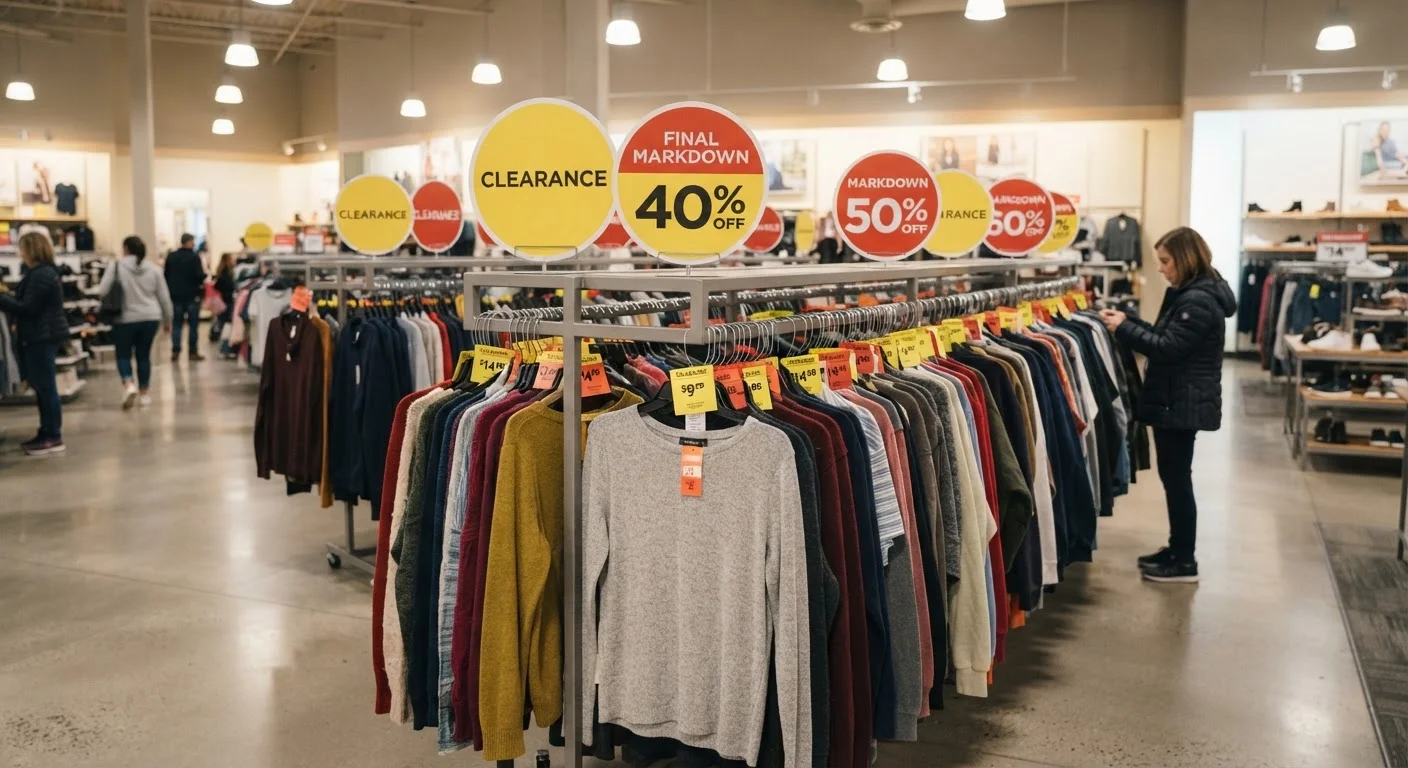
Clothing moves through the price ladder faster than almost any other category. Fashion is inherently perishable - a style that doesn't sell in-season becomes a liability the moment the next season's receipts arrive. Most mid-tier department stores and specialty apparel chains run clearance on a 6-8 week cadence, reducing prices in roughly two-week intervals until the item hits the liquidation threshold.
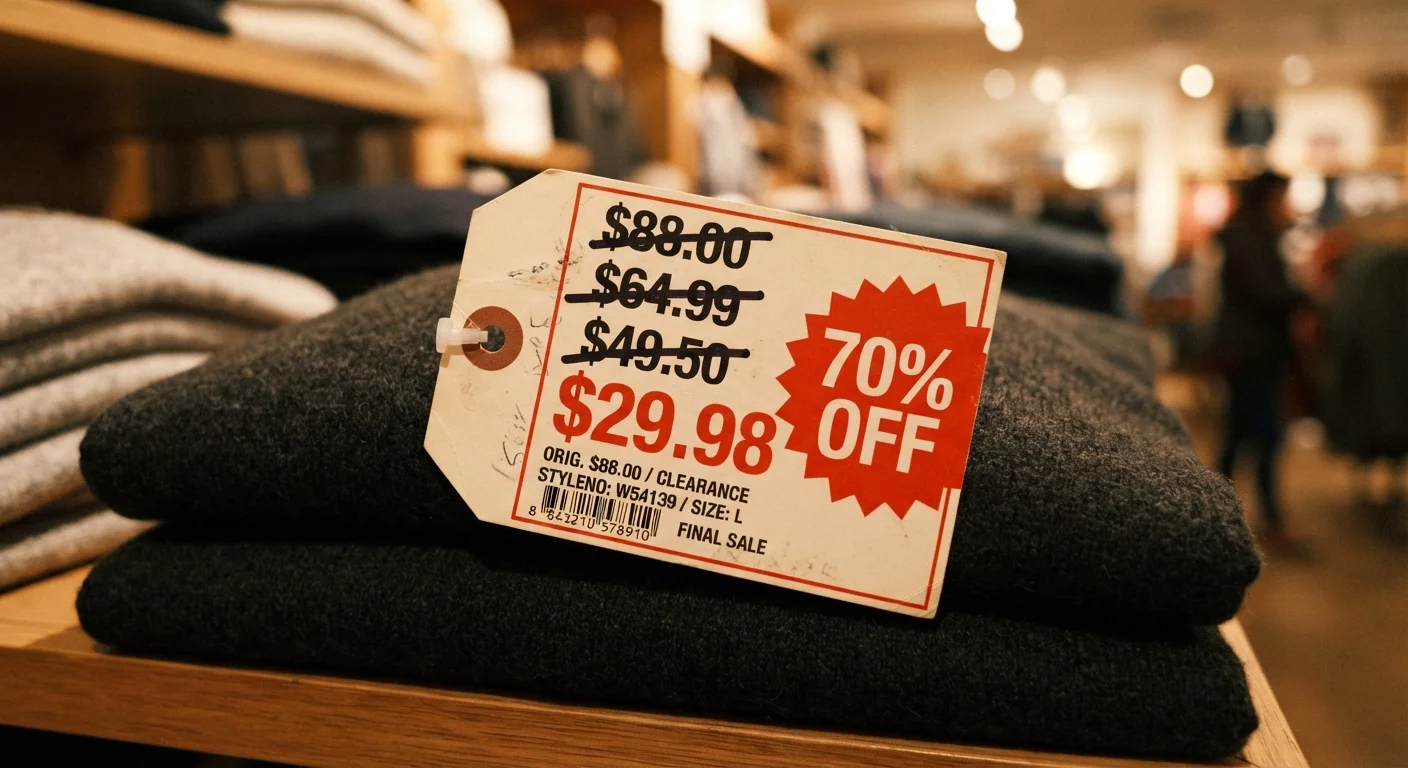
Here's how to read the typical apparel markdown ladder at a chain like Macy's, Nordstrom Rack, or a specialty retailer:
- Initial clearance tag (20-30% off): Item is freshly moved to clearance. Selection is still good; sizes are intact. Skip this step unless you need a specific item urgently.
- First reduction (40-50% off): Usually happens 2-3 weeks in. Assortment breaks start appearing here. This is the best value window if you need a full size run.
- Second reduction (60-70% off): Four to five weeks in. Sizes are picked over, but if your size is still there, this is peak value. Color and style options are minimal.
- Final clearance (70-75%+ off): The liquidation moment. Remaining units are often odd sizes or damaged. Buy only if the item still works for your needs.
Timing matters seasonally, too. Retailers transition floor sets on a defined calendar: winter apparel starts clearing in late January, summer items in late July or early August. The winter clearance playbook breaks this down further if cold-weather gear is your target.
One nuance most shoppers miss: the clearance rack is not restocked. What you see is what remains. If an item disappears from a clearance rack, it's gone - it didn't sell through to a deeper markdown, it sold out. When you find your size at a 50% reduction, that's likely your last opportunity.
68%
Shoppers who don't know their category's markdown schedule
According to a 2023 consumer survey by RetailMeNot, most shoppers buy clearance reactively rather than strategically.
30-90
Days after new electronics release that prior-gen prices drop most
Consumer Electronics Association data indicates the steepest discounts on outgoing models cluster in this window.
75%
Maximum typical apparel clearance discount at major chains
Retail Dive's 2022 survey found 75% off is the common floor before chains donate or liquidate remaining stock.
6-8 weeks
Average apparel clearance cycle from first mark to final cut
Most mid-tier department stores follow a structured cadence of reductions roughly every two weeks after initial clearance tagging.
$800B+
Annual U.S. retail clearance and discount merchandise market
Sourced from IBISWorld retail industry reports; illustrates the scale of inventory the system must move through clearance channels each year.
Electronics: Watch the Product Cycle, Not the Store Calendar
Electronics clearance is driven by one thing above all others: model year transitions. When a manufacturer announces a new generation of a product - a new laptop line, an updated TV series, a refreshed smartphone - the outgoing model becomes a clearance candidate at retail. The timing is more predictable than most shoppers realize.
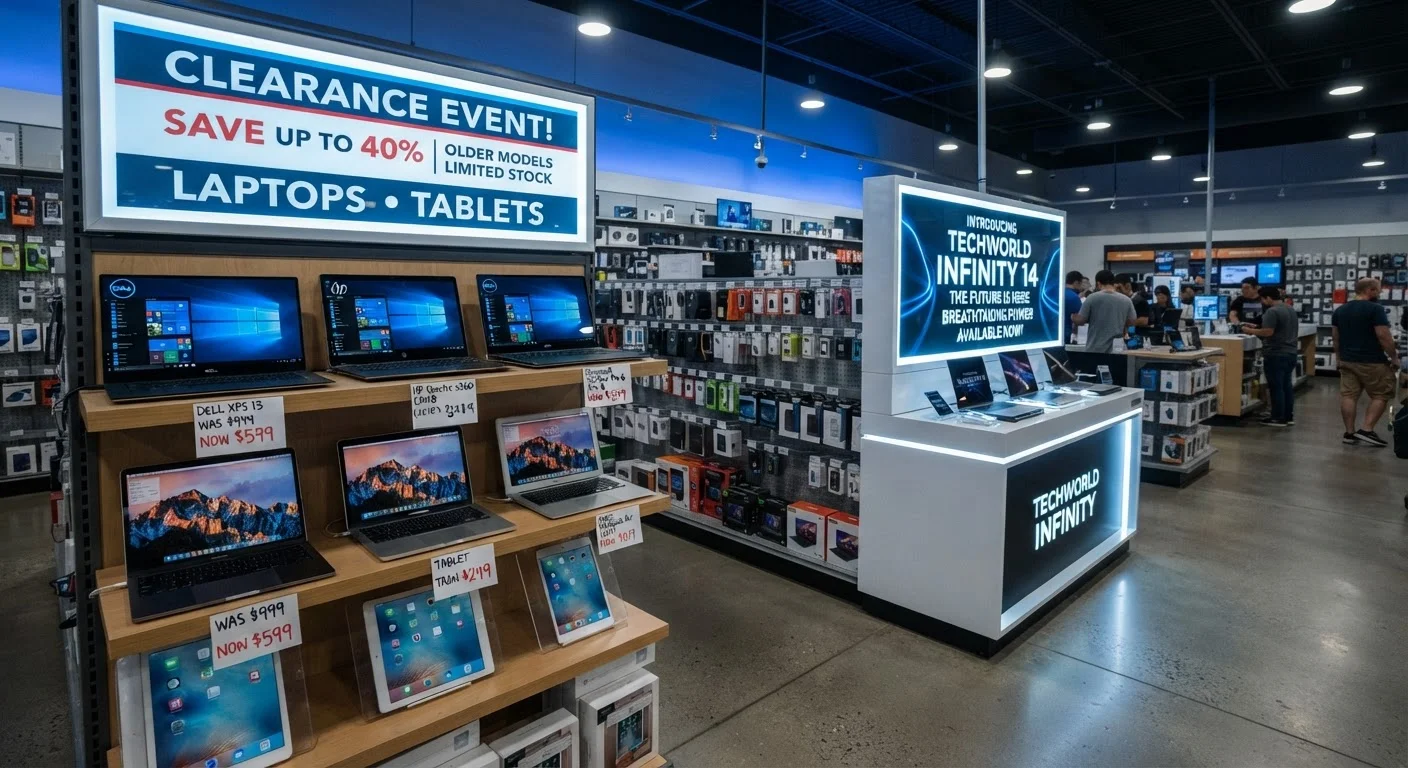
Major consumer electronics categories follow these approximate windows:
- Televisions: New models are announced at CES in January and hit shelves March-May. The prior year's lineup starts seeing meaningful markdowns in February-April. The deepest cuts on previous-year TVs typically land in September-October as retailers clear floor space for holiday inventory.
- Laptops and tablets: Back-to-school season (July-August) brings a wave of new model introductions. Prior-gen units start clearing in June-July. This is one of the best windows to buy a previous-generation laptop at 20-35% below its peak retail price.
- Smartphones: Flagship phone updates cluster in September-October. Prior-gen models drop in price almost immediately upon new model announcement - often before the new device is even available. Watch carrier and big-box retailer prices in the weeks surrounding major manufacturer announcements.
- Gaming consoles and accessories: Console generation transitions are infrequent but dramatic. Accessories, games, and peripherals for older platforms clear aggressively once a new console launches.
Clearance Tags Vary by Retailer
Not every store uses the same color-coded or percentage-based tag system. Some use date codes, others use letter-number sequences printed on the original tag. Before shopping a new store's clearance section, spend two minutes decoding their system - ask a floor associate or look up the chain's tag legend online. Getting this right unlocks the entire markdown timeline.
Online Clearance Follows a Different Clock
Most brick-and-mortar markdown cycles do not sync perfectly with the same retailer's website. Online clearance is often triggered by returns processing, warehouse overstock, or algorithmically detected slow-movers - which means you may find deeper cuts online mid-cycle or discover the physical store has already sold out of your size. Check both channels independently.
Floor Models Are Their Own Category
Floor models in electronics, appliances, and furniture operate outside the standard clearance cadence. They are priced to move when a planogram resets or a new model arrives - not on a fixed schedule. If you see a floor-model tag, that discount is unlikely to get deeper; in many stores these items are sold as-is with no further reductions.
One key discipline with electronics clearance: distinguish between a true discount and a cosmetic markdown. A 15% reduction on a current-model TV is not a clearance deal - it's promotional pricing. A 30-40% cut on a prior-year model with equivalent specs is. Price history tools like CamelCamelCamel are non-negotiable for this category; never buy based on the in-store tag alone.
Markdown Cadence
The scheduled intervals at which a retailer reduces the price of clearance inventory. Most categories follow predictable cadences tied to inventory age, shelf space pressure, or seasonal transitions.
Planogram Reset
A scheduled reorganization of store shelving or floor displays, often triggering clearance events as discontinued or excess items must be moved out to make room for new merchandise.
SKU Rationalization
The process by which a retailer trims its product assortment, discontinuing slow-moving or redundant items. Discontinued SKUs nearly always end up on clearance, sometimes at steep discounts.
Price Ladder
The sequence of markdown percentages a clearance item moves through - typically 20%, 30%, 50%, and 70% off - before the retailer liquidates or donates remaining units.
Liquidation Threshold
The point at which a retailer decides it costs more to hold remaining inventory than to sell it below cost or send it to a liquidator. Items at this stage often see 70-90% discounts.
Model Year Transition
The period when a manufacturer releases a new product generation, causing current-model inventory to be marked down at retail. Common in electronics, appliances, and automotive accessories.
Assortment Break
When a clearance item's available sizes, colors, or configurations become incomplete - reducing its sellability and often triggering deeper markdowns to move remaining units.
Evergreen SKU
A product that remains on the shelf year-round with steady demand, rarely appearing on deep clearance unless discontinued or overstocked.
Home Goods, Furniture, and Appliances: Seasonal Peaks and Floor Model Cycles
Home goods operate on two distinct clearance tracks that you should treat separately: small home goods (kitchenware, bedding, decor) and big-ticket furniture and appliances. Each follows different logic.
Small Home Goods
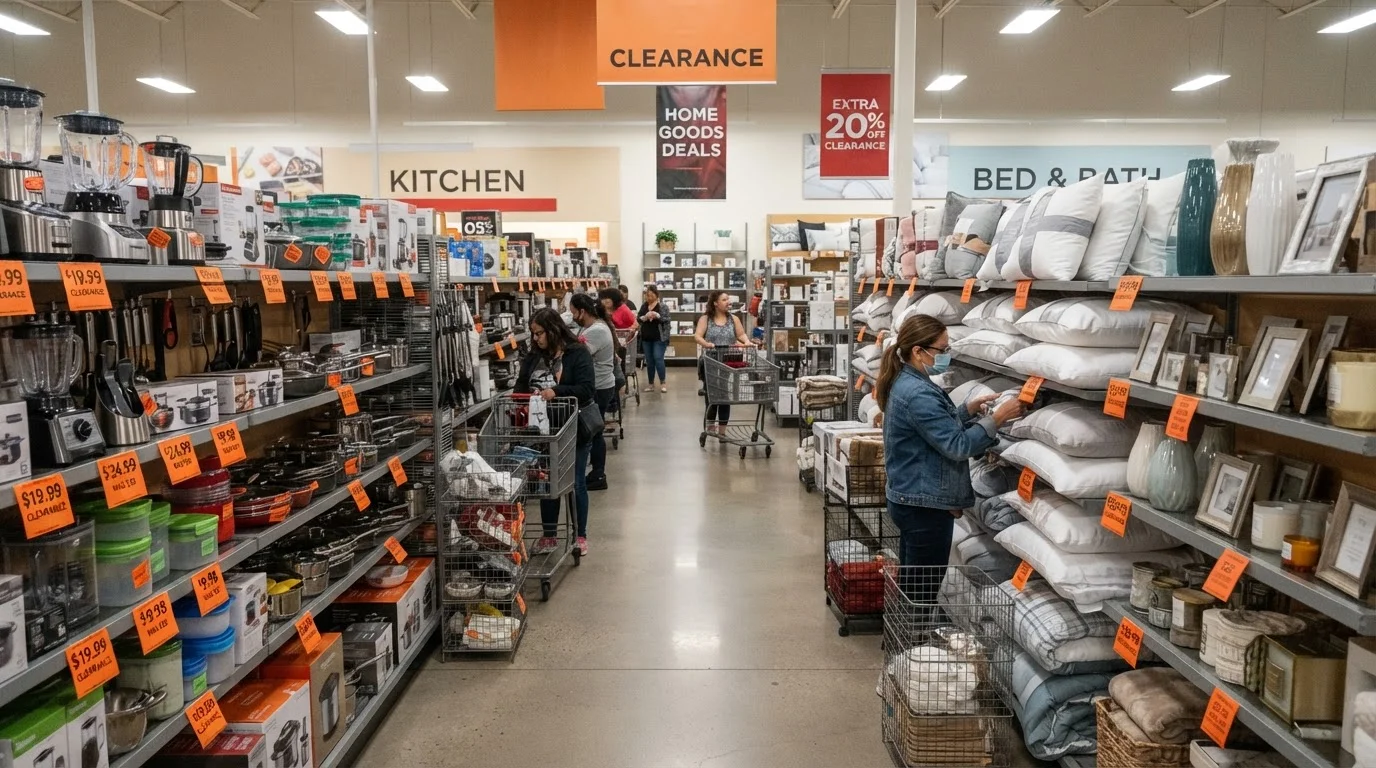
The clearance calendar for kitchenware, linens, and decor is tied to two major inventory transitions: post-holiday (January-February) and mid-summer (July-August). Retailers reset their home decor assortments in these windows, pushing prior-season merchandise to clearance at 40-60% off to make room for new planograms. January is consistently the best month of the year to buy home goods on clearance - stores are simultaneously clearing holiday overstock and transitioning to spring lines.
Specific sub-categories to target in January: holiday dinnerware, decorative throw pillows, candles and fragrance, small kitchen appliances gifted during the holidays, and storage solutions. July-August brings clearance on outdoor entertaining items, summer-weight bedding, and garden decor.
Furniture and Mattresses
Floor model rotation is the primary clearance trigger here. Most furniture retailers run planogram resets every 90-120 days, pulling floor models and discontinuing slow-selling configurations. Floor model clearance is often negotiable - the listed discount is a starting point, not a ceiling. Ask for an additional reduction citing cosmetic wear, missing hardware, or the absence of a warranty. Managers typically have authority to go 5-15% lower than the marked floor-model price.
New furniture collections launch in February and August (aligned with the High Point Market trade shows). Retiring styles hit clearance in January and July respectively. If you're flexible on style, shopping one month into these clearance windows gives you a good balance of selection and depth of discount.
Major Appliances
Appliances are most reliably discounted during two windows: holiday weekends (Memorial Day, Labor Day, Black Friday) and when new models arrive - typically February-April for most categories. The prior year's model doesn't vanish; it gets marked down 10-20% and often bundled. Off-season buying strategies apply well here - a refrigerator purchased in January versus May can carry a significant price difference for the same unit.
Groceries, Perishables, and Consumables: The Weekly Markdown Pattern
Grocery clearance operates on a completely different timescale - days and hours, not weeks and months. The fundamentals are: perishables get marked down based on sell-by proximity, and dry goods get marked down based on inventory pressure and supplier promotions.
Produce and Meat
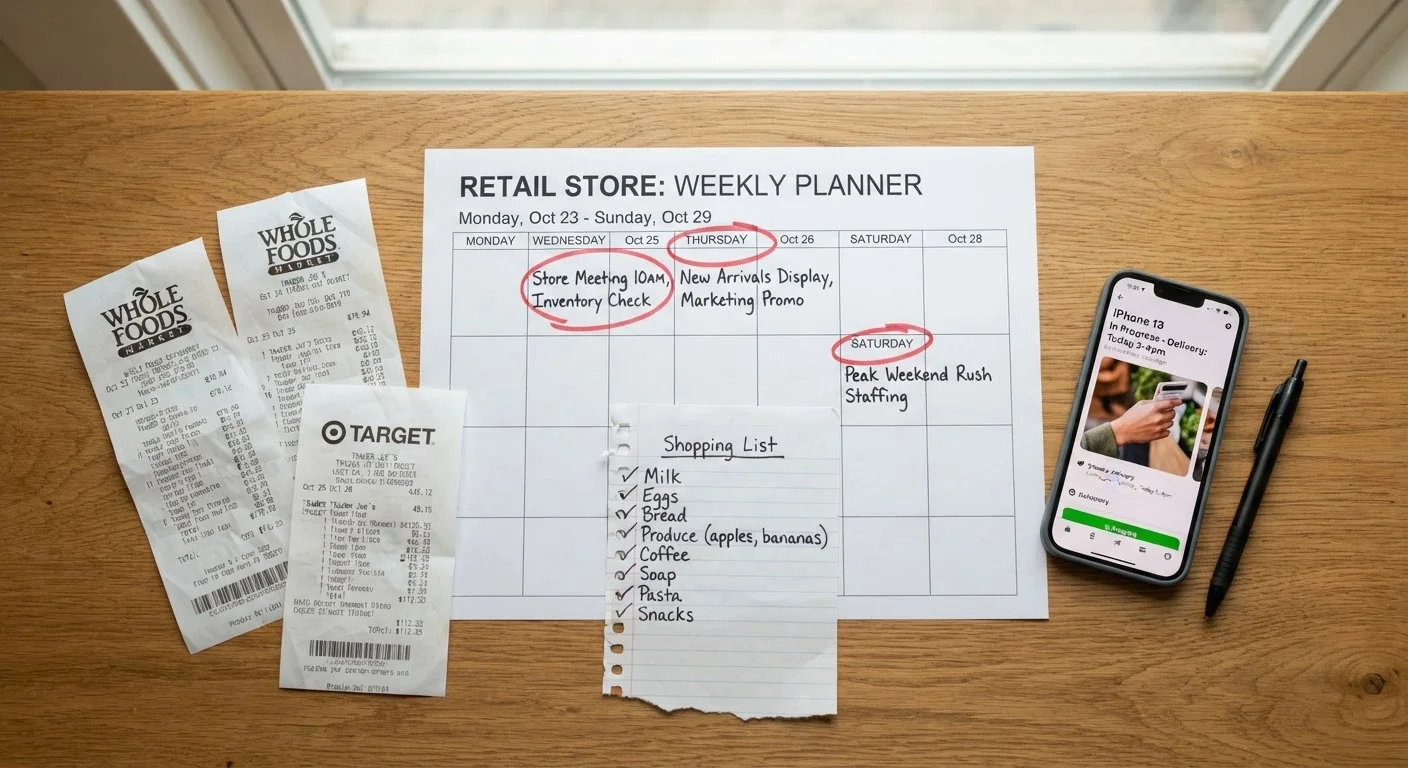
Most grocery chains mark down meat and prepared foods in the morning, typically between 7-9 AM or in the early afternoon. Items approaching their sell-by date receive yellow or orange stickers - look for 30-50% reductions on proteins in particular. The trick is timing your visit: too early in the week and stock hasn't been marked down; too late and it's already been picked over. Wednesday and Thursday mornings are the most productive windows at most chains.
Packaged and Shelf-Stable Goods
Clearance on shelf-stable items is triggered by three things: approaching (not expired) best-by dates, package redesigns that make old packaging obsolete, and overstock from promotional periods. These items often end up on a dedicated clearance shelf or end-cap, sometimes without obvious signage. Scan end-caps and the bottom shelves of heavily discounted aisles - stores place clearance where they have physical room, not necessarily where the category lives.
Health and Beauty at Grocery and Drug Chains
Product reformulations and package redesigns are clearance triggers in this sub-category. When a shampoo, skincare product, or supplement updates its formula or packaging, the old inventory goes to clearance - often at 50-70% off. If you're loyal to a specific product, reformulation clearance is one of the best opportunities to stock up legitimately cheap. Check the lot number and formulation notes before buying quantity.
Avoid the common trap of equating any discount with a good deal in consumables. See clearance myths that cost shoppers money - particularly the misconception that end-of-season timing always guarantees the deepest cuts.
Building Your Category-by-Category Clearance Calendar
The payoff of understanding these rhythms is that you can build a personal shopping calendar that positions you ahead of clearance events rather than reacting to them. Here's a practical framework:
- Identify your 3-5 high-spend categories. Don't try to optimize everything at once. Focus on the categories where you spend the most or where the savings potential is highest given your household's needs.
- Map the primary clearance windows for each. Use the cadences above as a starting point, then validate against actual store behavior over two or three cycles. Note whether your specific local retailers run earlier or later than the category average.
- Set price alerts, not reminders. Rather than reminding yourself to check a store, use a price tracker (CamelCamelCamel for Amazon products, Flipp for in-store) to alert you when a target item drops to a price you've predetermined is acceptable. This removes the emotional component of clearance shopping entirely.
- Track assortment breaks. When you see a clearance item's size or color run starting to thin, that's a signal the next markdown is coming - and a prompt to decide whether to buy now or wait and risk stockout.
- Build a substitution list. Clearance shopping requires flexibility. Know in advance which attributes of a product are non-negotiable (size, material, capacity) and which are flexible (color, brand, exact model). Shoppers with rigid requirements consistently overpay on clearance.
For a category-specific seasonal approach to clothing, the clothing sale calendar by retailer maps out which chains discount most aggressively and when - a useful complement to the category-level logic in this guide.
If you prefer a checklist-style approach to timing your end-of-season purchases, the pre-season-end clearance checklist covers the tactical steps to execute before markdown cycles close out.
And if you're exploring whether secondhand markets might complement your clearance strategy - particularly for apparel - building a wardrobe from secondhand pieces offers a strategic framework for that channel as well.
CamelCamelCamel
Free Amazon price history tracker that charts the full price timeline for any product - essential for knowing whether a clearance price is genuinely low or just marketing noise.
Flipp
Aggregates weekly store flyers and clearance ads from major retailers, letting you scan markdown activity across categories and regions without visiting each store's site separately.
Honey / PayPal Rewards
Browser extension that automatically applies coupon codes at checkout and tracks price history on select retail sites, useful for confirming that an online clearance price represents a true deal.
Retail Calendar (NRF)
The National Retail Federation publishes an annual retail calendar marking key seasonal transitions - a useful reference for predicting when category clearance windows open and close.
DealNews
Editorially curated deal alerts organized by category, with historical pricing context that helps you benchmark clearance prices against true market lows.
SlickDeals Community Forums
One of the most active deal-sharing communities online; category-specific threads often surface clearance patterns and in-store markdown schedules crowdsourced from shoppers nationwide.
The clearance rack is not random. It's a system with logic you can learn, patterns you can map, and timing you can exploit. Once you stop treating discounts as lucky finds and start treating them as predictable events, every category you buy regularly becomes an opportunity to systematically spend less.