

Key Takeaways
Summer Clearance Window
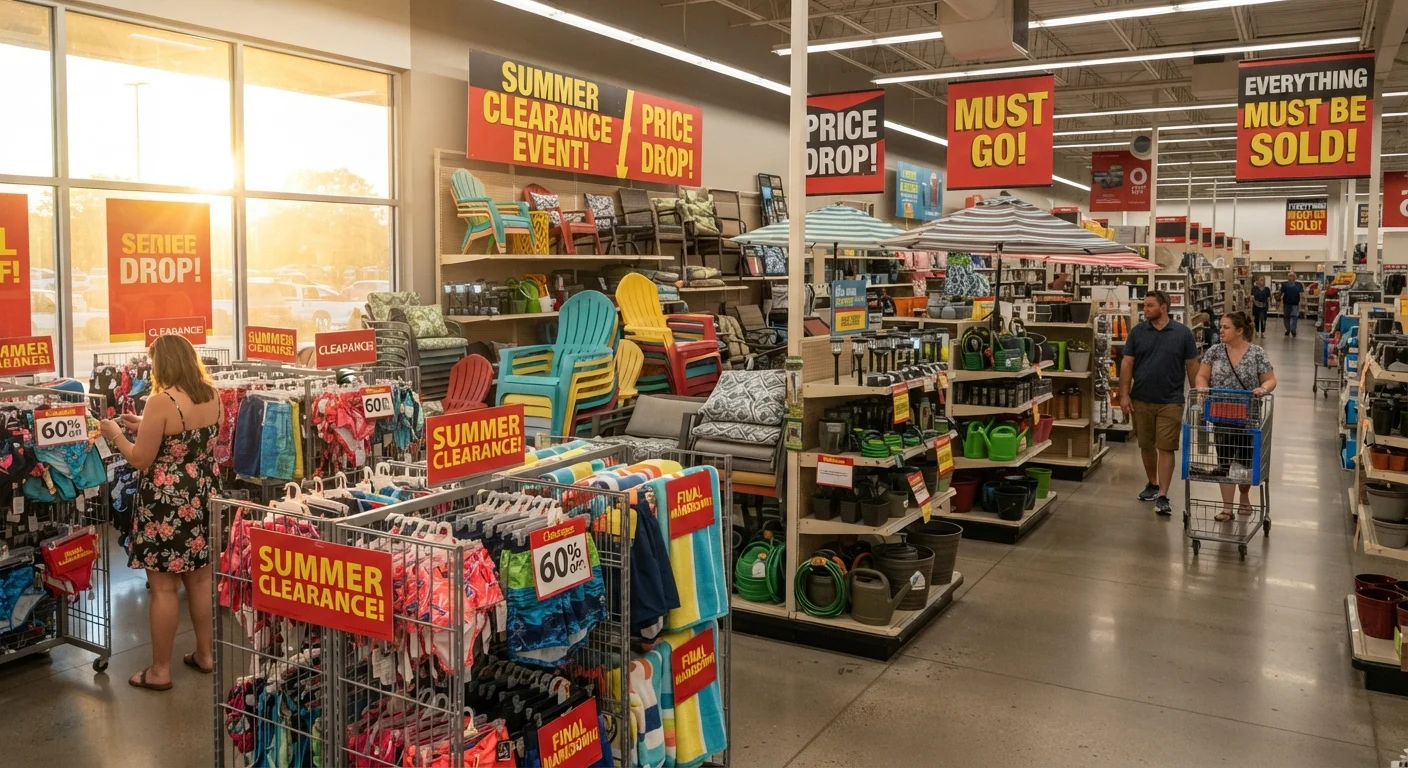
The summer clearance window is the concentrated period - typically the last two to three weeks of August - when retailers aggressively mark down summer merchandise to clear shelf and warehouse space for fall inventory. During this window, discounts are driven by inventory math, not just promotional calendars. Prices often bottom out 50-80% below their peak-season levels because carrying unsold summer stock into fall costs retailers more than selling it at a steep loss.
Retail planners call this "end-of-season inventory liquidation" - it's a structured process tied to planogram resets, not an improvised sale. The timing is predictable and repeatable, which makes it one of the few retail cycles a prepared shopper can reliably exploit.
The Retail Logic Behind the Late August Price Drop
Most shoppers treat late August clearance as a lucky accident - a bonus sale before fall kicks in. It isn't. It's one of the most predictable pricing events in retail, driven by inventory management pressure that builds throughout the summer and reaches a breaking point in the final weeks of August.
Here's the core mechanic: retailers operate on planograms - detailed floor plans that dictate exactly which products occupy which shelf space, and when those products change. Fall planograms activate in early-to-mid September at most major chains. That means every unit of summer merchandise still on the floor or in the stockroom on September 1 is a liability, not an asset. It takes up space that's already committed to fall inventory, it can't be efficiently stored for next summer at scale, and liquidating it to off-price channels (like TJX or Big Lots) returns only pennies on the dollar.
The math is simple: a patio chair that cost the retailer $80 wholesale and retailed at $200 is worth more at $90 to a consumer in late August than it is at $40 through a liquidator in October. That's why markdowns accelerate sharply in the last three weeks of August rather than tapering gradually throughout the season.
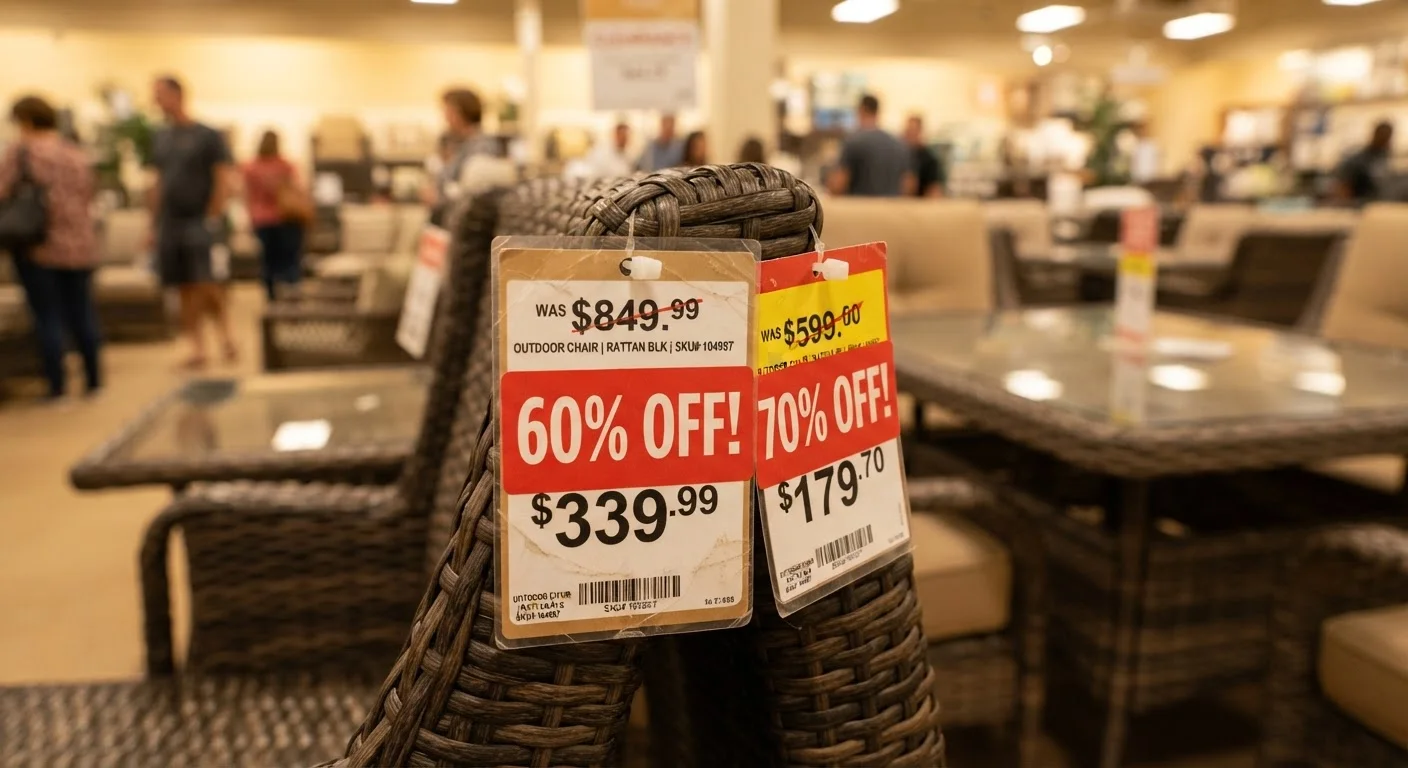
This dynamic is consistent across mass-market retailers (Target, Walmart, Home Depot, Lowe's), department stores (Macy's, Kohl's), and specialty chains (REI, Pottery Barn, West Elm). The specific timing shifts by a few days depending on the retailer's fiscal calendar, but the underlying pressure is universal. Understanding this is what separates reactive shoppers from strategic ones.
For a complementary view on how this same logic plays out at the other end of the year, see The Winter Clearance Calendar - the post-holiday version of this cycle follows nearly identical inventory mechanics.
Why "Late August" Is More Precise Than "End of Summer"
"End of summer" is vague. Late August is not. The distinction matters because arriving two weeks early means paying 20-30% more, and arriving two weeks late means the shelves are bare.
60-75%
Typical patio furniture markdown in late August
Based on observed pricing patterns at Home Depot, Lowe's, Target, and Walmart during the August 14-28 clearance window across multiple years.
2 weeks
Duration of the peak summer clearance window
The overlap period where deepest discounts and broadest selection coincide runs roughly August 14-28 at most major U.S. retailers.
80%
Max discount on summer apparel at specialty retailers
Swimwear and summer clothing at specialty chains can reach 80% off original retail in the final days of August as stores finalize seasonal floor transitions.
$0.40
Estimated liquidation return per $1 of retail value
Industry estimates suggest off-price liquidation channels return roughly 40 cents on the retail dollar - less than what retailers recover selling direct at 60-70% off.
Sep 1
Effective deadline for in-store summer clearance
Most major retailers have transitioned floor sets to fall merchandise by September 1, making late August the final reliable window for in-store summer clearance shopping.
The peak clearance window at most major U.S. retailers runs from approximately August 14 through August 28. That's a two-week corridor where the combination of deepest discounts and broadest remaining selection overlaps. Before August 14, most retailers are still running promotional sales ("Summer Sale", "End of Season Event") that look like clearance but are actually structured markdowns with a floor - prices won't go below a set point. After August 28, you're shopping remnants.
There's also a back-to-school distortion to account for. Retailers like Target and Walmart run heavy back-to-school promotions through mid-August, which can mask summer clearance activity and draw shopper attention toward school supplies rather than patio furniture. Once the back-to-school push winds down around the third week of August, summer clearance takes center stage - and that's when the most aggressive price cuts hit.
Online vs. In-Store Timing Differs
Online retailers including Amazon, Wayfair, and brand direct-to-consumer sites typically extend summer clearance 5-10 days beyond in-store timelines. This is partly because online inventory doesn't require physical shelf space and partly because digital liquidation can reach a broader buyer pool. If an in-store item is sold out, check the retailer's website before assuming the deal is gone.
Back-to-School Sales Are Not Summer Clearance
Retailers run both back-to-school promotions and summer clearance simultaneously in August, and the two are easy to conflate. Back-to-school sales are structured promotional events with managed price floors - items rarely drop below a set discount threshold. Summer clearance is true liquidation pricing where the floor drops as the season deadline approaches. Look for items explicitly tagged "clearance" rather than "sale" to identify genuine end-of-season pricing.
Online retailers follow a slightly extended timeline. Amazon, Wayfair, and direct-to-consumer brands often continue summer clearance through the first week of September, particularly for furniture and large outdoor items that are harder to sell through physical liquidation channels. If you're shopping online, you have roughly one additional week of window - but high-velocity items still sell out fast, so don't treat that extra week as breathing room on specific products you want.
To build a structured approach around these timing windows, the clearance shopping checklist is the most direct tool for staying organized across multiple retailers and categories simultaneously.
The Best Categories to Target (And a Few to Skip)
Not all summer clearance is created equal. Some categories deliver genuinely exceptional value in late August; others offer modest discounts on products that aren't worth buying in quantity. Here's how to allocate your attention.
High-Value Targets
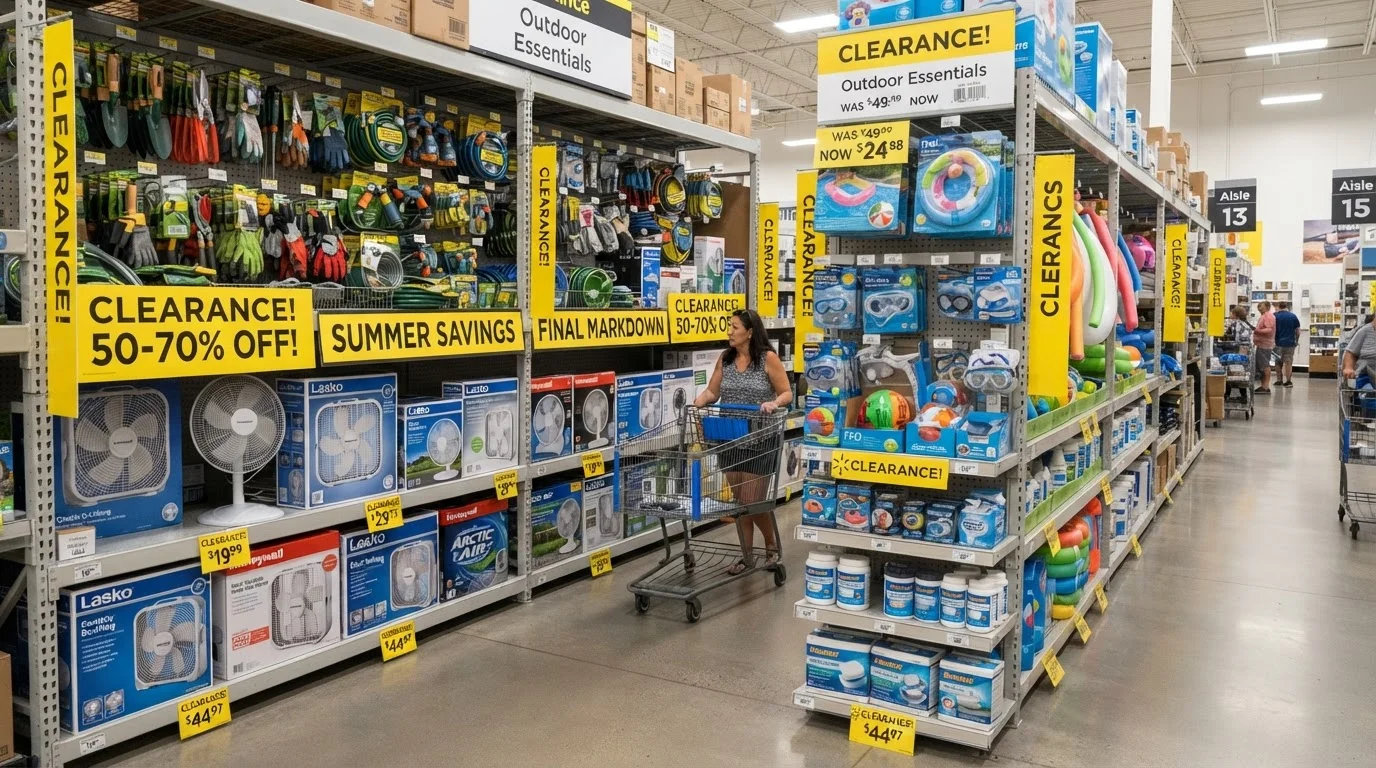
- Patio furniture: This is the flagship category for late August clearance. Retailers carry high-ticket items with significant margin, and they have zero appetite for storing bulky furniture through fall and winter. Discounts of 60-75% are common at Home Depot, Lowe's, Target, and Walmart. Buy the floor model if needed - most patio furniture is designed to be weather-resistant and handles display wear without functional compromise.
- Outdoor power equipment: Lawn mowers, pressure washers, and garden equipment follow the same inventory pressure cycle. Late August sees genuine clearance pricing, not just promotional discounts. This is one of the few categories where you can buy a high-quality item at a price that would otherwise require waiting for a Black Friday doorbuster.
- Cooling appliances: Window AC units, portable fans, and dehumidifiers move from necessity to clearance item almost overnight once temperatures drop. Late August hits that inflection point in most U.S. regions. Stock up for next year - these products don't meaningfully change year-over-year.
- Swimwear and summer apparel: The discount depth is high (60-80%) but so is the selectivity risk. If you're flexible on color and can try items on before buying, this is excellent value. Buying a swimsuit to wear next June for $12 that retailed at $60 is a straightforward win.
- Gardening supplies: Seeds, soil amendments, containers, and tools all clear hard in late August. Seeds bought now store well through winter and can be used the following spring.
Categories to Approach Carefully
- Grills: The timing is right but the competition is high. Popular grill models sell out fast once clearance pricing hits. If you don't find what you want in the first week of the window, the selection drops sharply.
- Summer electronics: Portable speakers and outdoor-rated tech sometimes see end-of-season markdowns, but electronics retailers manage pricing more carefully than general merchandise stores. Discounts are typically shallower (20-30%) and less reliable.
For a complete breakdown organized by category with specific retailer timing, see Summer Blowout Shopping: A Category-by-Category Breakdown.
How to Execute the Late August Clearance Strategy
Knowing the window exists is step one. Executing within it requires a few operational habits that separate casual browsers from shoppers who consistently land the best deals.
“Retail clearance is not charity. It's a retailer solving an inventory problem. Your job as a shopper is to be the cheapest solution to that problem at exactly the right moment.”
— Phil Lempert, Retail industry analyst and consumer trend expert
Pre-Window Preparation (Early August)
- Build your target list now. Walk the summer sections of your target stores in early August and note what's at full price. Items you'd buy at 60% off are your priority list. Don't rely on memory - photograph price tags.
- Set price alerts. For online retailers, tools like Camelcamelcamel (Amazon), Honey, or Capital One Shopping track price history and alert you when a specific product drops. Set alerts on your target items before clearance pricing hits.
- Check store apps. Target's app shows in-store clearance items with current discount percentages. Home Depot's app lets you check local store inventory. These tools let you triage before you drive.
During the Window (August 14-28)
- Shop mid-week. Tuesday through Thursday is when most clearance markdowns are processed and stocked. Weekend shoppers pick through what's left. If you can shop on a Wednesday morning, you're consistently ahead of the crowd.
- Check the clearance section and the main floor. Not all clearance items make it to the clearance section immediately. Products with remaining stock may still be on the main floor at full price while identical items on a clearance endcap are 50% off. Always check both.
- Ask about additional markdowns. In-store associates at most major retailers can pull up an item's markdown history and sometimes inform you whether a further markdown is pending. It's worth a 30-second conversation on high-ticket items.
- Stack with cashback. Late August clearance pricing stacks with cashback portals (Rakuten, TopCashback) and credit card category bonuses. A 65% clearance discount plus 5% cashback plus a 3% card bonus is a meaningfully better outcome than clearance alone. Don't leave that stack on the table.
Buy One Size Up in Apparel Clearance
When shopping summer apparel clearance in late August, you'll often find excellent selection in larger sizes that moved more slowly during the season. If fit is flexible - cover-ups, linen pants, casual shorts - buying a size up and tailoring or simply accepting a relaxed fit can open up far more options than shopping strictly to size.
Stack Cashback Portals With Clearance Pricing
Late August clearance discounts are fully stackable with cashback portals like Rakuten and TopCashback, as well as credit card category bonuses. Activate your portal before adding items to cart - a 65% clearance price combined with 5% cashback and a 2-3% card bonus compounds into meaningful additional savings. Set up portal browser extensions so you never forget to activate.
One important reality check: the clearance shopping myths article covers a critical trap many shoppers fall into - waiting for "one more markdown" that never comes. On high-demand items in limited sizes or finishes, the optimal move is to buy when you hit your target price, not to hold out for theoretical further reductions.
If you're interested in how the same inventory-driven clearance logic plays out in a different season, Winter Clearance Shopping Done Right walks through the post-holiday equivalent with the same level of tactical detail.
The Inventory Pressure That Makes This Window Reliable
One of the most useful things to understand about late August clearance is that it will happen every year, on nearly the same schedule, for structural reasons that aren't going away. This isn't a promotional strategy retailers can easily opt out of.
The retail supply chain operates on lead times of 6-12 months. Fall merchandise is ordered in the spring, manufactured overseas, shipped, and delivered to distribution centers in July and August. It has to hit store shelves in September regardless of what's still sitting there from summer. There is no mechanism to pause fall inventory delivery because summer inventory is moving slowly. The floor space has to clear.
This makes late August clearance one of the most reliable annual shopping opportunities in consumer retail - more predictable than Black Friday (which has become increasingly diluted by "pre-Black Friday" sales throughout November) and more consistent than Amazon Prime Day (which moves dates and varies significantly in discount depth year-over-year).
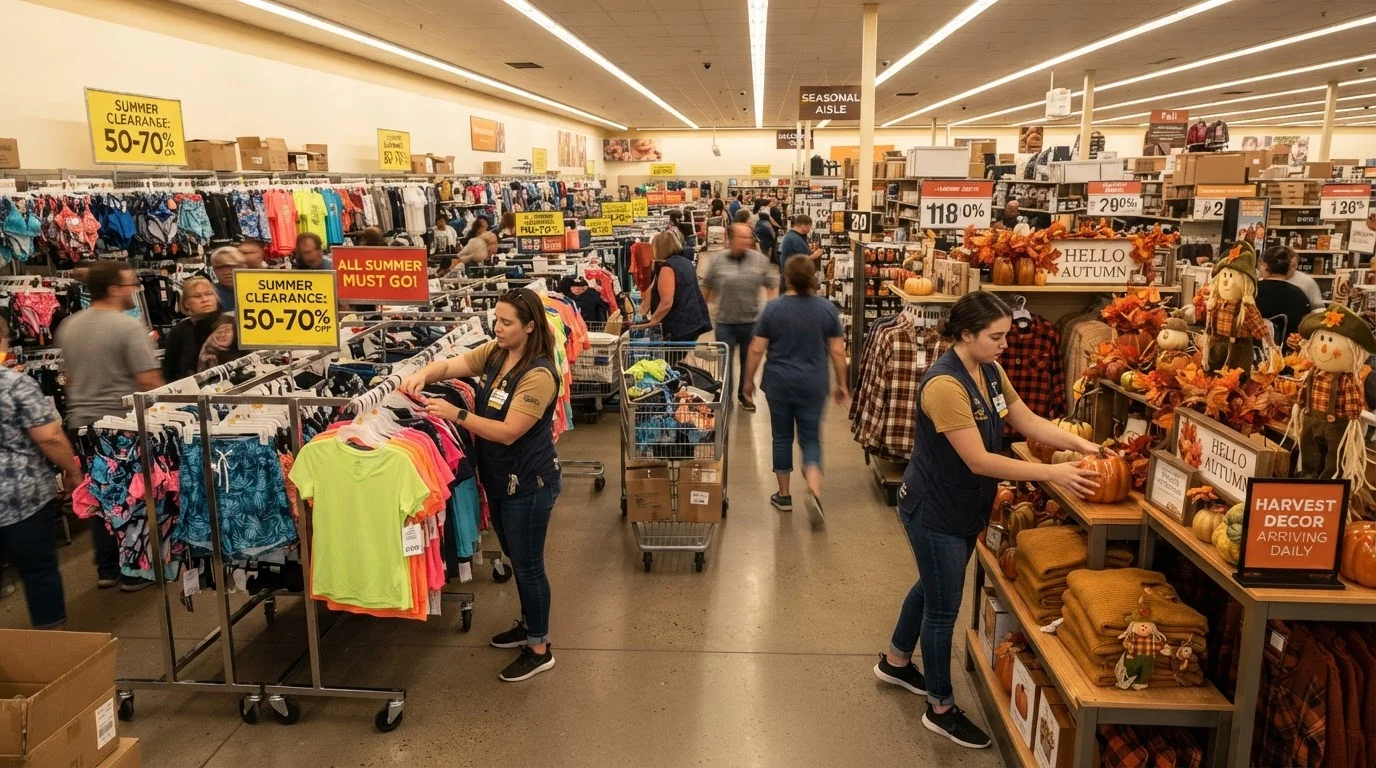
The implication for shoppers: if you missed the window this year, it will return next August within roughly the same two-week corridor. For non-urgent purchases - a replacement patio set, a backup window AC unit, garden supplies for next season - you can plan 12 months ahead and hit this window intentionally rather than stumbling across it.
This contrasts with off-season deal strategies, where the timing is more diffuse. The late August clearance window is one of the sharpest, most time-compressed discount events in the off-season calendar - which is exactly what makes it worth building a specific strategy around.