
Foundation Finish Types: Matte, Dewy, Satin, and Which Suits Your Skin
The finish of a foundation affects how your skin looks all day. Here's how each type behaves and which tends to work best for different skin types.
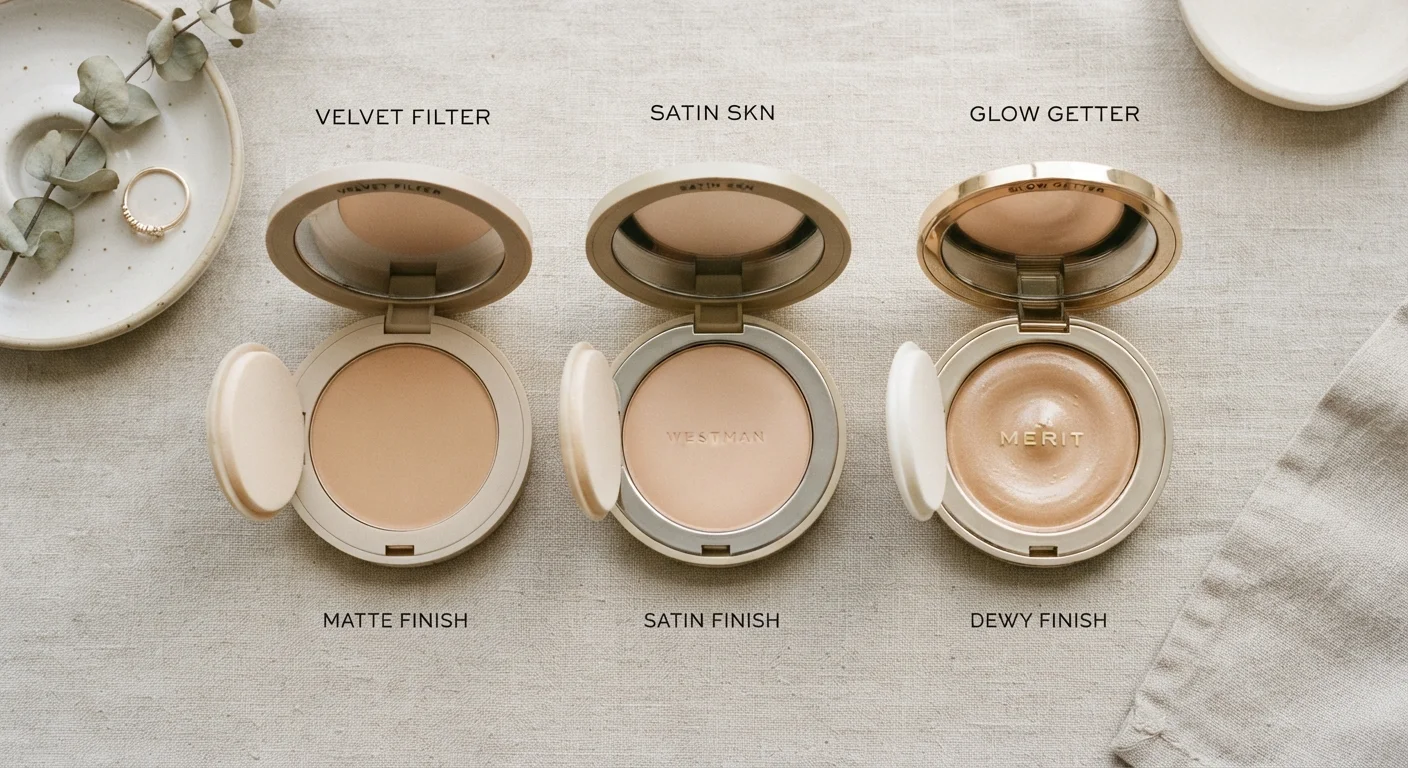
Photo: SaverSteals.com editorial
—— In This Article
What Foundation Finish Actually Means
Foundation finish describes the sheen — or lack of it — that a formula leaves on your skin once it's set. It's separate from coverage (how much it conceals) and separate from formula type (liquid, powder, stick). Two foundations can offer the same coverage level but look completely different depending on their finish.
Finish matters because it affects how light bounces off your skin throughout the day. A matte finish absorbs light; a dewy finish reflects it; satin lands somewhere between. Knowing the difference saves you from buying a formula that looks great in the tube but works against your skin type by noon.
| Finish types | Matte, dewy, satin (natural/soft-glow) |
| Best for oily skin | Matte or satin finish |
| Best for dry skin | Dewy or satin finish |
| Most versatile finish | Satin — works across most skin types |
| Key matte ingredient types | Silica, kaolin clay, talc |
| Finish affected by | Humidity, body heat, skincare base, and natural sebum |
Before diving in, it helps to know your skin type. If you're unsure, our guide on decoding oily, dry, combination, and sensitive skin is a useful starting point.
The Three Main Finishes — Defined
Matte finish
A foundation finish that absorbs light and minimizes the appearance of shine. Typically contains oil-absorbing powders such as silica or kaolin clay.
Dewy finish
A foundation finish that reflects light and gives skin a luminous, hydrated appearance. Often formulated with moisturizing ingredients or fine reflective particles.
Satin finish
A mid-range finish between matte and dewy — offering subtle luminosity without visible shine. Also labeled 'natural' or 'soft-glow' by some brands.
Sebum
The natural oil produced by skin's sebaceous glands. Excess sebum can break down foundation formulas and increase shine throughout the day.
Non-comedogenic
A term used on product labels to indicate a formula is designed not to clog pores. Relevant for acne-prone or sensitive skin types.
Complexion zoning
A technique of applying different foundation formulas or finishes to different areas of the face to address varying skin needs across zones.
Matte
Matte foundations contain oil-absorbing ingredients — often silica, kaolin clay, or talc — that minimize shine and create a flat, even surface. They tend to photograph well and last longer on oilier skin because they resist the sebum that breaks down other formulas. The trade-off: on dry or mature skin, they can look powdery or settle into fine lines.
Dewy
Dewy foundations are formulated to impart luminosity, often through reflective particles or a higher moisturizing base. They mimic the look of healthy, hydrated skin. On dry skin, this finish looks radiant. On oily skin, it can tip into greasy by mid-afternoon — though a light setting powder over the T-zone can help manage that.
Satin
Satin (sometimes labeled natural or soft-glow) is the middle ground. It offers a low-level luminosity without a full reflective sheen — giving skin a polished, lived-in appearance. It's often described as the most universally flattering finish because it doesn't emphasize dryness or amplify oiliness.
Labels Aren't Always Consistent
Terms like 'natural,' 'luminous,' 'radiant,' and 'soft-glow' are all marketing language for roughly what the industry calls satin or low-dewy. There's no regulated standard for what any finish label must mean. Reading user reviews and checking ingredient lists for oil-absorbing powders (silica, clay) versus moisturizing agents gives a clearer picture than the name alone.
Matching Finish to Skin Type
There are no absolute rules here — personal preference, climate, and your skincare base all play a role. That said, general patterns are worth knowing:
- Oily skin tends to do well with matte or satin finishes. The oil-absorbing ingredients in matte formulas help extend wear. Satin finishes work if shine isn't a major concern.
- Dry skin typically looks better with dewy or satin finishes. Matte formulas can cling to dry patches and emphasize texture.
- Combination skin often benefits from a satin formula applied all over, with a light matte powder pressed only into the T-zone. Some people use a dewy formula on dry areas and a matte formula on oily zones — a technique called complexion zoning.
- Normal skin has the most flexibility. All three finishes can work; the choice comes down to the look you want.
- Sensitive skin should focus first on formula ingredients rather than finish — fragrance-free, non-comedogenic formulas are generally recommended regardless of finish type.
Your skincare prep also affects finish. A silicone-based primer tends to extend matte wear; a hydrating primer enhances dewy formulas. Our walkthrough of the everyday skincare routine explains how base layers affect what goes on top.
3+
Core finish categories in most foundation lines
Most mainstream foundation ranges include at least matte, satin, and dewy variants — often within the same formula family.
~2–4 hrs
Typical time before finish visibly shifts on oily skin
Dermatologist guidance generally notes that sebum production accelerates after a few hours, affecting how any finish wears by midday.
A Few Things Worth Knowing Before You Shop
Finish can shift after purchase — that's not a defect, it's chemistry. Humidity, body temperature, and your skin's natural oils interact with the formula throughout the day. Testing a foundation at the counter (or at home with a sample) after a few hours gives a much more accurate picture than swatching on your hand in a store.
Price point doesn't determine finish quality. As explored in why drugstore and department store formulas are closer than you think, the ingredients driving finish performance appear across price ranges. A matte formula at a lower price point can outperform a pricier option if the formulation suits your skin.
Finally, foundation finish interacts with your undertone matching. A dewy formula with the wrong undertone can look muddy rather than radiant. If you haven't worked through undertone basics yet, understanding undertones and why some colors click applies directly to foundation selection too.
This article is for informational and educational purposes only. Results vary by individual skin type, formula, and application method.

Style Editorial Team
Style Editorial Team is the collective byline for our editorial team and contributor network. Articles published under this byline or an editorial pen name are researched, written, and reviewed according to our editorial standards for clarity, consistency, and independence before publication.
View author profile