
Concealer Pitfalls That Make Skin Look Worse, Not Better
From wrong undertone to over-application, small concealer errors are easy to make. Here's what goes wrong and how to correct it.
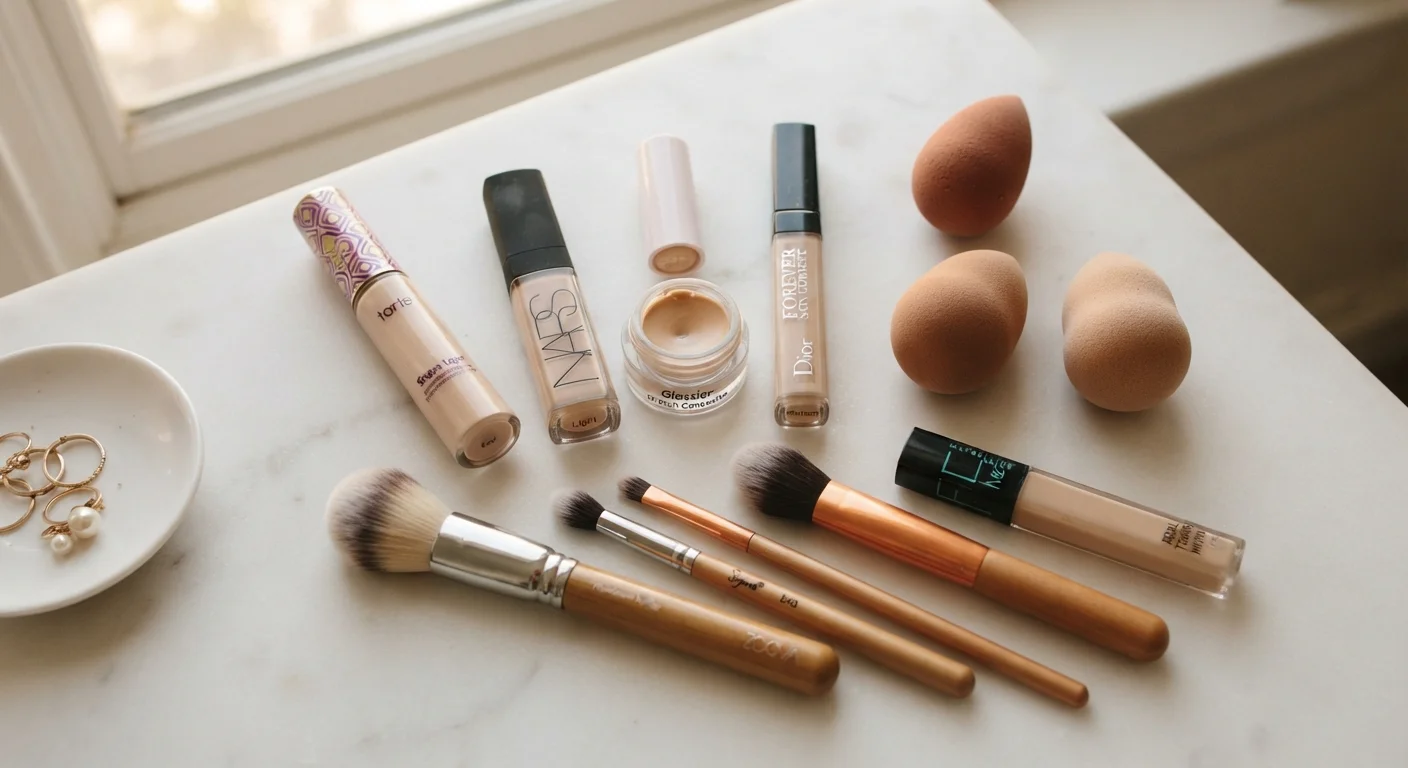
Photo: SaverSteals.com editorial
—— In This Article
Key Takeaways
- Using the wrong undertone is the most common reason concealer looks unnatural on skin.
- Applying concealer before moisturizer leads to patchiness and emphasizes dry texture.
- Too much product in one spot creates creasing, caking, and draws more attention to flaws.
- Setting technique matters — incorrect setting can make concealer look chalky or disappear too fast.
- Color-correcting before concealing gives better coverage with less product overall.
Why Concealer Goes Wrong
Concealer is one of the most versatile tools in any makeup kit — and also one of the easiest to misuse. When it works, it quietly evens things out without anyone knowing it's there. When it doesn't, it can accentuate the very spots you wanted to minimize. The good news: the mistakes are predictable, and fixing them doesn't require expensive products or professional skills.
Most concealer problems trace back to just a few root causes — wrong product selection, skipped prep, or heavy-handed application. Once you know what to look for, you'll be able to troubleshoot your own routine in real time.
Undertone Mismatch Is a Real Problem
Many people shop for concealer by matching surface shade alone, completely overlooking undertone. A concealer that looks identical in the bottle can read pink, ashy, or orange on skin depending on your undertone. If your concealer consistently looks off or draws the eye rather than blending away, undertone — not shade depth — is usually the culprit. Understanding your undertone is foundational; our guide on undertones and color can help.
The Most Common Concealer Mistakes (And How to Fix Them)
The mistakes below cover the full arc of a concealer routine — from product selection and skin prep all the way through application and setting. Each one is easy to correct once you understand why it happens.
Choosing the wrong undertone for your skin.
Why it happens: Most people focus on matching the depth (light, medium, dark) of a concealer and ignore whether the formula reads pink, yellow, or neutral — a mismatch that becomes obvious under natural light.
Skipping moisturizer and primer before applying concealer.
Why it happens: When you're in a hurry, prep steps feel optional — but concealer applied directly to dry or unprimed skin clings to texture and flakes throughout the day.
Applying too much product in a single layer.
Why it happens: When coverage feels insufficient, the instinct is to add more — but heavy buildup slides into fine lines, creases under the eyes, and actually highlights the area you wanted to hide.
Using concealer to cover redness without color-correcting first.
Why it happens: Reaching for concealer as a one-stop solution is intuitive — but very red spots, deep circles, or hyperpigmentation often bleed through, causing you to pile on more product.
Setting concealer with too much powder or the wrong formula.
Why it happens: Over-powdering — especially under the eyes — creates a dry, cakey finish and exaggerates fine lines. Many people also use the same setting powder for the entire face without adjusting application for delicate areas.
70%
of makeup wearers report concealer as their most-used product
Industry surveys consistently rank concealer among the top two or three makeup products used daily by American consumers.
3–5 taps
Ideal application method for under-eye concealer
Makeup educators widely recommend tapping — not swiping — to avoid pulling thin skin and disrupting product placement.
Once you've refined your concealer technique, it's worth thinking about what comes after: removing makeup properly is just as important as applying it well, particularly for preventing congestion around the eye and chin area where concealer tends to settle.
And if you're curious whether your daily SPF routine interacts with your base makeup, check out our breakdown of common sunscreen myths — including whether SPF in foundation actually counts as sun protection.
A Note on Skin Prep and Product Order
Even a perfectly matched concealer in the right shade will underperform on unprepared skin. Hydration is the foundation — literally. Dry patches cause concealer to sit on top of skin rather than blend into it, creating a texture-forward finish that reads as cakey rather than fresh.
Don't Skip Sunscreen Under Your Makeup
Many people assume the SPF in their foundation or concealer provides adequate sun protection, but coverage from makeup SPF is rarely applied thickly or evenly enough to deliver the labeled protection. Apply a dedicated broad-spectrum sunscreen before your base products. For more detail, see our piece on sunscreen myths that dermatologists want cleared up.
The general order that tends to work well: moisturizer, then sunscreen if worn, then primer if desired, then foundation if you use it, then concealer as a targeted step. Setting with powder completes the look. Adjusting product order alone can dramatically change how your concealer performs without changing a single product in your bag.

Style Editorial Team
Style Editorial Team is the collective byline for our editorial team and contributor network. Articles published under this byline or an editorial pen name are researched, written, and reviewed according to our editorial standards for clarity, consistency, and independence before publication.
View author profile