
Chemical Exfoliants vs. Physical Scrubs: What's Actually Happening to Your Skin
AHAs, BHAs, and sugar scrubs all promise smoother skin — but they work very differently. Here's what sets them apart.
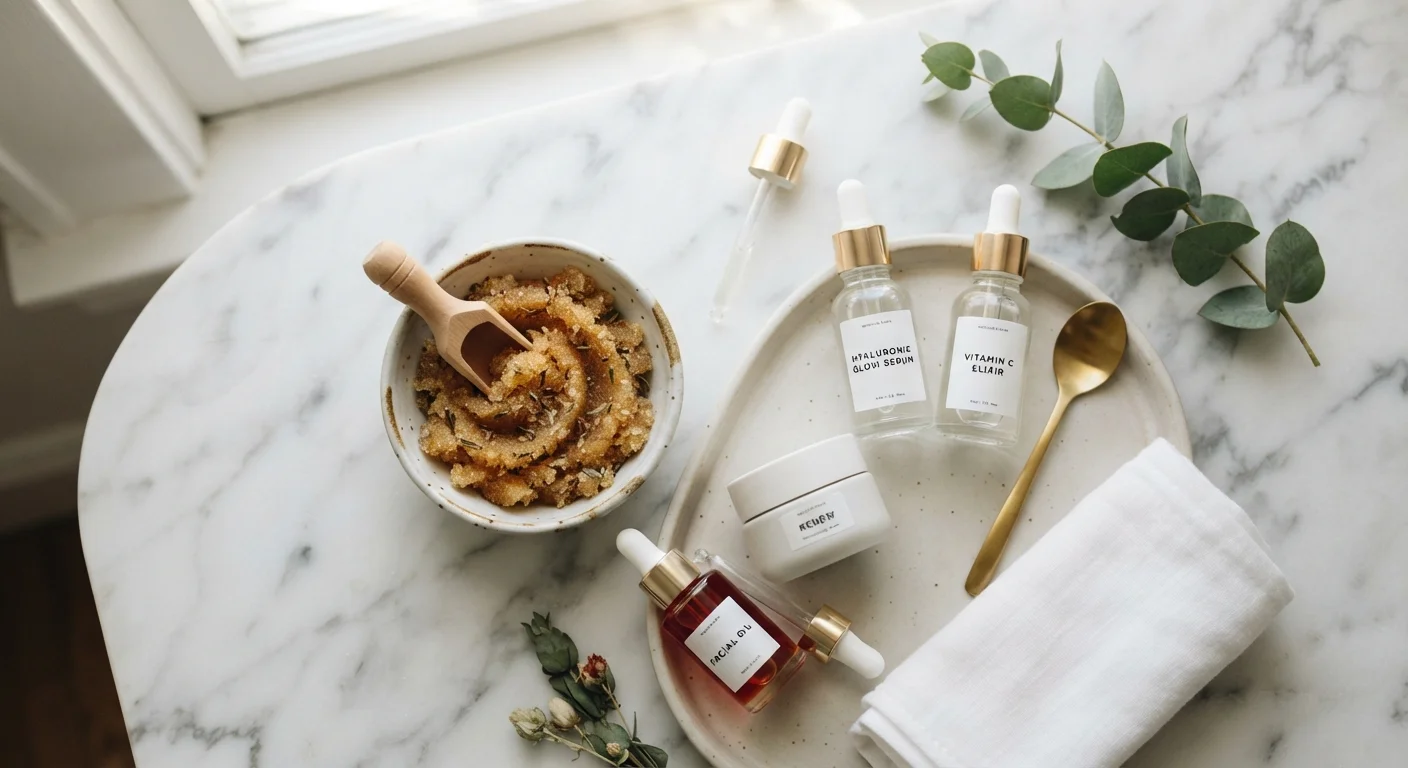
Photo: SaverSteals.com editorial
—— In This Article
Key Takeaways
- Chemical exfoliants dissolve the bonds between dead skin cells using acids or enzymes; physical scrubs remove them through manual abrasion.
- AHAs like glycolic acid work on the skin's surface, while BHAs like salicylic acid penetrate into pores — making them useful for different concerns.
- Physical scrubs carry a higher risk of microtears and irritation, especially with harsh particles or heavy pressure.
- Neither method is universally superior — the right choice depends on your skin type, concerns, and how your skin responds.
- Over-exfoliating with either type can damage your skin barrier, so frequency matters as much as method.
Two Very Different Approaches to the Same Goal
Exfoliation — removing dead skin cells to reveal fresher skin underneath — sounds straightforward. But how that removal happens is where chemical exfoliants and physical scrubs part ways dramatically. Understanding the mechanism isn't just nerdy skincare trivia; it directly affects which products will work for your skin and which might do more harm than good.
Before diving in, it's worth knowing your baseline. If you're not sure whether your skin is oily, dry, or somewhere in between, understanding your skin type is a helpful first step before committing to any exfoliation method.
| Criterion | Chemical Exfoliants | Physical Scrubs |
|---|---|---|
| Mechanism | Dissolves cell bonds chemically | Removes cells through abrasion |
| Pore penetration | BHAs penetrate pores; AHAs surface-level | Surface only — cannot enter pores |
| Best skin types | Oily, acne-prone, uneven tone, sensitive | Normal, less sensitive; better for body |
| Risk of irritation | Low to moderate if used correctly | Moderate to high with harsh particles |
| Results timeline | Gradual improvement over weeks | Immediate smoothness after use |
| Frequency (face) | Typically 2–3x per week | 1–2x per week max recommended |
| Common ingredients | Glycolic acid, lactic acid, salicylic acid | Sugar, salt, pumice, ground rice |
How Chemical Exfoliants Actually Work
Chemical exfoliants don't scrub — they dissolve. They work by loosening the bonds (called desmosomes) that hold dead skin cells together on the surface, allowing those cells to shed more efficiently. The two most common categories are AHAs (alpha hydroxy acids) and BHAs (beta hydroxy acids).
- AHAs — including glycolic acid (derived from sugarcane) and lactic acid (derived from milk) — are water-soluble and work primarily on the skin's outer surface. They're commonly associated with improving texture, dullness, and mild hyperpigmentation.
- BHAs — salicylic acid being the most recognizable — are oil-soluble. That means they can penetrate through sebum into the pore lining, making them particularly useful for oily and acne-prone skin.
- Enzymes (from papaya or pineapple, for example) are a gentler subcategory that digest dead cell proteins without acids, often favored for sensitive skin types.
Because chemical exfoliants work invisibly and gradually, some people assume they're not doing anything. But consistency matters more than intensity here — and so does not stacking them carelessly. For guidance on what plays well together, see our overview on skincare ingredient layering.
2–10%
Typical AHA concentration in OTC exfoliants
Most over-the-counter chemical exfoliants contain AHA concentrations between 2% and 10%; higher concentrations are generally reserved for professional treatments.
0.5–2%
Effective BHA (salicylic acid) range
Dermatologists commonly note that salicylic acid is effective for acne and oiliness at concentrations between 0.5% and 2% in leave-on formulas.
2015
Year synthetic microbeads banned in U.S. rinse-off products
The Microbead-Free Waters Act of 2015 phased out plastic microbeads from rinse-off cosmetics and personal care products sold in the United States.
What Physical Scrubs Are Really Doing
Physical scrubs remove dead skin cells through mechanical action — you're literally rubbing them away. The exfoliating agents can range from sugar and salt to ground walnut shell, pumice, or synthetic microbeads (which are now banned in rinse-off products in the U.S. under the Microbead-Free Waters Act of 2015).
The appeal is immediate and tactile: skin feels smoother the moment you rinse. That sensory payoff is real. The concern, particularly for facial skin, is that abrasive particles — especially irregular-shaped ones — can create tiny tears in the skin barrier if pressure is applied too firmly or products are used too frequently. Smoother particles like round sugar crystals are generally considered less abrasive than jagged options like crushed walnut shells.
Physical scrubs also can't penetrate pores, so they won't address the congestion that causes blackheads or acne at a structural level. They work best on areas with more resilient skin — like elbows, knees, and the body in general — where a thorough physical slough genuinely helps.
Price Doesn't Predict Gentleness
A higher price tag on a physical scrub doesn't guarantee softer particles or a safer formula. The key variables are particle shape, particle size, and how the product is used — not the brand or cost. For more on how formulation quality actually breaks down across price points, see our piece on drugstore vs. department store formulas.
The Common Ground: Frequency and Barrier Health
Here's what both camps share: over-exfoliating is a real and common problem. Signs that you've overdone it include persistent redness, tightness, increased breakouts, or skin that feels raw or stings with gentle products. These are signals that your skin barrier — the protective outer layer — has been compromised.
General guidance from dermatologists typically suggests exfoliating one to three times per week for most skin types, but individual tolerance varies widely. If you're new to either method, starting slow is always the smarter approach. And if you're integrating a new exfoliant into an existing routine, it's worth doing a quick self-audit first — patch testing and checking for sensitivities before committing to regular use.
It's also worth noting that regardless of which method you use, clean skin is a prerequisite. Exfoliating over makeup residue reduces effectiveness and can cause irritation. Our guide on what cleansing actually needs to accomplish covers how to set up your skin properly beforehand.
This article is for general informational and educational purposes only. It is not a substitute for personalized advice from a licensed dermatologist or skincare professional. If you experience skin reactions, persistent irritation, or have a diagnosed skin condition, consult a qualified healthcare provider before changing your routine.

Style Editorial Team
Style Editorial Team is the collective byline for our editorial team and contributor network. Articles published under this byline or an editorial pen name are researched, written, and reviewed according to our editorial standards for clarity, consistency, and independence before publication.
View author profile