

Key Takeaways
Why Most Black Friday Lists Fail Before the Sale Starts
Most shoppers treat their Black Friday list as a loose collection of things they might buy if the price looks right. That's not a list - it's a browsing prompt. And browsing under artificial urgency, flashing "limited time" banners, and countdown timers is exactly the environment retailers design to maximize spending, not savings.
The problem isn't that people buy the wrong things on Black Friday. It's that they make the buying decision during the sale instead of before it. By the time you're looking at a product on a Black Friday landing page, you're already past the point where rational price evaluation happens naturally. Scarcity cues and social proof ("847 people viewing this item") have already shifted your mental accounting.
A functional Black Friday list solves this by front-loading every decision that would otherwise get made under pressure. Your list tells you exactly what to buy, at what price, from which retailer, and when to walk away. Sale day becomes execution, not deliberation.
This is also why the list-building process belongs in the pre-sale preparation phase - ideally two to three weeks before the event, when prices are stable and you can research without any urgency in the air. If you're reading this the night before Black Friday, some of these steps will need to be compressed, but the core discipline still applies.
One more thing worth naming upfront: Black Friday is genuinely good for some purchases and genuinely mediocre for others. Electronics, small appliances, bedding, and toys historically see meaningful discounts. Clothing, jewelry, and grocery items rarely do. Knowing your category matters. For a clear-eyed look at which sale events suit which product types, winter clearance strategy is worth consulting - some items are better left for post-holiday markdowns than chased on Black Friday at half-hearted discounts.
What you will need
Here are the tools you'll need to build your list effectively:
CamelCamelCamel
Tracks Amazon product price history so you can confirm whether a Black Friday price is a genuine discount or a manufactured markdown.
Honey / PayPal Honey
Browser extension that surfaces price history and automatically tests coupon codes at checkout across major retailers.
Google Shopping
Compares current prices for a specific product model across multiple retailers in one search, useful for establishing price baselines.
Rakuten or TopCashback
Cashback portals that add a percentage return on purchases made through their retailer links, stackable with Black Friday sale prices.
Google Sheets or Notion
Organizes your list by tier, retailer, target price, and backup source - far more flexible than a handwritten or in-app wishlist.
Retailer Email Subscriptions
Many early-access Black Friday deals are sent exclusively to email subscribers days before public announcements - worth subscribing early.
Fake Discounts Are the Biggest Black Friday Trap
Many retailers artificially inflate 'original' prices in the weeks before Black Friday, making a 40% discount look dramatic when the real markdown is closer to 10-15%. Always verify a price's history using a tool like CamelCamelCamel (for Amazon) or Honey before adding an item to your confirmed list. A deal that can't survive a price-history check is not a deal worth chasing.
Never Shop Without a Hard Budget Cap Per Item
Deciding your maximum spend for each item before the sale is non-negotiable. The urgency and scarcity cues built into Black Friday promotions - countdown timers, 'only 3 left' warnings - are engineered to override rational decision-making. If you haven't committed to a ceiling price in advance, the heat of the moment will move that ceiling for you.
How to Execute Your List on Sale Day Without Derailing It
The list only works if you enforce it under fire. Sale day introduces a set of psychological pressures that the research phase insulates you against - but only if you've committed to the rules in advance.
Start with needs, not sales announcements
Before you look at a single Black Friday ad or deal aggregator, write down everything you genuinely need or have committed to buying - appliances on their last legs, specific gifts you've already promised, a laptop upgrade you've been putting off, or seasonal gear you'll actually use. This raw list is your anchor.
The critical discipline here is sequence: needs first, deals second. If you start by browsing "what's on sale," your list will fill up with things that seemed compelling under promotional framing but that you never wanted before you saw the markdown. That's the retail trap in its purest form.
Write down each item in plain language - not brand or model yet. "65-inch 4K TV for the living room" rather than a specific SKU. You'll narrow to models in the next step.
Research and select specific models
Now move from generic item descriptions to specific makes and models. Use review sources you trust - Wirecutter, Consumer Reports, Reddit's relevant subreddits, YouTube review channels - to narrow each category to two or three finalist models. Don't try to decide between dozens; three finalists per item is enough to compare pricing without decision fatigue.
Record the model name, current market price from Google Shopping, and any relevant specs that matter to you. At this stage you're building the evidence base that will let you recognize a real deal instantly on sale day.
[in_content_images:0]For tech products especially, confirm the model hasn't been superseded by a newer version. A 15% discount on last year's model is less appealing if the current generation is available at a modest premium - and that nuance rarely appears in a retailer's Black Friday ad copy.
Establish honest price baselines with history tools
This is the step most shoppers skip - and it's the one that separates buyers who actually save money from buyers who feel like they saved money. Before you can judge whether a Black Friday price is good, you need to know what the item normally costs.
For every item on your list, run the product through CamelCamelCamel (Amazon), Honey's price history graph, or a Google Shopping price-trend view. Screenshot or note the following:
- The average price over the past 90 days
- The lowest recorded price in the past 12 months
- Whether there was a price spike in October or early November (a common inflation tactic before Black Friday)
If the Black Friday "sale" price matches or beats the 90-day average, it's a real deal. If it's only better than an artificially inflated pre-sale price, you're not actually saving anything meaningful. Black Friday myths that cost shoppers real money covers this inflation tactic in detail - worth a read before you finalize any item on your list.
Tier your list by priority
Not everything on your list deserves equal urgency or spend. Divide your confirmed items into three tiers before sale day arrives:
- Tier 1 - Must Buy
- Items you need regardless of discount depth. You'll buy these even at a modest 20% off if that's the best price available.
- Tier 2 - Buy at Target Price Only
- Items you want, but only if the price hits a specific threshold you've set in advance. If the deal doesn't materialize, you skip it.
- Tier 3 - Gifts or Opportunistic
- Nice-to-haves or speculative gift ideas. You buy only if the price is exceptional and budget headroom remains after Tiers 1 and 2.
Tiering removes the in-the-moment judgment calls that retailers exploit. When you're staring at a countdown timer, you shouldn't be deciding whether something belongs on your list - that decision should already be made.
Assign a retailer and a backup retailer to each item
For each item, identify which retailer is most likely to offer the best price based on their historical Black Friday patterns and early-release ad scans. Then assign a backup retailer in case your primary is sold out or runs a weaker discount than expected.
This matters more than most shoppers realize. If you show up to checkout and your item is out of stock with no backup plan, you're vulnerable to substituting a worse deal out of frustration - or paying a premium elsewhere because you didn't think it through in advance.
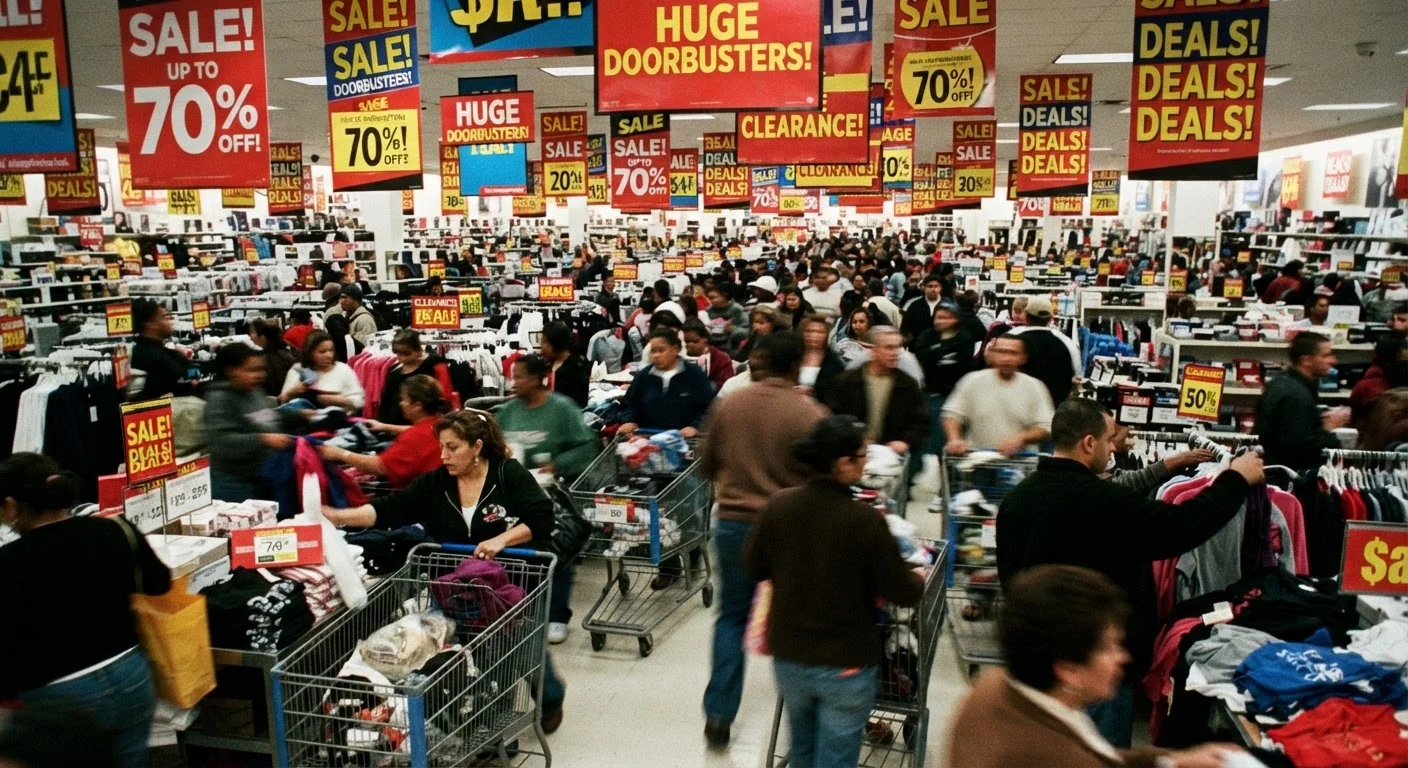
[in_content_images:1]For deciding between in-store and online purchases, factor in whether your primary retailer is brick-and-mortar or digital. In-store doorbusters reward early arrivals; online deals often replenish or extend - but shipping cutoffs and checkout queues introduce their own friction.
Set up price alerts and early-access triggers
Once your list is finalized and tiered, automate your monitoring. Set price drop alerts on CamelCamelCamel or Google Shopping for every Tier 1 and Tier 2 item. Configure alerts to notify you only when the price drops to or below your pre-set target - not for every minor fluctuation.
Managing price alert thresholds effectively is its own skill - too many alerts and you start ignoring all of them. Be selective: alerts on your top five to seven items is manageable; alerts on twenty items is noise.
Also subscribe to email lists for your target retailers if you haven't already. Many chains release early-access Black Friday pricing to subscribers 48-72 hours before the public sale. That window can mean the difference between securing your Tier 1 item at your target price and finding it sold out when the general sale opens. For a full pre-sale setup checklist, the Black Friday shopper's prep list walks through every account and tool setup step you should complete in advance.
Do a final list audit 48 hours before the sale
Two days before Black Friday, review your entire list from scratch with fresh eyes. For each item, ask three questions:
- Do I still actually need or want this?
- Is my target price realistic based on early ad leaks or confirmed sale prices?
- Is my total commitment within budget if I buy everything on Tiers 1 and 2?
This audit frequently trims 20-30% of items from a list. Priorities shift, early ad scans reveal that certain deals won't materialize, and the budget math sometimes doesn't add up once real prices are visible. It's far better to cut items now than to rationalize overspending on sale day.
Update your spreadsheet with any confirmed sale prices you've found from ad leaks or early-access announcements. Flag any items where the confirmed price exceeds your target - these move to Tier 3 or come off the list entirely.
Staying disciplined at checkout
The most common list failure mode isn't buying the wrong item outright - it's rationalizing additions. "It's 50% off and I might need it someday" is not a buying criterion. Your list already defines your criteria. If an item isn't on it, it doesn't go in the cart. Budget headroom from a Tier 2 item that didn't hit its price target does not automatically get redirected to an unplanned purchase - it goes back into your pocket.
Wishlists Are Not the Same as a Shopping List
Saving items to a retailer's wishlist or cart is a convenience feature, not a buying decision. Treat your wishlist as a research staging area, not a confirmed purchase queue. Items sitting in a retailer's wishlist get used by that retailer to serve you retargeting ads and urgency nudges - be aware of that dynamic when you revisit them.
Doorbuster Quantities Are Intentionally Tiny
Loss-leader doorbusters at major chains are often stocked in very limited quantities - sometimes fewer than a dozen units per store. If your list depends on a specific doorbuster, have a backup plan ready. See our breakdown of in-store vs. online Black Friday strategies to weigh your options realistically.
When to deviate from the list (and when not to)
There are two legitimate reasons to buy something not on your list: you discover it's a Tier 1-equivalent item you genuinely forgot to include, and the price history confirms it's a real discount. That's it. "It seemed like a good deal" or "I'll figure out a use for it" are not legitimate reasons - they're the exact impulse cues Black Friday is engineered to trigger.
If you're considering early-access deals versus waiting for doorbusters, your tiered list actually makes that decision easier. Tier 1 items that appear in early access at your target price should be bought immediately - there's no strategic reason to gamble on a better doorbuster price. Tier 2 items can wait if early access prices are above target.
Use a Spreadsheet, Not Just Paper
A digital spreadsheet lets you sort your list by category, budget, or retailer - and you can embed direct product links and price-history screenshots in the same document. Google Sheets works well and syncs to your phone so you have everything at checkout time.
Check Competing Retailers Before Sale Day
Once you've identified your target price for an item, search that same model at Walmart, Target, Best Buy, and the manufacturer's own site. Knowing three or four price points across retailers puts you in a stronger position and ensures you aren't locked into one retailer's terms if stock runs out.
Layer Cashback on Top of Sale Prices
Portals like Rakuten, TopCashback, and credit-card shopping portals can add 2-12% cashback on top of Black Friday sale prices. Check your portal before clicking through to any retailer - this step takes 60 seconds and frequently adds up to more than a coupon code would.
After the sale: audit what you actually bought
Within 24 hours of Black Friday, review every purchase against your original list. Did you stay within budget? Did every purchase match a listed item? Were the prices you paid at or below your pre-set targets? This post-sale audit isn't about guilt - it's about understanding your own patterns so next year's list is even tighter.
If Cyber Monday is also on your radar, a dedicated Cyber Monday game plan applies the same discipline to a separate set of deal windows - particularly useful if any of your Tier 1 items didn't hit their Black Friday price targets.

The broader principle at work here is that Black Friday rewards preparation, not spontaneity. The shoppers who capture genuine value are the ones who did their research in October, set their prices in writing, and showed up on sale day with a clear execution plan. Everyone else is just funding the experience for them. For a full map of how Black Friday fits into the larger holiday shopping calendar, the holiday sales guide provides the strategic context to time every category of purchase correctly across the season.