
Reading a Pet Food Label: What the Nutrition Claims Actually Mean
Terms like 'complete and balanced,' 'grain-free,' and 'natural' appear on nearly every bag. Here's what they mean — and what they don't.
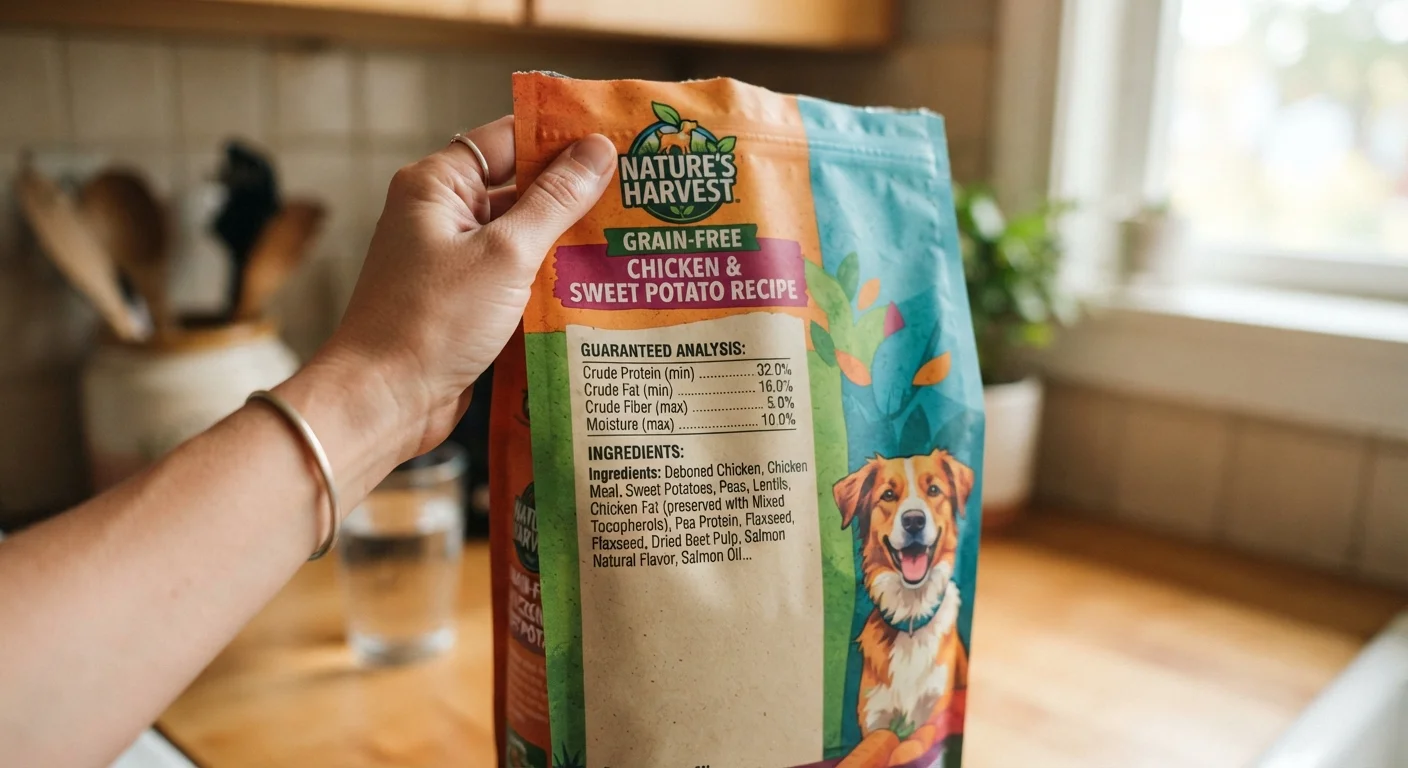
Photo: SaverSteals.com editorial
—— In This Article
Key Takeaways
- 'Complete and balanced' is a regulated phrase that signals a food meets established minimum nutritional standards.
- 'Natural' on a pet food label has a specific AAFCO definition but does not mean organic, premium, or superior.
- Grain-free does not mean low-carbohydrate — many grain-free foods substitute peas, lentils, or potatoes.
- Ingredient order by weight matters, but moisture content can be misleading when comparing raw and dry ingredients.
- A nutritional adequacy statement on the label tells you which life stage a food is formulated for.
- When in doubt, your veterinarian is the best resource for guidance on your specific pet's dietary needs.
Why Pet Food Labels Can Feel Overwhelming
Walk down the pet food aisle and you'll encounter a cascade of bold claims: "ultra-premium," "ancestral diet," "human-grade," "holistic." It's easy to feel like decoding the label requires a nutrition degree. The good news is that once you know which terms are regulated and which are marketing shorthand, the label becomes a genuinely useful tool.
Just like reading any product label — whether it's a human nutrition facts panel or a skincare ingredient list — the skill comes down to knowing what carries real meaning and what's largely window dressing.
Start With the Back of the Bag
The most useful information — the nutritional adequacy statement, ingredient list, and guaranteed analysis — is always on the back or side panel, not the front. Front-of-bag claims are marketing; the back panel is where regulated information lives. Make a habit of flipping the bag before deciding.
Regulated Terms You Can Actually Count On
Complete and balanced is the most meaningful phrase on any pet food label. It signals that the food meets minimum nutrient standards set by AAFCO — either through formulation against a nutrient profile or through an actual feeding trial. If a food doesn't carry this claim, it should be used only as a treat or supplement, not a primary diet.
The nutritional adequacy statement — usually found in small print near the ingredient list — specifies which life stage the food is intended for: growth (puppies or kittens), adult maintenance, reproduction, or all life stages. Feeding a kitten food formulated only for adult cats, for example, can leave nutritional gaps during a critical developmental window.
4,000+
Pet food products registered in the U.S.
AAFCO and state feed control agencies oversee registration and labeling requirements for thousands of commercial pet food products sold across the country.
~70%
U.S. households owning at least one pet
According to the American Pet Products Association's National Pet Owners Survey, pet ownership in the U.S. remains at historically high levels, making pet food literacy broadly relevant.
"Meets the nutritional levels established by AAFCO" versus "animal feeding tests" also matters. Feeding trial–validated foods have been tested on actual animals, which is generally considered a stronger standard, though formulation-based foods can still be nutritionally sound.
Loosely Defined Terms to Approach With Skepticism
"Natural" has an AAFCO definition — it rules out chemically synthesized ingredients, with limited exceptions — but it doesn't mean organic, humanely raised, or nutritionally superior. A food can be labeled natural and still contain rendered by-products or high levels of carbohydrates.
"Grain-free" has become one of the most discussed claims in pet nutrition. Removing grains doesn't automatically reduce carbohydrates; manufacturers frequently substitute peas, lentils, chickpeas, or potatoes. The FDA has been investigating a possible association between diets high in these legumes and dilated cardiomyopathy (DCM) in dogs — a concern worth discussing with your veterinarian, particularly for breeds already prone to heart issues.
Terms like "premium," "gourmet," "holistic," and "ultra" carry no regulatory definition whatsoever. They are purely marketing language and provide no information about ingredient quality or nutritional adequacy. This is similar to how unfamiliar ingredient names can sound alarming without actually signaling any problem — context always matters more than terminology.
Grain-Free and the DCM Investigation
The FDA launched an investigation into a potential link between certain grain-free diets and dilated cardiomyopathy (DCM) in dogs. While the science is still evolving and causation has not been established, the concern is taken seriously by veterinary cardiologists. If your dog is on a grain-free diet — especially one high in peas or lentils — it's worth raising with your vet at your next visit.
How to Read the Ingredient List Effectively
Ingredients are listed in descending order by weight before processing. This sounds straightforward, but moisture content complicates the picture. A whole chicken listed first is mostly water; once cooked, it may contribute less actual protein than a chicken meal (a concentrated, pre-dried protein source) listed further down. Neither is inherently better — understanding the distinction just prevents you from being misled by the top-of-list positioning alone.
Ingredient splitting — listing variations of the same ingredient separately to push each one lower on the list — is another technique worth recognizing. For example, if a label lists corn flour, corn gluten, and corn bran separately, corn may effectively be the primary ingredient even if no single corn entry appears first.
For a deeper look at how whole and refined grain ingredients compare nutritionally, see our overview on whole grains vs. refined grains. The same principles of ingredient processing apply in both human and pet nutrition contexts.
Making Confident Choices for Your Pet
No label — however well-designed — replaces a conversation with your veterinarian, especially if your pet has a health condition, allergy, or is at a life stage with specific needs. General label literacy, though, helps you ask better questions and spot red flags before the food ever reaches your pet's bowl.
Start with the nutritional adequacy statement. Then check whether the primary protein source is clearly named (e.g., "chicken" or "salmon," rather than vague terms like "poultry" or "fish"). Finally, assess whether the marketing claims on the front of the bag are supported by anything substantive on the back. For more context on separating fact from common misconceptions in pet care, see our piece on common pet health myths.
This article is for general informational purposes only and is not a substitute for professional veterinary dietary advice. Always consult your veterinarian before making significant changes to your pet's diet.
Frequently Asked Questions

Pets Editorial Team
Pets Editorial Team is the collective byline for our editorial team and contributor network. Articles published under this byline or an editorial pen name are researched, written, and reviewed according to our editorial standards for clarity, consistency, and independence before publication.
View author profile