
Whole Grains vs. Refined Grains: What Changes When Grains Are Processed
Learn what gets lost when grains are refined, how whole grains differ nutritionally, and how to spot genuine whole-grain products on packaging.
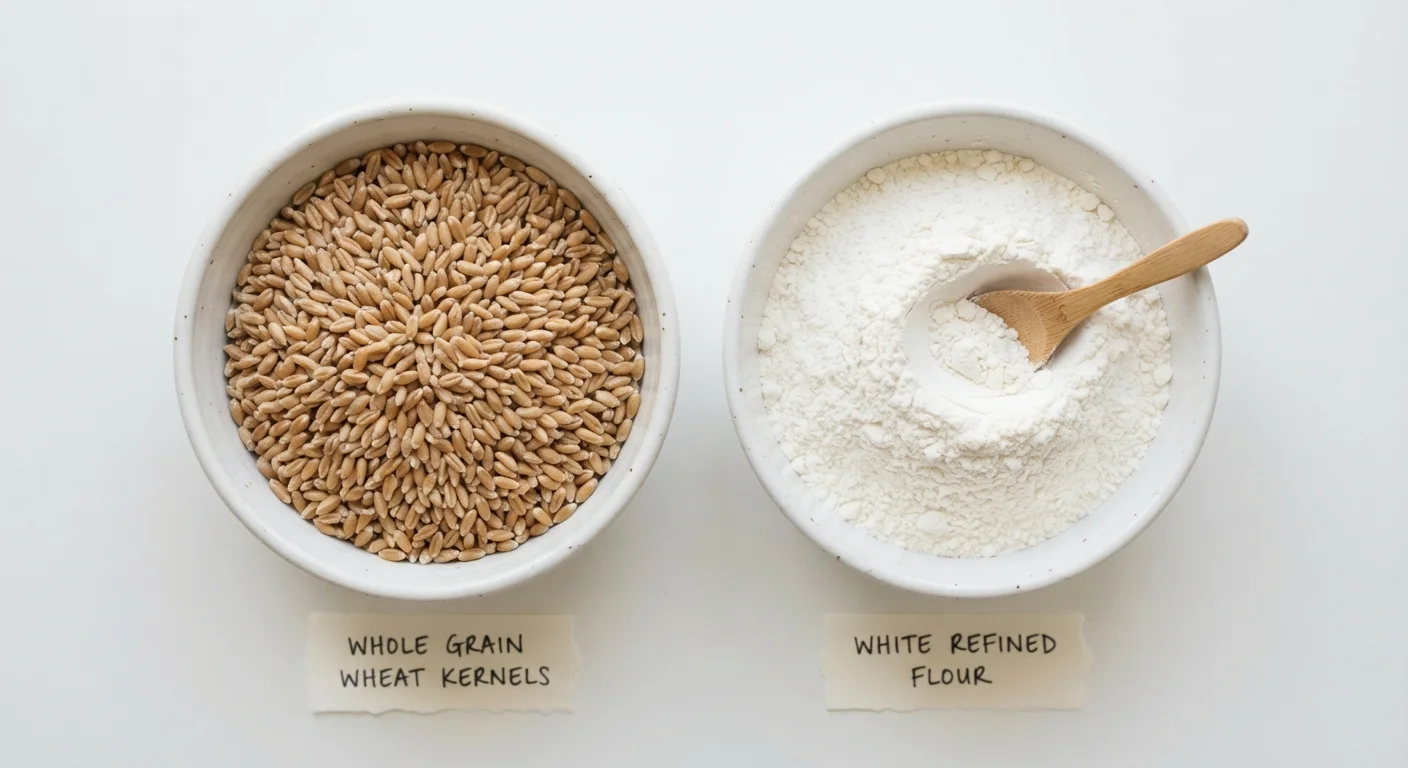
Photo: SaverSteals.com editorial
—— In This Article
Key Takeaways
- Milling removes the bran and germ from whole grains, stripping out fiber, B vitamins, iron, and healthy fats.
- Enriched refined grains have some nutrients added back, but fiber — one of the most important — is not restored.
- The words 'wheat flour' or 'multigrain' on a label do not guarantee a whole-grain product.
- Diets higher in whole grains are associated with reduced risk of heart disease, type 2 diabetes, and digestive issues.
- Look for 'whole grain' or 'whole wheat' as the first ingredient to identify genuinely whole-grain products.
What Happens Inside the Mill
Every grain kernel has three layers: the bran (outer shell), the germ (nutrient-rich embryo), and the endosperm (starchy interior). A whole grain keeps all three intact. Refining strips away the bran and germ, leaving only the endosperm.
That removal is significant. The bran supplies most of the kernel's dietary fiber along with B vitamins like niacin and thiamine. The germ contributes vitamin E, healthy unsaturated fats, and additional B vitamins. When both are milled away, the resulting white flour or white rice is largely starch — calorie-dense but nutritionally sparse.
To partially compensate, U.S. law requires manufacturers to enrich many refined grain products by adding back specific B vitamins (thiamine, riboflavin, niacin, folic acid) and iron. However, enrichment does not restore fiber, vitamin E, magnesium, zinc, or the dozens of phytonutrients that were present in the bran and germ. Think of it as replacing a few bricks after demolishing an entire wall.
| Criterion | Whole Grains | Refined Grains |
|---|---|---|
| Kernel parts retained | Bran, germ, endosperm | Endosperm only |
| Dietary fiber | High | Very low |
| B vitamins | Naturally present | Partially added back (enriched) |
| Vitamin E | Present (from germ) | Largely absent |
| Phytonutrients | Naturally present | Largely removed, not restored |
| Shelf life | Shorter (oils in germ can go rancid) | Longer |
| Texture | Denser, chewier | Softer, lighter |
The Nutritional Gap in Numbers
The difference between whole and refined grains shows up clearly in the data. A slice of 100% whole wheat bread typically contains two to three grams of fiber, while the same-sized slice of white bread provides less than one gram. Over a day's eating, that gap accumulates quickly — and most Americans already fall well short of the recommended daily fiber intake of 25–38 grams, according to the Dietary Guidelines for Americans.
<5%
Americans meeting whole-grain recommendations
Research estimates that fewer than 5% of U.S. adults meet the Dietary Guidelines recommendation to make at least half of all grains whole grains.
~25%
Lower cardiovascular disease risk linked to whole grains
Multiple large cohort studies, including analyses published in The BMJ, associate the highest whole-grain intake with roughly 20–25% lower cardiovascular disease risk compared to the lowest intake.
2–3x
More fiber per serving in whole vs. refined bread
USDA nutrient data shows that a typical slice of 100% whole wheat bread provides two to three times the fiber of an equivalent slice of white bread.
Beyond fiber, whole grains contain compounds such as lignans, phenolic acids, and beta-glucan (found especially in oats and barley) that have been studied for their roles in heart health and blood sugar regulation. These compounds are not added back during enrichment.
Research published in journals including The BMJ and Circulation has consistently found that higher whole-grain consumption is associated with lower risks of cardiovascular disease, type 2 diabetes, and certain digestive conditions. These are associations, not guarantees — individual diet patterns, genetics, and lifestyle all matter. This information is educational and not a substitute for advice from your healthcare provider.
Decoding the Label: Spotting Real Whole Grains
Food packaging can be misleading. Terms like multigrain, wheat bread, stone-ground, or made with whole grain do not mean a product is primarily whole grain. Here's how to cut through the noise:
- Check the ingredient list first. Ingredients appear in descending order by weight. If the first ingredient says 'whole wheat flour,' 'whole oat flour,' or another whole grain, the product is predominantly whole grain. If it says 'enriched wheat flour' or 'unbleached flour,' that is refined grain regardless of the front-of-package claim.
- Look for the Whole Grain Stamp. The Whole Grains Council's stamping program indicates how many grams of whole grain the product contains per serving. A '100%' stamp means all grains used are whole.
- Ignore color as a proxy. Brown bread is not automatically whole grain — caramel coloring or molasses can darken refined-grain bread.
For a broader look at navigating grain labels alongside other packaged food claims, see our practical grocery shopping guide.
Label Claims vs. Reality
The FDA regulates what manufacturers can call 'whole grain,' but terms like 'multigrain' and 'made with whole grain' have no strict minimum requirement. A product could contain a small token amount of whole grain and still use these phrases legally. The ingredient list — not the front-of-package claim — is your most reliable guide to what's actually inside. If you're curious how this compares to label-reading challenges in other food categories, our pet food label guide explores similar marketing language dynamics.
This article provides general nutritional information for educational purposes and is not a substitute for personalized medical or dietary advice. Consult a registered dietitian or qualified healthcare provider before making significant changes to your diet, especially if you manage a chronic health condition.

Health Editorial Team
Health Editorial Team is the collective byline for our editorial team and contributor network. Articles published under this byline or an editorial pen name are researched, written, and reviewed according to our editorial standards for clarity, consistency, and independence before publication.
View author profile