
What the Nutrition Facts Label Is Actually Telling You
Decode the numbers on packaged food labels — from serving sizes to daily values — so you can make more informed choices at the grocery store.
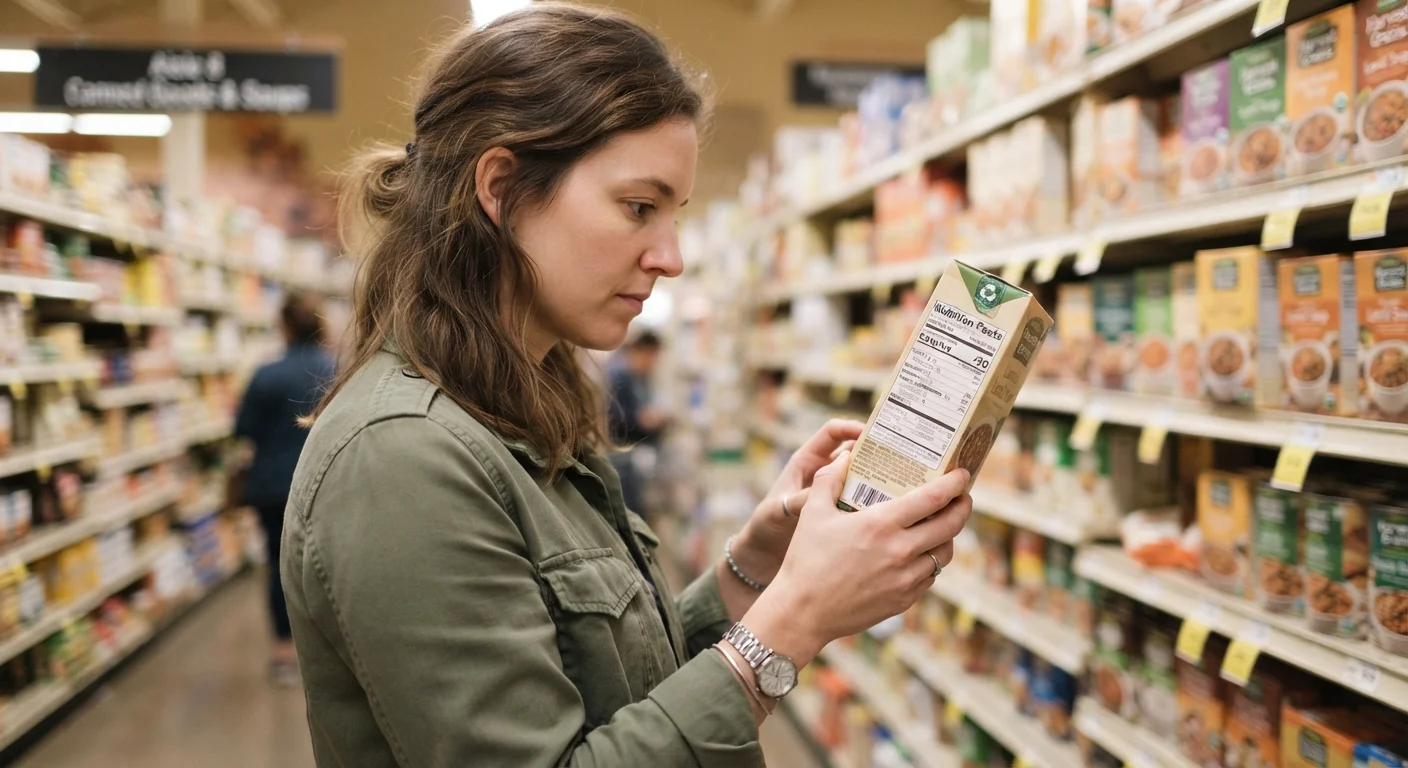
Photo: SaverSteals.com editorial
—— In This Article
Key Takeaways
- Serving size is a reference amount, not a recommendation — all numbers on the label are based on that quantity.
- The % Daily Value (%DV) tells you how much a nutrient in one serving contributes to a 2,000-calorie daily diet.
- Aim for higher %DV in fiber, vitamins, and minerals; look for lower %DV in saturated fat, sodium, and added sugars.
- Added sugars now appear as a separate line item, distinct from naturally occurring sugars.
- Calories are displayed prominently, but nutrient quality matters alongside calorie count.
- A single package may contain multiple servings — always check before assuming one container equals one serving.
Start Here: Serving Size Sets the Stage
Every number on the Nutrition Facts label — calories, grams of fat, milligrams of sodium — applies to one serving, not the entire package. Serving sizes are standardized by the FDA based on amounts people typically eat, but they can be surprisingly small. A bag of chips might list one serving as about 12 chips, while the bag holds three or four servings.
Before reading anything else on the label, identify how many servings are in the container and how much of the container you actually plan to eat. If you consume two servings, you double every value on the label. This single step prevents one of the most common misreadings of nutritional information.
Check the Servings Per Container First
Before reading any other number on the label, find 'servings per container' at the very top. If a package holds three servings and you eat the whole thing, multiply every value — calories, sodium, sugars — by three. This one habit eliminates the most frequent source of label misreading.
Calories: The Big Number in Context
The 2016 FDA label redesign made calories larger and bolder — a deliberate choice to make energy content immediately visible. Calories measure the energy a food provides. However, calorie count alone doesn't reflect nutritional quality. Two foods with identical calorie counts can differ widely in fiber, protein, vitamins, and how satisfying they are.
Rather than treating calories as the only metric, use them as one data point alongside the nutrient breakdown. A 200-calorie serving of almonds and a 200-calorie serving of a sweetened snack cake deliver very different nutritional profiles.
77%
Americans who read food labels when buying a new product
According to the International Food Information Council's Food and Health Survey, the majority of U.S. consumers report checking labels for at least some nutritional information.
20%+
%DV threshold considered 'high' for any nutrient
The FDA uses 20% Daily Value or above as the benchmark for designating a nutrient as high per serving — a quick reference for both nutrients to seek and those to limit.
2.5×
Average servings per container in many packaged snacks
Many single-use-style packages contain more than one serving, a common source of calorie and nutrient miscalculation among consumers who finish the package in one sitting.
Understanding % Daily Value
The right-hand column of the Nutrition Facts label shows % Daily Value (%DV) — how much each nutrient in one serving contributes to a daily total, based on a 2,000-calorie reference diet. The FDA's general rule of thumb: 5% DV or less is low; 20% DV or more is high.
Use %DV directionally:
- Aim higher: dietary fiber, potassium, vitamin D, calcium, and iron
- Aim lower: saturated fat, sodium, and added sugars
Total fat and cholesterol don't carry the same straightforward high/low guidance — context and food source matter more for those. For a deeper look at what's inside your packaged foods beyond the numbers, see how to read ingredient lists without getting confused.
Added Sugars: A Newer, Important Distinction
One of the most meaningful updates in the current label format is the separate line for added sugars, listed beneath total sugars. Naturally occurring sugars — such as lactose in milk or fructose in whole fruit — arrive packaged with fiber, protein, and micronutrients. Added sugars, by contrast, are incorporated during processing and provide calories with little additional nutritional value.
The American Heart Association and the Dietary Guidelines for Americans both recommend limiting added sugar intake. The %DV for added sugars on the label helps you see at a glance whether a single product uses a substantial portion of that daily budget.
Natural Sugars vs. Added Sugars
The total sugars line includes both naturally occurring and added sugars combined. Only the added sugars sub-line reflects what was put in during processing. A plain yogurt may show 12g of total sugars from naturally occurring lactose, with 0g added sugars — a very different nutritional story than a flavored yogurt with 12g of added sugars on top of its natural content.
Sodium and Saturated Fat: Why These Numbers Matter
Sodium and saturated fat are two nutrients most Americans consume in excess relative to current dietary guidance. High sodium intake is associated with elevated blood pressure in some people, while high saturated fat intake is linked to unfavorable changes in blood cholesterol in certain populations — though nutrition science continues to refine the understanding of these relationships.
The label makes it straightforward to spot high-sodium or high-saturated-fat items using %DV. This is especially useful when comparing similar products — say, two canned soups — side by side. A lower %DV for these nutrients across your daily meals allows more flexibility overall.
If you're navigating a broader set of label-reading challenges, the same skills apply in other contexts — for instance, grocery shopping with nutrition in mind offers a full-store perspective on applying this knowledge.
Putting It All Together
Reading a Nutrition Facts label isn't about finding a perfect food — it's about building a clearer picture of what you're eating so your choices are informed rather than guesswork. A useful habit: glance at serving size, calories, and two or three nutrients most relevant to your health context before deciding.
Over time, this becomes quick and intuitive. The label is a tool, not a test. Used consistently, it helps you notice patterns — like how sodium accumulates across processed foods, or how much added sugar appears in items that don't taste particularly sweet.
This article provides general nutrition information for educational purposes and is not a substitute for personalized dietary advice. For guidance tailored to your health needs, consult a registered dietitian or qualified healthcare professional.
Frequently Asked Questions

Health Editorial Team
Health Editorial Team is the collective byline for our editorial team and contributor network. Articles published under this byline or an editorial pen name are researched, written, and reviewed according to our editorial standards for clarity, consistency, and independence before publication.
View author profile