
Secondhand vs. New Home Décor: What's Actually Worth Buying Used
Not every home décor item makes sense to buy secondhand. Here's a practical breakdown of where used pays off and where new wins.
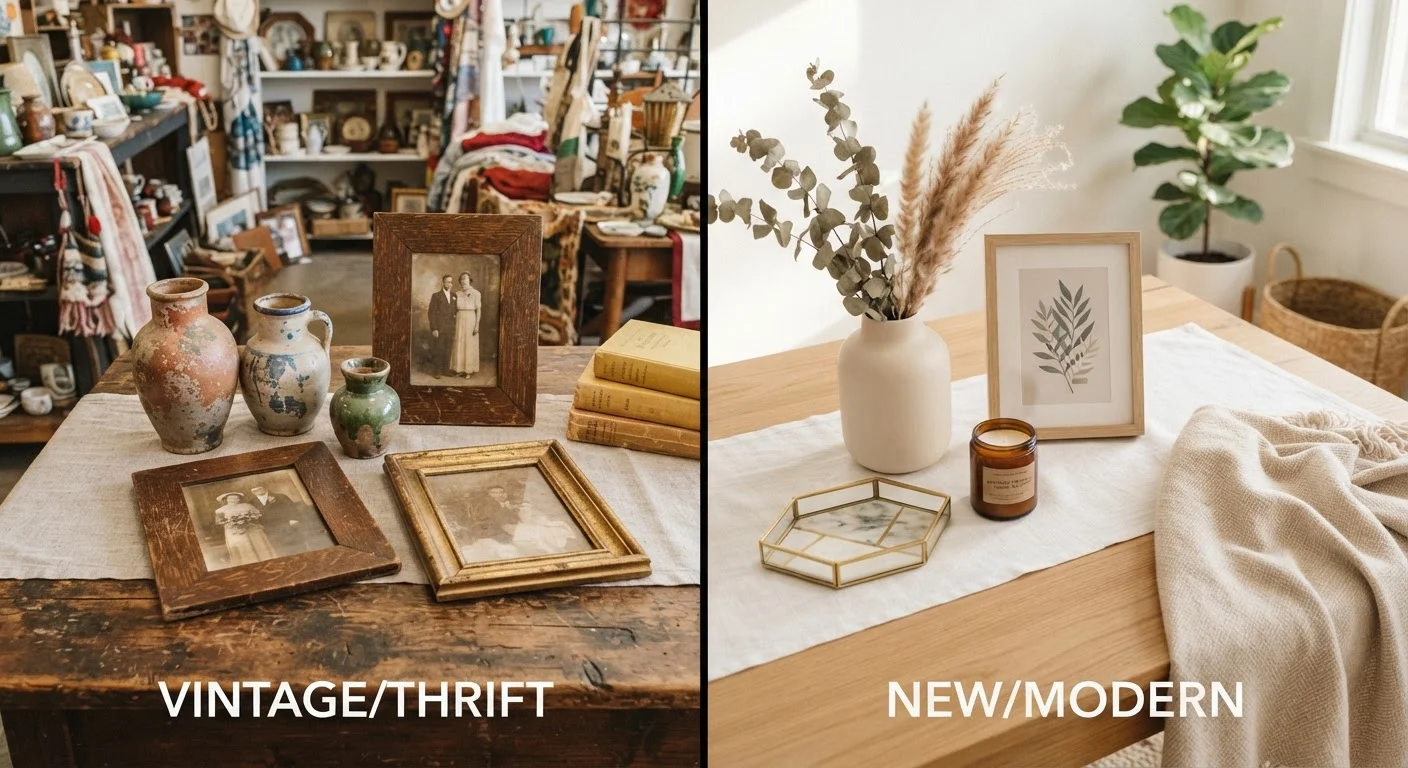
Photo: SaverSteals.com | Explore More. Shop Smarter. editorial
—— In This Article
Key Takeaways
- Solid wood furniture, mirrors, and ceramic décor are among the most rewarding secondhand purchases.
- Upholstered items, mattresses, and anything with safety certifications are generally safer to buy new.
- Condition inspection is the single most important step when buying used décor.
- Secondhand sourcing varies significantly between online listings and in-person markets — each has trade-offs.
- Mixing secondhand and new items often yields the best balance of cost savings and practicality.
Why This Choice Matters More Than It Seems
Decorating a home involves dozens of individual purchasing decisions, and the secondhand-vs-new question rarely has a single answer. The right call depends on the category of item, its condition, your household's specific needs, and how much time you are willing to invest in sourcing. Making blanket decisions — always buying used to save money, or always buying new for peace of mind — tends to leave value on the table in one direction or the other.
The practical approach is category-by-category thinking. Some décor items hold up beautifully secondhand and offer meaningful savings. Others carry real risks — hygiene, safety, or durability concerns — that make new purchases the more sensible investment. Understanding which is which helps you allocate your budget where it genuinely matters.
| Criterion | Secondhand Home Décor | New Home Décor |
|---|---|---|
| Typical cost | Significantly lower than retail | Full retail price |
| Condition certainty | Varies; inspection required | Consistent, manufacturer-set |
| Hygiene assurance | Limited for porous materials | High — unused and sealed |
| Safety certification | May predate current standards | Meets current regulations |
| Uniqueness / character | Often high — one-of-a-kind pieces | Standardized; widely available |
| Environmental impact | Lower — extends product life | Higher — new production required |
| Time investment | Higher — sourcing and inspection | Lower — immediate availability |
| Warranty / returns | Rarely available | Typically included |
What Is Actually Worth Buying Used
Certain home décor categories reward secondhand shopping reliably. Solid wood furniture is the classic example: a well-made dresser or bookcase from decades past is often structurally superior to modern flat-pack equivalents, and the depreciation curve means prior owners absorb most of the cost. Look for pieces with dovetail joints, real wood veneer, and no warping or water damage.
Decorative ceramics, glassware, and vases are low-risk secondhand purchases. They are easy to clean thoroughly, their condition is immediately visible, and they rarely involve hygiene concerns. The same logic applies to framed artwork, mirrors, and metal accent pieces — these items age well, and surface wear is usually superficial or even desirable.
Wooden shelving, side tables, and storage units are worth hunting for in secondhand markets. Minor scratches can be sanded and refinished at low cost, and the underlying structure often outlasts anything in a similar price bracket when new. For more on how the sourcing channel affects what you find and pay, see our guide on online listings vs. in-person markets for used furniture.
A Note on Lead Paint in Older Pieces
In the United States, paint containing lead was commonly used in homes and on furniture manufactured before 1978. If you are purchasing vintage wooden furniture or décor items from that era, the Consumer Product Safety Commission recommends testing painted surfaces before refinishing or if the paint is peeling. Inexpensive lead test kits are widely available at hardware stores. This is especially relevant if the piece will be used in spaces occupied by young children.
Where New Wins — and Why
Upholstered furniture — sofas, armchairs, ottomans — is the most common category where secondhand comes with hidden costs. Fabric and foam absorb odors, allergens, dust mites, and in some cases mold or pest residue that professional cleaning cannot always fully resolve. Unless you can inspect thoroughly, have the piece professionally cleaned, or reupholster it yourself, new is typically the lower-risk path.
Mattresses and bed pillows fall into the same category and are almost universally recommended to buy new for hygiene reasons. Window treatments and curtains made from fabric can also trap allergens and are difficult to assess for sun damage or structural integrity when purchased secondhand.
For items requiring current safety certifications — certain children's furniture, electrical fixtures, or smoke and carbon monoxide detectors — buying new ensures compliance with standards that older items may predate. This is a practical boundary worth respecting. If you are weighing similar decisions across other household categories, our article on the real pros and cons of an all-secondhand room covers the broader trade-offs.
Inspecting Secondhand Décor: What to Check
Condition assessment is the skill that separates confident secondhand shoppers from frustrated ones. Before committing to any used décor item, run through a short mental checklist:
- Structural integrity: Does the piece wobble, crack, or show signs of repair with mismatched materials?
- Surface condition: Is damage cosmetic (scratches, paint chips) or structural (deep gouges, water swelling, delamination)?
- Odor: Musty, chemical, or smoke smells in porous materials are often persistent and difficult to remove.
- Hardware and moving parts: Check drawers, hinges, and closures. Replacement hardware is inexpensive; broken structural joints are not.
- Origin and age signals: Older pieces may contain lead paint (pre-1978 in the US) or formaldehyde-heavy finishes that require precautions before use in living spaces.
Developing this inspection routine quickly becomes second nature and dramatically reduces the chance of purchasing something that ends up costing more to fix than it saved.
~45%
US adults who bought secondhand goods in recent years
According to ThredUp's resale industry reports, participation in secondhand shopping has grown steadily, with home goods among the top categories consumers are willing to buy used.
Pre-1978
Cut-off year for lead paint risk in US homes and furniture
The US Consumer Product Safety Commission banned lead-based paint for residential use in 1978, making age a relevant factor when assessing older secondhand furniture and décor.
Building a Smarter Blended Approach
Most well-decorated homes on a considered budget use both channels deliberately. A practical framework is to anchor rooms with secondhand structural pieces — the furniture that takes up space and cost — and fill in with new items where hygiene, safety, or exact sizing matters. Accent décor like ceramics, art, and lighting can often skew secondhand, where uniqueness adds more value than consistency.
Keep in mind that sourcing secondhand takes time. Estate sales, thrift stores, and resale platforms each have different inventory rhythms, and patience is part of the cost. If your time is limited, that's a genuine factor in favor of new purchases for certain categories — not a failure of thriftiness, just an honest accounting of trade-offs. Our piece on DIY vs. buying home décor explores a related dimension of this same decision.
The goal is not to maximize how much you buy secondhand, but to make each purchase — new or used — a deliberate, informed one that reflects real value for your specific situation.

Home & Garden Editorial Team
Home & Garden Editorial Team is the collective byline for our editorial team and contributor network. Articles published under this byline or an editorial pen name are researched, written, and reviewed according to our editorial standards for clarity, consistency, and independence before publication.
View author profile